

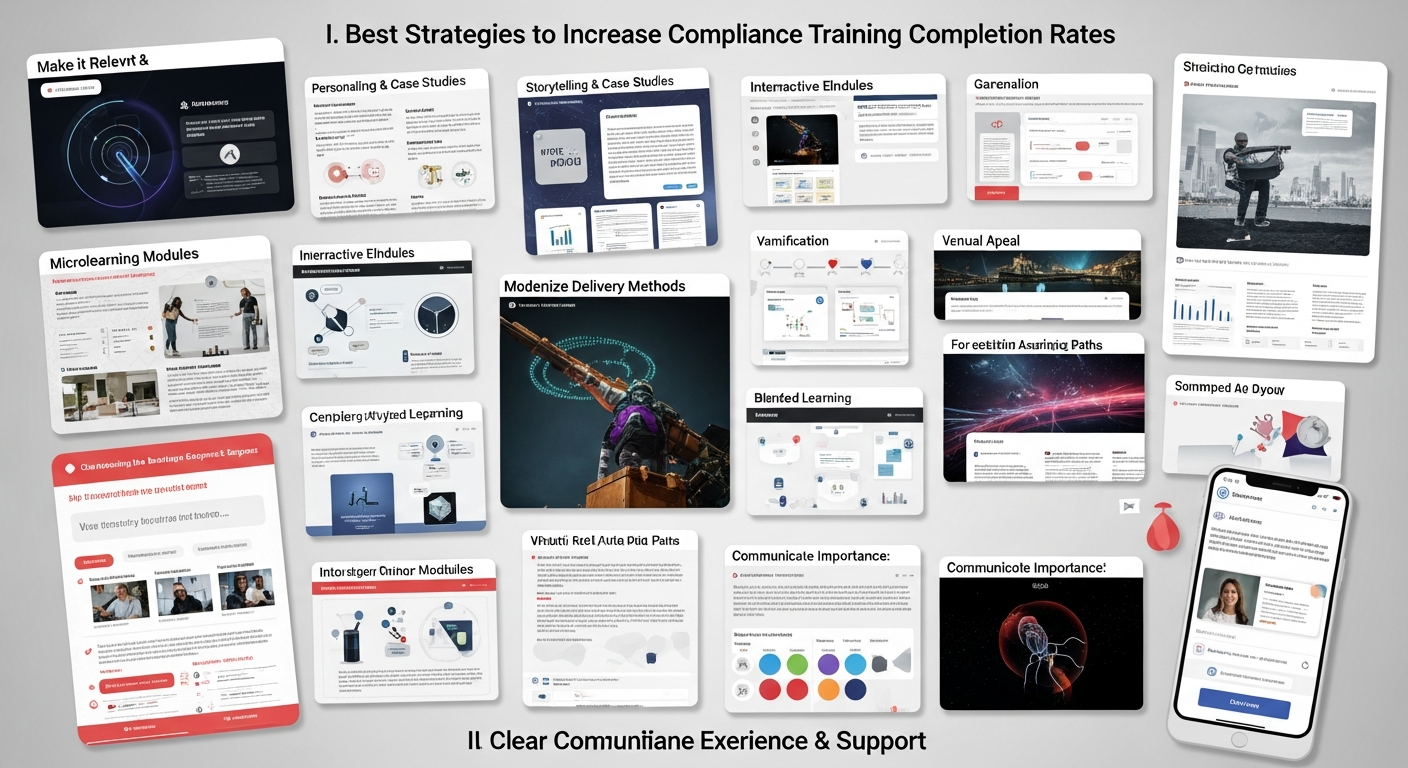
Mastering Compliance: Top Strategies to Boost Training Completion Rates
For Vice Presidents, Directors, and Managers in Learning & Development across industries like Compliance, Sales, Banking, Finance, Insurance, Retail, Pharma, Health care, Hospitality, Oil and Gas, and Mining, ensuring high compliance training completion rates isn't just a goal—it's a critical imperative. In an increasingly complex regulatory landscape, an organization's ability to demonstrate consistent, comprehensive employee training directly impacts its risk profile, operational integrity, and reputation. Yet, the perennial challenge remains: how do you transform compliance training from a dreaded annual chore into an engaging, effective, and readily completed learning experience?
Low completion rates signal more than just missed checkboxes; they indicate potential vulnerabilities, expose the organization to legal and financial penalties, and undermine efforts to foster a culture of ethical conduct. The costs of non-compliance, from hefty fines to irreparable brand damage, far outweigh the investment in effective training. This article delves into the best strategies L&D leaders can employ to significantly increase compliance training completion rates, leveraging modern methodologies and cutting-edge technology to drive engagement and ensure accountability.
The Core Challenge of Compliance Training
Why do employees often dread compliance training? The reasons are numerous and familiar: it's perceived as boring, irrelevant, overly time-consuming, or simply a bureaucratic hurdle. Traditional approaches often involve lengthy, generic modules that fail to resonate with individual roles or contextual scenarios, leading to disengagement, procrastination, and ultimately, low completion rates. The impact on the organization is profound: gaps in knowledge expose the company to heightened risks, damage employee morale, and divert valuable resources towards remedial actions rather than strategic growth initiatives.
To overcome these challenges, a paradigm shift is required. L&D professionals must move beyond one-size-fits-all mandates and embrace strategies that prioritize learner experience, relevance, and efficiency. The goal is not just to deliver information, but to cultivate understanding and instill compliant behaviors effectively across the workforce.
Strategies for Boosting Engagement and Completion
Make it Relevant and Concise
One of the most significant barriers to completion is content overload and perceived irrelevance. Employees are more likely to engage with and complete training that directly pertains to their daily tasks and specific risks. Tailoring content to departmental roles, geographical regulations, and individual responsibilities drastically increases its value.
- Role-Based Customization: Instead of generic modules, create specific training paths for different roles (e.g., customer service vs. finance).
- Embrace Microlearning: Break down complex topics into short, digestible modules. A Microlearning LMS is instrumental in delivering these bite-sized lessons, making training less daunting and easier to fit into busy schedules. This approach ensures content is focused, engaging, and directly applicable.
- Focus on Practical Application: Use real-world scenarios, case studies, and interactive exercises that demonstrate the direct impact of compliance on their job and the business. Prioritize Risk-focused Training that highlights the consequences of non-compliance in a relatable context.
- Optimize Content Delivery: Utilize a robust Learning content management system (LCMS) to ensure content is always up-to-date, easily accessible, and presented in an engaging format.
Leverage Technology for a Dynamic Experience
Modern `LMS` platforms offer a suite of features that can transform compliance training from tedious to captivating.
- Gamification: Introduce elements like points, badges, leaderboards, and challenges to make training competitive and fun. A Gamified LMS can significantly boost motivation and completion rates by appealing to employees' natural desire for achievement and recognition.
- Adaptive Learning Paths: Personalize the learning journey based on an individual's existing knowledge, role, and past performance. Adaptive Learning ensures that learners only focus on the areas where they need improvement, saving time and increasing efficiency. This tailored approach is key to effective `learning management software`.
- Interactive Content: Move beyond static presentations with quizzes, simulations, drag-and-drop activities, and interactive videos. An AI Powered Authoring Tool can dramatically accelerate the creation of such dynamic content, ensuring high quality and relevance.
- Powerful Management Tools: Modern `learning management solutions` provide comprehensive tracking and reporting, vital for monitoring progress and identifying bottlenecks in `enterprise learning management`.
Foster a Culture of Compliance
Training is most effective when it's part of a broader organizational commitment. Leadership must champion compliance not just as a rule, but as a core value.
- Leadership Buy-in: When senior management visibly supports and participates in compliance initiatives, it sends a clear message about its importance, encouraging others to follow suit.
- Continuous Communication: Regularly communicate the 'why' behind compliance training—its benefits to the individual, the team, and the company. Reinforce key messages through various channels beyond the training module itself.
- Recognition and Reinforcement: Acknowledge and reward individuals and teams for high completion rates and exemplary compliant behavior.
Optimize Delivery and Accessibility
Removing logistical barriers is crucial for improving completion rates.
- Mobile-First Design: Ensure that all training content is accessible and optimized for mobile devices, allowing employees to complete modules anytime, anywhere. Many `lms learning management system` platforms prioritize this accessibility.
- Flexible Scheduling: Allow employees to complete training at their own pace within a reasonable timeframe, integrating it seamlessly into their workflow rather than disrupting it.
- Automated Reminders and Nudges: Utilize the `MaxLearn LMS` or other advanced `cloud based learning management system` features to send automated, personalized reminders to employees nearing their deadlines, or to nudge them to resume incomplete modules.
- Clear Progress Tracking: Provide learners with clear visibility into their progress and what remains to be completed, giving them a sense of control and accomplishment.
AI-Driven Insights for Optimal Completion Rates
The strategic deployment of artificial intelligence can further refine and enhance compliance training, providing insights that were previously unattainable.
How can L&D leaders pinpoint the most impactful strategies for their unique organizational needs?
Modern learning platforms, often incorporating AI, analyze vast amounts of data on learner engagement, completion patterns, and performance. This data allows L&D leaders to identify exactly which modules are most effective, where learners typically drop off, and which content formats yield the best results. An advanced `learning management system` can highlight specific areas of struggle, enabling targeted interventions and content improvements. By understanding these patterns, organizations can personalize learning paths more effectively, ensuring employees receive training that is not only relevant but also delivered in the most effective manner for their individual learning style and role-specific requirements. This data-driven approach moves beyond guesswork to deliver truly impactful training programs.
Do specific industries or regions have distinct requirements that influence compliance training effectiveness?
Absolutely. While foundational compliance principles often remain consistent, the regulatory specifics can vary dramatically between industries—think financial regulations versus pharmaceutical guidelines—and even across different geographical regions. An effective `cloud based learning management system` is designed to be highly flexible, allowing organizations to deploy region-specific modules or industry-tailored content with ease. An `enterprise learning management` solution can manage complex organizational structures, ensuring that employees in various sectors or locales receive training that is precisely aligned with their local laws and industry standards. AI can further assist by flagging regulatory updates relevant to specific employee groups, prompting timely adjustments to training modules and ensuring ongoing relevance.
Beyond basic tracking, how can technology provide advanced insights and automate the optimization of compliance learning?
Beyond simply tracking completion, AI can revolutionize how compliance training is optimized. It can analyze learner performance to predict potential areas of non-compliance, suggesting preventative training or additional resources even before issues arise. An `AI Powered Authoring Tool` can rapidly update content in response to new regulations or identified knowledge gaps, ensuring training is always current and impactful. Furthermore, AI can automate personalized follow-up questions or micro-assessments, reinforcing key concepts over time and reducing knowledge decay. This goes beyond simple reminders; it involves intelligent nudges that adapt to individual learning pace and performance, effectively automating a highly personalized and continually optimized learning journey within the `LMS`.
Conclusion
Increasing compliance training completion rates is a multifaceted challenge, but it's one that modern L&D strategies and advanced `LMS` technology can unequivocally conquer. By shifting focus from mere obligation to genuine engagement, organizations can transform their compliance programs. Implementing relevant, concise, and interactive content delivered through a robust `learning management system` like `MaxLearn LMS`, coupled with a strong culture of compliance, will not only boost completion rates but also significantly reduce organizational risk. L&D leaders who embrace `learning management software` and integrate strategies like microlearning, gamification, and adaptive learning, supported by the analytical power of AI, will build a more informed, compliant, and resilient workforce ready to navigate today's complex regulatory environment. It's time to elevate compliance training from a necessary evil to a powerful driver of business integrity and growth.
.jpg)


