

```html
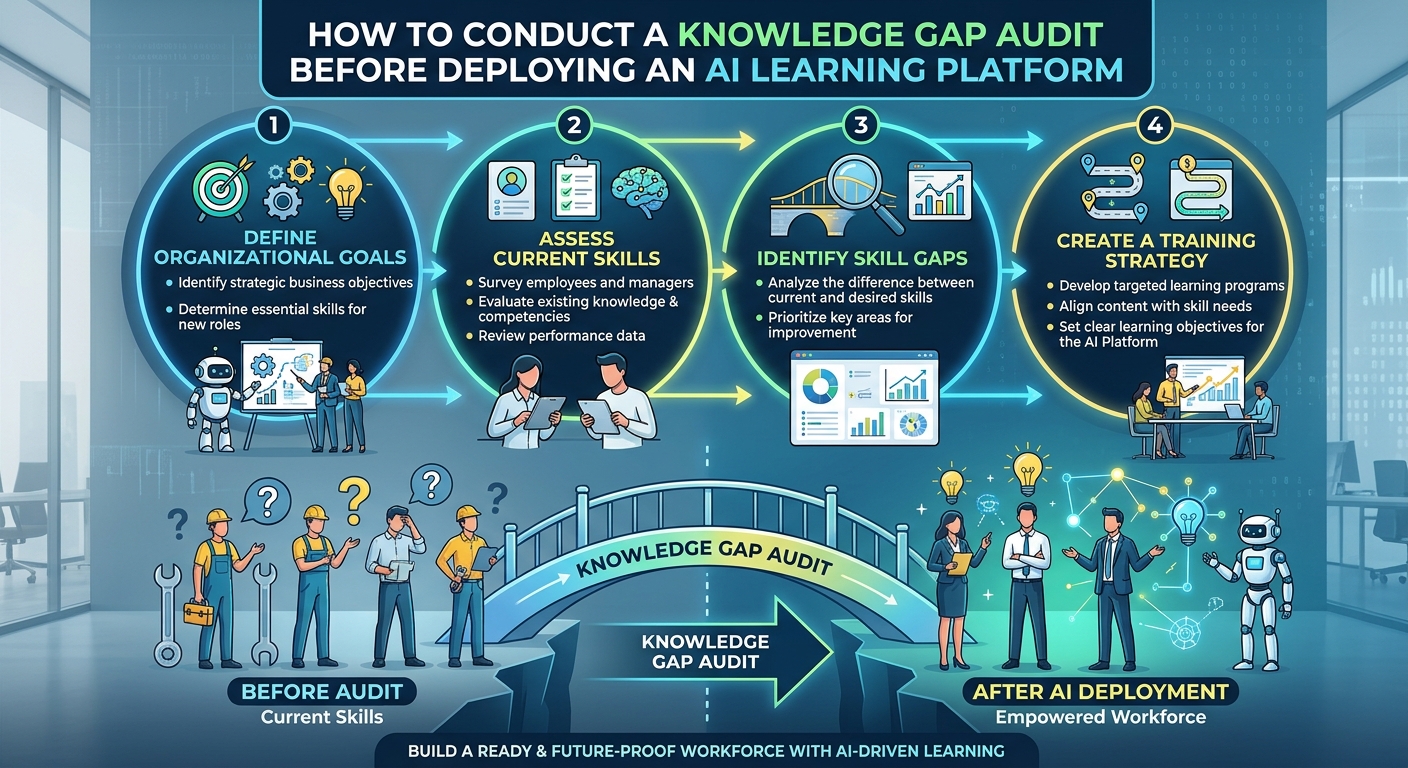
How to Conduct a Knowledge Gap Audit Before Deploying an AI Learning Platform
The landscape of corporate learning is undergoing a profound transformation, driven by the exponential advancements in artificial intelligence. For Vice Presidents, Directors, and Senior Managers in Learning & Development (L&D), the prospect of deploying an AI learning platform is exciting, promising unprecedented levels of personalization, efficiency, and impact. However, the path to successful integration is not merely about selecting the most advanced technology. It begins with a critical, often overlooked step: a comprehensive knowledge gap audit. Without this foundational understanding, even the most sophisticated AI-driven initiatives risk falling short of their potential, leading to wasted resources and missed opportunities for talent development.
Implementing a new learning management system (LMS) or an intelligent platform requires a clear understanding of your workforce's current capabilities versus the desired future state. This article will guide L&D leaders through the essential steps of conducting a robust knowledge gap audit, ensuring your organization is primed for the strategic deployment of an AI learning platform across diverse industries like Compliance, Sales, Banking, Finance, Insurance, Retail, Pharma, Health care, Hospitality, Oil and Gas, and Mining.
Why a Knowledge Gap Audit is Indispensable for AI Learning Platforms
The power of AI in learning lies in its ability to adapt, personalize, and optimize content delivery. But for AI to truly shine, it needs accurate data – not just about learner interactions, but about their existing knowledge and the gaps that need filling. Imagine deploying an AI system designed to create adaptive learning paths when you haven't clearly defined what knowledge gaps it needs to address. The result would be a scattershot approach, lacking focus and impact.
A thorough knowledge gap audit provides the blueprint for your AI learning strategy. It helps you:
- Pinpoint Critical Needs: Identify precisely where knowledge and skill deficiencies exist across your workforce.
- Optimize Resource Allocation: Direct your AI platform's capabilities towards the most impactful areas, avoiding generic training.
- Maximize ROI: Ensure that your investment in an advanced Gamified LMS or other learning management software yields measurable improvements in performance and productivity.
- Foster Relevancy: Deliver training that directly addresses current challenges and future strategic goals.
What strategic insights can L&D leaders gain from a thorough knowledge assessment prior to implementing machine learning tools?
By understanding current competency levels, L&D leaders can tailor the AI's initial content recommendations, personalize learning paths, and set realistic, measurable goals for improvement. This proactive approach ensures that the intelligent platform is immediately impactful and aligned with specific business objectives.
Key Steps to Conducting an Effective Knowledge Gap Audit
1. Define Your Learning Objectives and Business Goals
Before assessing anything, articulate what you want your AI learning platform to achieve. Are you aiming to enhance compliance adherence, boost sales performance, improve customer service, or develop specific technical skills? Your objectives should be measurable and directly tied to overarching business goals. For example, in banking, it might be to reduce compliance violations by X%; in healthcare, to improve patient safety protocols.
2. Identify Your Target Audiences and Their Roles
Different roles within an organization will have varying knowledge requirements and existing skill sets. Segment your workforce by department, role, seniority, and even geographical location. A sales team in one region might have different needs than another, making a Microlearning LMS particularly effective for targeted interventions.
3. Assess Current Knowledge and Skills
This is where you gather data on what your employees already know. Utilize a mix of methods:
- Surveys and Questionnaires: Gauge self-perceived competency levels.
- Formal Assessments: Quizzes, tests, and certifications to measure objective knowledge.
- Performance Reviews and KPIs: Identify areas where employees consistently underperform or exceed expectations.
- Interviews and Focus Groups: Gain qualitative insights from employees and their managers.
- Observational Data: Especially relevant in operational roles (e.g., manufacturing, hospitality).
What are the initial steps for identifying knowledge gaps effectively?
The initial steps involve defining objectives, segmenting the audience, and then gathering current knowledge data through a combination of quantitative (assessments, KPIs) and qualitative (surveys, interviews) methods. This multi-faceted approach provides a holistic view of existing competencies.
4. Pinpoint Desired Knowledge and Skills for the Future
Once you know what employees currently possess, define what they need to know to meet future challenges, strategic shifts, or new technological integrations. This often involves collaboration with subject matter experts, department heads, and even foresight into industry trends. For instance, what new digital skills are required for financial advisors, or what advanced manufacturing techniques are emerging in oil and gas?
5. Analyze and Prioritize the Gaps
Compare your "current state" with your "desired state" to identify the specific knowledge gaps. Not all gaps are equal. Prioritize them based on their impact on business goals, regulatory compliance (Risk-focused Training is crucial here), and urgency. A critical knowledge gap in compliance for a banking institution will take precedence over a minor skill enhancement in a less critical area.
6. Map Gaps to AI Learning Platform Capabilities
Now, translate these prioritized gaps into actionable strategies for your AI learning platform. Consider how features of your chosen MaxLearn LMS or enterprise learning management solution can specifically address each gap:
- Can the Adaptive Learning engine create personalized pathways for complex compliance modules?
- Can the AI Powered Authoring Tool help rapidly develop targeted content for emerging sales techniques?
- Will the analytics of your chosen cloud based learning management system highlight trends in skill deficiencies across teams?
How can an intelligent platform personalize learning experiences effectively?
An intelligent platform excels at personalization by using data from knowledge gap audits, learner performance, and behavioral patterns to recommend relevant content, adjust the pace of learning, and offer tailored feedback. This ensures each learner receives content optimally suited to their individual needs and learning style.
Optimizing AI Integration: Global and Strategic Perspectives
How do organizations ensure consistent learning outcomes across diverse global teams using advanced technology?
For multinational corporations, consistency is key. A robust learning content management system (LCMS) integrated with AI can standardize core curriculum while allowing for regional customization. The AI can then monitor learning progress globally, identifying variations in understanding and adapting content delivery to ensure all teams meet consistent benchmarks, regardless of their geographical location or local regulatory nuances.
What considerations are important when deploying AI-powered learning tools in multinational corporations?
Key considerations include data privacy regulations (like GDPR), language localization, cultural sensitivities in content, and ensuring the platform can scale effectively across different time zones and network infrastructures. A flexible learning management software capable of accommodating these factors is paramount for global success.
Benefits of a Thorough Audit Before AI Deployment
Undertaking this audit before full deployment of your lms learning management system ensures a more strategic, targeted, and ultimately successful integration. It transforms your AI learning platform from a generic tool into a precision instrument, designed to address your organization's unique developmental challenges. This leads to:
- Highly relevant and engaging training programs.
- Improved employee competency and performance.
- A stronger competitive advantage through a future-ready workforce.
- Demonstrable return on investment for your L&D initiatives.
Conclusion
The decision to deploy an AI learning platform is a significant strategic move for any L&D leader. It promises to revolutionize how your organization approaches talent development. However, the true power of AI can only be unlocked when it's precisely targeted to address identified needs. By investing time and resources into a comprehensive knowledge gap audit, you’re not just preparing for a new technology; you're laying the groundwork for a truly transformative learning experience, ensuring every dollar spent on your intelligent platform contributes directly to your organizational success. Start your audit today and confidently steer your enterprise learning management strategy into the future.
```


