

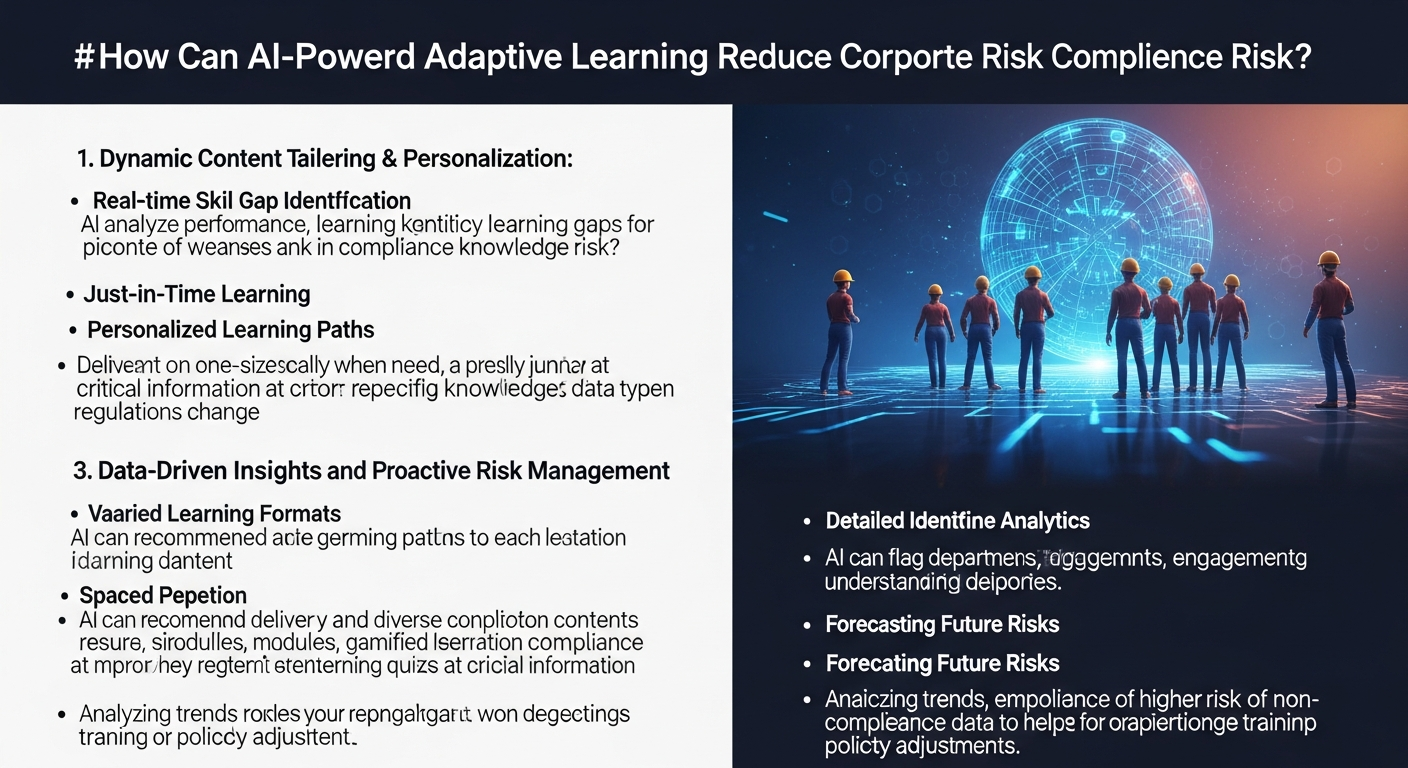
How Can AI-Powered Adaptive Learning Reduce Corporate Compliance Risk?
In today's complex corporate landscape, compliance is no longer just a regulatory obligation; it's a strategic imperative. The ever-evolving maze of laws, industry standards, and internal policies poses a formidable challenge for organizations across all sectors – from Banking and Finance to Healthcare and Manufacturing. For L&D leaders, ensuring every employee not only understands but also consistently adheres to these critical guidelines is a monumental task. Traditional, one-size-fits-all training often falls short, leading to disengagement, poor knowledge retention, and, most critically, increased corporate compliance risk. This is where AI-powered adaptive learning emerges as a game-changer, offering a transformative approach to significantly mitigate these risks.
The Compliance Landscape: A Growing Challenge
The stakes for non-compliance are higher than ever. Penalties range from crippling fines and legal action to severe reputational damage and loss of customer trust. Industries such as Pharma, Oil and Gas, and Retail face sector-specific regulations alongside universal mandates like data privacy (e.g., GDPR, CCPA) and anti-corruption laws. The sheer volume and intricacy of these rules mean that a generic compliance training program, even within a robust learning management system (LMS), can quickly become outdated, irrelevant, and ineffective. Employees often view compliance training as a tedious, mandatory exercise, which results in superficial engagement rather than deep understanding and behavioral change. L&D professionals need a solution that goes beyond mere content delivery to foster true competence and reduce the probability of human error.
What is AI-Powered Adaptive Learning?
At its heart, Adaptive Learning leverages artificial intelligence to personalize the educational journey for each individual learner. Unlike static courses, an adaptive system continuously assesses an employee's existing knowledge, learning style, and performance, dynamically adjusting the content, pace, and difficulty. It identifies knowledge gaps and areas of strength, providing targeted instruction where it's most needed and allowing learners to bypass redundant information. This intelligent personalization ensures that training is highly relevant, engaging, and efficient, optimizing learning outcomes. By delivering concise, focused content often through a Microlearning LMS, it ensures maximum retention and application of critical compliance information.
How AI Transforms Compliance Training
Integrating AI into compliance training fundamentally shifts how organizations manage and mitigate risk:
- Personalized Learning Paths: AI algorithms analyze individual learner data to create bespoke training paths. This means employees only spend time on the specific regulations and policies relevant to their role and areas where they lack proficiency, making training far more efficient and effective.
- Real-time Performance Monitoring: AI-driven platforms continuously track learner progress, engagement, and comprehension. This provides L&D leaders with immediate, granular insights into individual and team-wide understanding, enabling timely interventions and support.
- Predictive Analytics for Risk Mitigation: By analyzing performance data, completion rates, and historical incident reports, AI can identify patterns and predict potential areas of non-compliance risk within the workforce. This empowers L&D teams to deploy Risk-focused Training proactively, addressing vulnerabilities before they lead to breaches.
- Automated Content Updates: The regulatory landscape is constantly shifting. AI can assist in rapidly updating existing compliance modules or even generating new content. An AI Powered Authoring Tool dramatically reduces the time and resources required to keep training current, ensuring employees are always informed of the latest mandates.
- Scalability and Efficiency: For large enterprises in industries like Hospitality or Mining, an enterprise learning management system powered by AI can efficiently deliver consistent, high-quality compliance training to thousands of employees across diverse regions and roles, often facilitated by a cloud based learning management system.
How does intelligent learning technology specifically help organizations reduce their legal vulnerabilities?
Intelligent learning technology systematically diminishes legal vulnerabilities by ensuring a deep, personalized understanding of compliance requirements across the workforce. Rather than simply delivering static information, these systems analyze individual comprehension, pinpointing areas where an employee might be at higher risk of misunderstanding or non-compliance. Through adaptive pathways, the system provides targeted remediation, reinforcing critical concepts until mastery is achieved. This minimizes the chance of errors stemming from ignorance or misunderstanding. Furthermore, by providing granular data on each employee’s proficiency, organizations can demonstrate verifiable due diligence to regulators, proving that robust, measurable training efforts are in place. This shift from completion-based metrics to competency-based outcomes is crucial for mitigating potential legal challenges.
In which industries, or across what regions, is AI-driven compliance education proving most impactful today?
AI-driven compliance education is demonstrating significant impact across a broad spectrum of industries, particularly those characterized by complex regulatory frameworks and high-stakes operations. In sectors like Banking, Finance, and Insurance, where anti-money laundering (AML), Know Your Customer (KYC), and data privacy regulations are paramount, AI ensures employees are consistently updated and thoroughly tested on intricate policies. In Healthcare and Pharma, it’s vital for adherence to HIPAA, FDA regulations, and ethical guidelines, where errors can have life-threatening consequences. Even in dynamic fields like Sales and Hospitality, where safety protocols and data security are critical, AI's ability to deliver relevant, timely, and engaging content is invaluable. Geographically, its adoption is surging globally, as organizations recognize the universal need for effective compliance across diverse regulatory environments, from North America and Europe to Asia and beyond.
What advanced capabilities does smart learning offer to make corporate compliance programs more proactive and less reactive?
Smart learning platforms empower corporate compliance programs to transition from a reactive "fix-it" approach to a proactive "prevent-it" strategy. Beyond personalized training, these systems offer advanced capabilities such as predictive analytics that can identify emerging compliance risks based on historical data, employee performance trends, and external regulatory changes. By correlating learning data with operational metrics, the lms learning management system can highlight potential weak points in advance, allowing L&D teams to deploy preventative training. Furthermore, sophisticated intelligent learning platforms, often leveraging an LCMS, facilitate continuous learning, delivering just-in-time refreshers and alerts as regulations evolve. They can even simulate real-world compliance scenarios, allowing employees to practice decision-making in a safe environment, thereby building muscle memory for compliant behavior before an actual incident occurs. This proactive stance significantly reduces the likelihood of breaches and enhances an organization's overall resilience.
Key Benefits of Implementing AI-Powered Adaptive Learning for Compliance
- Reduced Human Error: By directly addressing individual knowledge gaps and reinforcing critical information, AI significantly minimizes the likelihood of employees making costly compliance mistakes.
- Improved Engagement and Retention: Personalized, relevant, and interactive training, often enhanced by Gamified LMS features, dramatically increases learner engagement and improves long-term knowledge retention compared to traditional methods.
- Cost Savings: Streamlined training processes, reduced time-to-competency, and a significant decrease in compliance penalties translate into substantial financial savings for the organization.
- Demonstrable Compliance: Detailed analytics provide irrefutable evidence of robust and effective training efforts, which is invaluable during audits and regulatory scrutiny.
- Enhanced Agility: AI enables organizations to respond quickly to regulatory changes, ensuring training content is always up-to-date and employees are informed without delay.
Choosing the Right Platform for Your Compliance Strategy
For L&D professionals seeking to harness the power of AI for compliance, selecting the right technology partner is paramount. Look for a robust learning management software or learning content management system that not only offers AI-powered adaptive capabilities but also integrates features like microlearning for digestible content and comprehensive analytics. A platform like MaxLearn LMS, which emphasizes intelligent, personalized learning, can be a game-changer for your compliance strategy. When evaluating learning management solutions, prioritize those that offer a truly intelligent and adaptive learning experience, not just generic online courses.
Conclusion
The era of generic, ineffective compliance training is rapidly drawing to a close. AI-powered adaptive learning represents a paradigm shift, offering L&D leaders a powerful tool to not only meet regulatory obligations but to transform compliance into a strategic advantage. By personalizing the learning journey, predicting risks, and ensuring continuous competence, organizations can significantly reduce their corporate compliance risk, protect their reputation, and foster a culture of integrity. Embracing this technology isn't just about staying compliant; it's about future-proofing your business in an increasingly complex and regulated world. It's time for L&D leaders to explore how intelligent adaptive learning can elevate their organization's compliance posture and drive sustainable growth.
.jpg)


