

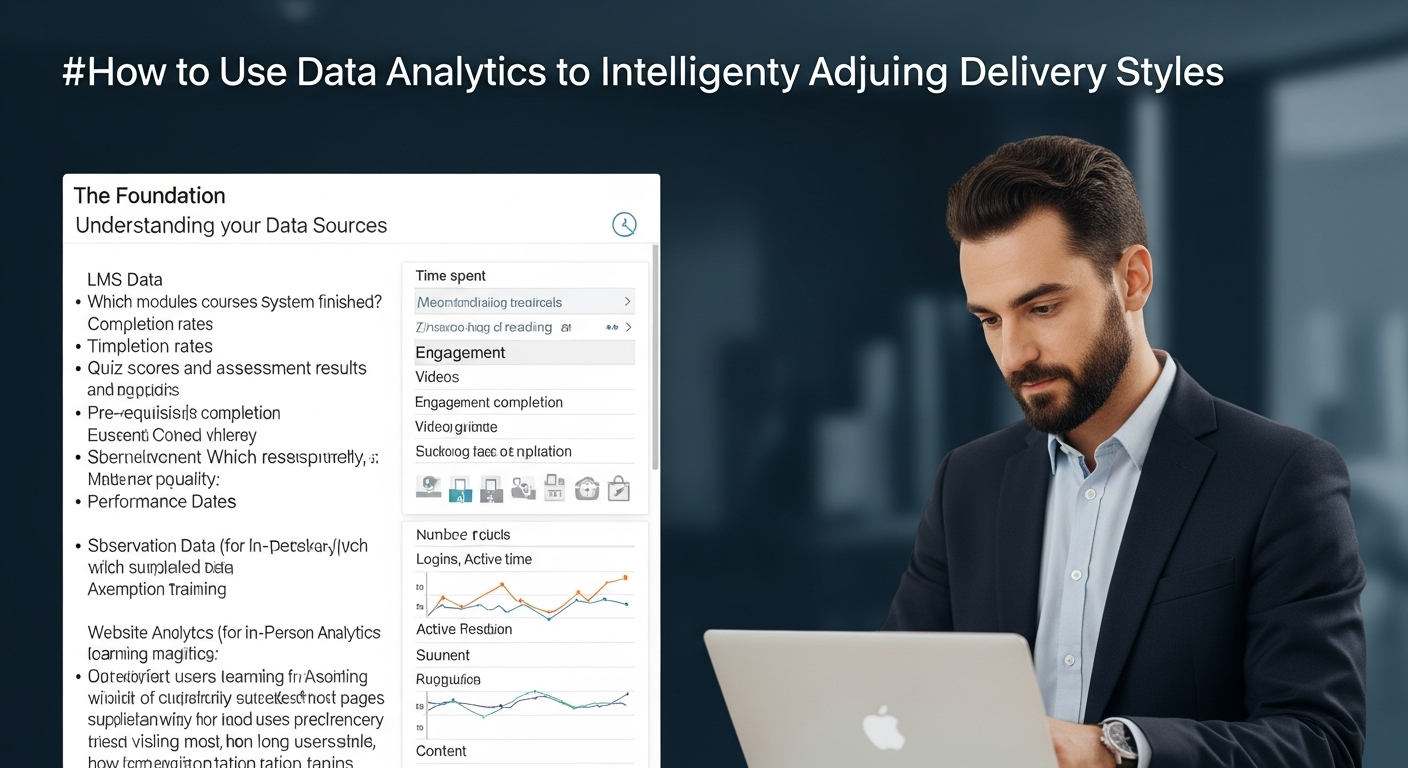
How to Use Data Analytics to Intelligently Adjust Training Delivery Styles
In today's fast-evolving corporate landscape, the effectiveness of employee training is paramount. For Vice Presidents, Directors, and Managers of Learning & Development, ensuring that training not only imparts knowledge but also drives tangible performance improvements is a continuous challenge. The traditional "one-size-fits-all" approach to training delivery is increasingly inefficient. Enter data analytics – a powerful tool that transforms L&D from a reactive function into a proactive, strategic powerhouse. By harnessing data, L&D leaders can move beyond guesswork, intelligently fine-tuning delivery styles to meet diverse learner needs across industries like Compliance, Sales, Banking, Finance, Insurance, Retail, Pharma, Healthcare, Hospitality, Oil and Gas, and Mining.
The Imperative of Data-Driven Training
Why Traditional Approaches Fall Short
Conventional training methods often rely on anecdotal feedback, outdated surveys, or simply replicating past programs. This can lead to:
- Low engagement and completion rates
- Ineffective knowledge transfer, particularly in complex areas like compliance or specialized sales techniques.
- Misaligned learning objectives with actual business needs.
- Wasted resources on irrelevant or redundant content.
- Inability to adapt quickly to new market demands or regulatory changes.
The Power of Analytics in L&D
Data analytics provides the empirical evidence needed to understand what truly works for your learners. It allows L&D teams to identify patterns, predict outcomes, and make informed decisions about content, format, and delivery. A robust learning management system (LMS) is the foundation for collecting and analyzing this crucial data, transforming raw information into strategic insights.
Key Data Points for Optimizing Training Delivery
To intelligently adjust training, L&D professionals need to focus on specific data types collected through their LMS or learning content management system (LCMS). These include:
- Engagement Metrics: Track learner activity within courses – time spent on modules, number of interactions, participation in discussions, and frequency of logins. High engagement correlates with better learning outcomes. For instance, if a sales team in the banking sector consistently drops off during lengthy product training videos, it signals a need for shorter, more interactive segments.
- Performance Data: Analyze assessment scores, simulation results, and real-world performance indicators (e.g., sales conversion rates post-training, compliance adherence statistics). This data directly links training to business impact, allowing for Risk-focused Training adjustments where necessary.
- Completion Rates and Time: Understand how many learners complete courses and how long it takes them. Low completion rates for mandatory compliance training or health and safety modules in the oil and gas industry might indicate content that is too dense or inaccessible.
- Feedback and Sentiment Analysis: Go beyond simple surveys. Utilize AI-driven tools to analyze open-ended feedback, comments, and even social learning interactions to gauge learner sentiment and pinpoint specific areas for improvement. Are hospitality staff finding the new customer service training practical, or too theoretical?
Translating Data into Actionable Adjustments
Personalizing Learning Paths
Data can reveal diverse learning preferences and knowledge gaps across your workforce. An Adaptive Learning approach, powered by analytics, ensures that content adjusts to individual progress and needs. For example, new hires in finance might need foundational modules, while experienced professionals require advanced, specialized training. This can be effectively managed by an enterprise learning management system.
Optimizing Content Formats
If data shows low engagement with long-form text, consider pivoting to video tutorials, interactive simulations, or Microlearning LMS modules. For a retail workforce with limited training time, short, bite-sized content delivered on a mobile-friendly cloud based learning management system can significantly boost uptake and retention.
Enhancing Engagement with Interactivity
Boredom is the enemy of learning. Data on drop-off points or low quiz scores can indicate a need for more interactive elements. Integrating gamification, as seen in a Gamified LMS, can transform mundane topics – like regulatory compliance in pharmaceuticals – into engaging experiences, driving higher completion rates and better retention.
Addressing Performance Gaps Strategically
When analytics highlight specific areas where employees struggle, L&D can deploy targeted interventions. For example, if data from sales training reveals a consistent weakness in handling objections, supplementary micro-modules or coaching sessions can be automatically recommended to those who need it most, leveraging the capabilities of a comprehensive learning management software.
Leveraging AI for Content Creation and Curation
The role of artificial intelligence in L&D is rapidly expanding. An AI Powered Authoring Tool can analyze existing content, suggest improvements, and even generate new content variations based on learner data, ensuring content remains relevant and engaging. This significantly streamlines the process of updating course materials, especially for rapidly changing fields like technology in banking or product knowledge in pharma.
AI-Driven Insights for L&D Leaders
What types of data can artificial intelligence help us analyze in L&D?
Artificial intelligence can process vast datasets that human analysts might miss. It excels at analyzing structured data like test scores, completion rates, and learning paths, identifying correlations and predicting trends. Beyond that, AI can perform sophisticated sentiment analysis on unstructured data from learner feedback, forum discussions, and even video interactions. It can identify patterns in engagement, pinpoint areas of confusion, and reveal the most effective content formats and delivery methods, significantly enhancing your learning management system's capabilities.
How can artificial intelligence predict future training needs for our workforce?
By integrating L&D data with HR and business performance metrics, AI can forecast skill gaps. For instance, if a company plans to expand into new markets or adopt new technologies, AI can analyze current employee skills, project future requirements, and recommend proactive training programs. It can also identify emerging trends in job roles within specific industries (e.g., new types of digital transformation roles in banking or sustainable practices in mining) and suggest relevant learning management solutions to prepare the workforce, ensuring your enterprise learning management strategy remains future-proof.
Where can artificial intelligence enhance the personalization of learning experiences across diverse teams or regions?
AI can significantly tailor learning by understanding individual and group contexts. For diverse teams, such as a global sales force, AI can recommend content based on geographical nuances, cultural preferences, or specific market conditions. For example, a sales training module might be localized with relevant case studies for a team in Asia versus North America. It can also adapt content based on job role, prior experience, and even preferred learning times, optimizing the delivery for maximum impact across a dispersed workforce, all facilitated by an advanced lms learning management system like MaxLearn LMS.
Implementing a Data-Driven Learning Management System
To fully leverage data analytics, L&D leaders need a robust LMS at the core of their strategy. A modern learning management system should not just deliver content; it must be a comprehensive data collection and analysis engine. Look for a learning management software that offers intuitive dashboards, advanced reporting, and seamless integration with other HR systems. A cloud based learning management system provides scalability and accessibility, making it easier to deploy data-driven training across an entire organization, regardless of size or industry. For a holistic approach, an integrated LCMS and enterprise learning management solution like MaxLearn LMS offers the tools necessary to create, manage, deliver, and analyze learning effectively, providing powerful learning management solutions.
Conclusion
The era of guesswork in L&D is over. By embracing data analytics, L&D Vice Presidents, Directors, and Managers can transform their training programs into highly effective, dynamic, and responsive systems. This strategic shift not only optimizes learning outcomes and enhances employee performance but also positions L&D as a critical driver of business success. Invest in the right LMS and the analytical capabilities it offers, and empower your organization to adapt, innovate, and thrive in an ever-changing world.
.jpg)


