

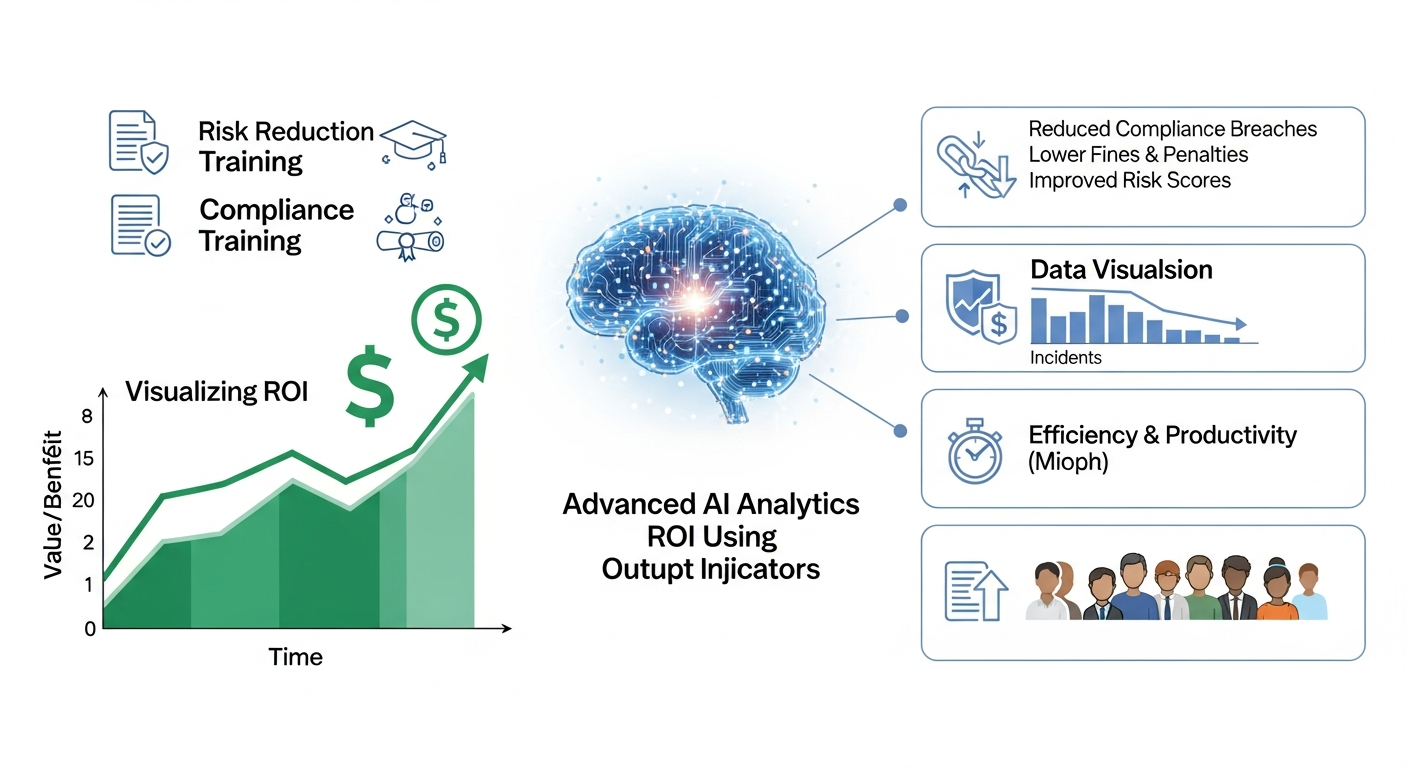
How to Measure Compliance Training ROI using Advanced AI Analytics
For Vice Presidents, Directors, and Senior Managers in Learning & Development, the challenge of demonstrating Return on Investment (ROI) for compliance training has long been a complex endeavor. Unlike sales or product training, where direct revenue impact is often clearer, compliance initiatives are primarily designed to mitigate risk, avoid penalties, and foster a culture of integrity. Quantifying the value of averted disaster, improved ethical behavior, or enhanced regulatory adherence can feel like chasing an elusive target. However, in an era defined by data and advanced technology, a transformative solution has emerged: Artificial Intelligence (AI) analytics.
This article explores how L&D leaders can leverage sophisticated AI tools to move beyond simple completion rates, uncovering profound insights into the true impact and value of their compliance training programs across various sectors like Sales, Banking, Finance, Insurance, Retail, Pharma, Healthcare, Hospitality, Oil and Gas, and Mining.
The Elusive ROI of Compliance Training: A Traditional Conundrum
Historically, measuring the effectiveness of compliance training relied on a combination of basic metrics and qualitative assessments. Completion rates, pass/fail scores, and post-training surveys provided some indication of participation and comprehension. However, these traditional methods fall short in providing a comprehensive understanding of how training translates into real-world behavior change, reduced incidents, or mitigated financial and reputational risks.
The core difficulty lies in the nature of compliance itself: it's about prevention. How do you measure something that didn't happen? Without robust data and analytical capabilities, L&D teams struggle to connect training initiatives directly to a reduction in legal infractions, audit failures, or employee misconduct. This often leaves compliance training budgets vulnerable to scrutiny, making it difficult to advocate for necessary resources or prove strategic value to the executive board. Furthermore, the sheer volume and evolving nature of regulations necessitate continuous, adaptive training, making efficient, effective, and measurable solutions crucial for any enterprise learning management strategy.
Ushering in a New Era: AI's Role in Compliance Measurement
AI analytics is revolutionizing the way organizations approach compliance training ROI. By processing vast amounts of structured and unstructured data, AI can identify patterns, predict outcomes, and provide actionable insights that traditional methods simply cannot. This shifts the paradigm from reactive reporting to proactive, data-driven strategy, enabling L&D leaders to fine-tune their programs for maximum impact and demonstrate tangible value.
AI-Powered Insights: Beyond Completion Rates
Advanced AI analytics allow L&D professionals to delve deeper into the effectiveness of their compliance programs, focusing on behavioral change and risk mitigation rather than mere attendance. Here’s how:
- Predictive Analytics for Risk Identification: AI models can analyze historical data from incident reports, audit findings, employee performance reviews, and even geographical data to identify high-risk departments, roles, or individuals most susceptible to compliance breaches. This allows for targeted, Risk-focused Training interventions, optimizing resources and preempting potential issues.
- Personalized Learning Paths and Performance Correlation: An AI-powered Microlearning LMS or any advanced learning management software can tailor learning content based on an individual's knowledge gaps, role-specific risks, and learning style. By tracking engagement with Adaptive Learning modules and correlating it with post-training performance and real-world compliance behavior, AI can prove the effectiveness of personalized approaches. This data helps demonstrate a direct link between customized training and improved outcomes.
- Sentiment Analysis and Engagement Metrics: AI can analyze employee feedback, forum discussions, and survey responses to gauge sentiment around compliance training. Combined with engagement metrics from a Gamified LMS, L&D can understand what resonates with learners, identify areas of confusion or resistance, and measure the overall cultural impact of training. This holistic view provides insights into learner motivation and comprehension.
- Automated Content Optimization: Using an AI Powered Authoring Tool, training content can be dynamically updated and optimized based on performance data. AI can identify which sections of a module are least effective, where learners consistently struggle, or which scenarios yield the best application of knowledge. This ensures that training content is always relevant, impactful, and up-to-date with evolving regulations.
Unlocking Deeper Understanding: AI Questions & Answers for L&D Leaders
Leaders are increasingly looking to technology for answers to complex organizational challenges. Here’s how an intelligent analytics system can provide critical insights into compliance training effectiveness:
Question: How can an intelligent system predict potential compliance breaches before they occur?
Answer: An intelligent system utilizes predictive modeling by ingesting vast datasets, including past incident reports, audit outcomes, employee training scores, and even external regulatory changes. By identifying complex correlations and subtle anomalies within this data – such as a consistent decline in test scores in a specific department coupled with an increase in minor policy violations – the system can flag high-risk areas or individuals. This proactive identification allows L&D to deploy targeted interventions or refresher training before a minor issue escalates into a significant breach, directly reducing the cost of non-compliance.
Question: What are the most impactful analytical methods for assessing compliance training effectiveness across diverse global teams?
Answer: For global organizations, intelligent analytics can employ cross-cultural comparative analysis. By normalizing data across different regions, considering local regulatory nuances, and leveraging Adaptive Learning principles, the system can pinpoint training modules that perform exceptionally well in specific geographies versus those that consistently underperform. This allows L&D to understand regional effectiveness, identify best practices, and tailor content and delivery methods to maximize impact globally, ensuring consistent compliance standards while respecting local contexts.
Question: How does AI help in understanding employee sentiment and engagement with mandatory training modules?
Answer: Through natural language processing (NLP) and sentiment analysis, AI can analyze open-ended feedback, comments in a Gamified LMS forum, and survey responses to quantify the emotional tone and overall sentiment towards training. It can identify recurring themes of frustration, confusion, or enthusiasm. When combined with granular engagement metrics – such as time spent on specific sections, participation in interactive elements, and frequency of revisits – L&D can gain a nuanced understanding of employee receptiveness, pinpoint content areas that bore or confuse, and ultimately design more engaging and effective compliance experiences.
Question: Can AI identify which specific training modules effectively reduce particular types of organizational risk?
Answer: Absolutely. An intelligent analytics platform can perform deep dives into the correlation between specific training module completions and subsequent reductions in related risk incidents. For example, if a company observes a decrease in data privacy breaches after a particular data security module, AI can quantify this relationship. By performing causality analysis on diverse data points – from quiz scores and simulated scenario performance to actual incident data and audit findings – the system can identify which Risk-focused Training modules offer the highest ROI in mitigating specific organizational risks. This allows for strategic investment in the most impactful training content.
Implementing AI for Measurable Compliance ROI: A Roadmap
Adopting AI analytics for compliance training ROI is a strategic move that requires careful planning. Here’s a roadmap for L&D leaders:
- Define Clear Objectives & Metrics: Before implementing any solution, articulate what success looks like. Is it reducing fines by X%, decreasing incident rates by Y%, or improving audit scores by Z points? Align these with business objectives.
- Leverage Robust Data Sources: AI is only as good as the data it consumes. Integrate data from your existing LMS, HRIS, incident management systems, audit reports, and even external regulatory databases. A comprehensive learning content management system that integrates various data points is key.
- Invest in AI-Ready Platforms: Choose a learning management system (LMS) or cloud based learning management system that comes equipped with advanced AI analytics capabilities, like MaxLearn LMS. Look for platforms that offer robust data integration, machine learning algorithms, and intuitive dashboards for your enterprise learning management needs. These platforms, often referred to as learning management solutions or LCMS, are essential for modern organizations.
- Start Small, Scale Up: Begin with a pilot program in a specific department or for a particular compliance area. Demonstrate initial successes, gather feedback, and refine your approach before rolling out across the entire organization.
- Continuously Iterate and Refine: AI models improve with more data. Regularly review the insights generated, adjust your training programs accordingly, and continuously feed new data back into the system to enhance its predictive power and accuracy.
The Future is Clear: Strategic Compliance with AI
For L&D Vice Presidents, Directors, and Managers, the era of guesswork in compliance training ROI is drawing to a close. Advanced AI analytics offer an unparalleled opportunity to transform compliance from a necessary cost center into a strategic asset. By embracing these intelligent solutions, you can proactively identify risks, optimize training effectiveness, demonstrate tangible value, and confidently lead your organization towards a more compliant and resilient future. The ability to measure the true impact of your learning management solutions will not only secure budgets but also elevate the strategic importance of your L&D function within the enterprise.
.jpg)


