

How to Create Personalized Compliance Learning Paths for High-Risk Employee Roles
Compliance training often feels like a checkbox exercise, especially in industries laden with intricate regulations. For employees in high-risk roles—be it financial traders, healthcare professionals, oil rig operators, or pharmaceutical researchers—the stakes are exceptionally high. A single misstep can lead to catastrophic financial penalties, severe reputational damage, or even endanger lives. The traditional "one-size-fits-all" approach to compliance learning is no longer sufficient. What's needed is a more nuanced, targeted strategy: personalized compliance learning paths. This article will guide L&D leaders through the crucial steps of designing and implementing bespoke training programs that genuinely mitigate risk and foster a culture of unwavering adherence.
Why Personalization Matters for High-Risk Roles
In environments where regulatory landscapes are constantly shifting, and the consequences of non-compliance are severe, generic training falls short. High-risk roles often demand specialized knowledge that goes beyond general compliance guidelines. A frontline bank teller's compliance needs differ vastly from a derivatives trader's, just as a retail associate's requirements vary from a supply chain manager's. Moreover, individuals learn at different paces and through various modalities. Personalization addresses these discrepancies head-on, delivering highly relevant and engaging content precisely when and how it's needed. This targeted approach not only enhances comprehension and retention but also transforms compliance from a burdensome obligation into a proactive safeguard.
Key Pillars of Personalized Compliance Learning Paths
Risk Assessment and Role Mapping
The foundation of any personalized path is a thorough understanding of organizational risks and how they intersect with specific job functions. This involves detailed mapping of roles, responsibilities, and the regulatory frameworks that apply to each. It’s about identifying which employees are exposed to what specific compliance risks.
Content Tailoring and Delivery
Once risks are identified, content must be adapted. This means breaking down complex regulations into digestible modules, often leveraging Microlearning LMS principles. Integrating Adaptive Learning techniques ensures that the content adjusts to the learner's proficiency and knowledge gaps. Interactive exercises, simulations, and real-world case studies, sometimes delivered through a Gamified LMS, can further enhance engagement and practical application.
Technology as an Enabler
A robust LMS (Learning Management System) is indispensable. Modern learning management software goes beyond simple content delivery; it facilitates the creation, deployment, and tracking of intricate learning paths. An enterprise learning management solution, particularly a cloud based learning management system, offers scalability and accessibility crucial for large organizations across industries like banking, healthcare, or oil and gas. A comprehensive learning management system that doubles as a Learning content management system (LCMS) is ideal for managing the vast array of compliance materials. MaxLearn LMS is an example of such a comprehensive platform.
Designing Your Personalized Learning Path: A Step-by-Step Guide
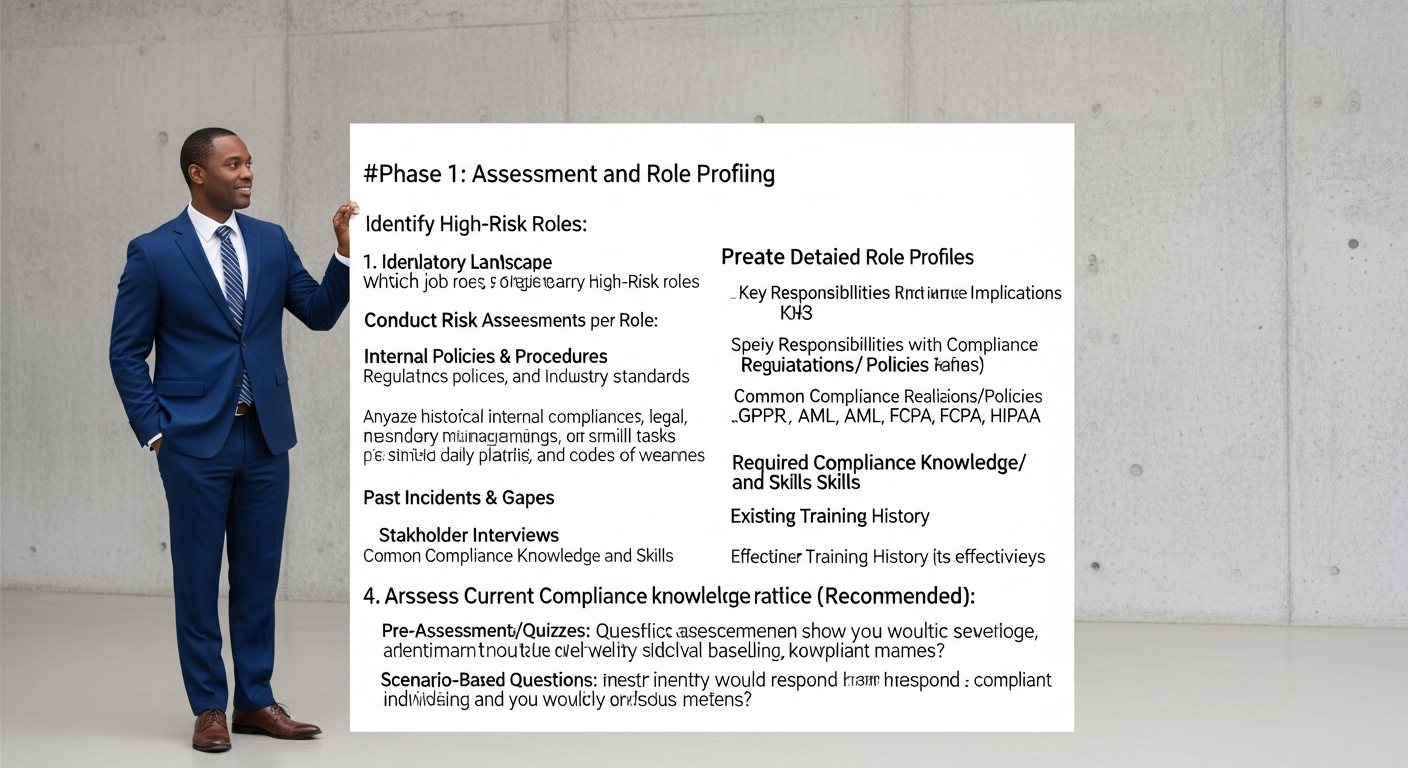
Step 1: Define Your Risk Landscape
Conduct a comprehensive risk assessment across all departments and roles. What are the specific regulatory requirements for each job function or team? Identify potential areas of non-compliance, their associated impact, and the relevant regulations (e.g., GDPR, HIPAA, SOX, anti-money laundering laws, industry-specific safety protocols). This forms the blueprint for your Risk-focused Training.
Step 2: Profile Your High-Risk Employees
Understand your employees' existing knowledge, learning preferences, and job-specific responsibilities. This includes assessing prior training, performance data, and individual learning styles. This deep profiling informs the customization of learning pathways, ensuring relevance and effectiveness.
Step 3: Curate Relevant Content
Develop or acquire high-quality, targeted content that directly addresses identified risks and roles. Consider using an AI Powered Authoring Tool to streamline content creation, ensure it's up-to-date with evolving regulations, and easily adaptable. This includes creating microlearning modules that focus on critical risk areas, breaking down complex topics into digestible units.
Step 4: Implement Adaptive Learning Pathways
Design learning paths where employees progress based on their performance and needs. For instance, if an employee struggles with a specific regulatory concept, the system can automatically assign additional resources, remedial modules, or different learning modalities. This is the essence of Adaptive Learning, ensuring that training is never redundant but always targeted.
Step 5: Leverage Technology for Delivery and Tracking
A sophisticated learning management software platform is crucial. Look for a Microlearning LMS that supports personalized pathways, detailed progress tracking, and robust reporting to demonstrate compliance. A Gamified LMS can also significantly boost engagement, turning compliance into an interactive and rewarding experience. A modern lms learning management system provides the flexible framework necessary for such dynamic training.
Step 6: Continuous Evaluation and Iteration
Compliance is not static. Regularly review and update learning paths based on new regulations, internal audit findings, incident reports, and employee feedback. This continuous improvement cycle ensures your Risk-focused Training remains effective, relevant, and aligned with the dynamic regulatory environment. Leverage data analytics from your learning management solutions to identify areas for improvement.
AI in Action: Answering Your Critical Questions
How can artificial intelligence help ensure my compliance content is discoverable and impactful for learners searching for specific answers?
AI-driven semantic search capabilities within a learning platform can ensure that when employees query for specific compliance information – perhaps regarding a particular transaction type, a new data privacy regulation, or an ethical dilemma – they are instantly presented with the most relevant, context-specific learning modules or policy documents. This goes beyond simple keyword matching; it understands the intent behind the query, prioritizing information that directly answers their immediate need and optimizing content relevance and accessibility. This intelligent retrieval helps employees find critical information quickly, reducing response times and the potential for errors.
What role does generative artificial intelligence play in rapidly creating and customizing learning modules for diverse compliance scenarios?
Generative AI can significantly accelerate the development of compliance learning content. It can analyze vast amounts of existing regulations, legal texts, internal policies, and real-world case studies to automatically draft new microlearning modules, quizzes, interactive scenarios, and simulations. For instance, if a new regulation impacting financial reporting is introduced, generative AI can quickly produce customized training content for different levels of finance personnel, from entry-level clerks to senior auditors. This drastically reduces the manual effort and time required for content creation, ensuring training is current and tailored to every role's specific needs.
How can an AI-driven platform continuously optimize learning paths for individual employees based on their performance and evolving risks?
An intelligent learning management system utilizes AI to analyze each employee's learning history, assessment results, on-the-job performance data, and even real-time regulatory updates. Based on this continuous stream of data, the platform can dynamically adjust an individual's compliance learning path. If an employee consistently performs well in certain areas but shows gaps in others, the AI will recommend targeted remedial modules, different instructional methods, or advanced training. Similarly, as new risks emerge or regulations change, the system can proactively assign relevant updates, ensuring each employee's knowledge remains current and precisely aligned with their evolving risk profile and organizational needs. This proactive, data-driven optimization ensures maximum effectiveness of the training effort and supports a truly adaptive learning experience.
Conclusion
Creating personalized compliance learning paths for high-risk employee roles is no longer a luxury but a strategic imperative. It's about moving beyond rote memorization to true comprehension and application, fostering a workforce that instinctively makes the right, compliant decisions. By understanding your risks, leveraging tailored content, and harnessing the power of an advanced learning management system, you can transform your compliance training from a reactive necessity into a proactive competitive advantage. Embrace this evolution, and empower your high-risk employees across finance, healthcare, retail, and other demanding sectors to navigate complex regulatory landscapes with confidence and competence.
.jpg)


