

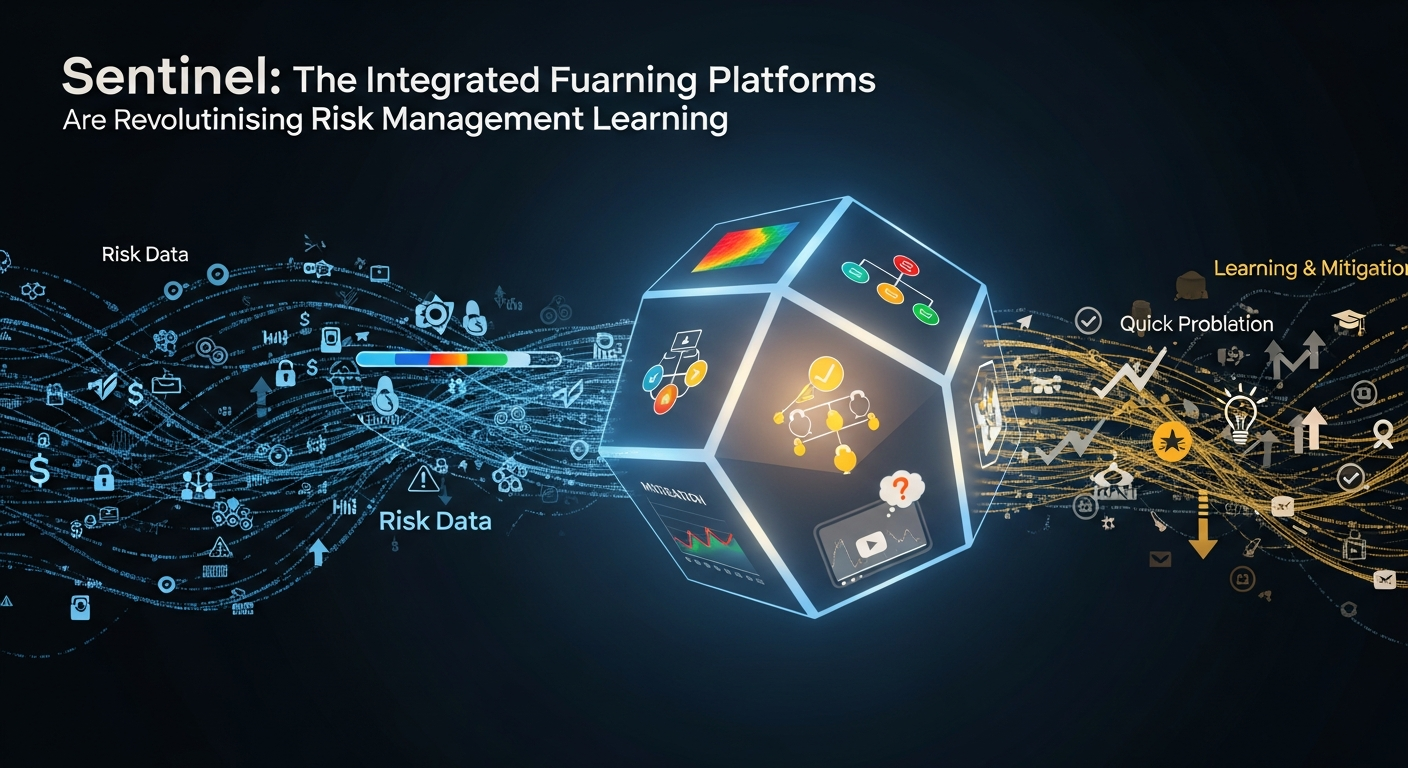
How Next-Gen Microlearning Platforms Are Revolutionizing Enterprise Risk Management
In an era defined by rapid technological advancement and an ever-shifting global landscape, enterprise risk management (ERM) is no longer a static compliance checklist; it's a dynamic, critical function for organizational resilience and growth. For Vice Presidents, Directors, and Senior Managers in Learning & Development, the challenge is clear: how do we effectively equip our diverse workforce across industries like Compliance, Sales, Banking, Finance, Insurance, Retail, Pharma, Health care, Hospitality, Oil and Gas, and Mining with the agile knowledge and skills needed to navigate complex risks? The answer lies in the transformative power of next-generation microlearning platforms.
Traditional, lengthy training modules often fall short in delivering timely, relevant, and engaging risk education. They struggle to keep pace with evolving threats – from cybersecurity breaches and regulatory changes to operational disruptions and financial market volatility. This is where modern learning solutions step in, offering a paradigm shift in how enterprises approach risk awareness and mitigation. By leveraging cutting-edge technology, these platforms are not just improving training; they are fundamentally reshaping ERM for the better.
The Evolving Landscape of Enterprise Risk
Businesses today face an unprecedented array of risks. Digital transformation brings both opportunity and the threat of cyber-attacks. Global interconnectedness means geopolitical events can have immediate financial repercussions. Stricter regulatory frameworks demand continuous compliance updates, while a heightened focus on ESG (Environmental, Social, Governance) factors introduces new ethical and reputational risks. The sheer volume and complexity of these challenges necessitate a workforce that is not only aware but also proactive in identifying and managing potential threats.
Conventional training methods, often characterized by infrequent, long-form courses, struggle to instill this level of continuous vigilance. Employees are overwhelmed with information, retention rates are low, and the learning often occurs too late to be truly impactful. This inefficiency creates significant gaps in an organization's risk defense, making a strong case for a more agile, accessible, and integrated approach to learning.
Microlearning: The Agility ERM Demands
At its core, microlearning delivers focused, bite-sized content designed to achieve specific learning outcomes in a short timeframe – typically 3-7 minutes. For ERM, this means breaking down complex policies, procedures, and threat scenarios into manageable, digestible chunks. Instead of a two-hour annual compliance module, employees receive short, targeted updates on a new data privacy regulation, a revised anti-money laundering protocol, or a specific cybersecurity threat, precisely when and where it's most relevant.
The benefits are immediate: increased engagement, improved knowledge retention, and the flexibility for employees to learn at their own pace, on their preferred devices, without disrupting their workflows. This agility is precisely what ERM requires to stay ahead of dynamic risks.
Next-Gen Platforms: Beyond Basic Microlearning
While microlearning itself is powerful, next-generation platforms elevate its impact through advanced features and intelligent design. These aren't just content delivery systems; they are sophisticated ecosystems for continuous risk education.
Personalized Learning Paths
One of the most significant advancements is the ability to tailor learning experiences. Through Adaptive Learning, these platforms assess an individual's existing knowledge, role-specific risk exposure, and past performance, then deliver content precisely addressing their unique gaps. A finance manager might receive modules on market risk and regulatory compliance, while a healthcare professional focuses on patient data privacy and ethical guidelines. This personalized approach ensures maximum relevance and efficiency, eliminating the "one-size-fits-all" frustration common with traditional training.
Engaging & Memorable Experiences
Critical information, especially in risk management, needs to stick. Next-gen platforms leverage Gamified LMS elements – points, badges, leaderboards, and interactive simulations – to transform otherwise dry compliance topics into engaging experiences. This not only boosts learner motivation but also significantly improves knowledge retention, making employees more likely to recall and apply risk mitigation strategies in real-world scenarios. Imagine a phishing simulation that feels like a game, reinforcing best practices without the heavy-handedness of a lecture.
Real-time Relevance with Dynamic Content
The pace of change in risk environments demands that training content be updated rapidly and consistently. Platforms equipped with an AI Powered Authoring Tool enable L&D teams to create, modify, and deploy new microlearning modules with unprecedented speed. This capability ensures that employees are always learning from the most current information regarding new threats, policy updates, or regulatory shifts, making Risk-focused Training truly agile and responsive.
Data-Driven Insights for Proactive Management
Beyond content delivery, these platforms provide robust analytics. L&D leaders can track completion rates, comprehension scores, engagement levels, and even identify common areas of misunderstanding across departments or the entire enterprise. This data is invaluable for pinpointing systemic weaknesses, demonstrating compliance to auditors, and proactively refining Risk-focused Training strategies to address emerging gaps before they become critical incidents.
Addressing Key Challenges with Modern Learning
Leaders frequently ask how advanced technologies can be harnessed for better risk education. Let's explore some common inquiries:
How can intelligent systems enhance risk management training effectiveness?
Intelligent learning systems, often powered by sophisticated algorithms, enhance training effectiveness by personalizing content delivery, identifying individual and collective knowledge gaps in real-time, and recommending targeted interventions. They can analyze learner performance to predict areas of potential risk non-compliance, enabling proactive educational support. This ensures that every employee receives the most relevant training, precisely when they need it, maximizing impact and minimizing wasted learning effort.
What are the benefits of integrating smart learning programs into corporate compliance initiatives?
Integrating smart learning programs into corporate compliance initiatives yields numerous benefits, including improved compliance rates, a significant reduction in risk-related incidents, and enhanced audit readiness. These systems ensure that all employees are consistently updated on the latest regulations through dynamic, easily consumable content. The data analytics capabilities provide irrefutable proof of training completion and comprehension, simplifying regulatory reporting and demonstrating a strong culture of compliance to external auditors and stakeholders. This proactive approach helps avoid costly fines and reputational damage.
How do advanced learning solutions assist in developing a robust risk-aware culture across global enterprises?
Advanced learning solutions foster a robust risk-aware culture across global enterprises by providing consistent, high-quality messaging that can be easily localized for different regions and languages. They offer continuous reinforcement of risk principles through varied micro-interactions, moving beyond one-off training events. By making learning accessible and engaging, these platforms embed risk consciousness into the daily workflow, turning every employee into an active participant in risk mitigation. This widespread engagement helps democratize risk ownership, ensuring that understanding and managing risks become an integral part of everyone's job, regardless of their geographical location or specific role.
Key Benefits for L&D Leaders
For L&D professionals, adopting a next-gen Microlearning LMS offers strategic advantages:
- Operational Efficiency: Automate training delivery, tracking, and reporting, freeing up valuable L&D time for strategic initiatives rather than administrative tasks.
- Measurable Impact: Easily demonstrate the ROI of risk training through comprehensive analytics on knowledge gain, behavioral shifts, and compliance adherence.
- Future-Proofing: Stay ahead of the curve by quickly adapting training content to new regulatory requirements and emerging risks, ensuring organizational resilience.
- Employee Empowerment: Cultivate a highly engaged, risk-aware workforce that feels empowered to identify and report potential risks, transforming them into a proactive defense line.
- Seamless Integration: Many advanced platforms, like the MaxLearn LMS, are designed to integrate smoothly with existing HRIS, CRM, or other enterprise systems, ensuring a cohesive learning ecosystem.
Choosing the Right Platform
When evaluating next-gen learning platforms for your ERM strategy, consider solutions that offer not just microlearning capabilities but also a comprehensive suite of features. Look for a robust learning management system (LMS) or learning content management system (LCMS) that emphasizes scalability, intuitive user experience, deep analytics, and strong integration capabilities. A true enterprise learning management solution should provide a cloud based learning management system infrastructure to ensure accessibility and reliability. Whether you call it learning management software, learning management solutions, or simply an lms learning management system, its core purpose is to elevate your organization's ability to manage risk through superior education.
Next-gen microlearning platforms are more than just a training tool; they are a strategic asset in revolutionizing enterprise risk management. By delivering targeted, engaging, and data-driven learning experiences, they empower organizations across all industries to build a truly risk-aware culture, ensuring resilience, compliance, and sustained growth in an increasingly complex world. For L&D leaders ready to drive impactful change, embracing these innovative solutions is the clear path forward.
.jpg)


