

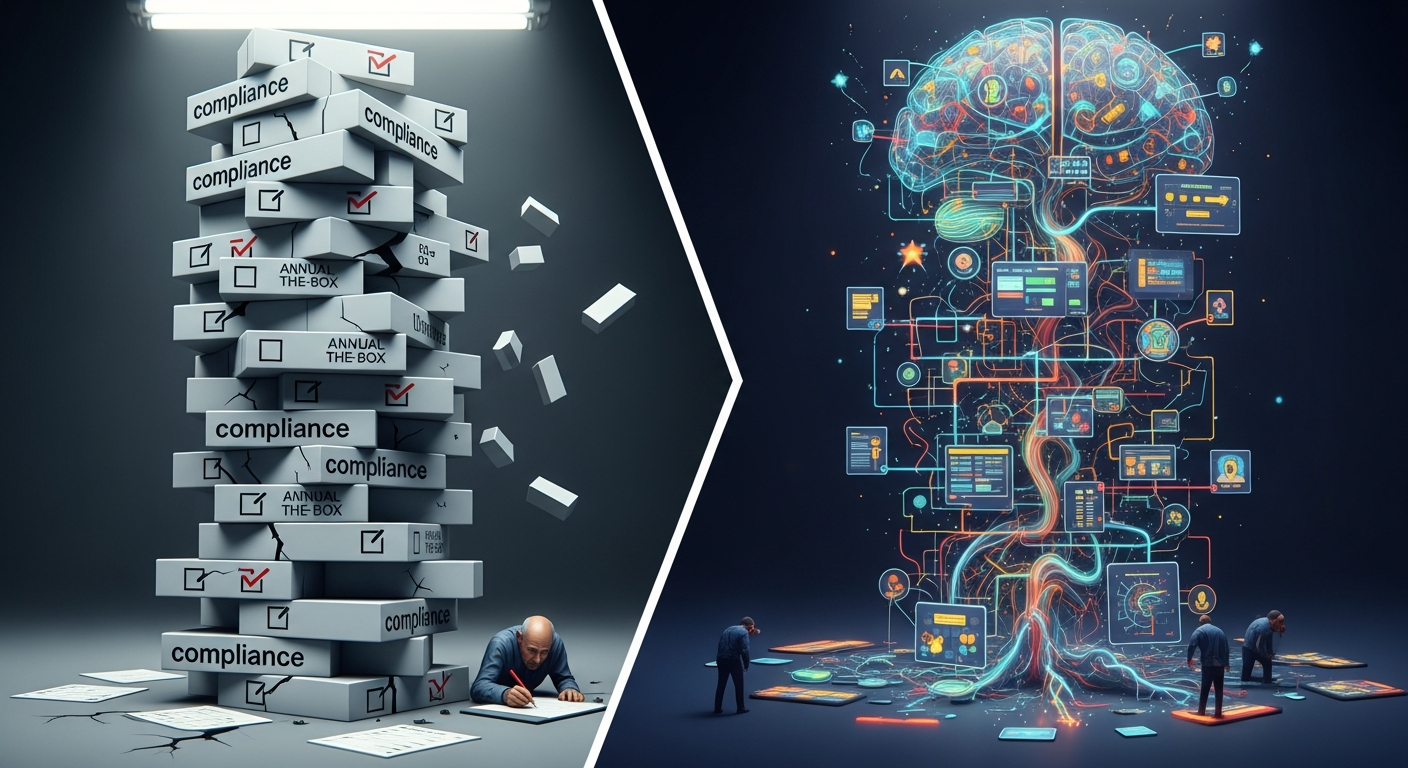
The Death of annual 'Tick-the-Box' Compliance: Why Continuous Learning Is Winning
For too long, compliance training has been viewed as a necessary evil – an annual, cumbersome ritual designed more to satisfy regulatory bodies than to genuinely embed knowledge or foster a culture of ethical conduct. The infamous "tick-the-box" approach, characterized by lengthy, generic courses and infrequent assessments, is not just inefficient; it's a dangerous liability in today's rapidly evolving business landscape. As Vice Presidents, Directors, and Senior Managers in L&D across industries like Banking, Pharma, Retail, and Oil & Gas know, the stakes have never been higher. Regulations change daily, risks multiply, and a passive approach to compliance is no longer sustainable. The good news? A powerful shift is underway: continuous learning is not just an alternative; it's the winning strategy.
The Flaws of the "Tick-the-Box" Mentality
The traditional compliance model, often delivered through an outdated learning management system, suffers from fundamental flaws that undermine its very purpose. It creates a false sense of security while leaving organizations vulnerable.
Lack of Engagement and Retention
Imagine sitting through hours of generic slides, dense text, and abstract scenarios that bear little resemblance to your daily work. This is the reality of annual compliance for many employees. This approach leads to abysmal engagement rates and, more critically, poor knowledge retention. Information consumed once a year is quickly forgotten, especially if it's not immediately applicable. This means critical compliance guidelines, data privacy protocols, or anti-money laundering procedures might not be top-of-mind when they truly matter, exposing the organization to significant legal and financial risks.
Outdated Information in a Dynamic World
The pace of change in regulatory environments is relentless. New data protection laws emerge, financial regulations are updated, and industry-specific mandates are constantly revised. An annual training cycle simply cannot keep up. By the time employees complete their mandatory training, some of the information might already be obsolete. This lag creates dangerous knowledge gaps, leaving employees ill-equipped to navigate current compliance requirements and potentially leading to inadvertent non-compliance.
Missed Opportunities for Proactive Risk Management
A reactive, event-driven approach to compliance, where training only occurs after an incident or regulatory update, is inherently inefficient. It fails to leverage learning as a tool for proactive risk mitigation. Without continuous reinforcement and real-time updates, organizations lose the opportunity to identify and address emerging risks before they escalate. This reactive stance often leads to costly fines, reputational damage, and a breakdown of trust with customers and stakeholders.
The Rise of Continuous Learning in Compliance
The transition from a static, event-based model to a dynamic, continuous learning framework is not merely an upgrade; it's a strategic imperative. Modern approaches, powered by sophisticated learning content management system technologies, transform compliance from a burden into a competitive advantage.
From Passive Consumption to Active Engagement
Continuous learning re-engages learners by breaking down complex topics into digestible, relevant chunks. This is where a Microlearning LMS shines, delivering bite-sized modules that can be consumed on demand, fitting seamlessly into an employee's workflow. This approach respects their time and cognitive load, making learning more palatable and effective. When combined with a Gamified LMS, compliance training becomes interactive, challenging, and even enjoyable, fostering active participation and deeper understanding rather than passive absorption.
Agility in the Face of Evolving Regulations
A continuous learning ecosystem, often supported by a cloud based learning management system, allows organizations to be agile. As soon as a new regulation or policy update is announced, relevant microlearning modules can be rapidly deployed to targeted employee groups. This ensures that the workforce is always operating with the most current information, significantly reducing the risk of non-compliance. This real-time adaptability is crucial for industries like Finance, Insurance, and Healthcare, where regulatory landscapes are in constant flux.
Data-Driven Insights for Enhanced Oversight
Modern learning management software provides invaluable data analytics capabilities. L&D professionals can track engagement, completion rates, knowledge retention, and even identify specific areas where employees struggle. This data empowers managers to make informed decisions, tailor interventions, and demonstrate compliance effectiveness to auditors and regulators with concrete evidence. This level of insight transforms compliance from a guesswork exercise into a data-driven strategy.
Leveraging Advanced Technology for Continuous Compliance
The power of continuous compliance learning is amplified significantly by cutting-edge educational technologies. These tools move beyond simple course delivery, offering intelligent, personalized, and efficient solutions.
Personalized Pathways with Adaptive Methodologies
One of the greatest advancements is the ability to personalize the learning journey. Adaptive Learning platforms dynamically adjust the content and pace based on an individual's prior knowledge, role, and performance. An employee in a sales role will receive highly specific training on ethical sales practices and anti-bribery regulations, while a finance professional will focus on financial crime compliance. This ensures relevance, reduces redundant training, and makes every learning moment impactful.
Intelligent Content Creation
Developing engaging and up-to-date compliance content can be resource-intensive. However, an AI Powered Authoring Tool dramatically streamlines this process. These tools can assist in generating scenarios, suggesting relevant examples, and even creating assessment questions, ensuring content is always fresh, engaging, and aligned with current regulations. This not only saves time and cost for L&D teams but also ensures a consistent quality of learning materials across the enterprise learning management system.
Proactive Identification of Knowledge Gaps
Traditional learning management solutions often reveal knowledge gaps only after a failed assessment. With modern MaxLearn LMS, however, advanced analytics can predict potential areas of weakness based on learning patterns, engagement metrics, and even interactions within the platform. This allows for Risk-focused Training interventions to be deployed proactively, addressing potential compliance vulnerabilities before they manifest as actual incidents. This shift from reactive to proactive is a game-changer for overall organizational risk management.
In the context of these advancements, L&D leaders often ask pressing questions:
-
How can intelligent systems help us understand compliance knowledge across our global workforce?
Advanced data analytics embedded within modern learning management system platforms can process vast amounts of learning data from diverse geographic locations and departments. By analyzing performance metrics, completion rates, and assessment results, these systems can pinpoint specific regions or business units where compliance understanding is lagging. This allows L&D teams to deploy highly targeted, localized interventions, ensuring a consistent level of compliance understanding regardless of an employee's location or primary language. This granular insight helps organizations ensure global adherence to standards and mitigate localized risks effectively.
-
How can smart platforms ensure our compliance training is always relevant to individual roles?
Through sophisticated machine learning algorithms, modern learning management software can analyze an employee's job function, historical learning patterns, performance data, and even their interactions with internal systems. Based on this rich dataset, the platform can automatically curate and deliver compliance modules that are hyper-relevant to their specific responsibilities and potential exposure to risk. For instance, a procurement manager would receive training focused on anti-corruption in supply chains, while a customer service representative would focus on data privacy protocols. This personalization ensures that every minute spent on compliance training is directly applicable and impactful, boosting both engagement and retention.
-
How do advanced algorithms optimize our learning content for maximum impact and retention?
Contemporary authoring tools and LCMS platforms leverage sophisticated algorithms to continually analyze how learners interact with content. These systems can identify which formats (e.g., video, interactive simulation, text), duration, and assessment types yield the best engagement and knowledge retention outcomes. Based on these insights, the platforms can recommend or even automatically adapt content delivery methods, suggesting modifications to existing modules or highlighting areas where new, more effective content could be created. This iterative optimization process ensures that compliance learning materials are always designed for peak effectiveness, making complex topics easier to grasp and remember.
The Business Case for Continuous Compliance Learning
The argument for moving to a continuous compliance learning model extends far beyond simply avoiding fines. It's about building a resilient, ethical, and high-performing organization:
- Reduced Risk Exposure: Proactive, up-to-date training significantly lowers the likelihood of compliance breaches.
- Enhanced Ethical Culture: Regular reinforcement of values and policies fosters a stronger, more ethical workplace environment.
- Improved Employee Performance: Employees who understand regulations are more confident and efficient in their roles.
- Cost Efficiency: While initial investment in advanced learning management system technology is required, the long-term cost savings from reduced fines, streamlined training, and improved productivity are substantial.
- Reputational Safeguard: A strong compliance posture protects brand reputation and maintains stakeholder trust.
Conclusion
The era of "tick-the-box" compliance is unequivocally over. It's a relic ill-suited for the complexities and demands of modern business. For L&D leaders across every major industry, embracing continuous learning, powered by intelligent and adaptive technology, is not just a trend; it's a fundamental shift towards more effective risk management, enhanced organizational ethics, and sustainable business growth. The future of compliance isn't about annual checkboxes; it's about a continuous journey of learning, adapting, and thriving.
.jpg)


