

Is Gamification Effective in Compliance Training? A Data-Driven Breakdown
For many organizations, compliance training is a critical yet often dreaded annual ritual. The necessary evil of regulations and policies can translate into tedious, unengaging learning experiences, leading to low employee retention and questionable effectiveness. In an era where engagement is paramount to learning success, the concept of gamification has emerged as a potential savior. But beyond the buzz, is gamification truly effective in transforming compliance training? This article delves into the data to provide a clear, evidence-based answer for L&D leaders.
What is Gamification in Compliance Training?
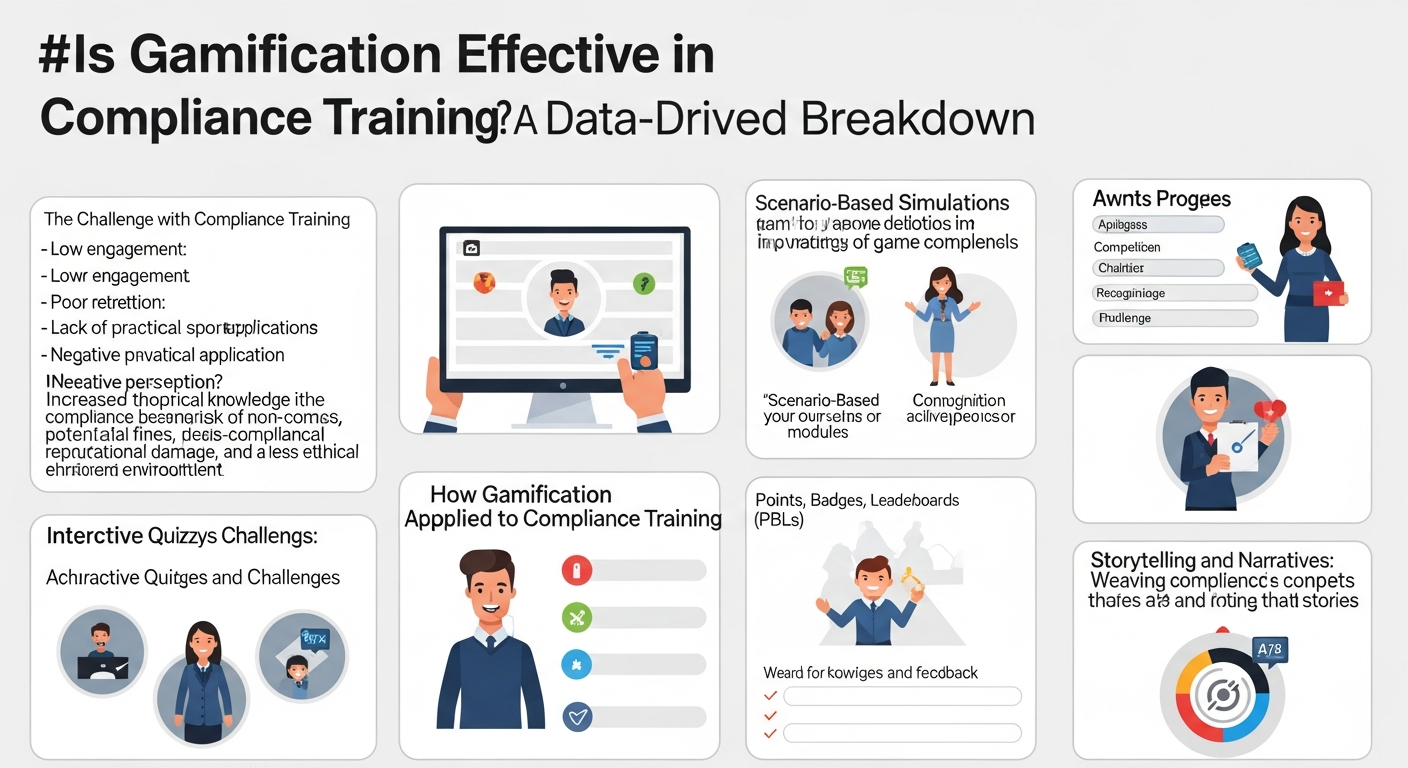
Gamification is the strategic application of game-design elements and game principles in non-game contexts. When applied to compliance training, it means transforming dry, regulatory material into an interactive, challenging, and often rewarding experience. This can involve:
- Points and scoring systems to track progress and effort.
- Badges and virtual rewards for completing modules or mastering topics.
- Leaderboards that foster healthy competition among peers or teams.
- Levels and progression paths that guide learners through increasing complexity.
- Interactive scenarios, quizzes, and simulations that mimic real-world compliance dilemmas.
- Storytelling and narrative elements that make the learning journey more immersive.
The goal isn't just to make learning "fun" but to leverage inherent human motivators like achievement, competition, collaboration, and immediate feedback to drive deeper engagement and more effective learning outcomes.
The Persistent Challenges of Traditional Compliance Training
Before assessing gamification's impact, it's crucial to acknowledge the inherent shortcomings of conventional compliance training methods:
Low Engagement and Motivation: Employees often view compliance training as a mandatory chore, leading to passive participation and minimal effort. The dry, text-heavy nature of many programs fails to capture attention.
Poor Knowledge Retention: Without active engagement and practical application, information from traditional modules is quickly forgotten. This creates a dangerous knowledge gap where critical compliance details are lost.
Difficulty Measuring Impact: Beyond completion rates, traditional methods struggle to provide tangible data on whether training actually changes behavior or reduces risk. This leaves L&D teams guessing about ROI.
Negative Perception: The perceived burden of compliance training can foster resentment and disinterest, undermining its very purpose.
These challenges highlight the urgent need for innovative approaches to ensure that compliance training is not just completed, but truly understood and applied.
How Gamification Addresses These Challenges: A Data-Driven Perspective
Modern Gamified LMS solutions are demonstrating measurable improvements in key areas:
Increased Engagement Rates
Studies consistently show that gamified learning experiences lead to significantly higher engagement. Learners are more likely to actively participate, spend more time on modules, and willingly return for further interaction. For instance, reports often indicate a jump in completion rates by 50% or more, with active participation increasing by over 60%. The interactive nature, coupled with rewards and social recognition, transforms a passive experience into an active pursuit.
Improved Knowledge Retention
Gamification leverages principles of cognitive science to boost memory and recall. By introducing challenges, quizzes, and scenarios, learners are forced to actively retrieve information rather than passively absorb it. Immediate feedback reinforces correct answers and corrects misconceptions on the spot. This active learning environment, often supported by Adaptive Learning algorithms, leads to significantly better long-term retention compared to traditional methods. Data shows that retention rates can improve by 30-50% in gamified programs.
Enhanced Behavioral Change and Application
The ultimate goal of compliance training is to influence behavior. Gamified simulations and role-playing scenarios allow employees to practice decision-making in a safe environment. By experiencing the consequences of choices (within the game), they develop a deeper understanding of the "why" behind compliance rules. This experiential learning, particularly through Risk-focused Training scenarios, translates into more compliant actions in real-world situations. Metrics can track decision quality within simulations, offering valuable insights into preparedness.
Richer Data and Analytics
One of the most powerful aspects of gamification within a robust Microlearning LMS is the wealth of data it generates. Unlike simple completion records, gamified platforms track:
- Individual learner progress and performance.
- Time spent on specific challenges or topics.
- Common areas of struggle or incorrect answers.
- Engagement with different game mechanics.
This granular data provides L&D professionals with actionable insights, allowing them to identify weaknesses, refine content, and tailor future training initiatives for maximum impact. Such detailed analytics are invaluable for demonstrating the ROI of compliance programs.
Key Elements of Successful Gamified Compliance Training
Implementing gamification isn't a silver bullet; its success hinges on strategic design:
Clear Learning Objectives: Every game element must serve a specific learning goal. Gamification is a tool, not an end in itself.
Meaningful Challenges & Rewards: Challenges should be relevant to real-world compliance scenarios, and rewards should be perceived as valuable, whether intrinsic (sense of accomplishment) or extrinsic (points, badges).
Balanced Difficulty: The game should be challenging enough to prevent boredom but not so difficult as to cause frustration.
Timely Feedback: Immediate and constructive feedback is crucial for guiding learners and reinforcing correct understanding.
Integration with Microlearning: Breaking down complex compliance topics into short, digestible Microlearning LMS modules works exceptionally well with gamified approaches, maintaining engagement and preventing cognitive overload.
Intelligent Insights for Future-Proof Compliance Training
As L&D leaders look to the future, sophisticated technologies offer even greater potential for gamified compliance training:
How can intelligent systems personalize gamified compliance experiences for diverse workforces?
Advanced platforms, often leveraging an AI Powered Authoring Tool, can analyze an individual's past performance, job role, geographical location, and learning preferences to dynamically adapt the gamified experience. This means tailoring scenarios, adjusting the difficulty of challenges, and even varying the types of rewards to resonate more deeply with each learner. The system can identify knowledge gaps and automatically serve up targeted mini-games or modules, ensuring a truly personalized and efficient learning path.
What role does advanced technology play in making compliance training universally engaging across different regions and cultures?
Sophisticated analytical engines can evaluate engagement metrics across different cultural groups and geographic locations. By identifying which game mechanics, narratives, or reward structures resonate most effectively in specific regions, the technology allows L&D teams to localize and optimize gamified content. This ensures that the training is not only compliant with local regulations but also culturally relevant and intrinsically motivating for a global workforce, improving overall effectiveness and adoption.
How can sophisticated analytical tools anticipate potential compliance risks based on learning data?
Beyond tracking individual progress, advanced analytical capabilities within a robust learning management system can identify collective trends. For example, if a significant percentage of employees consistently struggle with specific compliance scenarios in a gamified module, it flags a potential organizational vulnerability. These predictive insights allow L&D and compliance officers to proactively address emerging risks through targeted interventions, additional training, or policy clarification, moving from reactive to proactive risk management.
Real-World Impact and Future Outlook
The data unequivocally supports the efficacy of gamification in compliance training. Businesses across various sectors—from banking and finance to healthcare and oil & gas—are seeing tangible benefits: higher engagement, improved knowledge retention, better application of compliance principles, and a more positive attitude towards mandatory training. The integration of gamification with Gamified LMS solutions and emerging technologies like AI and adaptive learning promises an even more dynamic and effective future for compliance education. It transforms a traditional burden into a strategic asset for business growth and risk mitigation.
Conclusion
Gamification is not merely a trend but a powerful, data-backed strategy for revolutionizing compliance training. By understanding its core principles and implementing them thoughtfully within a modern learning framework, L&D leaders can transform mundane obligations into engaging, effective, and measurable learning experiences. Embrace the power of the game, and watch your organization's compliance culture, knowledge, and adherence soar. Explore how a modern Gamified LMS can elevate your compliance programs from merely satisfactory to truly exceptional.
.jpg)


