

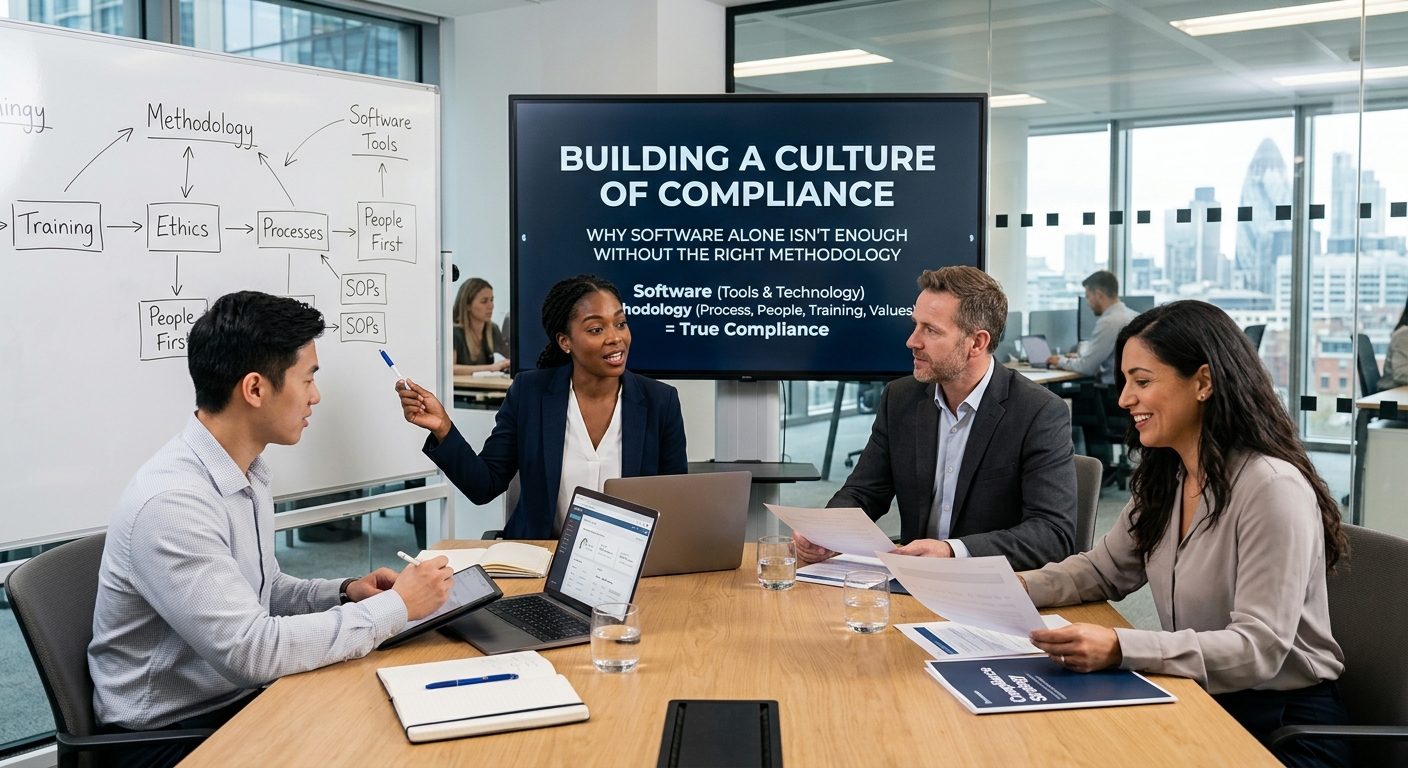
Building a Culture of Compliance: Why Software Alone Isn’t Enough Without the Right Methodology
In today's intricate and rapidly evolving business landscape, compliance isn't just a regulatory checkbox; it's a cornerstone of organizational integrity, risk mitigation, and sustainable growth. For L&D leaders across industries—from Banking and Finance to Pharma, Healthcare, Retail, and even Oil and Gas—the challenge of cultivating a robust culture of compliance is paramount. Many organizations invest heavily in sophisticated compliance software and cutting-edge learning management solutions, expecting these powerful tools to single-handedly solve their compliance woes. While technology undoubtedly plays a crucial role, the stark reality is that software, no matter how advanced, is merely an enabler. Without a strategic, well-defined methodology underpinning its implementation, even the best Microlearning LMS can fall short of fostering true behavioral change and a deeply embedded culture of compliance.
The Digital Transformation of Compliance Training
The journey towards modern compliance training has been significantly shaped by digital transformation. Gone are the days of binders full of policies and tedious, infrequent classroom sessions. Today, a robust learning management system (LMS) is expected to deliver engaging, accessible, and trackable training experiences. A cloud based learning management system offers unparalleled flexibility, scalability, and ease of deployment, allowing organizations to reach a global workforce with critical compliance updates and educational modules. These systems often come equipped with features designed to streamline course delivery, manage user progress, and generate comprehensive reports.
The Promise of Compliance Software
- Efficiency: Automating assignments, tracking completions, and generating reports saves countless hours for L&D and compliance teams.
- Accessibility: Employees can access training modules anytime, anywhere, fostering a more flexible learning environment.
- Consistency: Ensures every employee receives the same, standardized information, reducing variations in understanding.
- Scalability: Easily scales to accommodate a growing workforce or expanded compliance requirements across different segments like sales or operations.
However, the existence of these features doesn't automatically translate into effective learning or cultural change. The best learning content management system might host world-class content, but if that content isn't designed to resonate or the delivery method isn't optimal, its impact will be minimal.
Beyond the Tools: The Indispensable Role of Methodology
The effectiveness of your compliance training hinges not just on the software you use, but on the instructional design principles and strategic approach you employ. A true culture of compliance is built on understanding, internalization, and consistent application of ethical and regulatory standards, which requires more than just making information available.
Understanding Your Audience: A Foundational Step
One of the biggest pitfalls in compliance training is the "one-size-fits-all" approach. Employees in different roles, departments, or geographical locations (e.g., frontline retail staff vs. back-office finance teams) have distinct compliance risks and learning needs. A methodology that prioritizes learner analysis is crucial. This is where Adaptive Learning becomes indispensable, tailoring content pathways based on pre-assessments, role, prior knowledge, and performance data. It ensures that training is relevant, preventing cognitive overload and improving retention.
Engaging Content Delivery: More Than Just Information
Compliance topics can often be perceived as dry or complex. A strong methodology focuses on making learning engaging and memorable. Instead of lengthy, text-heavy modules, consider:
- Microlearning: Delivering information in short, digestible bursts makes it easier to consume and retain. A dedicated Microlearning LMS is specifically designed for this purpose, fitting learning into the flow of work.
- Gamification: Incorporating game-like elements such as points, badges, leaderboards, and interactive challenges can significantly boost learner engagement and motivation. A Gamified LMS transforms mundane training into an interactive experience.
- Real-world Scenarios: Presenting compliance dilemmas through case studies, simulations, and interactive role-playing helps employees understand the practical implications of their actions and develop critical decision-making skills.
This approach moves beyond simply presenting rules to fostering a deeper understanding of 'why' compliance matters and 'how' it applies to their daily tasks, whether in a hospital setting or a mining operation.
Measuring Impact, Not Just Completion
A common metric in compliance training is completion rates. While important, a high completion rate doesn't guarantee understanding or behavior change. A robust methodology includes mechanisms for assessing true learning and behavioral application. This often involves scenario-based assessments, post-training surveys, and observable performance indicators. Organizations should move towards Risk-focused Training, which not only educates on regulations but also directly addresses specific organizational risks, measuring the reduction in incidents or improvements in adherence. This strategic lens transforms training from an obligation into a key driver for business resilience and growth, relevant for any enterprise learning management strategy.
Integrating AI for Smarter Compliance Education
The advent of Artificial Intelligence offers powerful new avenues for enhancing compliance training methodologies, moving beyond traditional learning management software capabilities. AI can revolutionize how we create, deliver, and assess compliance education, making it more personal, predictive, and efficient.
How can Artificial Intelligence personalize compliance training?
AI algorithms can analyze vast amounts of data, including a learner's role, historical performance, departmental risks, and even geographic location (for multi-national operations). This analysis allows for the dynamic generation and recommendation of highly personalized learning paths. Imagine a system where an AI-driven engine identifies that an employee in a specific region or department frequently struggles with data privacy regulations. It could then automatically assign supplementary Adaptive Learning modules or provide contextualized scenarios, ensuring the most relevant and impactful training is delivered at the right time. This level of personalization far surpasses generic compliance courses, ensuring every learner receives training precisely tailored to their needs and risk exposure.
Can AI help predict compliance risks within an organization?
Absolutely. By leveraging predictive analytics, AI can scrutinize operational data, incident reports, audit findings, and even employee feedback trends to identify potential compliance vulnerabilities before they escalate. For instance, AI could flag a consistent pattern of minor non-compliance incidents in a particular team or branch within the retail or hospitality sector, indicating a systemic issue rather than isolated mistakes. This intelligence can then proactively inform the L&D department about specific areas requiring intensified training interventions or policy clarifications. This proactive, data-driven approach allows for targeted interventions, transforming compliance from a reactive response to a proactive risk management strategy, making your enterprise learning management more strategic.
How does AI enhance the efficiency of compliance content creation and updates?
Creating and maintaining up-to-date compliance content is a monumental task, especially with frequently changing regulations across sectors like finance or healthcare. An AI Powered Authoring Tool can dramatically streamline this process. AI can assist by:
- Automatically flagging regulatory changes and suggesting content updates.
- Generating initial drafts of training modules based on policy documents.
- Converting lengthy legal texts into concise, digestible Microlearning LMS snippets.
- Ensuring consistency in terminology and messaging across all training materials within the learning content management system.
This not only reduces the workload on content developers but also ensures that compliance training remains current, accurate, and relevant, strengthening the overall impact of your learning management system (LMS).
Building a Sustainable Culture of Compliance
Ultimately, software and advanced tools are catalysts. The true transformation lies in weaving compliance into the very fabric of your organizational culture. This requires a continuous, multi-faceted approach.
Leadership Buy-in and Continuous Reinforcement
Compliance cannot be seen as an HR or L&D burden; it must be championed from the top down. When senior leadership visibly prioritizes ethical conduct and regulatory adherence, it sends a clear message throughout the organization. Regular communication, town halls, and internal campaigns reinforcing compliance principles are vital. Your lms learning management system should be a hub for this ongoing dialogue.
Feedback Loops and Iterative Improvement
A dynamic culture of compliance thrives on feedback. Employees should feel empowered to report concerns without fear of reprisal. Post-training feedback, anonymous surveys, and incident analysis provide valuable insights to refine training methodologies and content. This iterative process ensures that your compliance program remains agile and responsive to emerging risks and evolving regulatory landscapes, constantly improving your learning management solutions.
The MaxLearn Advantage: Combining Software with Strategy
For organizations seeking to build an unshakeable culture of compliance, the choice of a learning management system (LMS) is critical, but so is the strategic foresight to implement it effectively. A robust MaxLearn LMS, paired with a well-thought-out methodology embracing Adaptive Learning, Microlearning LMS, and Gamified LMS approaches, empowers L&D leaders. It integrates an advanced LCMS for seamless content management and leverages AI Powered Authoring Tool capabilities for efficiency, all while focusing on Risk-focused Training. This combination is how modern organizations achieve not just compliance, but true excellence.
In conclusion, while cutting-edge compliance software provides the essential infrastructure, it is the strategic methodology—deeply informed by learner needs, engaging delivery, continuous measurement, and intelligent automation—that truly transforms compliance from a burdensome obligation into an intrinsic organizational value. For L&D professionals, embracing this holistic approach is key to forging a resilient, ethical, and compliant future.
.jpg)


