

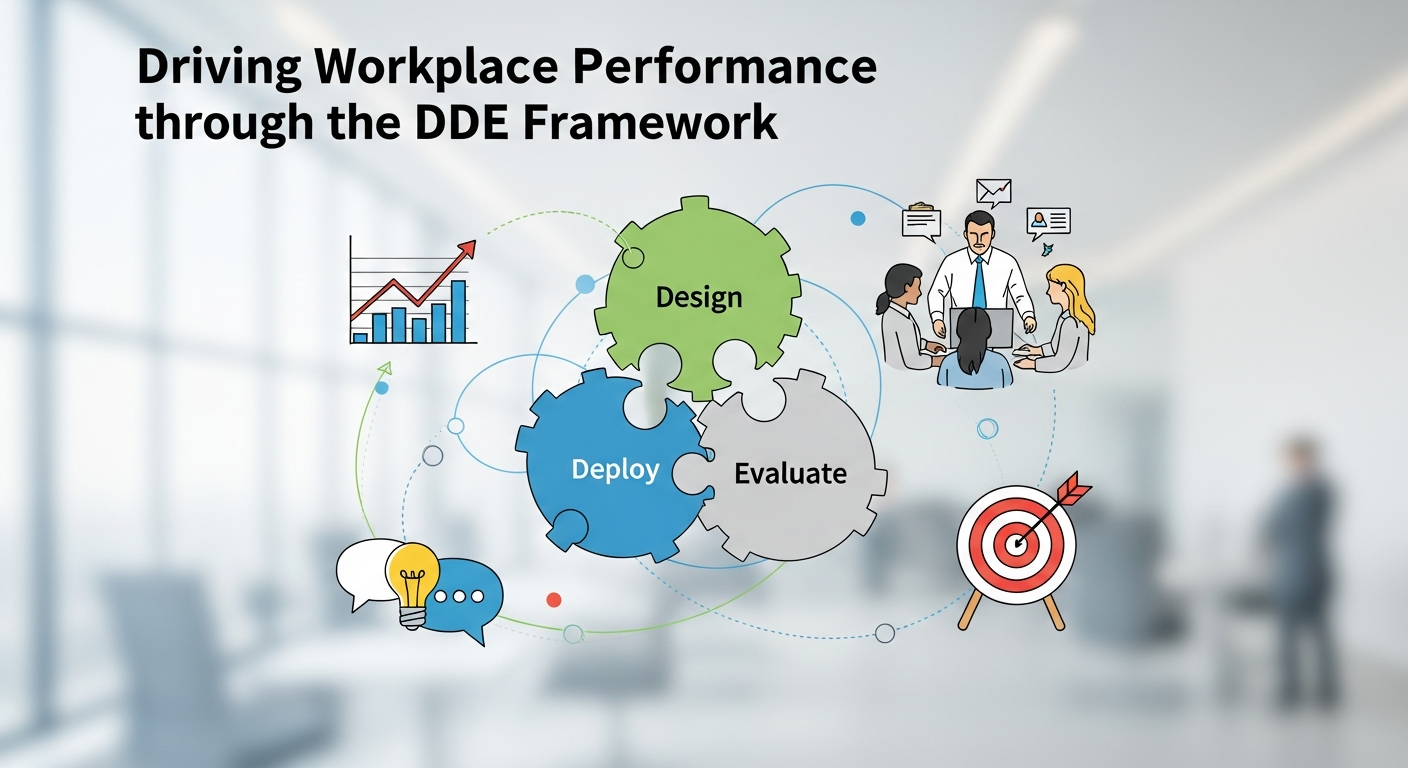
Driving Workplace Performance: A Comprehensive Look at the DDE Framework
In today's fast-paced, ever-evolving corporate landscape, driving optimal workplace performance isn't just a goal—it's a critical imperative for sustained success. Organizations are constantly seeking robust methodologies to empower their workforce, close skill gaps, and foster a culture of continuous improvement. Enter the DDE Framework: Discover, Design, Execute. This comprehensive approach offers L&D leaders a powerful blueprint to strategically enhance capabilities, boost productivity, and deliver measurable business impact. This article will delve into the nuances of the DDE Framework, exploring its phases, benefits, and how modern eLearning technologies and artificial intelligence can supercharge its effectiveness.
What is the DDE Framework?
The DDE Framework is a structured, iterative process designed to systematically address performance challenges and opportunities within an organization. It's an adaptable model that moves beyond traditional training paradigms to focus on holistic performance improvement. Let's break down its three core phases:
The "Discover" Phase: Unearthing Needs and Opportunities
This initial phase is about deep-dive analysis and understanding. It's the diagnostic stage where L&D professionals act as organizational detectives, uncovering the root causes of performance issues or identifying areas ripe for improvement. Key activities include:
- Performance Gap Analysis: Comparing current performance levels against desired outcomes.
- Stakeholder Interviews: Gathering insights from employees, managers, and senior leadership.
- Data Collection: Analyzing existing data such as performance reviews, customer feedback, sales reports, and compliance records.
- Business Goal Alignment: Ensuring that any proposed intervention directly supports strategic organizational objectives.
- Technology Assessment: Understanding current learning tools and their utilization, identifying gaps or underutilized features within an existing Microlearning LMS or LMS.
The output of the Discover phase is a clear, data-backed understanding of the problem or opportunity, along with well-defined performance objectives.
The "Design" Phase: Crafting Strategic Interventions
Once needs are thoroughly understood, the Design phase focuses on creating targeted, effective solutions. This isn't just about designing a training course; it’s about crafting a strategic intervention that addresses the identified gaps. Considerations include:
- Solution Ideation: Brainstorming various interventions, which could range from training programs, process redesigns, technology implementations, or coaching initiatives.
- Content Development: Creating engaging and relevant learning materials. This is where tools like an AI Powered Authoring Tool become invaluable for generating dynamic content efficiently.
- Learning Methodology Selection: Deciding on the most effective delivery methods, such as Adaptive Learning, Gamified LMS modules, blended learning, or instructor-led sessions.
- Measurement Strategy: Defining how success will be measured against the objectives set in the Discover phase.
The outcome is a detailed plan for the intervention, complete with learning objectives, content outlines, delivery methods, and evaluation criteria.
The "Execute" Phase: Implementing and Sustaining Impact
The final phase involves bringing the designed solution to life and ensuring its lasting impact. This is where implementation, monitoring, and continuous improvement take center stage.
- Implementation: Rolling out the intervention, whether it's a new training program delivered via a cloud based learning management system, a process change, or a technology launch.
- Monitoring & Feedback: Continuously tracking progress, collecting feedback from participants, and observing changes in performance. A robust learning management software can provide crucial analytics here.
- Evaluation: Assessing whether the intervention achieved its intended objectives and delivered the desired performance improvements.
- Iteration & Refinement: Using feedback and evaluation data to make necessary adjustments and improvements, ensuring the solution remains relevant and effective over time. This iterative loop back to Discover and Design is crucial for agility.
The Execute phase ensures that investments in performance improvement translate into tangible, sustained business benefits.
Why the DDE Framework Matters for L&D Leaders
For VPs, Directors, and Managers of L&D, the DDE Framework offers several compelling advantages:
- Strategic Alignment: Ensures all L&D initiatives are directly tied to business goals.
- Data-Driven Decision Making: Moves L&D from reactive training requests to proactive, evidence-based solutions.
- Measurable ROI: Provides a clear path to demonstrate the impact of learning on key performance indicators.
- Agility and Adaptability: Its iterative nature allows for continuous adjustment to changing business needs and market conditions.
- Holistic Approach: Addresses performance comprehensively, considering processes, tools, and environment, not just individual knowledge gaps.
Integrating Modern Learning Technologies with DDE
The DDE Framework becomes exponentially more powerful when integrated with cutting-edge learning technologies. A comprehensive learning management system (LMS) or LCMS is the backbone of this integration.
- Discover: An enterprise learning management system can provide rich analytics on course completion, assessment scores, and learner engagement, highlighting potential skill gaps or areas of difficulty for individuals and teams.
- Design: Technologies like Microlearning LMS platforms enable the creation and deployment of bite-sized, on-demand content. Gamified LMS features can boost engagement and motivation. For personalized learning paths, Adaptive Learning technologies are critical.
- Execute: A lms learning management system facilitates seamless delivery of learning content, tracks progress, and allows for continuous assessment. Features within a modern learning management solutions platform enable real-time feedback and easy content updates.
The Role of AI in Supercharging DDE
Artificial intelligence is a game-changer for the DDE Framework, offering unprecedented capabilities for insight, personalization, and efficiency across all phases.
- Discover with AI: AI can analyze vast quantities of data—from HR systems, operational metrics, and external market trends—to predict future skill demands, identify emerging performance bottlenecks, and even highlight potential compliance risks before they materialize.
- Design with AI: AI-powered tools can generate personalized learning recommendations, adapt content difficulty based on learner performance, and even help L&D teams create content more rapidly using an AI Powered Authoring Tool. This ensures highly relevant and engaging learning experiences tailored to individual needs.
- Execute with AI: AI can provide intelligent coaching, offer real-time feedback, and predict performance outcomes based on learning data. It also enhances the effectiveness of Risk-focused Training by identifying individuals or departments most vulnerable to specific risks and proactively pushing targeted interventions.
Let's address some common queries about AI's role in this context:
Question: How can artificial intelligence help us accurately pinpoint evolving skill requirements across global teams?
Answer: AI algorithms can analyze vast datasets from performance reviews, industry trends, and internal communications to identify critical skill gaps and forecast future needs, regardless of geographical distribution. This data feeds directly into the "Discover" phase, ensuring highly relevant program design across all segments and industries.
Question: What methods does intelligent technology offer to ensure training content remains relevant and engaging for a diverse workforce?
Answer: Intelligent systems can dynamically tailor learning paths and content delivery based on individual learner progress, preferences, and performance data. Tools like an Adaptive Learning platform, powered by AI, can recommend specific AI Powered Authoring Tool generated modules, or even suggest Risk-focused Training, ensuring personalized and impactful experiences that keep learners engaged with the most pertinent information.
Question: Can advanced analytics truly measure the practical impact of learning initiatives on business outcomes?
Answer: Absolutely. Advanced analytics, often driven by AI, can connect learning completion rates and assessment scores directly to key performance indicators (KPIs) like sales figures, compliance adherence, or customer satisfaction. This enables L&D leaders to demonstrate tangible ROI and refine their strategies within the "Execute" phase, fostering continuous improvement. A sophisticated Microlearning LMS equipped with such capabilities becomes invaluable.
DDE in Action Across Industries
The DDE Framework is highly versatile and applicable across a multitude of industries:
- Compliance: (Discover) Analyze new regulatory changes and identify knowledge gaps. (Design) Develop targeted Risk-focused Training modules. (Execute) Deploy via a Learning content management system and track adherence, ensuring the organization meets legal requirements.
- Sales: (Discover) Pinpoint specific performance deficiencies in sales cycles. (Design) Create Gamified LMS scenarios or Microlearning LMS paths for objection handling. (Execute) Monitor improved sales figures and customer conversion rates.
- Healthcare: (Discover) Assess gaps in new medical protocol understanding or patient safety procedures. (Design) Craft Adaptive Learning modules for continuous medical education. (Execute) Track reduction in errors and improvements in patient outcomes.
- Finance: (Discover) Identify areas of high financial risk exposure. (Design) Develop comprehensive Risk-focused Training. (Execute) Use a MaxLearn LMS to ensure all employees are up-to-date with financial regulations and best practices.
Choosing the Right Partner: Your Learning Management Solution
To effectively implement the DDE Framework and leverage the power of modern learning technologies and AI, a robust learning management system is indispensable. Look for an enterprise learning management solution that offers:
- Comprehensive analytics for the Discover phase.
- Flexible content authoring and delivery options for the Design phase, including support for Adaptive Learning and Gamified LMS features.
- Seamless deployment, tracking, and reporting capabilities for the Execute phase.
- AI integration for personalization, intelligent recommendations, and advanced analytics.
- A user-friendly interface for both administrators and learners, characteristic of a top-tier cloud based learning management system.
Platforms like MaxLearn LMS provide the necessary tools for L&D leaders to drive performance strategically, from discovery to execution and beyond.
Conclusion
The DDE Framework offers L&D leaders a clear, powerful, and adaptable model for driving workplace performance. By systematically discovering needs, designing targeted interventions, and executing with precision, organizations can ensure their learning initiatives deliver tangible business value. When combined with the transformative capabilities of modern eLearning technologies and artificial intelligence, the DDE Framework becomes an unparalleled engine for fostering a high-performing, future-ready workforce. Embrace DDE, empower your teams, and elevate your organization's performance to new heights.
.jpg)


