

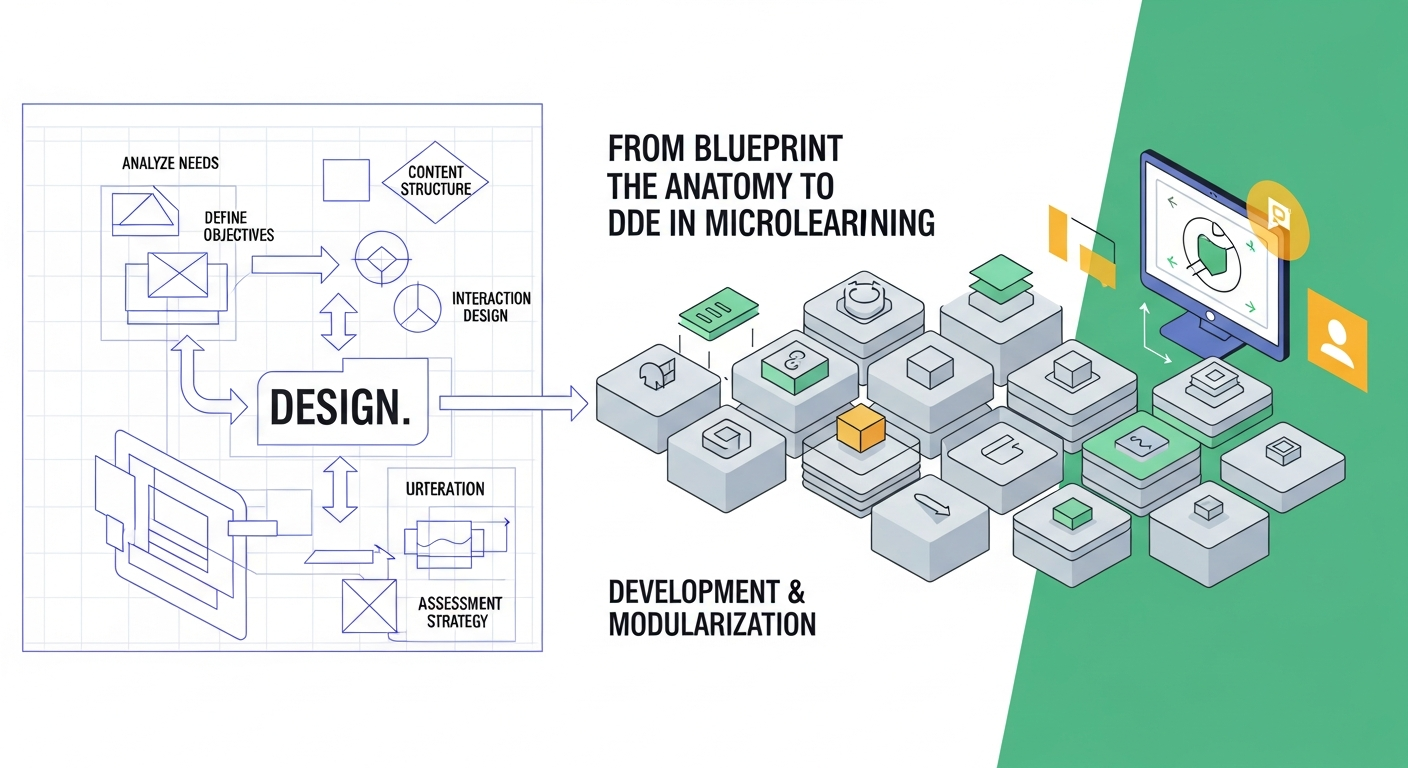
From Blueprint to Interface: The Anatomy of DDE in Microlearning
In the fast-paced world of corporate learning, agility and impact are paramount. Learning and Development (L&D) leaders – from Vice Presidents to Managers – are constantly seeking methodologies that deliver measurable results efficiently. Microlearning has emerged as a powerhouse, providing bite-sized, targeted content that resonates with modern learners. But behind every successful microlearning initiative lies a meticulous process: Design, Develop, Evaluate (DDE). Understanding the anatomy of DDE in microlearning isn't just about instructional design; it's about building a robust, engaging, and highly effective learning ecosystem that drives business objectives across diverse industries like Compliance, Sales, Banking, Finance, Insurance, Retail, Pharma, Healthcare, Hospitality, Oil and Gas, and Mining.
The Blueprint: Designing for Impact
The design phase is the strategic bedrock of any microlearning program. It's where the blueprint for learner success is meticulously crafted. For L&D professionals, this isn't merely about creating content; it’s about understanding the core problem, defining clear objectives, and envisioning the learner's journey.
Understanding Your Audience and Objectives
- Deep Dive into Needs: Before a single piece of content is created, a thorough needs analysis is crucial. What specific skills gap are you addressing? What regulatory changes in Banking or Pharma require immediate compliance training? Understanding the audience – from frontline staff in Retail to engineers in Oil and Gas – dictates the content and approach.
- Pinpointing Learning Outcomes: Microlearning thrives on precision. Each module must have a clear, measurable learning objective. Instead of "understand customer service," aim for "demonstrate three active listening techniques during customer interactions." This focus makes evaluation straightforward.
- Content Chunking & Sequencing: The essence of microlearning is its brevity. Information must be broken down into digestible, standalone modules, typically 3-7 minutes long. The design phase determines how these chunks logically sequence to build mastery over time. For example, a complex financial product training could be broken into modules on "Product Features," "Regulatory Compliance," and "Sales Pitch Best Practices." This structure is often facilitated by a robust Microlearning LMS.
- Integrating Adaptive Learning Paths: Modern design incorporates principles of Adaptive Learning. The design phase considers how different learner profiles will interact with the content, allowing for personalized paths based on prior knowledge, role, or performance. This is particularly vital in industries like Healthcare or Compliance, where specific knowledge gaps can have significant implications.
Building the Interface: Developing Engaging Content
Once the blueprint is solid, the development phase brings the microlearning modules to life. This is where instructional design meets creative execution, transforming abstract concepts into engaging, interactive experiences. This stage heavily relies on efficient content creation and management within your learning ecosystem.
Crafting Compelling Micro-Modules
- Instructional Design for Engagement: Microlearning demands highly engaging content formats. Think short videos, interactive quizzes, infographics, simulations, and scenarios. In a sales training context, a short video showcasing a successful pitch followed by an interactive role-play simulation is far more effective than a lengthy document.
- Leveraging Technology for Creation: The development phase benefits immensely from advanced tools. An AI Powered Authoring Tool can significantly accelerate content creation, suggesting relevant media, structuring quizzes, and even personalizing content snippets based on audience profiles. This dramatically reduces development time and costs, especially for large organizations needing to rapidly deploy training across multiple segments.
- Multimedia Integration: High-quality visuals, clear audio, and concise text are non-negotiable. Whether it's for Gamified LMS elements or standard modules, the user interface must be intuitive and visually appealing.
- Content Management and Version Control: Efficient development requires a robust learning content management system (LCMS). This ensures all training materials are organized, easy to update, and accessible. In regulated industries like Pharma or Finance, strict version control is crucial for compliance.
Refining for Impact: Evaluating and Iterating
The DDE cycle isn't complete without evaluation. This phase is about measuring the effectiveness of your microlearning, understanding its impact, and continuously refining the program for optimal results. A comprehensive learning management software is key here, providing the analytics needed for insightful evaluation.
Measuring Performance and Driving Improvement
- Formative and Summative Assessment: Microlearning modules often include embedded quizzes or challenges (formative assessments) to check understanding. Summative assessments can gauge overall mastery of a topic. These assessments should directly tie back to the learning objectives defined in the design phase.
- Performance Analytics: A sophisticated LMS provides invaluable data. Track completion rates, scores, time spent, and engagement levels. This data helps L&D leaders understand which modules are performing well and which need refinement. For an enterprise learning management system, this level of detail is critical for demonstrating ROI.
- Feedback Loops: Gather qualitative feedback through surveys and direct communication. What did learners find most helpful? What challenges did they face? This user-centric feedback is essential for continuous improvement.
- Connecting to Business Outcomes: The ultimate evaluation measures the impact on business metrics. Did the sales team using the microlearning increase their conversion rates? Did compliance audit failures decrease? For Risk-focused Training, did incident rates go down? This data-driven approach solidifies the value of your training initiatives.
- Iterative Refinement: DDE is not linear; it's cyclical. Insights from the evaluation phase feed directly back into the design and development phases, ensuring the microlearning program continuously adapts and improves. A cloud based learning management system facilitates rapid updates and redeployments globally.
AI Integration for Enhanced DDE
As L&D embraces digital transformation, intelligent technologies are reshaping how DDE is executed in microlearning. These advancements offer unprecedented opportunities for efficiency, personalization, and measurable impact.
Common Questions L&D Leaders Ask About AI in Microlearning DDE
-
Many leaders wonder, how can smart technologies assist in streamlining the design phase of short-form learning modules?
Advanced algorithms can analyze existing knowledge bases, identify skill gaps, and even suggest optimal content chunking and learning paths. They can help define precise learning objectives by processing vast amounts of performance data, ensuring that every micro-module is highly targeted and relevant. This predictive power significantly cuts down the initial planning time for L&D teams.
-
Considering global teams, what is the role of advanced algorithms in ensuring culturally relevant content delivery worldwide?
Intelligent systems are becoming adept at not just translation, but also localization. They can analyze cultural nuances, suggest appropriate imagery and examples, and adapt content tone to resonate with diverse regional audiences. This ensures that microlearning deployed from an lms learning management system to a global workforce, from Asia to Europe, is both effective and culturally sensitive, reducing potential misunderstandings and increasing engagement.
-
From an industry-wide perspective, how can intelligent automation enhance the overall impact and measurement of microlearning programs?
Intelligent automation provides sophisticated analytics that go beyond simple completion rates. It can predict learner attrition, identify specific knowledge areas causing difficulty across an industry segment, and even correlate learning outcomes with on-the-job performance metrics. This allows L&D leaders to demonstrate the tangible business impact of their microlearning programs with greater precision, driving strategic decision-making and continuous improvement.
Optimizing Your Microlearning Ecosystem with an Advanced LMS
The effective implementation of DDE in microlearning hinges on a robust technology platform. A cutting-edge learning management system (LMS) is not just a repository for content; it's the operational backbone that supports every stage of the DDE process.
Whether you're in Banking needing secure financial compliance training, in Hospitality onboarding new staff rapidly, or in Mining ensuring critical safety protocols are understood, a comprehensive learning management software is indispensable. It provides the tools for streamlined content delivery, robust tracking, and insightful analytics. Modern MaxLearn LMS solutions offer integrated features that support the entire DDE lifecycle, from an intuitive learning content management system (LCMS) for development to advanced reporting for evaluation. For organizations looking to scale their training efforts, robust learning management solutions are essential for efficient enterprise learning management. Investing in a powerful, cloud based learning management system ensures that your microlearning initiatives are not just conceptual blueprints but tangible, impactful interfaces that drive performance and foster continuous growth across all industries.
Conclusion
The journey from blueprint to interface in microlearning, guided by the DDE process, is a continuous cycle of strategic planning, creative execution, and data-driven refinement. For L&D Vice Presidents, Directors, Senior Managers, and Managers, mastering this anatomy is crucial for building training programs that are not only efficient and engaging but also deeply aligned with organizational goals. By embracing thoughtful design, leveraging modern development tools, rigorously evaluating impact, and integrating intelligent technologies, you can transform your microlearning initiatives into powerful catalysts for professional development and business success across any industry.
.jpg)


