

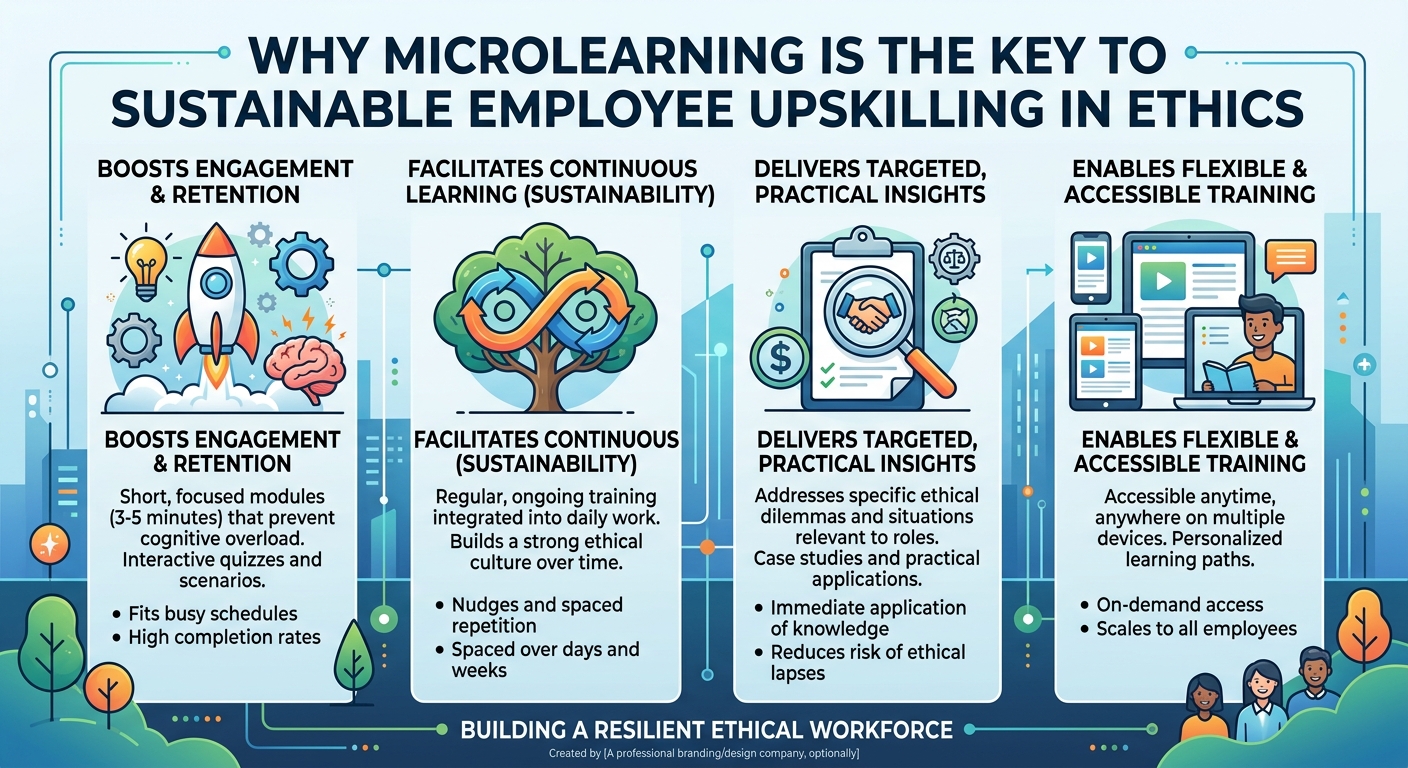
Why Microlearning Is the Key to Sustainable Employee Upskilling in Ethics
In today's rapidly evolving business landscape, the bedrock of a resilient organization isn't just its products or services, but its unwavering commitment to ethical conduct. As Vice Presidents, Directors, and Senior Managers of Learning & Development, you understand that fostering an ethical culture is paramount, not merely a compliance checkbox. From the intricacies of financial regulations in banking and insurance to patient data privacy in healthcare, and supply chain transparency in retail or oil and gas, ethical dilemmas are omnipresent and constantly shifting. The challenge lies in ensuring that every employee, from front-line staff to senior leadership, possesses the current knowledge and ethical acumen to navigate these complexities responsibly.
Traditional, lengthy ethics training sessions, often conducted annually, frequently fall short. They struggle to engage modern learners, leading to poor retention and a disconnect from real-world application. This is where a strategic pivot to microlearning becomes not just advantageous, but indispensable. Microlearning, with its focused, bite-sized approach, is emerging as the definitive solution for creating a culture of continuous ethical upskilling, making it the key to sustainable compliance and responsible business practices across diverse industries like compliance, sales, pharma, and hospitality.
The Evolving Imperative of Ethical Upskilling
The stakes for ethical lapses have never been higher. Reputational damage, hefty fines, legal battles, and a significant loss of stakeholder trust are just some of the severe consequences. Factors such as the rise of AI, globalized operations, stringent ESG (Environmental, Social, and Governance) standards, and hybrid work models introduce new ethical frontiers that demand constant vigilance and updated understanding. For organizations in sectors like mining, finance, or retail, anticipating and mitigating these risks through proactive, effective ethics training is no longer optional; it's a strategic imperative.
Many organizations rely on an enterprise learning management system to manage their training, but the effectiveness of the content delivered through the LMS is crucial. If the content isn't engaging or relevant, even the best learning management software won't yield optimal results. This underscores the need for a more dynamic and engaging approach to learning content management system delivery.
The Limitations of Conventional Ethics Training
Think back to those long, obligatory ethics seminars. They often involve hours of passive listening, dense presentations, and generic scenarios that fail to resonate with an employee's daily responsibilities. Such methods are prone to information overload, resulting in the "forgetting curve" taking hold almost immediately after the session concludes. Employees may tick the box, but genuine understanding, application, and retention of ethical principles remain elusive. This sporadic, one-size-fits-all approach is simply not equipped to build a robust, continuously learning ethical workforce.
Embracing Microlearning: A Sustainable Solution
Microlearning revolutionizes how ethical principles are taught and internalized. By breaking down complex ethical topics into short, digestible modules—typically 3-7 minutes long—it aligns perfectly with how modern professionals learn and retain information. These modules can include short videos, interactive quizzes, scenario-based challenges, infographics, or quick reference guides, all accessible on demand. This approach transforms ethics training from a dreaded annual event into an ongoing, integrated part of professional development.
What are the key advantages of this approach? The answer lies in its ability to deliver precise, relevant information exactly when it’s needed, fostering genuine understanding and application.
The Pillars of Sustainable Ethical Upskilling with Microlearning
Bitesize and Targeted Content
Microlearning excels at zeroing in on specific ethical dilemmas. Instead of a broad overview, an employee can tackle a module dedicated to, for example, "Handling Gifts from Clients," "Navigating Conflicts of Interest in Sales," or "Ensuring Data Privacy in Customer Interactions." This specificity makes the training highly relevant and immediately applicable. How do employees effectively learn complex ethical frameworks in short bursts? By focusing on one concept at a time, reinforced by real-world examples and immediate feedback.
Enhancing Engagement and Retention
The interactive nature of microlearning, especially when delivered through a Gamified LMS, significantly boosts engagement. Quizzes, simulations, and interactive scenarios make learning an active rather than passive experience. A well-designed Microlearning LMS can transform abstract ethical guidelines into compelling, memorable learning experiences. This intrinsic motivation, combined with frequent, low-stakes practice, helps combat the forgetting curve, leading to better long-term retention of ethical principles.
Just-in-Time Learning and Reinforcement
Imagine a sales professional needing a quick refresher on anti-bribery policies just before a crucial international negotiation. Or a banking associate needing to confirm a specific compliance detail. Where can our global team access up-to-date ethical guidelines specific to their region, instantly? Microlearning provides just-in-time access to critical information, allowing employees to access relevant ethical guidance precisely when a dilemma arises or a decision needs to be made. This immediate accessibility not only supports ethical decision-making but also reinforces learning in a practical context.
Personalization and Adaptability
No two roles or regions face identical ethical challenges. Microlearning platforms, especially those incorporating Adaptive Learning technologies, can tailor content to individual employee needs, roles, geographical locations, and even their prior learning history. This ensures that the training is highly relevant and maximizes its impact. What's the best way to tailor ethical training for our new hires in different departments? An adaptive learning system analyzes proficiency and delivers personalized pathways, ensuring everyone receives the most pertinent ethical instruction.
Addressing Emerging Ethical Challenges with AI
The rapid evolution of technology, particularly AI, introduces new ethical considerations daily. Organizations need to address topics like algorithmic bias, data ethics in AI, and responsible AI deployment. An AI Powered Authoring Tool can dramatically speed up the creation of microlearning modules on these complex, rapidly changing topics, keeping your workforce ethically literate. Furthermore, Risk-focused Training, delivered via microlearning, can target high-risk areas identified by AI analytics, providing proactive upskilling where it's needed most.
Implementing Microlearning for Ethics: Practical Considerations
To successfully integrate microlearning for ethics upskilling, L&D leaders should focus on several key areas:
- Platform Selection: Invest in a robust LMS that specializes in microlearning delivery. Look for a cloud based learning management system that offers intuitive user interfaces, mobile accessibility, and strong analytics. A comprehensive learning management system, like MaxLearn LMS, should support various content formats and easy deployment.
- Content Strategy: Develop a library of micro-modules covering a wide array of ethical topics relevant to your industry and specific job roles. Leverage an LCMS to efficiently manage and update this content.
- Integration: Seamlessly integrate microlearning into daily workflows. Promote it as a resource for problem-solving rather than just a compliance mandate.
- Measurement: Utilize the analytics capabilities of your learning management software to track completion rates, comprehension scores, and employee engagement. This data provides invaluable insights into the effectiveness of your ethics training program.
Deploying a sophisticated learning management system, whether it’s a cloud based learning management system or an enterprise learning management solution, is crucial. It’s not just about having an LMS; it’s about having a learning management solution that supports the dynamic and granular nature of microlearning, ensuring your lms learning management system works for you, not against you.
Real-world Impact and Benefits
The shift to microlearning for ethical upskilling yields tangible benefits across various industries:
- For Compliance: Ensures continuous adherence to regulations, reducing legal exposure.
- For Sales: Equips teams with ethical selling practices, building trust and long-term client relationships.
- For Banking/Finance: Reinforces integrity and transparency, crucial for regulatory compliance and customer confidence.
- For Healthcare: Upholds patient privacy and ethical care standards, critical for trust and legal compliance.
- For Retail/Hospitality: Fosters a culture of fairness and respect, enhancing customer experience and brand reputation.
- For Pharma/Oil & Gas/Mining: Strengthens environmental responsibility, safety protocols, and supply chain ethics.
Ultimately, microlearning cultivates a proactive ethical culture, where employees are empowered to make sound judgments, mitigate risks, and uphold the company's values, contributing to overall business growth and resilience.
Conclusion
As L&D leaders, the responsibility of nurturing an ethically sound workforce falls squarely on your shoulders. The evolving landscape of business ethics demands a modern, agile, and effective approach. Microlearning is not just a trend; it is the strategic imperative for sustainable employee upskilling in ethics. By adopting a Microlearning LMS, you can ensure that your organization is not only compliant but truly ethical, resilient, and prepared for the challenges of tomorrow. Embrace microlearning to build a culture of continuous learning and unwavering integrity that will stand the test of time, driving long-term success and reputation for your enterprise.
.jpg)


