

Beyond the Stick: Leveraging Behavioral Psychology for Effective L&D in the Digital Age
In the dynamic world of corporate learning and development, the concepts of negative reinforcement and punishment are frequently misunderstood, often conflated, and almost always subject to intense debate. For Vice Presidents, Directors, and Managers of L&D across critical sectors like compliance, sales, banking, finance, insurance, retail, pharma, healthcare, hospitality, oil and gas, and mining, understanding these behavioral psychology principles is crucial. While both aim to influence behavior, their mechanisms and long-term impacts on employee engagement, learning retention, and organizational culture are vastly different. This article dissects these concepts and offers insights into how L&D leaders can apply modern, positive strategies leveraging advanced learning technologies.
Deconstructing Negative Reinforcement in L&D
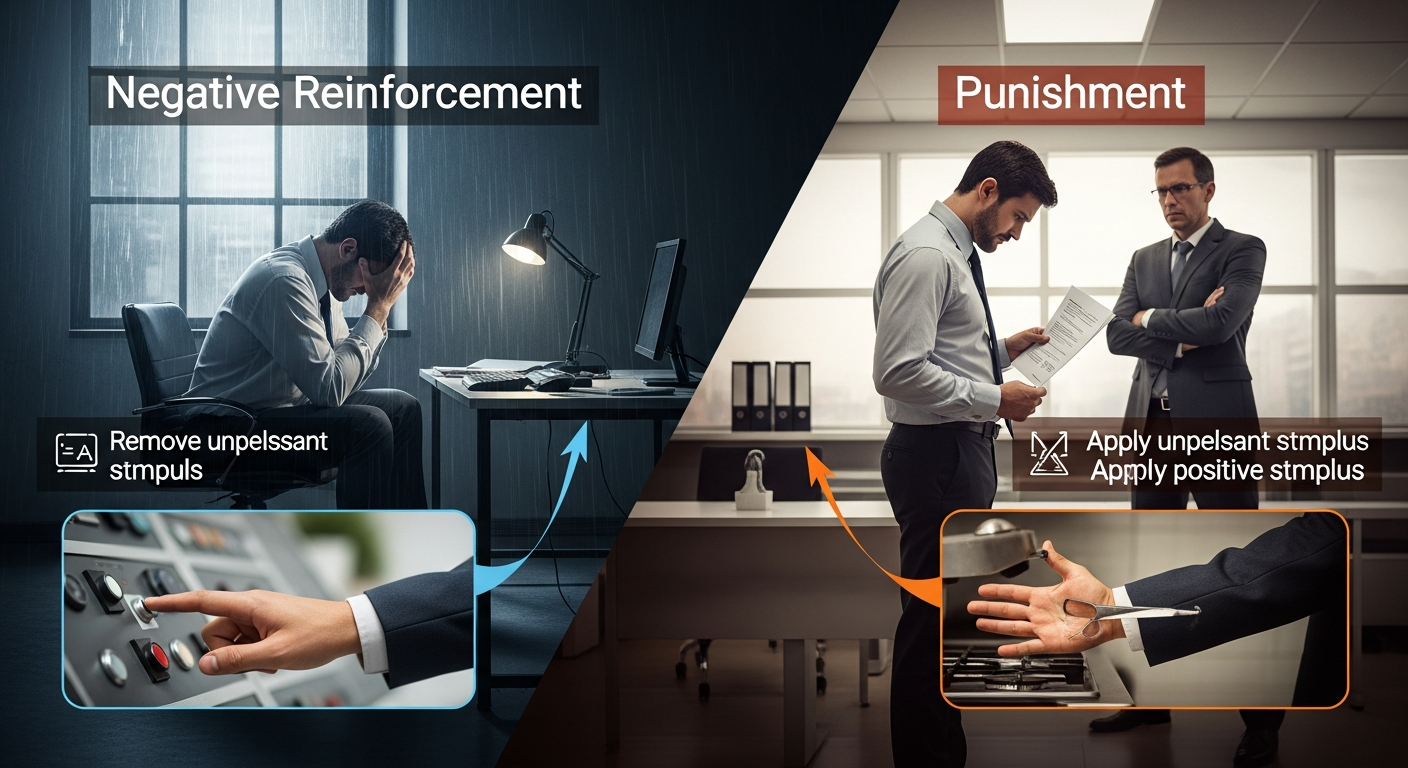
Negative reinforcement, a term often mistaken for punishment, is actually a mechanism designed to *increase* a desired behavior by removing an aversive stimulus. The "negative" refers to the removal of something undesirable, not the introduction of something bad. Think of it as an escape or avoidance learning scenario.
Consider these examples in an L&D context:
- Compliance Training: Employees might dread lengthy, annual compliance modules. A well-designed system that allows them to "test out" of sections they already master (removing the aversive stimulus of redundant content) can reinforce the behavior of proactively staying updated on compliance knowledge. The completion of the training removes the anxiety of potential audit failures or non-compliance penalties, thus reinforcing the desired behavior of engaging with the material.
- Skill Development: A sales team struggling with a new CRM might face constant pressure and lower performance metrics (aversive stimuli). Providing targeted Microlearning LMS modules that quickly address specific pain points, the completion of which leads to improved performance and reduced pressure, reinforces the behavior of seeking out and completing training.
In essence, negative reinforcement encourages desired actions by allowing learners to avoid or escape an unpleasant situation or consequence. It's about motivating through relief, not fear.
Understanding Punishment in Corporate Training
Punishment, in contrast, aims to *decrease* an undesired behavior. This can be achieved in two ways:
- Positive Punishment: Applying an aversive stimulus (e.g., a verbal reprimand, a penalty).
- Negative Punishment: Removing a desirable stimulus (e.g., loss of a privilege, reduced bonus).
While punishment might seem effective in the short term for stopping an undesirable behavior, its long-term impact on learning and workplace culture is generally detrimental. For instance, if an employee is publicly shamed for a mistake during training (positive punishment) or loses access to crucial resources due to a single training failure (negative punishment), it can lead to:
- Resentment and decreased morale.
- Avoidance of learning opportunities or risk-taking.
- Focus on compliance avoidance rather than genuine learning.
- A fear-driven culture that stifles innovation and open communication.
In L&D, especially for Risk-focused Training where honesty about errors is vital for learning, punishment can be counterproductive. It discourages reporting mistakes, which can have significant repercussions in industries like healthcare, finance, or mining.
The Critical Distinction: Why it Matters for L&D Leaders
The nuance between negative reinforcement and punishment is vital for L&D professionals. While both involve "negative" elements, one encourages a desired behavior by removing an unpleasant situation, fostering engagement and a sense of control. The other suppresses an undesired behavior by adding something unpleasant or removing something desirable, often leading to disengagement, anxiety, and a superficial adherence to rules rather than genuine understanding or behavioral change.
Effective L&D strategies for industries from banking to hospitality should prioritize positive reinforcement, fostering an environment where learning is seen as an opportunity for growth and improvement, rather than a means to avoid adverse outcomes imposed by management.
Applying Modern Behavioral Psychology in L&D
Instead of coercive methods, contemporary L&D focuses on creating engaging, motivating learning experiences that naturally encourage desired behaviors. This is where advanced learning technologies shine:
- Positive Reinforcement through Gamified LMS: Elements like points, badges, leaderboards, and progress tracking provide immediate, positive feedback. Achieving a milestone in a compliance module, for example, triggers a sense of accomplishment, encouraging continued engagement.
- Personalized Learning with Adaptive Learning: Tailoring content to individual needs and pace ensures learners are challenged but not overwhelmed. This reduces frustration (an aversive stimulus), reinforcing the behavior of completing training by making it relevant and manageable.
- Immediate and Constructive Feedback: Modern learning content management system platforms allow for instant feedback on assessments and activities. This guides learners without resorting to punitive measures, helping them correct course proactively.
- Building Autonomy and Mastery: Providing choice in learning pathways and opportunities to master skills fosters intrinsic motivation, a far more powerful driver than external threats.
AI-Driven Insights for L&D Leaders
Artificial intelligence is transforming how L&D can proactively influence behavior positively and understand learning dynamics. L&D executives are increasingly turning to AI to optimize training strategies:
How can sophisticated learning platforms guide learners towards optimal performance without relying on punitive measures?
Advanced learning management software powered by AI leverages predictive analytics to identify individual learning gaps and preferences. An AI Powered Authoring Tool can then generate personalized content, scenario-based simulations, and just-in-time microlearning modules that proactively address skill deficiencies. By providing adaptive pathways and intelligent recommendations, the system guides learners through a constructive journey, reinforcing good study habits and skill acquisition through success, not through the threat of failure.
What are the cross-cultural considerations for implementing behavior-based training strategies across diverse global teams?
For large organizations operating in banking, pharma, or oil and gas, cultural nuances significantly impact how learning interventions are perceived. AI can analyze cultural preferences in learning styles, preferred feedback mechanisms, and even compliance interpretations across different regions. This allows enterprise learning management systems to localize content and delivery, ensuring that training methods, including those involving behavioral psychology principles, are culturally sensitive and effective. This reduces the risk of misinterpretation or alienation that can arise from a one-size-fits-all approach, particularly when addressing sensitive topics like ethical conduct or safety protocols.
Beyond basic completion rates, what advanced metrics can L&D leverage to truly understand and improve the impact of training on employee behavior and business outcomes?
Modern learning management solutions go far beyond simple completion tracking. AI and machine learning in a cloud based learning management system can analyze how learning correlates with real-world performance indicators, such as reduced compliance violations, improved sales figures, decreased safety incidents in mining, or enhanced customer satisfaction in retail. They can track skill application in job roles, measure sentiment around learning experiences, and even predict future performance based on learning pathways. This allows L&D to demonstrate tangible ROI and refine strategies for deeper, more sustainable behavioral change, moving beyond superficial metrics to true impact.
The Future of Behavioral Influence in L&D
As L&D professionals, our goal is to cultivate a learning culture that empowers employees, enhances skills, and drives organizational success across every industry. While understanding concepts like negative reinforcement and punishment is foundational, the emphasis must shift towards proactive, positive, and technologically advanced strategies. Leveraging a powerful LMS like MaxLearn LMS, with its capabilities for Microlearning LMS, gamification, and AI-driven personalization, allows organizations to create engaging learning experiences. These platforms inherently encourage desired behaviors through intrinsic motivation, immediate positive feedback, and relevant, adaptive content. This approach builds a workforce that is not just compliant, but genuinely competent, engaged, and ready to meet the challenges of tomorrow.
.jpg)


