

Mastering the Memory Retention Graph: Strategies for L&D Excellence Across Industries
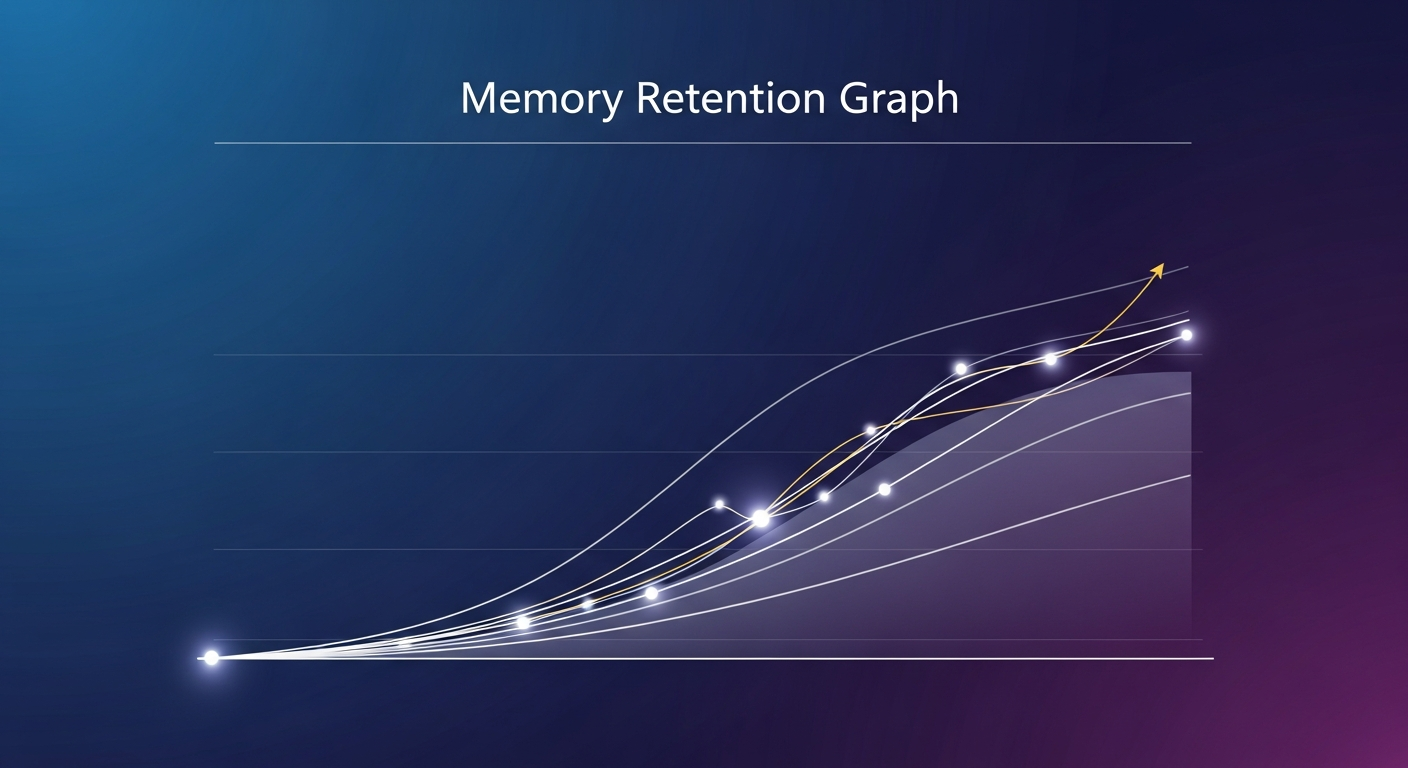
In today's rapidly evolving professional landscape, continuous learning isn't just an advantage—it's a necessity. From staying compliant with regulations in finance to mastering complex medical procedures in healthcare, and ensuring critical safety protocols in mining, the ability to retain and apply knowledge directly impacts an organization's success and bottom line. Yet, a fundamental challenge persists: the human brain's natural tendency to forget. This phenomenon is best illustrated by the Memory Retention Graph, also widely known as the Forgetting Curve.
For Learning & Development (L&D) professionals across diverse sectors like Insurance, Finance, Retail, Banking, Mining, Health care, Oil and Gas, and Pharma, understanding this graph isn't merely academic; it's crucial for designing effective training programs that truly stick. This article will delve into the Memory Retention Graph, its implications, and how modern L&D strategies—bolstered by advanced technology—can help organizations transcend its limitations.
Understanding the Memory Retention Graph: The Forgetting Curve
The Memory Retention Graph, first described by German psychologist Hermann Ebbinghaus in the late 19th century, plots the decline of memory retention over time. Ebbinghaus's research showed that within hours or days of initial learning, a significant portion of newly acquired information is forgotten if not reinforced. The curve illustrates a steep initial drop, followed by a more gradual decline. This means that a learner might forget 50-80% of what they learned within a very short period—sometimes as quickly as 24-48 hours—if there's no recall or application.
This insight is profoundly impactful for L&D. Traditional training methods, such as lengthy workshops or one-off seminars, often fail to account for this natural memory decay. Learners might leave a session feeling informed, but without strategic reinforcement, much of that knowledge fades, rendering the training investment less effective.
The Forgetting Curve in Action: Industry Insights
The implications of the Memory Retention Graph ripple across industries, manifesting as distinct challenges:
- Insurance, Finance, and Banking: These sectors demand meticulous attention to regulatory compliance, complex product knowledge, and evolving customer service protocols. Forgetting crucial details can lead to compliance breaches, financial penalties, or customer dissatisfaction. Keeping up with new policies, fraud detection methods, and data privacy laws requires constant, reinforced learning.
- Retail: Sales associates need to retain vast amounts of product information, understand various sales techniques, and consistently deliver exceptional customer experiences. A lapse in memory about a product feature or a store policy can directly impact sales and brand reputation.
- Mining and Oil & Gas: Safety is paramount. Workers must flawlessly recall and execute complex safety procedures, equipment operation guidelines, and emergency protocols. Forgetting even a single step can have catastrophic consequences, leading to accidents, environmental damage, or loss of life.
- Healthcare and Pharma: Professionals in these fields are burdened with a massive volume of ever-updating medical knowledge, patient care best practices, drug protocols, and stringent regulatory requirements. Memory lapses can endanger patient lives, lead to misdiagnoses, or result in costly compliance violations.
Strategies to Combat the Forgetting Curve and Boost Retention
The good news is that the Forgetting Curve is not an insurmountable barrier. Modern L&D strategies, often powered by technology, are specifically designed to counteract memory decay and foster long-term retention:
1. Microlearning and Spaced Repetition
Breaking down complex information into bite-sized, digestible modules is the core of microlearning. These short bursts of content are easier to absorb and recall. Coupled with spaced repetition—the technique of reviewing information at increasing intervals—microlearning directly challenges the Forgetting Curve. Platforms like MaxLearn Microlearning Platform are specifically designed to deliver content in this highly effective format, ensuring critical information is reinforced just when learners are about to forget it.
2. Gamification and Engagement
Making learning engaging and fun significantly boosts retention. Gamified elements like points, badges, leaderboards, and interactive challenges transform training from a chore into an exciting experience. This increased engagement not only motivates learners but also improves their memory of the content. A Gamified LMS can provide the framework for incorporating these elements, making learning feel less like work and more like play, thus enhancing recall.
3. Adaptive Learning Paths
Not all learners are the same, and neither are their knowledge gaps. Adaptive learning systems personalize the learning journey by assessing a learner's current knowledge and adjusting the content, pace, and sequence of modules accordingly. This ensures that learners focus on areas where they need the most help, rather than reviewing information they already know, making the learning process more efficient and effective for retention. Discover more about this methodology through Adaptive Learning approaches.
4. Practical Application and Experiential Learning
Learning by doing solidifies knowledge. Incorporating simulations, role-playing, case studies, and hands-on exercises allows learners to apply theoretical knowledge in practical scenarios. This active engagement creates stronger memory traces and helps transfer knowledge from short-term to long-term memory.
5. AI-Powered Content Creation and Personalization
Artificial intelligence is revolutionizing how L&D content is created and delivered. AI-driven tools can analyze vast amounts of data to identify common knowledge gaps, suggest optimal learning paths, and even generate personalized content variations. An AI Powered Authoring Tool can dramatically speed up the development of highly relevant and effective microlearning content, ensuring that training is always fresh and targeted.
6. Risk-Focused Training
For industries where errors can have severe consequences, targeting training to high-risk areas is critical. By identifying the most critical skills, knowledge, or behaviors associated with operational risk, L&D can create highly focused and frequently reinforced training modules. This approach ensures that the most vital information is consistently retained. Explore the benefits of Risk-focused Training to mitigate potential hazards effectively.
Leveraging Advanced Technology for Superior Retention
The integration of advanced technology, particularly artificial intelligence, into L&D strategies offers unprecedented opportunities to combat the Forgetting Curve. Here are some common inquiries and insights into how AI is making a difference:
Common Queries for Enhanced Learning:
Q: How can artificial intelligence predict learning decay?
A: AI algorithms analyze learner interaction data, performance trends, and content characteristics to predict when knowledge retention is likely to decline, enabling timely interventions through personalized reminders or targeted review modules. This proactive approach ensures learning is reinforced precisely when it's most needed.
Industry-Specific Intelligence:
Q: Can AI tailor learning paths based on an individual's role in a complex organization (e.g., a mining engineer vs. a finance analyst)?
A: Absolutely. AI-driven platforms dynamically adjust content and delivery methods to align with specific job roles, regulatory requirements, and practical challenges unique to each sector. This ensures that whether an employee is a healthcare provider learning new patient protocols or an oil rig worker training on updated safety measures, their learning experience is highly relevant and impactful.
Deeper Algorithmic Insights:
Q: What advanced AI techniques are used to optimize knowledge transfer and combat the forgetting curve?
A: Techniques like predictive analytics, natural language processing for content analysis, intelligent tutoring systems, and reinforcement learning are extensively employed. These allow platforms to identify precise knowledge gaps, personalize content at an individual level, and schedule optimal review intervals, maximizing long-term retention and application of learned material.
Implementing a Retention-Focused L&D Strategy
For organizations striving for excellence in performance, compliance, and innovation, embracing a retention-focused L&D strategy is non-negotiable. This involves:
- Adopting modern learning platforms that support microlearning, spaced repetition, and adaptive pathways.
- Investing in engaging content, potentially developed with AI assistance, that resonates with learners.
- Continuously analyzing learning data to identify trends and optimize training effectiveness.
- Fostering a culture of continuous learning and reinforcement within the organization.
Conclusion
The Memory Retention Graph serves as a potent reminder of the fragility of human memory, but it also lights the path toward more effective L&D. By understanding how we forget and strategically implementing solutions like microlearning, gamification, adaptive learning, and AI-powered tools, organizations across Insurance, Finance, Retail, Banking, Mining, Health care, Oil and Gas, and Pharma can transform their training from a transient event into a sustained engine of knowledge and skill. The goal isn't just to teach, but to ensure that what's learned truly sticks, empowering employees and driving organizational success in an ever-complex world.
.jpg)


