

Shaping Success: How Operant Conditioning Powers Modern L&D and eLearning
For L&D leaders navigating the complex demands of today's corporate world, cultivating desired behaviors and driving performance is paramount. From ensuring compliance in banking to enhancing sales effectiveness in retail, the goal remains consistent: to motivate employees to act in ways that benefit the organization. While modern learning strategies often highlight cutting-edge technology and innovative content, the foundational principles of how we learn—and how behavior is shaped—remain timeless. Enter B.F. Skinner and his groundbreaking theory of Operant Conditioning.
Often considered a cornerstone of behavioral psychology, Skinner's work offers profound insights into how consequences influence actions. For Vice Presidents, Directors, and Managers of L&D, understanding these principles isn't just academic; it's a strategic imperative. It provides a robust framework for designing effective Microlearning LMS programs, fostering a culture of continuous improvement, and ultimately, achieving measurable business outcomes across diverse industries like healthcare, finance, oil and gas, and more.
Understanding Operant Conditioning: The Core Mechanics
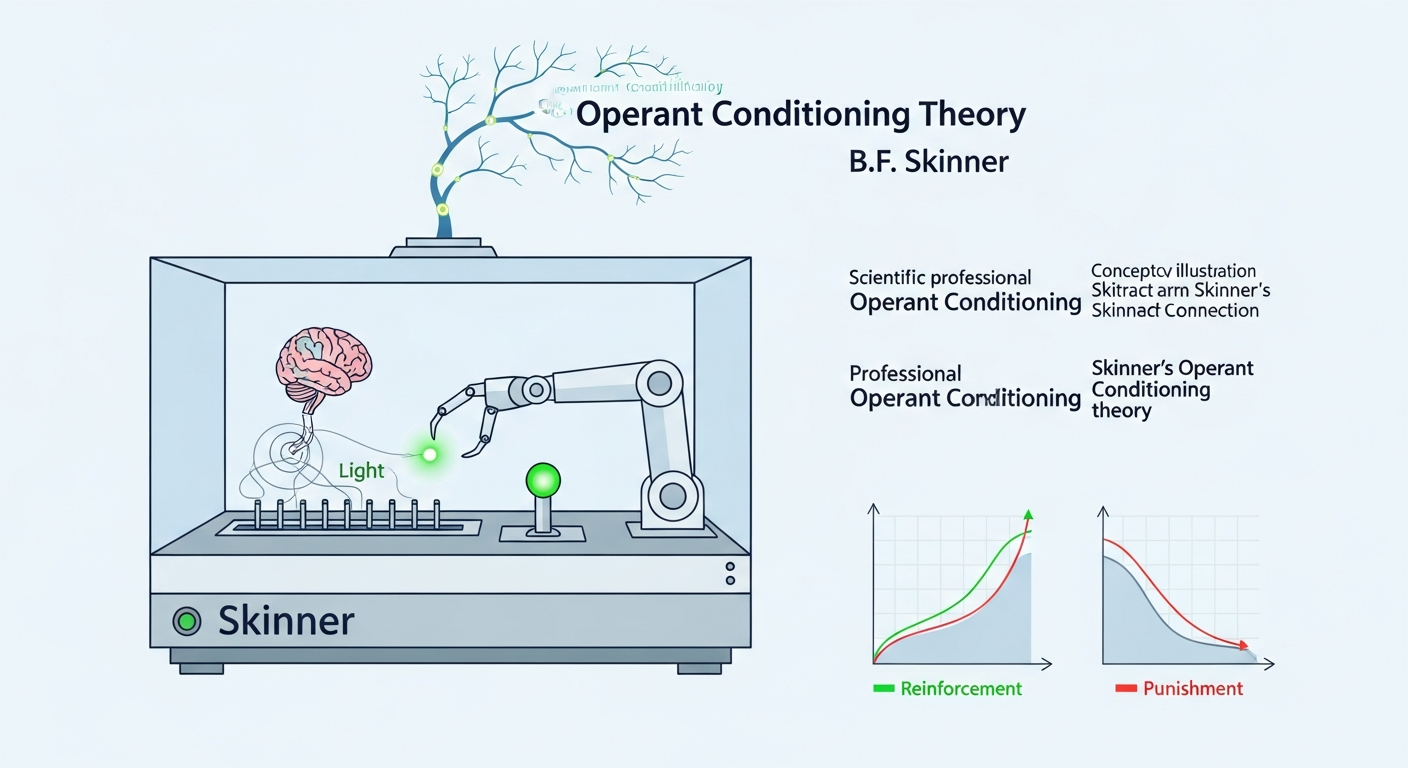
At its heart, Operant Conditioning posits that behavior is a function of its consequences. Unlike classical conditioning, which focuses on involuntary responses, operant conditioning deals with voluntary behaviors and how they can be strengthened or weakened based on what follows them. Skinner introduced concepts like reinforcement and punishment, along with schedules that dictate how and when these consequences are applied, profoundly impacting the persistence of learned behaviors.
Reinforcement: The Engine of Desired Behavior
Reinforcement is any consequence that increases the likelihood of a behavior being repeated. It's the most powerful tool for L&D professionals seeking to encourage specific actions, such as completing mandatory training modules, adhering to new sales protocols, or mastering complex software.
- Positive Reinforcement: Adding a desirable stimulus after a behavior occurs. Think immediate feedback, recognition, points in a Gamified LMS, or even a tangible reward for completing a challenging Adaptive Learning path. In sales, this could be a bonus for exceeding targets, directly reinforcing the behaviors that led to that success.
- Negative Reinforcement: Removing an undesirable stimulus after a behavior occurs. This isn't punishment; it's about escaping or avoiding something unpleasant. For instance, successfully completing a compliance training module might exempt an employee from follow-up emails or reminders about overdue tasks, reinforcing the behavior of timely completion.
Punishment: Deterring Undesired Actions
Punishment aims to decrease the likelihood of a behavior being repeated. While often effective in the short term, its application in L&D requires careful consideration to avoid negative emotional responses or a chilling effect on engagement.
- Positive Punishment: Adding an undesirable stimulus after a behavior. For example, a formal warning or a negative score on a compliance assessment.
- Negative Punishment: Removing a desirable stimulus after a behavior. Such as losing access to certain training resources or privileges due to non-compliance with learning objectives.
For L&D, the emphasis is almost always on reinforcement. Building positive associations with learning and performance is far more sustainable and effective than relying on punitive measures, especially in an enterprise learning management context.
Schedules of Reinforcement: Pacing for Persistence
How and when reinforcement is delivered significantly impacts the strength and persistence of learned behavior. Skinner identified various schedules:
- Continuous Reinforcement: Reinforcing every instance of a desired behavior. Ideal for initial learning, like immediate feedback after each correct answer in a new software simulation.
- Partial (Intermittent) Reinforcement: Reinforcing only some instances of the desired behavior. This leads to more persistent behavior once established.
- Fixed Ratio: Reinforcement after a fixed number of responses (e.g., getting a badge after completing 5 modules).
- Variable Ratio: Reinforcement after an unpredictable number of responses (e.g., occasional, surprise recognition for high performance). This is highly resistant to extinction, akin to gambling, and can drive sustained effort.
- Fixed Interval: Reinforcement after a fixed amount of time (e.g., quarterly performance reviews).
- Variable Interval: Reinforcement after an unpredictable amount of time (e.g., random spot checks for safety compliance, maintaining constant vigilance).
Skinner's Theory in the Modern L&D Landscape
The principles of operant conditioning aren't confined to a laboratory; they are actively shaping successful learning strategies in organizations worldwide. A modern learning management system (LMS) or AI Powered Authoring Tool, often functioning as a robust learning content management system (LCMS), can be meticulously designed to leverage these behavioral insights.
Enhancing Engagement with Modern Learning Solutions
Consider the power of a Gamified LMS. Leaderboards, badges, points, and virtual rewards are direct applications of positive reinforcement. They provide immediate, tangible feedback for desired learning behaviors, driving engagement and completion rates in training for segments like retail sales or hospitality customer service.
Driving Performance through Strategic Reinforcement
In industries like finance and healthcare, where precision and adherence to protocol are critical, operant conditioning helps build consistent behavior. Regular, positive feedback for correct procedural execution reinforces best practices, while immediate, constructive feedback for errors prevents repetition. This is especially vital in Risk-focused Training, where mitigating hazards in sectors like oil and gas or mining is paramount.
Leveraging AI for Skinnerian Principles in eLearning
The advent of artificial intelligence is supercharging our ability to apply operant conditioning principles at scale, making learning more personalized and impactful than ever before. AI-driven platforms act as sophisticated tools for identifying, reinforcing, and shaping learner behaviors.
AI and Adaptive Feedback Loops
How can advanced intelligence personalize reinforcement in corporate training?
AI algorithms can analyze a learner's performance in real-time within an enterprise learning management solution. They can identify patterns, predict areas of struggle, and deliver immediate, targeted positive reinforcement (e.g., "Great job on that complex scenario!") or course corrections. This adaptive feedback ensures that reinforcement is timely, relevant, and personalized, much like a skilled tutor providing one-on-one guidance. This dynamic adjustment is a hallmark of effective Adaptive Learning.
Predicting and Shaping Learning Pathways
What role does advanced data analysis play in shaping effective learning pathways?
By analyzing vast datasets of learner interactions, AI can predict which types of content, assessments, or interventions are most likely to lead to desired behavioral changes. This allows for the dynamic adjustment of learning paths, effectively creating individualized schedules of reinforcement. For example, in compliance training, AI can identify employees who are consistently completing modules on time and reinforce that behavior with advanced content access, while those who lag might receive timely reminders or simplified modules, tailored to reinforce timely completion.
The Future of Performance-Driven Training
Can intelligent automation enhance the efficiency of behavior modification in large organizations?
Absolutely. Intelligent automation, powered by AI, can automate the delivery of reinforcement (e.g., automated recognition emails, personalized learning recommendations) and punishment (e.g., flagging non-compliance for managerial review). This scales the application of operant conditioning principles across large workforces, ensuring consistent behavioral shaping without overwhelming L&D teams. This is especially critical for a Microlearning LMS handling thousands of users across multiple geographies.
Practical Applications Across Industries
The versatility of Operant Conditioning, amplified by modern eLearning and AI, makes it a powerful asset for any organization:
- Compliance: In banking and finance, consistent adherence to regulations is non-negotiable. Risk-focused Training can use variable ratio reinforcement (e.g., random scenario challenges) to ensure employees maintain vigilance and continuous learning, preventing costly errors.
- Sales: Sales professionals thrive on positive reinforcement. An LMS learning management system can track performance, provide immediate feedback on training module completion, and offer gamified rewards for mastering new product knowledge or sales techniques.
- Healthcare: Ensuring accurate procedures and patient safety. Positive reinforcement through simulation training and immediate feedback fosters mastery and confidence in critical tasks.
- Retail & Hospitality: Enhancing customer service and operational efficiency. Timely recognition for exemplary service or efficient task completion encourages consistent high standards.
- Pharma & Manufacturing: Adherence to safety protocols and quality control. Regular, positive feedback and gamified safety challenges reinforce correct procedures, minimizing errors and accidents.
Choosing the Right Tools for Operant Learning
To effectively implement Skinnerian principles, L&D leaders need the right technological infrastructure. A robust learning management system (LMS) is foundational. Look for a cloud based learning management system that integrates features essential for modern behavioral shaping:
- A Microlearning LMS for delivering bite-sized, digestible content that allows for frequent reinforcement.
- A Gamified LMS to leverage points, badges, leaderboards, and virtual rewards as powerful positive reinforcers.
- Adaptive Learning capabilities, often AI-powered, to personalize learning paths and deliver timely, relevant reinforcement.
- An AI Powered Authoring Tool that enables rapid creation of interactive content designed for immediate feedback and behavioral nudges.
- Analytics that track engagement, completion, and performance metrics, allowing L&D to understand the effectiveness of their reinforcement schedules.
Platforms like MaxLearn LMS exemplify how these functionalities converge to create powerful, behavior-shaping learning experiences.
Conclusion
B.F. Skinner's Operant Conditioning Theory offers L&D professionals a timeless and highly effective blueprint for driving desired behaviors and elevating performance across the organization. By strategically applying reinforcement, understanding various schedules, and leveraging the immense capabilities of modern eLearning technology—especially AI-driven solutions—L&D leaders can design programs that not only educate but also consistently motivate, engage, and shape the actions of their workforce. The legacy of Skinner, when combined with innovative learning management software, empowers organizations to build truly adaptive, high-performing teams ready for the challenges of tomorrow.
.jpg)


