

The Ebbinghaus Forgetting Curve: A Foundation for Modern Learning & Development
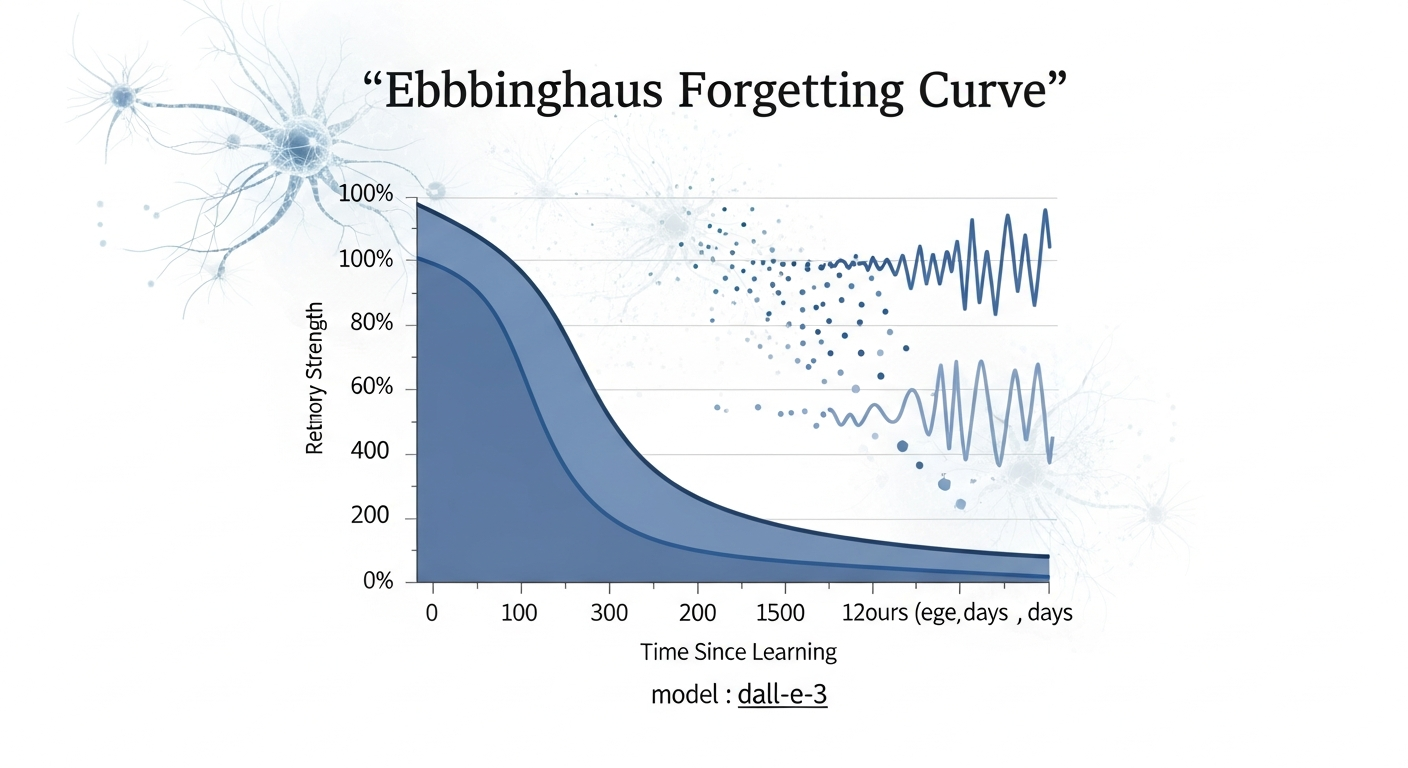
Imagine investing significant resources into training your team, only for that crucial knowledge to fade from their minds within days or weeks. This isn't a hypothetical fear; it's a well-documented phenomenon known as the Ebbinghaus Forgetting Curve. Discovered by German psychologist Hermann Ebbinghaus in the late 19th century, this curve illustrates the rate at which newly acquired information is forgotten over time. It demonstrates a sharp initial decline in retention, followed by a more gradual loss. For professionals in Learning & Development (L&D) across vital sectors like Insurance, Finance, Retail, Banking, Mining, Healthcare, Oil and Gas, and Pharma, understanding and actively combating this curve is not just beneficial—it's absolutely critical for success, compliance, and even safety.
In today's fast-paced corporate environment, where information overload is the norm and continuous learning is a necessity, the implications of the Ebbinghaus Forgetting Curve are more profound than ever. From rapidly evolving regulatory landscapes in banking to new safety protocols in mining, and from innovative pharmaceutical drug information to complex patient care guidelines, the ability to retain and recall knowledge directly impacts operational efficiency, risk management, and overall business growth. This article will delve into the science behind memory decay and explore how modern L&D strategies, powered by advanced technology, are effectively flattening the curve and ensuring knowledge sticks.
Understanding the Ebbinghaus Forgetting Curve
The Science Behind Memory Decay
Hermann Ebbinghaus conducted pioneering experiments on memory using himself as the subject, memorizing lists of nonsense syllables and then testing his recall over various time intervals. His findings were striking: without any review or reinforcement, memory retention drops off dramatically after initial learning. For instance, he found that within an hour, approximately 50% of newly learned information might be forgotten, and within a day, that figure could climb to over 70%. The curve shows a steep descent shortly after learning, then levels off, meaning that the majority of forgetting happens relatively quickly.
This rapid initial decay highlights the fragility of new memories, especially if they are not actively consolidated or connected to existing knowledge. Factors such as the difficulty of the material, its meaningfulness, and the learner's emotional state can influence the exact shape of an individual's forgetting curve, but the general principle of rapid initial decay remains universal.
Why We Forget: Factors at Play
- Lack of Consolidation: New information needs to be processed and stored in long-term memory. Without active engagement or repetition, it often remains in short-term memory, which has limited capacity and duration.
- Interference: New learning can interfere with older memories, and conversely, existing knowledge can make it harder to recall new, similar information.
- Retrieval Failure: The information might still be in long-term memory, but the learner struggles to access it, often due to insufficient cues or infrequent recall practice.
- Cognitive Overload: Bombarding learners with too much information at once can hinder the brain's ability to process and retain it effectively.
The Industrial Impact: Where Forgetting Hurts Most
The consequences of the Ebbinghaus Forgetting Curve are particularly acute in industries where precision, compliance, and up-to-date knowledge are paramount:
- Insurance & Finance: Forgetting new regulatory changes, complex product details, or compliance protocols can lead to significant fines, reputational damage, and misinformed customer advice. The stakes are incredibly high in managing risk and ensuring ethical operations.
- Retail & Banking: Employees need to be constantly updated on new product offerings, customer service procedures, security protocols, and evolving fraud detection methods. Knowledge gaps here directly impact customer satisfaction, sales, and security.
- Mining & Oil and Gas: In these high-risk environments, forgetting a critical safety procedure, equipment operation protocol, or emergency response plan can have catastrophic consequences, leading to accidents, injuries, or environmental disasters.
- Healthcare & Pharma: The pace of innovation in new drugs, treatment protocols, and patient care guidelines is relentless. Forgetting vital medical information or drug interactions can compromise patient safety, lead to misdiagnoses, and impact treatment efficacy.
In each of these sectors, the ability to retain, recall, and apply knowledge is not merely an advantage; it is a fundamental requirement for operational excellence and mitigating substantial risks.
Battling the Curve: Modern L&D Strategies
Understanding the forgetting curve isn't about resignation; it's about empowerment. Modern L&D strategies are designed to actively counteract memory decay, ensuring that learning investments yield lasting results. Key among these is the adoption of innovative platforms and methodologies.
Microlearning: The Antidote to Forgetting
One of the most effective strategies to combat the steep initial drop of the Ebbinghaus curve is MaxLearn Microlearning Platform. By breaking down complex information into short, digestible modules—typically 3-7 minutes long—microlearning aligns perfectly with the brain's natural ability to process and retain information in smaller chunks. This approach reduces cognitive overload, making new knowledge easier to grasp and less susceptible to rapid forgetting. It’s ideal for reinforcing key concepts, delivering timely updates, and providing just-in-time support for employees in all sectors.
The Power of Repetition and Reinforcement
Ebbinghaus himself found that repeated exposure to information, particularly through spaced repetition (reviewing material at increasing intervals), significantly flattens the forgetting curve. Modern L&D leverages this by scheduling regular, brief refreshers, quizzes, and follow-up activities. This spaced reinforcement moves information from short-term to long-term memory, ensuring better retention.
Engaging Learning Experiences
Dull, passive learning is easily forgotten. Engaging, interactive experiences, on the other hand, create stronger memory traces. A Gamified LMS (Learning Management System) integrates game-like elements such as points, badges, leaderboards, and challenges into the learning process. This boosts motivation, encourages active participation, and makes learning more enjoyable and memorable, reducing the rate at which information is forgotten.
Personalized Learning Journeys
Not all learners are the same, nor do they forget at the same rate or in the same areas. Adaptive Learning platforms use data to tailor the learning path to each individual's needs, pace, and existing knowledge. By identifying areas where a learner struggles and providing targeted reinforcement, adaptive learning ensures that review is focused where it's most needed, making the learning process more efficient and effective at combating personalized forgetting curves.
Leveraging Technology for Effective Training
Technology plays a pivotal role in creating, delivering, and managing these advanced learning strategies. An AI Powered Authoring Tool allows L&D professionals to rapidly create engaging, microlearning content that is ready for deployment. This significantly reduces content development time, enabling organizations to keep training material current and responsive to changes in industry regulations, products, or procedures, thus consistently reinforcing knowledge.
Mitigating Risk Through Knowledge Retention
For high-risk industries, effective knowledge retention directly correlates with safety and compliance. Implementing Risk-focused Training ensures that employees not only understand critical safety protocols, compliance regulations, or emergency procedures but also retain them for the long term. By targeting high-impact, high-risk areas with frequent, engaging microlearning modules and regular assessments, organizations can significantly reduce incidents and ensure regulatory adherence.
Addressing Common Queries
How quickly does new information fade from memory?
Studies inspired by the original Ebbinghaus curve suggest that without reinforcement, approximately 50-70% of new information can be forgotten within 24 hours. The most significant drop in retention typically occurs within the first few hours or days after initial learning.
Can technology truly enhance an employee's ability to remember critical job knowledge?
Absolutely. Modern learning technologies, such as microlearning platforms, adaptive learning systems, and gamified experiences, are specifically designed to counteract memory decay. They facilitate spaced repetition, personalized content delivery, and engaging interactions that reinforce learning and significantly improve long-term retention compared to traditional training methods.
What are the most effective ways to ensure employees consistently remember crucial safety procedures in high-stakes environments?
For critical procedures, a multi-faceted approach is best. This includes frequent, short microlearning modules that focus on specific steps, hands-on practical application, regular simulation exercises, immediate feedback mechanisms, and gamified quizzes to test recall. Leveraging AI to identify knowledge gaps and provide targeted refreshers also proves highly effective.
How can businesses measure the long-term effectiveness of their training programs in terms of knowledge retention?
Measuring long-term effectiveness involves more than just post-training assessments. It requires ongoing performance metrics, regular low-stakes quizzes and recall exercises, observation of on-the-job application, and feedback loops. Advanced learning platforms offer analytics that track learner progress, identify areas of weakness over time, and correlate training completion with key performance indicators and safety records, providing a clear picture of retention.
Conclusion
The Ebbinghaus Forgetting Curve stands as a powerful reminder of the challenges inherent in human memory. However, it is not an insurmountable obstacle. By understanding its principles and strategically deploying modern L&D methodologies—particularly microlearning, gamification, and adaptive learning, supported by intelligent authoring tools—organizations can transform their approach to training. Investing in platforms that specifically address memory decay empowers employees across Insurance, Finance, Retail, Banking, Mining, Healthcare, Oil and Gas, and Pharma sectors to retain vital knowledge, ensuring compliance, enhancing safety, boosting productivity, and ultimately driving sustainable business growth. The future of L&D lies in flattening the curve, making knowledge not just acquired, but truly embedded.
.jpg)


