

Unlocking Peak Performance: The Strategic Advantage of a Gamified Training Platform for L&D Leaders
In today's fast-paced corporate landscape, traditional training methods often fall short in capturing and sustaining employee attention. Learning and Development (L&D) leaders, from VPs to directors, and senior managers to managers, constantly seek innovative solutions to boost engagement, improve knowledge retention, and drive tangible business results. Enter the Gamified LMS – a transformative approach that injects the excitement and motivation of gaming into corporate learning. This article explores how a cutting-edge gamified training platform can elevate your L&D strategy, fostering a culture of continuous learning and unparalleled performance across diverse industries.
What is a Gamified Training Platform?
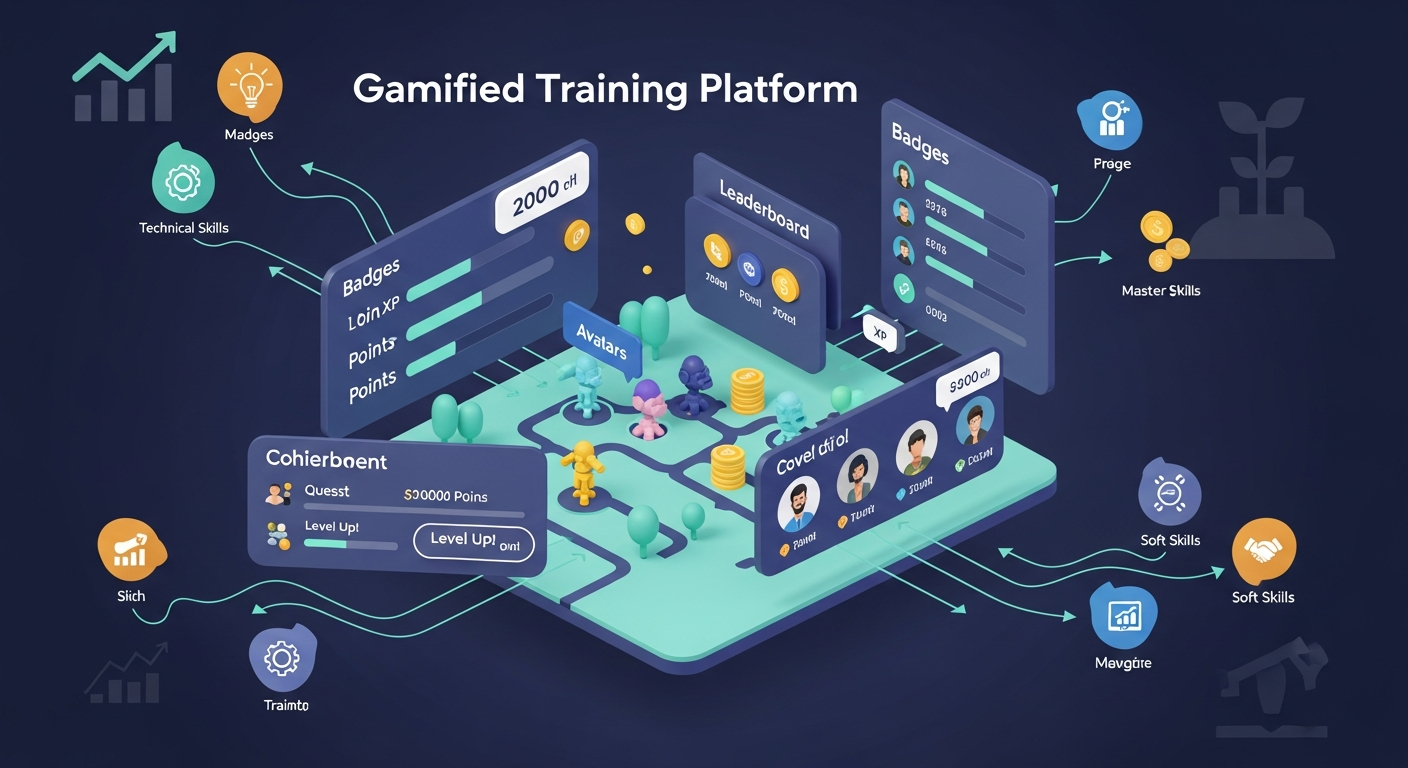
At its core, a gamified training platform leverages game-design elements and game principles in non-game contexts, specifically corporate learning. It's not about making learning into a video game, but rather applying psychological triggers found in games – such as competition, achievement, status, and reward – to motivate learners and make the educational journey more enjoyable and effective. This involves incorporating features like points, badges, leaderboards, levels, challenges, and virtual rewards into a structured LMS environment. The goal is to drive specific behaviors, enhance problem-solving skills, and reinforce learning outcomes by tapping into learners' intrinsic motivations.
Why Gamification is a Game-Changer for L&D
Increased Engagement and Motivation
One of the primary challenges in corporate training is learner engagement. Monotonous modules often lead to low completion rates and superficial learning. A gamified training platform transforms this experience. By introducing elements like progress bars, unlockable content, and personalized challenges, learners are more invested in their journey. The desire to earn a badge, climb a leaderboard, or complete a quest provides a powerful incentive, making learning feel less like a chore and more like an exciting adventure. This intrinsic motivation translates directly into higher participation and completion rates.
Improved Knowledge Retention
Active participation is crucial for knowledge retention. Gamification fosters an environment where learners actively apply concepts, solve problems, and make decisions within a simulated context. This experiential learning, often delivered through Microlearning LMS modules, reinforces information more effectively than passive consumption. Regular quizzes, interactive scenarios, and instant feedback loops ensure that knowledge sticks, leading to better long-term recall and application in real-world situations. The repetition in a varied, engaging format further solidifies learning.
Enhanced Performance & Skill Development
Gamified platforms are adept at developing specific skills through practical application. For instance, sales teams can practice negotiation tactics in a simulated sales environment, while compliance officers can navigate complex regulatory scenarios. The immediate feedback allows learners to understand their mistakes and correct them in a low-stakes environment. This iterative process of practice, feedback, and refinement is key to rapid skill acquisition and performance improvement. Many platforms even include an AI Powered Authoring Tool to quickly create these dynamic scenarios.
Data-Driven Insights for L&D Leaders
Beyond engagement, a significant benefit of a modern learning management system (LMS) with gamification is the wealth of data it generates. L&D leaders gain granular insights into learner progress, areas of struggle, completion rates, and overall performance. Dashboards can highlight top performers, identify knowledge gaps across teams, and even predict future training needs. This data empowers L&D professionals to make informed decisions, tailor content, and optimize their strategies for maximum impact, proving the ROI of their training initiatives.
Key Features of an Effective Gamified Training Platform
- Points & Rewards: Earned for completing modules, passing assessments, or achieving learning milestones.
- Badges & Certificates: Digital recognition for specific skills acquired or courses completed, shareable on professional networks.
- Leaderboards: Foster healthy competition by displaying top performers, often segmented by team, department, or region.
- Challenges & Quests: Structured learning paths presented as missions or quests with clear objectives and rewards.
- Levels & Progress Bars: Provide a clear visual representation of a learner's advancement, encouraging continued effort.
- Real-time Feedback: Immediate validation or correction helps learners understand their performance instantly.
- Social Learning Integration: Allows learners to collaborate, discuss, and even compete with peers, mirroring gaming communities.
- Personalized Learning Paths: Tailored content and challenges based on a learner's role, existing knowledge, and performance data, often driven by Adaptive Learning capabilities.
Implementing Gamified Training Across Diverse Industries
The versatility of a gamified training platform makes it invaluable across a wide spectrum of industries, addressing specific challenges in each sector.
- Compliance & Risk Management: In sectors like Banking, Finance, Insurance, and Healthcare, regulatory compliance training is often seen as tedious. Risk-focused Training through gamification can transform dry legal content into engaging simulations where employees face virtual scenarios, make decisions, and see the immediate consequences, ensuring better understanding and adherence. This is vital for managing enterprise risk effectively.
- Sales & Customer Service: Retail, Hospitality, and Sales teams thrive on performance and motivation. Gamified platforms can create sales challenges, product knowledge quizzes with leaderboards, and customer service simulations. This approach helps refine pitching skills, product recall, and empathy in customer interactions, directly impacting revenue and customer satisfaction.
- Pharma & Healthcare: For critical training in drug protocols, patient care procedures, or medical device operation, gamified modules provide a safe environment for practice. Healthcare professionals can earn "certifications" (badges) for mastering new techniques, while pharmaceutical sales reps can quickly grasp complex product information using a robust learning management software.
- Oil & Gas and Mining: In high-risk environments, safety training is paramount. Gamified simulations can teach hazard recognition, emergency protocols, and equipment operation in a virtual, risk-free setting. Employees can earn points for identifying dangers or successfully completing safety drills, making safety a competitive and engaging priority.
Leveraging Intelligence for Optimal Learning Outcomes
The true power of a gamified training platform is magnified when infused with intelligent technologies. L&D leaders are increasingly looking for solutions that go beyond simple point systems, aiming for deeply personalized and effective learning journeys.
How can learning platforms personalize challenges and content effectively? Modern learning solutions utilize sophisticated algorithms to analyze a learner's performance, preferences, and knowledge gaps. This allows the system to dynamically adjust the difficulty of challenges, recommend specific Microlearning LMS modules, or even suggest areas for improvement. Such intelligent adaptation ensures that each learner receives the right content at the right time, maximizing their potential without overwhelming them or wasting their time on already mastered topics. This tailored approach significantly boosts efficiency and engagement.
Can advanced systems truly adapt content and activities to individual learner needs? Absolutely. The latest generation of platforms incorporates machine learning to constantly refine the learning experience. They observe how learners interact with content, what types of games or challenges they respond to best, and where they struggle. Based on this continuous feedback loop, the system can modify pathways, introduce new scenarios, or provide supplementary resources. This ensures a truly Adaptive Learning experience that evolves with the individual, making the learning management system far more powerful.
Where do these intelligent learning solutions find universal applicability across global teams? These advanced platforms are designed for global scalability. Whether deployed in a small regional office or across multinational operations, their ability to personalize content and track progress remains consistent. They can often support multiple languages and cultural contexts, making them ideal for large enterprises with diverse workforces. By providing a consistent yet personalized learning experience, they help maintain uniform standards and foster a cohesive learning culture worldwide, regardless of geographic location. This ensures that every employee, everywhere, can benefit from the same high-quality, engaging training.
Choosing the Right Gamified Training Platform
Selecting the ideal LMS for your organization requires careful consideration. L&D professionals should look for a robust learning content management system that offers:
- Scalability: Can it grow with your organization and accommodate thousands of users?
- Integration: Does it integrate seamlessly with existing HRIS, CRM, or other enterprise learning management systems?
- Analytics & Reporting: Does it provide comprehensive, actionable data for L&D leaders?
- Authoring Tools: Does it offer an intuitive AI Powered Authoring Tool for easy content creation and updates?
- Mobile Compatibility: Is it accessible on various devices, supporting on-the-go learning?
- Customization: Can it be branded and tailored to your organization's specific needs and culture?
- Support: Does the provider offer excellent customer support and continuous platform development, like MaxLearn LMS?
A comprehensive learning management software, particularly a cloud based learning management system, that offers a sophisticated LCMS and robust gamification features will be a significant asset.
Conclusion
The era of passive, uninspiring corporate training is over. For Vice Presidents, Directors, and Managers of L&D, a gamified training platform is not just a trend; it's a strategic imperative for fostering a highly engaged, knowledgeable, and high-performing workforce. By harnessing the power of game mechanics and intelligent design, these platforms deliver unparalleled engagement, boost knowledge retention, and provide invaluable data-driven insights. Investing in a cutting-edge Gamified LMS will empower your organization to unlock peak performance, drive business growth, and stay ahead in an increasingly competitive market. It’s time to transform your L&D strategy from a necessity into an exciting journey of continuous improvement.
.jpg)


