

Unlocking Strategic Value: Mastering Key Learning Points for L&D Leaders
In today's dynamic business environment, where market shifts, technological advancements, and regulatory changes are constant, the role of Learning & Development (L&D) has never been more critical. Vice Presidents, Directors, Senior Managers, and Managers of L&D are increasingly challenged to not just deliver training, but to drive measurable business outcomes. The key to achieving this lies in the meticulous identification and strategic deployment of Key Learning Points.
For organizations across diverse sectors—from Compliance, Sales, Banking, Finance, and Insurance to Retail, Pharma, Health Care, Hospitality, Oil and Gas, and Mining—training isn't just a cost center; it's a strategic investment. Identifying the most crucial pieces of knowledge and skills, or Key Learning Points (KLPs), ensures that every minute and dollar spent on learning translates into tangible improvements in performance, productivity, and profitability. It's about focusing on impact, not just activity.
What Exactly Constitutes a Key Learning Point?
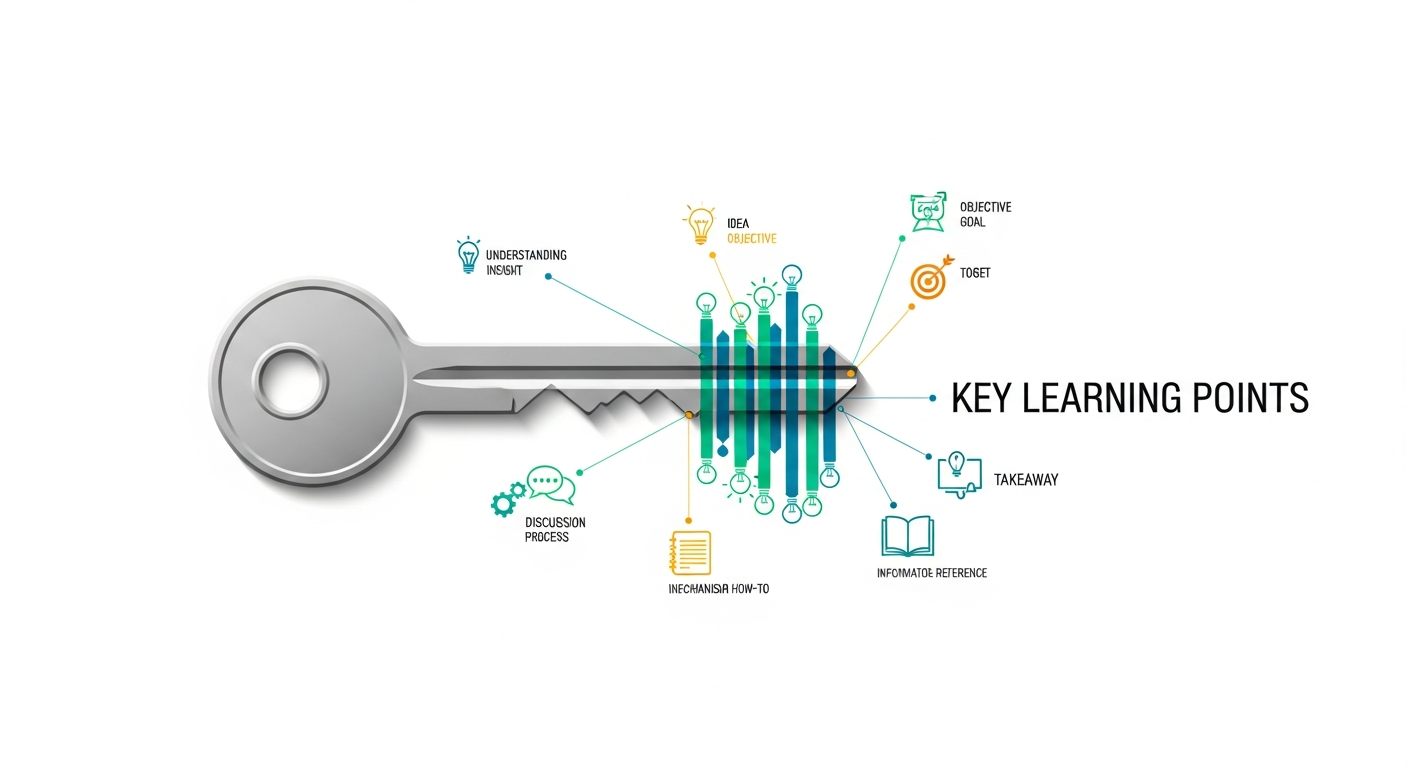
A Key Learning Point is more than just a bullet point in a lesson plan. It represents the essential knowledge, a critical skill, or a pivotal behavioral change that learners must acquire, internalize, and apply to achieve a specific, desired outcome. KLPs are the foundational building blocks upon which competence is built and performance is enhanced.
Consider the varying demands across industries: in Compliance, a KLP might be understanding a specific regulatory update; in Health Care, it could be a new patient safety protocol; in Sales, it might be mastering a new product feature or objection-handling technique. For any organization utilizing a robust LMS, the ability to clearly define, track, and reinforce these points is paramount.
The Strategic Imperative: Why KLPs Drive Business Outcomes
Focusing on KLPs transforms L&D from a reactive function into a proactive business driver. By pinpointing what truly matters, L&D leaders can:
- Optimize Resource Allocation: Direct training efforts and budgets towards areas with the highest potential impact, ensuring maximum ROI. This is especially true when considering a sophisticated learning content management system.
- Enhance Performance: Equip employees with precisely the skills they need to excel in their roles, leading to improved individual and team performance.
- Mitigate Risks: In sectors like Banking, Finance, Pharma, and Oil and Gas, mastering compliance-related KLPs can significantly reduce operational and legal risks. Effective Risk-focused Training is built entirely on this principle.
- Accelerate Onboarding: Streamline the learning curve for new hires by focusing on essential knowledge and skills, bringing them to productivity faster.
- Foster Continuous Development: Create a culture where learning is targeted, relevant, and directly linked to career progression and organizational goals. A modern learning management software facilitates this.
Identifying and Delivering Key Learning Points in the Modern Age
The process of identifying KLPs has evolved beyond simple surveys. It now leverages data analytics, performance reviews, industry benchmarks, and even AI to pinpoint critical skill gaps and emerging needs. Once identified, the delivery mechanism is equally crucial for effective absorption and retention.
Leveraging Innovative eLearning Methodologies
Modern L&D leaders are turning to advanced eLearning methodologies and platforms to deliver KLPs efficiently and effectively:
- Microlearning: Breaking down complex topics into bite-sized, digestible modules ensures that KLPs are absorbed quickly and retained longer. A Microlearning LMS is specifically designed to facilitate this, ideal for busy professionals in high-stakes industries like Health Care or Finance.
- Gamification: By integrating game-like elements, L&D can transform mundane, but essential, training—such as compliance mandates—into engaging experiences. A Gamified LMS enhances motivation, competition, and ultimately, the mastery of KLPs.
- Adaptive Learning: This personalized approach adjusts the learning path based on an individual's progress, strengths, and weaknesses, ensuring that each learner focuses on the KLPs they most need to master. Adaptive Learning maximizes efficiency and effectiveness, especially in complex fields like Engineering or Pharma.
- AI-Powered Content Creation: Tools that leverage artificial intelligence can rapidly develop, update, and personalize learning content, ensuring that KLPs are always current and relevant. An AI Powered Authoring Tool is a game-changer for keeping up with the pace of change in industries like Sales and Banking.
Implementing an enterprise learning management solution that incorporates these features can significantly enhance the strategic value of L&D. Whether it's a cloud based learning management system or an advanced LCMS, the right technology ensures KLPs are not just taught, but truly learned.
Measuring the Impact of Key Learning Points
The true measure of effective KLP deployment is its impact on business metrics. L&D leaders should move beyond completion rates to analyze:
- Performance Improvement: Are employees applying the KLPs? Are their performance metrics improving? (e.g., increased sales, reduced errors, improved safety records).
- Retention Rates: How well are learners retaining the critical information over time?
- Compliance Adherence: For regulated industries, are compliance failures decreasing post-training?
- Skill Gap Closure: Are identified skill gaps narrowing as a direct result of KLP-focused training?
Robust analytics capabilities within a learning management system (LMS) or lms learning management system are essential for gathering these insights, allowing for continuous optimization of learning programs. Many organizations find great value in learning management solutions like MaxLearn LMS for this very reason.
Intelligent Insights for L&D Leaders
As L&D increasingly relies on technology to pinpoint and deliver essential knowledge, specific questions arise that cutting-edge tools are designed to answer.
Question 1: How can organizations pinpoint the most crucial skills for their workforce in a rapidly evolving market?
Leveraging advanced analytics platforms integrated with learning systems allows L&D leaders to analyze performance data, identify skill gaps, and predict future competency needs based on industry trends and organizational goals. These systems can process vast amounts of data to highlight the specific knowledge and behaviors that contribute most directly to success and resilience, forming the core Key Learning Points for strategic training initiatives.
Question 2: What specialized training considerations are paramount for ensuring compliance and operational excellence across diverse industry sectors?
For industries with stringent regulations such as Banking, Pharma, and Oil and Gas, specialized learning platforms can offer highly customizable modules that adapt to local laws and specific operational procedures. These platforms use intelligent content tagging and delivery to ensure that employees receive accurate, up-to-date, and relevant information tailored to their exact roles and the regulatory landscape of their particular sector, thereby ensuring targeted and effective compliance training.
Question 3: What practical strategies can L&D leaders employ to ensure high engagement and measurable impact from their core learning initiatives?
To maximize engagement and impact, L&D leaders should prioritize interactive learning experiences that go beyond passive content consumption. This includes incorporating simulations, real-world case studies, and collaborative projects. Utilizing platforms that support Gamified LMS features and Adaptive Learning pathways allows for personalization and immediate feedback, which are crucial for reinforcing Key Learning Points. Furthermore, integrating learning outcomes directly with performance management systems provides a clear line of sight from training completion to on-the-job effectiveness.
Conclusion
For L&D Vice Presidents, Directors, Senior Managers, and Managers, mastering Key Learning Points is not merely an operational task; it's a strategic imperative. It's about ensuring that every learning intervention is precise, impactful, and directly contributes to organizational success and resilience. By embracing data-driven identification, leveraging innovative eLearning technologies, and rigorously measuring impact, L&D leaders can elevate their function from a support role to a core driver of competitive advantage across all industries. The future of effective enterprise learning management hinges on this focused, strategic approach.
.jpg)


