

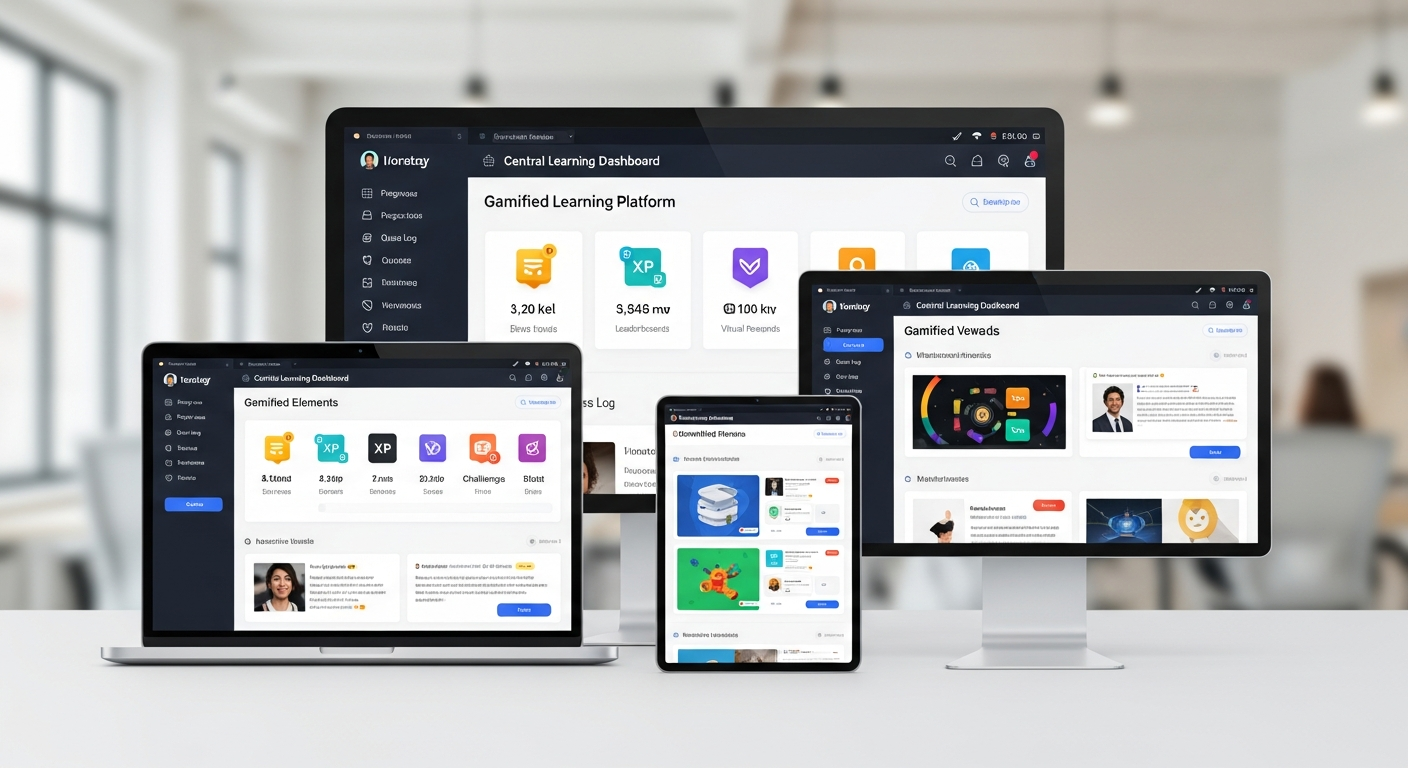
Unlocking Potential: The Strategic Advantage of a Gamified Learning Platform in L&D
In today's fast-evolving corporate landscape, the traditional approach to learning and development is often insufficient to meet the dynamic needs of employees and organizations. Vice Presidents, Directors, and Senior Managers of L&D across industries—from Compliance, Sales, Banking, Finance, and Insurance to Retail, Pharma, Healthcare, Hospitality, Oil and Gas, and Mining—are constantly seeking innovative solutions to drive engagement, improve knowledge retention, and ultimately, impact business performance. This quest leads many to a powerful and increasingly popular solution: the gamified learning platform.
Imagine a learning environment where employees are not just passively consuming content, but actively participating, competing, and progressing through challenges, much like their favorite games. This is the essence of a gamified learning platform, transforming mundane training into an exciting, motivating, and highly effective experience.
What Exactly is a Gamified Learning Platform?
A gamified learning platform integrates game-like elements and principles into educational content and processes. It's more than just adding points or badges; it’s about leveraging intrinsic human motivators such as competition, achievement, status, self-expression, and altruism to enhance the learning journey. By applying these mechanics to corporate training, organizations can create immersive experiences that captivate learners and foster a deeper connection with the material.
At its core, a robust Gamified LMS combines engaging content delivery with interactive features that mimic game structures. This can range from simple quizzes with leaderboards to complex simulations and role-playing scenarios, all designed to make learning intuitive, enjoyable, and memorable.
Why Gamification is Essential for Modern L&D Leaders
For L&D professionals seeking to elevate their training programs, a gamified approach offers a multitude of benefits:
- Boosted Engagement and Participation: Traditional courses often suffer from low completion rates. Gamification injects fun and purpose, motivating learners to start, continue, and complete modules. This is especially vital in industries like Compliance, where understanding complex regulations is critical but often seen as dry.
- Enhanced Knowledge Retention: Active participation, problem-solving, and immediate feedback inherent in gamified learning reinforce concepts more effectively than passive methods. This leads to better long-term recall, crucial for Sales teams needing to master product knowledge or Healthcare professionals adhering to precise protocols.
- Measurable Progress and Performance: Gamified platforms inherently generate rich data on learner performance, progress, and areas of struggle. This allows L&D leaders to gain actionable insights, measure the effectiveness of their training, and continuously optimize content. This data-driven approach is invaluable for all industries, from Banking to Oil and Gas, ensuring training directly addresses skill gaps.
- Fostering a Culture of Continuous Learning: The addictive nature of games encourages repeated engagement. Learners are more likely to return to the platform, explore new content, and continuously upskill, creating a proactive learning culture within the organization.
- Safe Environment for Risk-focused Training: In high-stakes environments like Finance, Pharma, or Mining, gamified simulations provide a safe, risk-free space for employees to practice critical procedures, respond to emergencies, and make decisions without real-world consequences. This type of Risk-focused Training is invaluable for building competency and confidence.
Key Features of an Effective Gamified Learning Platform
When evaluating a learning management system for gamification, consider platforms that offer:
- Points, Badges, and Leaderboards: These core elements provide instant recognition and foster healthy competition, driving learners to achieve more.
- Challenges and Quests: Structuring learning into progressive quests or challenges makes the journey feel purposeful and rewarding.
- Personalized Learning Paths: An advanced LMS should offer Adaptive Learning capabilities, allowing the platform to adjust content difficulty and recommendations based on individual learner performance and preferences. This ensures relevance and prevents disengagement.
- Real-time Feedback: Immediate feedback on quizzes or simulated scenarios is crucial for reinforcing correct behaviors and correcting misunderstandings promptly.
- Storytelling and Narrative: Embedding learning content within compelling narratives makes it more relatable and memorable.
- Integration with Microlearning: A Microlearning LMS naturally complements gamification, breaking down complex topics into bite-sized, easily digestible modules that are perfect for game-like challenges.
- Robust Analytics: Detailed reporting on learner progress, engagement levels, and mastery of concepts provides L&D leaders with the data needed to demonstrate ROI.
- Content Creation Tools: An intuitive AI Powered Authoring Tool can significantly streamline the creation of engaging, gamified content, allowing L&D teams to quickly develop interactive modules tailored to specific needs.
Leveraging AI for Next-Gen Gamified Learning
The convergence of artificial intelligence with gamified learning platforms creates unprecedented opportunities for L&D. AI can supercharge personalization, optimize content, and provide deeper insights into learner behavior. Here are some common inquiries regarding AI's role:
How can artificial intelligence personalize the gamified learning experience for diverse teams?
AI algorithms analyze vast amounts of learner data, including performance, preferences, learning styles, and even emotional responses to content. This allows the system to dynamically adapt game difficulty, recommend specific challenges, and suggest personalized learning paths. For a global organization, AI can tailor content delivery to individual roles, cultural contexts, and language requirements, ensuring that each learner receives the most relevant and effective experience, whether they are in a branch office in Tokyo or a mining site in Nevada.
What are the considerations for deploying a scalable, AI-enhanced gamified platform across multinational operations?
Deploying such a platform globally requires a cloud based learning management system that can handle large user bases, provide robust security, and offer localized content management. AI assists by automating content translation, adapting cultural nuances in game scenarios, and providing regionalized analytics. It also ensures consistent learning quality across diverse geographic locations by identifying common skill gaps and recommending universal interventions, while still allowing for local customization. The scalability of an enterprise learning management solution with AI capabilities means companies can maintain global standards while respecting local variations.
Beyond engagement, how does AI contribute to measurable business outcomes through gamified training initiatives?
AI moves beyond surface-level engagement metrics by correlating learning data with business performance indicators. It can predict which employees might be at risk of underperformance based on their training patterns, identify systemic knowledge gaps that could impact productivity or compliance, and even optimize resource allocation for L&D initiatives. By providing predictive analytics and prescriptive recommendations, AI helps L&D leaders demonstrate the tangible ROI of their gamified training, linking improved sales figures, reduced compliance breaches, or enhanced operational efficiency directly back to the learning interventions. This makes an AI-driven MaxLearn LMS not just a training tool, but a strategic business asset.
Choosing the Right Learning Content Management System
When selecting a gamified LMS, L&D leaders should look for a comprehensive Learning content management system (LCMS) that offers robust features, scalability, and intuitive design. The ideal learning management software will not only facilitate gamification but also provide seamless content management, advanced reporting, and integration capabilities. A cutting-edge learning management system should transform how your organization approaches training, fostering a dynamic and engaging environment.
The market offers numerous learning management solutions, but finding one that truly integrates gamification with advanced features like AI and microlearning is key. An effective lms learning management system will support your strategic L&D goals, driving both individual growth and organizational success.
Conclusion
The future of corporate learning is interactive, personalized, and engaging. For L&D Vice Presidents, Directors, and Managers across critical sectors like Finance, Healthcare, and Retail, embracing a gamified learning platform isn't just an option—it's a strategic imperative. By leveraging the power of game mechanics and the intelligence of AI, organizations can transform their training programs from a mere requirement into a powerful engine for skill development, performance enhancement, and competitive advantage.
Invest in a gamified learning platform to empower your workforce, drive measurable results, and cultivate a culture where learning is not just effective, but truly enjoyable.
.jpg)


