

Operant Conditioning: Architecting High-Performance Behaviors in Enterprise Learning
As Vice Presidents, Directors, and Senior Managers in Learning & Development, you are constantly seeking scientifically-backed methodologies to elevate corporate training effectiveness. You’re not just delivering content; you’re shaping behaviors that drive compliance, boost sales, mitigate risk, and enhance overall organizational performance. At the heart of many successful behavioral change strategies lies an often-underestimated psychological principle: Operant Conditioning Theory.
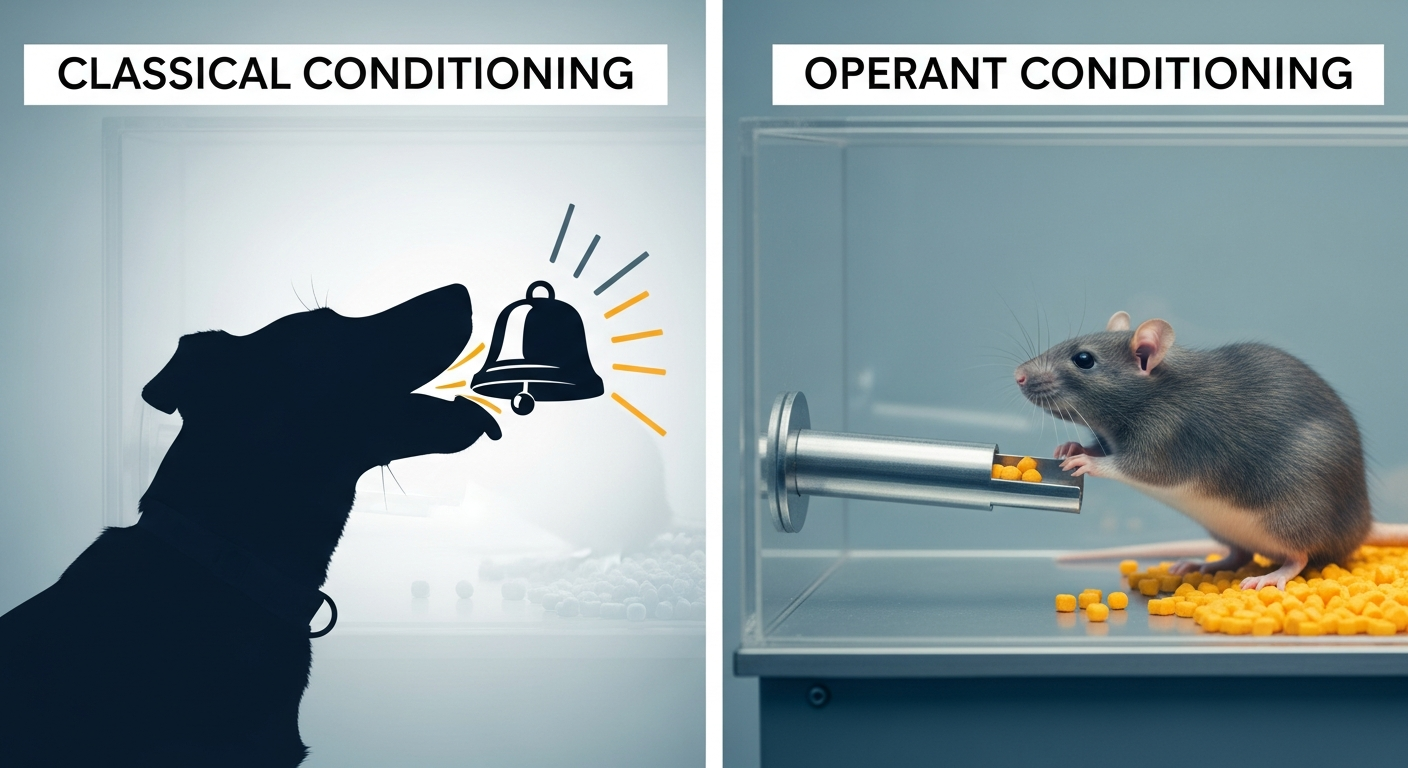
Developed by B.F. Skinner, Operant Conditioning provides a robust framework for understanding how consequences influence voluntary behavior. Far from a relic of academic psychology, its principles are profoundly relevant in today’s complex corporate training landscape, especially when integrated with modern eLearning technologies. This article explores how L&D leaders can harness Operant Conditioning to design more impactful training, foster desired employee behaviors, and achieve tangible business outcomes across diverse industries.
Understanding Operant Conditioning: The Foundation of Behavior
Operant Conditioning posits that behavior is learned through consequences. Simply put, behaviors followed by desirable outcomes are more likely to be repeated, while those followed by undesirable outcomes are less likely. This theory is built on four core components:
- Positive Reinforcement: Adding a desirable stimulus to increase a behavior (e.g., praise for completing a module, a bonus for exceeding sales targets).
- Negative Reinforcement: Removing an undesirable stimulus to increase a behavior (e.g., an employee completes mandatory compliance training to avoid repeated reminder emails).
- Positive Punishment: Adding an undesirable stimulus to decrease a behavior (e.g., a verbal warning for not following safety protocols).
- Negative Punishment: Removing a desirable stimulus to decrease a behavior (e.g., loss of a privilege due to ethical misconduct).
For L&D, the focus is predominantly on reinforcement, particularly positive reinforcement, as it fosters a proactive and motivated learning environment. The goal is to design learning experiences that consistently reinforce desired behaviors, making them habitual and ingrained.
The Power of Reinforcement in Corporate Learning
Imagine a sales representative who consistently closes deals, a healthcare professional who meticulously follows patient safety protocols, or a financial advisor who adheres strictly to regulatory guidelines. These are not random occurrences; they are often the result of behaviors shaped by consistent reinforcement. In corporate learning, Operant Conditioning can be applied to:
- Drive Engagement: Immediate feedback and recognition for completing challenging tasks within a Microlearning LMS can keep learners motivated.
- Accelerate Skill Acquisition: Providing rewards (points, badges, leaderboards in a Gamified LMS) for demonstrating new skills encourages their practice and mastery.
- Ensure Compliance: Reinforcing correct procedural steps for compliance training minimizes errors and reduces organizational risk.
- Foster Continuous Improvement: Recognizing and rewarding efforts in upskilling or problem-solving encourages a culture of lifelong learning.
Strategic Application Across Industries
Compliance and Risk Mitigation
In highly regulated sectors like banking, finance, insurance, and pharma, compliance is non-negotiable. Operant Conditioning principles can be used to reinforce correct procedures for data handling, ethical conduct, and regulatory adherence. Immediate positive feedback within Risk-focused Training modules for correct answers or simulation outcomes helps embed critical compliance behaviors, directly mitigating financial and reputational risks.
Sales and Performance
For sales teams across retail, finance, and hospitality, the link between behavior and outcome is clear. Training can reinforce effective sales techniques, customer service excellence, and product knowledge. A Gamified LMS that offers badges for product mastery or points for successful role-play scenarios can significantly motivate sales professionals to adopt and utilize learned behaviors, leading to higher conversion rates.
Financial Sector Mastery
Banking and finance demand precision and ethical decision-making. Training can reinforce complex financial models, fraud detection protocols, and customer advisory best practices. Prompt, constructive feedback on simulated scenarios acts as positive reinforcement, reducing errors and fostering trustworthy client relationships.
Healthcare Excellence
In healthcare, adherence to protocols is literally life-saving. Operant Conditioning can reinforce proper diagnostic procedures, patient interaction techniques, and equipment handling. Through Adaptive Learning paths, correct actions are reinforced, ensuring high standards of patient care and safety.
Industrial Safety (Oil & Gas, Mining)
High-risk industries like Oil & Gas and Mining critically depend on consistent safety behaviors. Training must ingrain safety protocols and emergency procedures. Reinforcement of correct responses in virtual reality simulations or interactive modules can ensure employees automatically perform safe actions under pressure, preventing accidents and saving lives.
Modernizing Operant Conditioning with Technology
The digital age has revolutionized how we apply Operant Conditioning. Modern eLearning platforms, particularly an advanced LMS, are perfectly positioned to deliver timely and consistent reinforcement:
- A Microlearning LMS delivers short, targeted bursts of content, allowing for frequent opportunities for learners to perform desired behaviors and receive immediate positive feedback.
- A Gamified LMS uses points, badges, leaderboards, and virtual rewards to provide continuous positive reinforcement, motivating learners through engaging challenges.
- Adaptive Learning systems can personalize the pace and content, ensuring learners are consistently challenged at their optimal level, leading to more frequent and meaningful successes (reinforcements).
Leveraging Intelligence for Optimal Learning Outcomes
Integrating advanced computational intelligence into learning platforms amplifies the power of Operant Conditioning, allowing for unprecedented levels of personalization and effectiveness.
Question: How can we dynamically adjust learning paths to maximize skill retention and application across our diverse workforce?
Answer: Intelligent systems analyze individual learner performance data in real-time. By understanding where a learner excels and where they struggle, these systems can provide precisely targeted content and interventions. This means immediate positive feedback for correct responses, and constructive, corrective reinforcement for errors, ensuring that desired behaviors are learned and cemented efficiently. An AI Powered Authoring Tool facilitates the creation of such dynamic content, optimizing the learning journey for every individual.
Question: What strategies ensure our global teams receive training that resonates with their specific operational contexts and local regulations?
Answer: Leveraging sophisticated analytical capabilities, learning platforms can tailor content based on geographic location, local customs, and regional compliance mandates. This localization provides relevant and meaningful scenarios, ensuring that the behaviors reinforced are appropriate and effective for specific operational environments. Such context-aware delivery is crucial for Risk-focused Training, where local nuances can significantly impact compliance and safety.
Question: How do we personalize learning experiences to cater to individual learner preferences and accelerate proficiency for diverse roles?
Answer: Modern learning platforms can identify preferred learning styles—whether visual, auditory, or kinesthetic—and deliver content in formats that optimize engagement and comprehension. By understanding how each individual best absorbs and applies information, the system can provide customized reinforcement strategies, leading to faster skill acquisition and more effective behavior shaping across different roles and employee segments. This ensures that every learner receives the optimal stimulus for positive behavioral change through a robust Learning content management system.
Choosing the Right Platform for Behavioral Reinforcement
To effectively implement Operant Conditioning principles, L&D leaders need a powerful and flexible learning management system. Look for a solution that offers:
- Robust analytics to track learner progress and identify areas for intervention.
- Customization options for adaptive learning paths and personalized feedback.
- Gamification features to make learning engaging and provide extrinsic motivation.
- Seamless content delivery, whether through a cloud based learning management system or an enterprise learning management solution.
A comprehensive learning management software, acting as a true LCMS, can be the engine that drives your behavioral change initiatives. The right lms learning management system provides the tools to design, deliver, and measure reinforcement strategies, transforming your training programs into powerful drivers of performance. For L&D leaders seeking advanced learning management solutions that masterfully integrate these principles, explore the capabilities of MaxLearn LMS.
By understanding and strategically applying Operant Conditioning Theory, especially when augmented by intelligent learning platforms, L&D leaders can move beyond mere knowledge transfer. They can actively architect and reinforce the high-performance behaviors critical for success in today’s dynamic business environment, ensuring a demonstrable return on their training investment.
.jpg)


