

What Is Skinner's Theory and Its Enduring Relevance for Modern L&D Leaders?
For Vice Presidents, Directors, and Senior Managers in Learning & Development, the pursuit of effective, measurable training is a constant. In a landscape increasingly shaped by Microlearning LMS platforms, Gamified LMS experiences, and Adaptive Learning methodologies, understanding the foundational theories of how people learn remains paramount. Among these, B.F. Skinner’s theory of operant conditioning stands as a bedrock of behavioral psychology, offering profound insights into designing compelling and impactful training programs across industries like Compliance, Sales, Banking, Finance, Insurance, Retail, Pharma, Health care, Hospitality, Oil and Gas, and Mining.
This article delves into the core tenets of Skinner's theory and explores its practical applications, demonstrating how L&D professionals can harness these principles, even with an AI Powered Authoring Tool, to foster desired behaviors, enhance knowledge retention, and drive organizational performance in today’s dynamic learning environment.
Understanding B.F. Skinner's Theory: Operant Conditioning
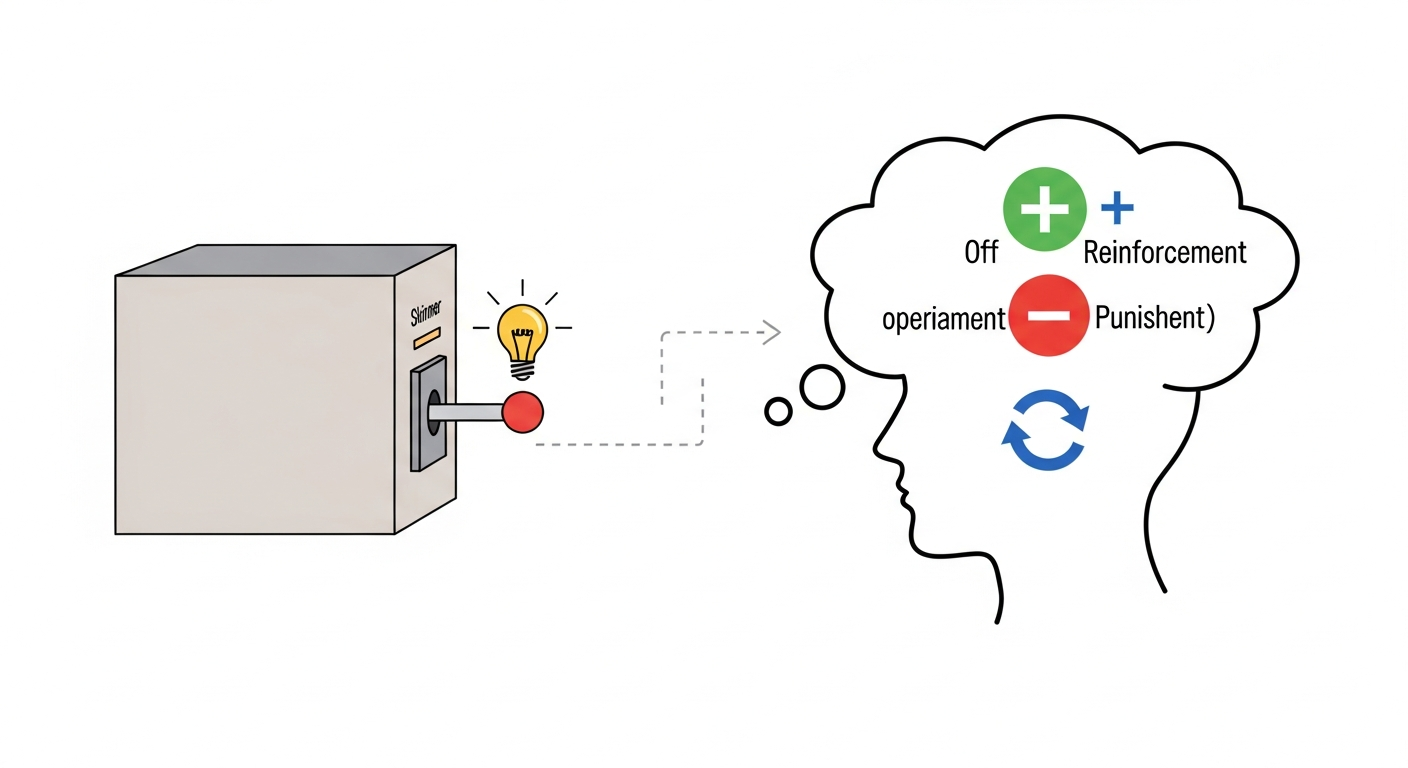
Burrhus Frederic Skinner, a prominent American psychologist, is best known for his work on behaviorism and, specifically, operant conditioning. Unlike classical conditioning (Pavlov), which focuses on involuntary reflexive responses, operant conditioning deals with voluntary behaviors that are influenced by their consequences. Skinner proposed that learning is a function of change in overt behavior, where changes in behavior are the result of an individual's response to events (stimuli) that occur in the environment.
The Four Pillars of Operant Conditioning:
- Positive Reinforcement: Adding a desirable stimulus to increase a behavior. For instance, an employee completes a compliance module correctly and immediately receives a digital badge or a congratulatory message from their learning management software. This makes them more likely to repeat the desired behavior (completing modules accurately).
- Negative Reinforcement: Removing an undesirable stimulus to increase a behavior. Imagine a sales team member who consistently misses their targets, leading to extra, time-consuming coaching sessions. When they meet their target, these extra sessions are ceased, reinforcing the desired behavior of hitting sales goals. It's not punishment, but the removal of something unpleasant.
- Positive Punishment: Adding an undesirable stimulus to decrease a behavior. An employee repeatedly fails to follow safety protocols, leading to a mandatory, inconvenient retraining session. This aims to decrease the undesirable behavior.
- Negative Punishment: Removing a desirable stimulus to decrease a behavior. A manager's poor communication leads to project delays, and as a consequence, they lose the opportunity to lead a high-profile project. This aims to decrease the poor communication behavior.
Skinner also emphasized the importance of reinforcement schedules (continuous vs. intermittent) and shaping, where complex behaviors are learned by reinforcing successive approximations of the desired behavior. These concepts are incredibly powerful when applied to structured learning within an LMS.
Skinner's Principles in Modern L&D Strategy
The relevance of Skinner's theory extends far beyond the psychology lab. For L&D leaders across industries like Pharma, Health care, and Oil and Gas, these principles offer a robust framework for designing effective training solutions that genuinely change behavior and improve performance.
- Clear Objectives and Immediate Feedback: Every training module, especially in enterprise learning management, should have clearly defined behavioral objectives. Once a learner performs the desired action (e.g., answers a question correctly, simulates a sales pitch, correctly identifies a risk), immediate positive feedback is crucial. A sophisticated learning content management system facilitates this by providing instant scoring, correct answers, or even personalized guidance.
- Reinforcement for Progress, Not Just Perfection: Complex skills, like mastering new financial regulations or operating intricate machinery in Mining, aren't learned overnight. L&D professionals can use Skinner's concept of "shaping" by providing reinforcement for small, incremental steps towards the desired outcome. A MaxLearn LMS can track progress through a curriculum, awarding micro-badges or points for completing sections, even if the final mastery isn't yet achieved.
- Gamification as a Powerful Reinforcer: The rise of Gamified LMS platforms is a direct application of Skinnerian principles. Points, leaderboards, virtual rewards, and level progression act as powerful positive reinforcers, motivating learners to engage more deeply, complete training, and achieve mastery. This is particularly effective in engaging diverse workforces in Retail and Hospitality.
- Adaptive Learning for Personalized Reinforcement: Adaptive Learning systems leverage data to tailor content based on a learner's performance. By presenting challenges at the right difficulty level and providing targeted feedback, these systems create an optimal environment for positive reinforcement, preventing frustration (which could lead to negative reinforcement if the difficulty is too high) and optimizing learning paths.
- Building Risk-focused Training: In high-stakes industries, the consequences of inaction or incorrect action can be severe. Skinner's principles help design training where adherence to safety protocols or compliance procedures is heavily reinforced, and deviations lead to immediate, corrective feedback (a form of positive punishment if a negative stimulus is added, or negative reinforcement if an undesirable scenario is avoided).
Leveraging Modern eLearning for Skinnerian Success
Today's learning management solutions and cloud based learning management system architectures provide an unparalleled opportunity to operationalize Skinner's theory. An lms learning management system, for example, can automate immediate feedback, track progress, and administer rewards, making the application of operant conditioning scalable and efficient across global organizations. An LCMS (Learning Content Management System) specifically allows for the granular management and adaptation of content to support diverse reinforcement strategies.
Consider the power of an AI Powered Authoring Tool. Such a tool can dynamically generate scenarios that challenge learners, provide context-specific feedback, and even suggest optimal reinforcement schedules based on learner performance data. This takes the concept of programmed instruction, an early Skinnerian application, to an entirely new level, enabling highly personalized and effective behavioral shaping.
For industries like Banking and Finance, where complex regulations and ethical considerations are paramount, a well-implemented learning management software that incorporates Skinnerian principles can dramatically improve adherence and reduce risk. By systematically reinforcing correct decision-making through interactive simulations and immediate feedback, L&D can build robust learning experiences.
Addressing Common Questions for Smarter L&D
Question: How can learning leaders in the financial sector ensure employees consistently apply complex compliance knowledge in their daily tasks?
Answer: Consistency in applying knowledge is achieved through repeated, reinforced practice. An LMS can deploy scenario-based Microlearning LMS modules that simulate real-world compliance challenges. When employees make correct decisions, they receive immediate positive reinforcement (e.g., "Correct! This action mitigates risk effectively."). If they err, targeted feedback helps them understand the correct path, reducing the likelihood of future mistakes. Risk-focused Training designed with these principles ensures critical behaviors are ingrained.
Question: What strategies can global sales organizations use to boost product knowledge retention and sales performance across diverse teams?
Answer: For sales teams, retention and application are key. Implementing a Gamified LMS provides consistent positive reinforcement through points, badges, and leaderboards for completing product training and achieving sales milestones. Coupling this with an AI Powered Authoring Tool allows for the creation of dynamic, interactive sales simulations that offer immediate feedback and tailor learning paths based on performance, effectively shaping superior sales behaviors.
Question: How can healthcare organizations deliver personalized training that adapts to individual learning styles and performance gaps?
Answer: Adaptive Learning within a comprehensive learning management system is the answer. It continuously assesses a learner's progress and adjusts content and difficulty accordingly. This ensures learners are always challenged but never overwhelmed, providing an optimal environment for positive reinforcement as they master new skills or address specific knowledge gaps. This personalized approach accelerates skill acquisition and boosts confidence in critical healthcare procedures.
Question: What’s the most effective way for L&D in manufacturing and logistics to ensure workers adhere to complex safety protocols?
Answer: Precision in safety protocols requires clear, repeated, and reinforced instruction. Use Microlearning LMS modules that break down complex protocols into digestible steps, followed by immediate quizzes or interactive simulations. A Gamified LMS can reward consistent adherence with recognition, fostering a safety-first culture. Furthermore, providing feedback that removes undesirable outcomes (e.g., avoiding potential accidents in simulations) acts as negative reinforcement, strengthening safe practices.
Question: As an L&D leader in a rapidly evolving tech industry, how do I ensure our training programs remain cutting-edge and responsive to new skill requirements?
Answer: To stay cutting-edge, leverage a flexible cloud based learning management system combined with an AI Powered Authoring Tool. This combination allows for rapid content creation and updates, ensuring training reflects the latest industry developments. The system can identify skill gaps in real-time and push relevant, reinforced micro-modules to employees, providing continuous learning and adapting to the dynamic needs of the workforce. This continuous, reinforced learning environment ensures agility and expertise.
Challenges and Considerations
While powerful, a purely Skinnerian approach can sometimes be criticized for overlooking intrinsic motivation, cognitive processes, and individual differences. L&D leaders must strike a balance, integrating behavioral principles with other pedagogical approaches. The goal is not to "train" employees like animals, but to intelligently design environments where desired behaviors are naturally reinforced, leading to sustained performance and growth. The ethical application of reinforcement means ensuring transparency, fairness, and alignment with organizational values.
Conclusion
B.F. Skinner's theory of operant conditioning offers timeless principles that remain profoundly relevant for today's L&D leaders. By understanding and strategically applying concepts like positive reinforcement, immediate feedback, and shaping, L&D professionals can design highly effective training programs that drive behavioral change and improve organizational outcomes across all industries. From enhancing compliance in Banking to boosting sales performance in Retail, the intelligent application of Skinnerian psychology, powered by modern MaxLearn LMS solutions and learning management software, paves the way for a more engaged, skilled, and high-performing workforce. Embracing these foundational theories, in conjunction with cutting-edge enterprise learning management platforms, is not just about understanding how people learn; it’s about strategically designing environments where they thrive.
.jpg)


