

Single-Loop and Double-Loop Learning: Elevating L&D from Reactive to Transformative
In the dynamic world of corporate learning, L&D leaders face the perpetual challenge of not just keeping pace, but actively shaping the future of their organizations. Beyond merely delivering courses, the true impact of learning and development lies in its ability to foster genuine organizational change. This pursuit brings us to two fundamental concepts from organizational learning theory: Single-Loop Learning and Double-Loop Learning. While both are crucial, understanding their distinction and strategic application is what separates good L&D initiatives from truly transformative ones. For Vice Presidents, Directors, and Senior Managers of L&D, mastering these loops is key to unlocking profound growth across all industries, from Compliance to Healthcare, Banking to Retail.
Understanding Single-Loop Learning: The 'Fix It' Approach
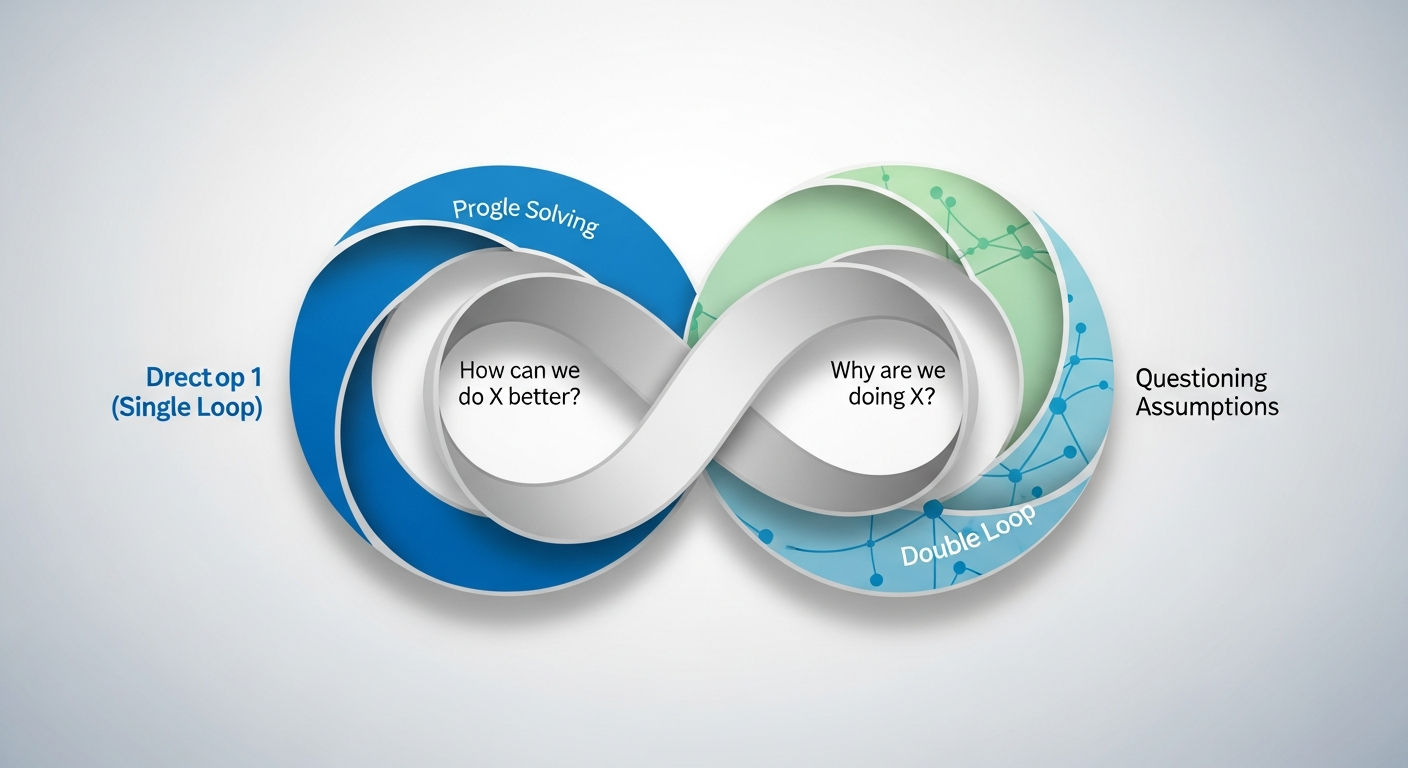
Single-Loop Learning is akin to a thermostat. When the temperature in a room deviates from the set point, the thermostat senses this discrepancy and activates the heating or cooling system to bring it back into alignment. It addresses symptoms, corrects errors, and improves efficiency within existing rules, policies, and goals. It asks, "Are we doing things right?"
- Characteristics: Corrective action, problem-solving within established frameworks, focus on efficiency, immediate feedback loops.
- L&D Examples:
- Updating a compliance module to reflect new regulations.
- Improving a sales training program based on low quiz scores or feedback that specific product features weren't covered adequately.
- Fixing a broken link in an eLearning course.
- Refining onboarding materials to clarify a commonly misunderstood policy.
This type of learning is essential for operational excellence. It helps organizations fine-tune processes, ensure adherence to standards, and respond swiftly to immediate challenges. Without effective Single-Loop Learning, an organization would constantly repeat the same mistakes. Modern Microlearning LMS platforms are excellent tools for facilitating rapid, targeted single-loop adjustments, allowing L&D teams to deploy quick updates and feedback mechanisms efficiently.
Embracing Double-Loop Learning: The 'Question It' Paradigm Shift
Double-Loop Learning goes a step further. Instead of just correcting errors within the existing framework, it challenges the framework itself. It questions the underlying assumptions, values, policies, and goals that led to the error in the first place. It asks, "Are we doing the right things?" and "Why are we doing them this way?"
- Characteristics: Critical reflection, challenging deeply held beliefs, paradigm shifts, re-evaluating goals and strategies, questioning the 'why'.
- L&D Examples:
- Instead of just updating a compliance module, questioning why employees struggle with compliance and redesigning the entire approach to foster a culture of ethical behavior rather than just rule-following.
- Analyzing why sales training isn't translating into better performance and then questioning the fundamental sales strategy or even the product-market fit, leading to a complete overhaul of the sales methodology.
- Re-evaluating the entire purpose and structure of onboarding, leading to a new strategic approach to employee integration.
This is where true innovation and sustainable competitive advantage emerge. Double-Loop Learning is transformative, driving organizations to adapt to rapidly changing environments rather than just optimizing old ways of working. It requires introspection, courage, and a willingness to dismantle and rebuild.
The Critical Difference for L&D Leaders
For L&D VPs and Directors, distinguishing between these two learning loops is paramount for strategic planning. Single-Loop Learning improves efficiency; Double-Loop Learning improves effectiveness and relevance. An L&D strategy that only focuses on single-loop improvements will lead to highly efficient delivery of potentially outdated or misaligned training. Conversely, an exclusive focus on double-loop thinking without the ability to implement changes efficiently can lead to analysis paralysis.
The challenge lies in fostering both. Organizations in highly regulated sectors like Banking, Pharma, and Healthcare often excel at single-loop learning due to strict compliance requirements. However, neglecting double-loop opportunities can lead to stagnation, preventing them from adapting to new market realities or technological advancements.
Integrating Learning Loops with Modern eLearning
Modern eLearning technologies are powerful catalysts for both Single-Loop and Double-Loop Learning. They provide the infrastructure to not only deliver content but also to gather insights, stimulate reflection, and facilitate continuous improvement.
- For Single-Loop Efficiency:
- A robust Microlearning LMS allows for rapid content updates, immediate feedback mechanisms, and agile deployment of bite-sized learning modules. This enables L&D to quickly address skill gaps or update employees on new policies, a common need in industries like Retail or Oil and Gas.
- Gamified LMS features can provide immediate performance feedback, helping learners correct mistakes and improve within the current system, making compliance or sales training more engaging and effective.
- For Double-Loop Transformation:
- Adaptive Learning technologies can identify deeper patterns in learner performance and engagement, prompting L&D to question the fundamental design of entire learning pathways or even the strategic goals they support. If learners consistently struggle with a specific concept, adaptive platforms can flag this, leading to an examination of why that concept is difficult, rather than just reteaching it in the same way.
- An AI Powered Authoring Tool doesn't just speed up content creation; it can analyze existing content and suggest alternative pedagogical approaches or even identify potential biases or outdated information, pushing L&D to reconsider foundational learning strategies.
- Implementing Risk-focused Training can move beyond simply teaching employees how to mitigate identified risks. It encourages the L&D team to ask why those risks exist in the first place, challenging organizational processes and cultural norms to prevent systemic failures in areas like finance, insurance, or healthcare.
Intelligent Insights for Enhanced Learning and Development
Leveraging advanced analytics and intelligent systems is revolutionizing how organizations approach learning, moving beyond mere data collection to actionable foresight. Here are some common questions and insights that intelligent systems can provide:
- Question: How can our learning initiatives be more impactful across diverse employee demographics and operational contexts?
- Insight: Intelligent platforms analyze engagement patterns, performance data, and cultural nuances to tailor content delivery and instructional strategies. This ensures that learning materials resonate deeply with individual learners, regardless of their background or regional location, significantly boosting the overall effectiveness and retention of information in complex global organizations.
- Question: What is the practical implication of adopting modern learning technologies for our geographically dispersed workforce?
- Insight: Advanced digital learning environments enable consistent, high-quality training delivery to teams spread across different cities or countries. By localizing content and providing real-time access to resources, these systems foster a unified learning experience, which is crucial for maintaining compliance standards and operational consistency across all branches of a multinational enterprise.
- Question: How can we develop highly individualized learning journeys that genuinely cater to each professional's unique needs and career trajectory?
- Insight: Sophisticated algorithms process learner interactions, skill assessments, and career aspirations to dynamically recommend bespoke content, progressive pathways, and personalized feedback. This adaptive approach not only maximizes individual engagement but also ensures that every learning endeavor directly contributes to the professional's growth and the strategic objectives of the organization.
Industry-Specific Applications and the Road Ahead
The application of both learning loops is universal yet distinct across industries:
- Compliance: Single-loop for new regulations; double-loop for cultivating an ethical, proactive compliance culture.
- Sales: Single-loop for product updates; double-loop for rethinking customer engagement strategies.
- Banking & Finance: Single-loop for new financial products; double-loop for re-evaluating risk management philosophies or digital transformation strategies.
- Healthcare: Single-loop for updated medical procedures; double-loop for patient-centric care models or public health approaches.
- Retail & Hospitality: Single-loop for new product lines or service protocols; double-loop for innovating customer experience strategies.
- Pharma: Single-loop for clinical trial updates; double-loop for R&D process innovation or drug development ethics.
- Oil & Gas / Mining: Single-loop for safety protocol revisions; double-loop for sustainable resource management or operational resilience strategies.
The Future of Learning: A Continuous Loop of Evolution
For L&D leaders, the journey involves not just implementing training, but continuously evolving the very approach to learning. It means fostering an organizational culture where employees and leaders are empowered to not only solve problems but also to question the underlying assumptions that create them. This dual capacity for single-loop refinement and double-loop transformation is the hallmark of a truly resilient, innovative, and future-ready organization.
Embracing both Single-Loop and Double-Loop Learning is no longer an academic exercise; it's a strategic imperative for L&D leaders aiming to drive significant organizational impact. By skillfully applying both methodologies, supported by advanced eLearning platforms, L&D can transform from a support function into a strategic partner, capable of guiding their organizations through continuous improvement and profound innovation. It's about building an ecosystem where learning isn't just about knowing more, but about thinking differently and acting more effectively.
.jpg)


