

Beyond the Fix: How Double-Loop Learning Elevates L&D Strategy for Lasting Impact
In the dynamic landscape of modern business, learning and development (L&D) leaders face an unprecedented challenge: not just to train, but to transform. The complexities of global markets, rapid technological advancements, and evolving regulatory frameworks demand more than superficial adjustments. This article delves into two fundamental approaches to organizational learning – Single-Loop Learning and Double-Loop Learning – and illuminates why the latter is indispensable for Vice Presidents, Directors, and Senior Managers of L&D aiming to drive profound, sustainable change across their enterprises.
Understanding Single-Loop Learning: The Adaptive Response
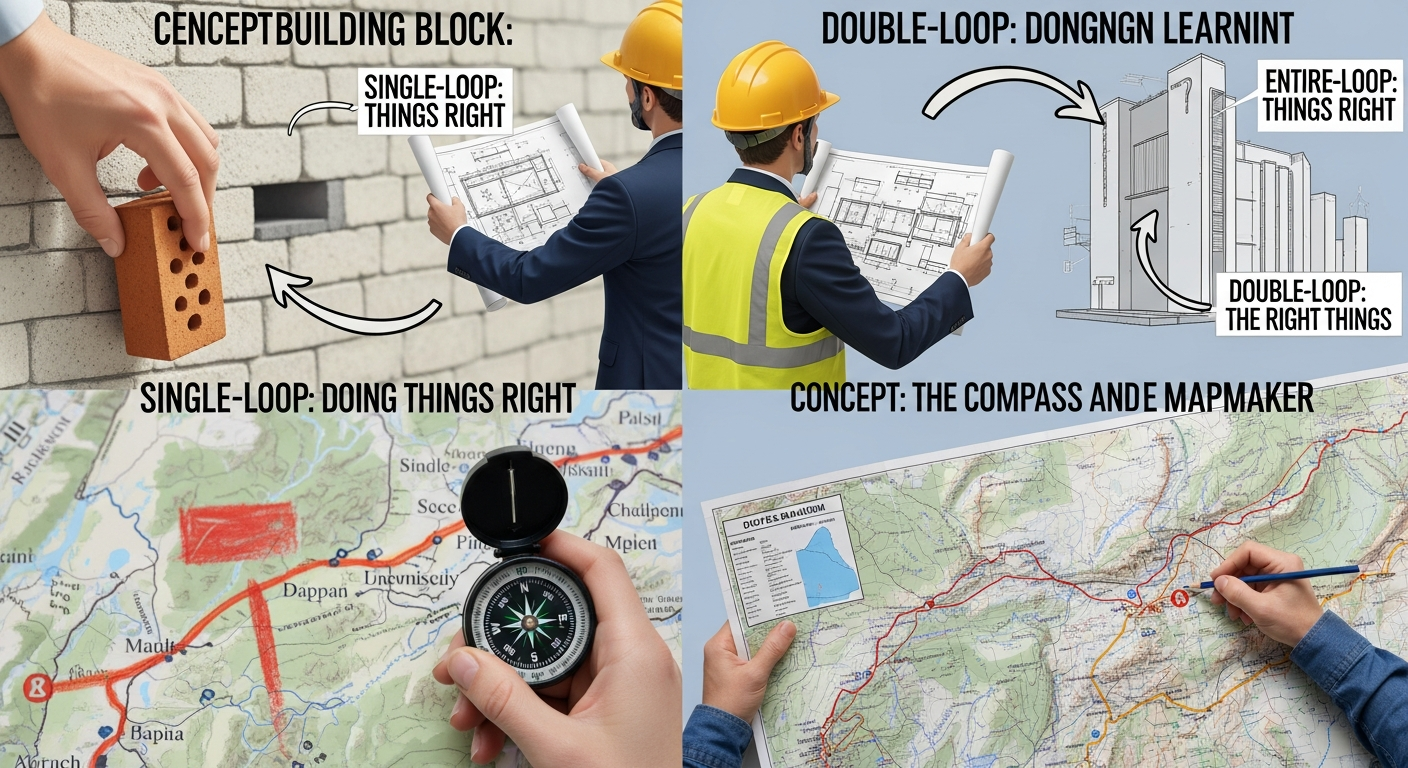
At its core, Single-Loop Learning involves detecting and correcting errors or deviations from established norms without questioning the underlying assumptions, policies, or goals that led to those errors. Think of it like a thermostat: when the room temperature deviates from the set point, the thermostat activates the heating or cooling system to bring it back into line. The goal (the desired temperature) remains unquestioned.
In L&D, Single-Loop Learning is pervasive and often necessary. For instance:
- A compliance team identifies a new regulatory requirement and quickly updates relevant training modules to ensure employees are informed and compliant.
- Sales performance dips in a specific region, leading L&D to provide a refresher course on product features or advanced sales techniques.
- An employee fails a mandatory safety quiz, prompting an immediate re-assignment to the relevant training material until competence is demonstrated.
This approach is highly efficient for immediate problem-solving and maintaining existing systems. It ensures adherence to current standards and facilitates quick adjustments to keep operations running smoothly. However, its limitation lies in its inability to challenge the deeper organizational structures, cultural norms, or mental models that might be contributing to recurring issues or hindering genuine innovation and strategic growth.
Embracing Double-Loop Learning: The Transformative Approach
Double-Loop Learning goes a significant step further. It involves questioning the fundamental assumptions, values, policies, and goals that frame current actions. Instead of just correcting the error, it asks: "Why did this error occur in the first first place, and are our fundamental approaches, values, or strategies flawed?" It’s about challenging the 'set point' on the thermostat itself, or even questioning if a thermostat is the optimal way to manage temperature within the broader system.
For L&D leaders, adopting a Double-Loop Learning mindset means:
- Instead of merely updating a compliance module, an L&D team might question the entire methodology of compliance training. Are employees truly engaged? Is the content genuinely relevant to their daily roles? Is a Microlearning LMS a better, more impactful approach than lengthy annual courses? This could lead to a complete overhaul, focusing on experiential or Risk-focused Training to embed learning.
- When sales performance falters, instead of just retraining on product features, an L&D team might investigate if the sales strategy itself is outdated, if market conditions have shifted dramatically, or if the current incentive structure is inadvertently counterproductive. This deeper analysis could lead to a re-evaluation of the sales process, potentially incorporating new methodologies supported by an AI Powered Authoring Tool for dynamic, context-specific content generation.
- Beyond simply re-testing an employee on safety protocols, the organization might explore why employees consistently make safety errors despite repeated training. Is the equipment poorly designed? Are workplace pressures leading to shortcuts? Is the safety culture genuinely ingrained and reinforced, or just a checkbox exercise?
Double-Loop Learning fosters genuine innovation, systemic change, and a deeper, more profound understanding of organizational dynamics. It's about proactive evolution and sustainable transformation rather than reactive maintenance.
Why Double-Loop Learning is Indispensable for Progressive L&D
In today's complex business environment – from the highly regulated sectors like Banking and Pharma to the rapidly evolving Retail and Hospitality industries – Double-Loop Learning is not merely an option; it's a strategic imperative. For L&D VPs and Directors, it's the key to moving beyond transactional training delivery towards becoming a strategic partner in organizational growth and resilience.
- Fostering True Agility: It enables organizations to adapt not just tactically, but strategically, to market shifts, technological disruptions, and evolving workforce needs across all industries, including Oil and Gas, and Mining.
- Driving Innovation: By daring to challenge established norms and mental models, it creates space for groundbreaking ideas and processes that single-loop learning would inadvertently suppress.
- Enhancing Engagement & Performance: When L&D questions its own efficacy and impact, it designs more relevant, engaging, and ultimately more effective learning experiences, leading to better individual and collective performance. Utilizing a Gamified LMS, for instance, is often a double-loop decision to fundamentally rethink learner engagement.
- Building Resilience: Organizations that regularly engage in double-loop learning are better equipped to learn from failures, anticipate future challenges, and build robust systems that prevent recurring issues, strengthening their position in competitive markets.
Implementing Double-Loop Learning in Your L&D Strategy
Transitioning from a predominantly single-loop to a double-loop learning culture requires deliberate effort and a steadfast commitment from leadership. Here’s how L&D VPs, Directors, and Managers can cultivate this transformative approach:
Cultivating a Culture of Inquiry
- Promote Psychological Safety: Create an environment where challenging assumptions, raising uncomfortable questions, and admitting errors are not just tolerated but actively encouraged, fostering genuine learning.
- Embrace Data-Driven Reflection: Beyond just tracking completion rates, meticulously analyze performance data, qualitative feedback, and tangible business impact metrics to identify underlying patterns and systemic issues. For example, use data to understand if an Adaptive Learning approach is truly changing behaviors and driving outcomes, or merely improving knowledge retention.
- Facilitate Critical Dialogue: Organize regular, structured sessions where L&D teams, cross-functional business stakeholders, and even learners can collectively analyze failures, question established practices, and brainstorm radical solutions.
- Develop Systemic Thinking: Train L&D professionals to look beyond immediate, isolated problems and understand the interconnectedness of various organizational elements and processes.
Leveraging Intelligent Systems for Deeper Learning Insights
The advent of sophisticated analytical technologies and advanced learning platforms provides unprecedented opportunities to foster double-loop learning. By moving beyond basic reporting and superficial metrics, L&D can tap into profound insights that expose fundamental systemic issues and guide strategic realignment.
Strategic Inquiries for Enhanced Learning Agility
Consider how modern analytical capabilities and intelligent systems can empower your L&D strategy to achieve deeper, more transformative impact:
Question: How can advanced analytical platforms help us understand why current training methods might be falling short, beyond just tracking simple completion rates or quiz scores?
Answer: Sophisticated analytical engines can meticulously analyze learner interactions, on-the-job performance data, and even qualitative feedback and sentiment, revealing nuanced patterns that indicate systemic issues rather than just individual knowledge gaps. This granular data enables a critical shift from merely fixing a course’s content to fundamentally rethinking its design, delivery methodology, and ultimate business impact. For instance, in the Healthcare sector, understanding why medical staff consistently struggle with a specific procedure might reveal a flaw in the procedure design itself, not solely deficiencies in the training delivery.
Question: What dynamic tools exist to benchmark our training effectiveness against industry leaders or proactively predict future skill requirements based on wider market trends and global developments?
Answer: Cutting-edge predictive analytics and global learning intelligence platforms can aggregate anonymized data from various sectors and geographical locations, offering invaluable insights into best practices and emerging skill demands. This empowers L&D leaders, particularly in global industries like Oil & Gas, Finance, or Pharmaceuticals, to proactively adjust their strategies. It ensures learning initiatives are not only relevant today but also future-proof, allowing an organization to anticipate and prepare for changes before they become critical challenges.
Question: How can we ensure that our learning interventions are not just broadly effective for a group, but truly transformative for each individual, influencing their unique on-the-job performance and long-term career trajectory?
Answer: Tailored learning experiences, powered by sophisticated recommendation algorithms and individual performance data, can adapt content and pathways based on an individual's unique needs, learning styles, and career aspirations. This precision allows L&D to move beyond generic, one-size-fits-all solutions, fostering deep personal growth and contributing significantly to systemic organizational improvement. In a Retail environment, this could mean an associate's training path evolves based on their customer service scores, inventory management efficiency, or expressed career interests, leading to a truly personalized and impactful development journey.
Conclusion: The Path to Sustainable L&D Excellence
For L&D VPs, Directors, and Senior Managers, embracing Double-Loop Learning is a profound commitment to continuous, deep-seated improvement. It’s about transforming L&D from a reactive function into a proactive, strategic powerhouse that not only addresses immediate skill gaps but also fundamentally reshapes organizational capabilities, fosters innovation, and strengthens corporate culture. By daring to question fundamental assumptions, leveraging intelligent insights to uncover deeper truths, and fostering a pervasive culture of critical inquiry, you can unlock sustainable growth, drive unparalleled innovation, and ensure your organization is truly ready for tomorrow’s complex challenges. The future of L&D isn't just about what you teach, but how profoundly you're willing to learn and evolve yourselves.
.jpg)


