

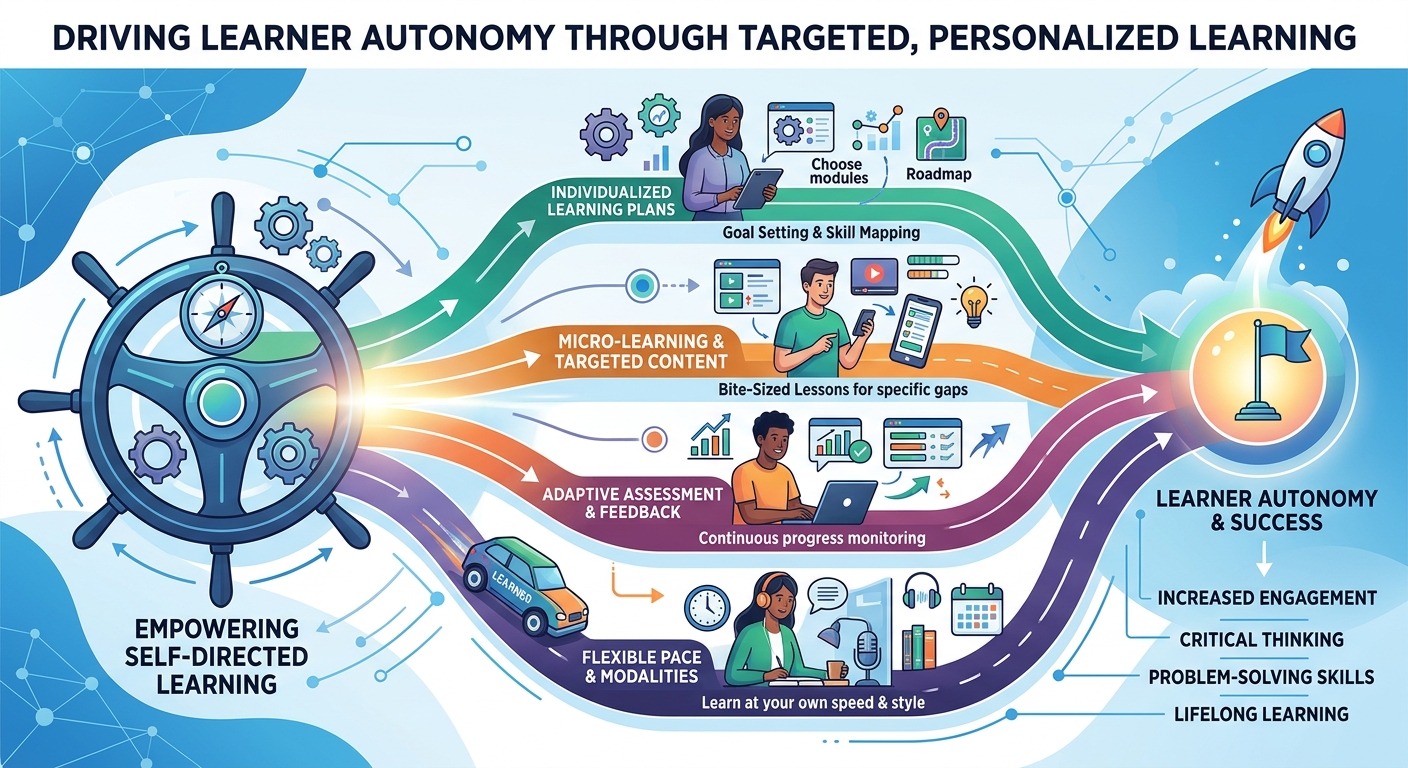
Driving Learner Autonomy Through Targeted, Personalized Learning
In today's fast-evolving corporate landscape, the traditional one-size-fits-all approach to corporate training is becoming increasingly obsolete. Learning and Development (L&D) leaders across industries—from Compliance and Sales to Banking, Finance, Insurance, Retail, Pharma, Health care, Hospitality, Oil and Gas, and Mining—are constantly seeking innovative strategies to empower their workforce. The key to unlocking true potential and achieving sustained growth lies in fostering learner autonomy, an approach profoundly enhanced by targeted, personalized learning experiences. This article delves into how L&D professionals can champion this paradigm shift, leveraging modern technologies to cultivate a self-directed, highly engaged learning culture.
The Imperative for Learner Autonomy in Modern L&D
Learner autonomy is more than just allowing employees to choose courses; it's about empowering them to take ownership of their professional development, understanding their unique needs, and actively shaping their learning journey. In an era where skills obsolescence is a constant threat, fostering this autonomy is crucial for organizational agility and competitive advantage.
Why Traditional Training Models Fall Short
- Irrelevance: Generic content often fails to resonate with individual job roles or career aspirations.
- Disengagement: Passive consumption of information leads to low retention and application.
- Inefficiency: Time and resources are often wasted on training that doesn't directly address specific skill gaps or business objectives.
- Lack of ownership: Learners feel disconnected from their own development path, viewing training as a compliance burden rather than a growth opportunity.
The Power of Personalized Learning Paths
Personalized learning is the antidote to these challenges. It recognizes that every learner comes with a unique set of existing knowledge, learning styles, goals, and professional contexts. By tailoring content, pace, and delivery methods, organizations can create learning experiences that are highly relevant, engaging, and effective. This approach not only caters to individual needs but also significantly boosts learner motivation and autonomy, as individuals feel valued and invested in their growth.
Leveraging Data for Deeper Personalization
The foundation of truly personalized learning lies in robust data analytics. By understanding learner preferences, performance metrics, skill gaps, and career aspirations, L&D teams can craft highly targeted interventions. This data-driven approach allows for dynamic content recommendations, adaptive assessments, and individualized feedback, transforming a static curriculum into a living, evolving learning ecosystem.
Technology as an Enabler: From LMS to Intelligent Platforms
The evolution of learning management software has been pivotal in making personalized learning a scalable reality. Modern LMS platforms have moved beyond simple content repositories, offering sophisticated tools that facilitate dynamic learning experiences. A robust learning management system, especially a cloud based learning management system, provides the infrastructure for delivering diverse content, tracking progress, and enabling collaboration across vast enterprise learning management landscapes.
The Role of Microlearning LMS in Fostering Autonomy
Microlearning, delivered through a specialized Microlearning LMS, is a perfect complement to personalized learning and a powerful driver of autonomy. By breaking down complex topics into bite-sized, digestible modules, learners can access relevant information precisely when and where they need it. This self-paced, on-demand format empowers employees to proactively seek out knowledge, address immediate skill gaps, and integrate learning seamlessly into their workflow. It’s an ideal solution for busy professionals in sectors like healthcare or sales, who benefit from just-in-time learning content management system solutions that respect their demanding schedules.
Engaging Learners with Gamified LMS
Engagement is paramount for sustaining learner autonomy. A Gamified LMS injects elements of friendly competition, rewards, and interactive challenges into the learning process. By integrating points, badges, leaderboards, and scenarios, gamification transforms mundane training into an exciting journey. This approach not only boosts participation and completion rates but also fosters a sense of achievement and self-motivation, encouraging learners to take charge of their progress and explore new content with enthusiasm. For industries like compliance and finance, where training can be dense, gamification makes vital information more approachable and memorable.
Building Truly Adaptive Learning Experiences
Adaptive Learning goes a step further than personalization by dynamically adjusting the learning path in real-time based on a learner's performance, interactions, and knowledge gaps. Imagine an lms learning management system that not only recommends content but also modifies the difficulty, sequence, and type of learning activities as the learner progresses. This intelligent tailoring ensures that every minute spent learning is productive, challenging enough to promote growth, yet supportive enough to prevent frustration. Such an approach is invaluable for complex fields like engineering in Oil and Gas or advanced financial products in Banking.
AI's Role in Optimizing Learning Journeys
Artificial intelligence is the engine driving the next generation of personalized and adaptive learning experiences. Its capabilities are transforming how organizations approach talent development.
How are intelligent systems transforming individual learning experiences?
Intelligent systems analyze vast amounts of data to understand individual learning styles, strengths, and weaknesses. They can then dynamically curate content, recommend specific courses or modules, and even adjust the pacing of lessons to suit each learner. For instance, an AI Powered Authoring Tool can automatically generate variations of content to match different learning preferences, ensuring that each employee receives the most effective training possible. This level of customization ensures higher engagement and more efficient skill acquisition across all sectors.
In what ways can advanced algorithms customize training content for diverse global teams?
Advanced algorithms can process demographic, cultural, and geographical data to localize training content effectively. For a global enterprise learning management system, this means adapting scenarios, examples, and even language nuances to resonate with learners in different regions. For example, a compliance training module for a multinational bank can be automatically adjusted to reflect local regulatory frameworks, or sales training for a retail chain might include case studies relevant to specific market conditions in different countries. This ensures cultural relevance and adherence to local regulations, critical for industries like Pharma and Mining with global operations.
What proactive insights can artificial intelligence provide to enhance learner engagement and prevent skill gaps?
Artificial intelligence offers predictive analytics that can foresee potential challenges before they impact performance. By analyzing learner behavior and performance trends, AI can identify individuals at risk of disengagement or those likely to develop specific skill gaps in the future. This allows L&D teams to intervene proactively, offering targeted support, mentorship, or even Risk-focused Training to prevent problems. For example, in hospitality, AI could flag an employee who needs additional customer service training based on early feedback data, significantly improving service quality and reducing future issues.
Practical Steps for Implementation
For L&D leaders looking to embrace learner autonomy and personalization, a strategic approach is essential:
- Assess Current State: Understand existing learning infrastructure, content, and learner demographics. Identify pain points in your current learning management solutions.
- Define Learning Objectives: Clearly articulate what skills and behaviors need to be developed, linking them directly to business outcomes.
- Invest in the Right Technology: Select an LMS or LCMS that supports personalized learning paths, microlearning, gamification, and adaptive capabilities. Consider providers like MaxLearn LMS for comprehensive features.
- Curate and Create Relevant Content: Focus on high-quality, modular content that can be easily customized and updated. Leverage an AI Powered Authoring Tool for efficiency.
- Empower Learners with Choice: Offer a diverse catalog of learning content management system resources and clear guidance on how to navigate their learning journey.
- Iterate and Optimize: Continuously collect feedback and analyze data to refine learning paths and content, ensuring your learning management system remains effective and engaging.
- Promote a Culture of Continuous Learning: Foster an environment where learning is seen as an ongoing process, not a one-time event, supported by accessible learning management software.
Driving learner autonomy through targeted, personalized learning isn't just a trend; it's a strategic imperative for modern enterprises. By adopting intelligent platforms and methodologies, L&D leaders can transform their organizations into agile, skilled, and future-ready powerhouses. The investment in these advanced learning management solutions will yield significant returns in employee engagement, retention, and ultimately, business growth across every industry.


