

Evaluating Enterprise Microlearning Security: Data Privacy, SCORM, and Cloud Scalability
In today's fast-paced corporate environment, enterprise learning and development leaders are increasingly turning to microlearning to deliver timely, targeted, and engaging training. This agile approach enhances skill acquisition, boosts productivity, and ensures compliance across diverse industries, from Banking and Finance to Pharma and Health Care. However, as organizations embrace this powerful methodology, the spotlight inevitably turns to a critical, often underestimated aspect: security. For Vice Presidents, Directors, and Senior Managers of L&D, understanding the intricate layers of security – encompassing data privacy, content standards like SCORM, and robust cloud scalability – is paramount. This article delves into the vital considerations for securing your enterprise microlearning initiatives.
Understanding the Microlearning Landscape and its Security Implications
Microlearning, characterized by short, focused learning modules, is revolutionizing how employees consume knowledge. Whether it's for onboarding, sales training, compliance updates, or enhancing specific skill sets, its effectiveness is undeniable. Yet, delivering these bite-sized pieces of education across various devices and global locations introduces a unique set of security challenges. A modern Microlearning LMS is not just a delivery platform; it's a repository of sensitive organizational and learner data, making its security architecture a non-negotiable priority.
Data Privacy: The Cornerstone of Trust
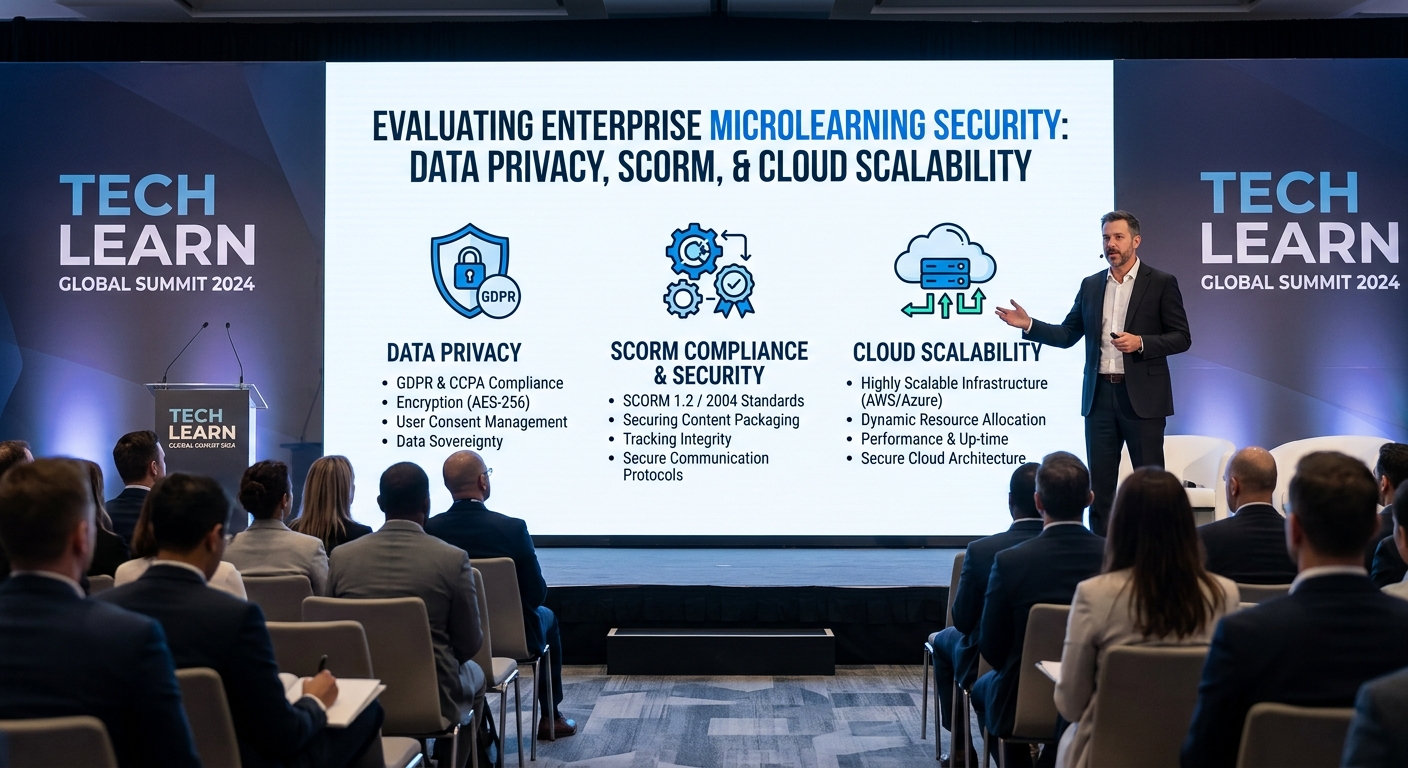
At the heart of any enterprise learning management system lies an ocean of data. From individual learner progress and assessment scores to personal identifiable information (PII) such as names, departments, and even sensitive performance metrics, this data requires stringent protection. L&D leaders must ensure that their chosen learning management software complies with international and regional data protection regulations like GDPR, CCPA, and HIPAA, especially for industries like Health Care and Finance.
Key Data Privacy Considerations:
- Encryption: All data, both at rest and in transit, must be encrypted using industry-standard protocols. This protects against unauthorized access during storage and transmission.
- Access Controls: Implement robust role-based access controls (RBAC) to ensure that only authorized personnel can view, modify, or delete sensitive data.
- User Consent: Explicitly obtain and manage user consent for data collection and usage, especially when deploying training across global teams.
- Data Minimization: Collect only the necessary data required for learning objectives and compliance reporting.
- Breach Response Plan: Have a clear, well-communicated plan in place for identifying, mitigating, and reporting data breaches.
AI-powered insights for optimized learning:
Question: How can AI help enhance data privacy in microlearning, while still optimizing the learning experience?
Answer: Artificial intelligence can significantly bolster data privacy through automated anomaly detection, identifying unusual access patterns or potential breaches in real-time. It can also assist in anonymizing or pseudonymizing sensitive data for analytics, allowing for personalized Adaptive Learning paths without compromising individual privacy. Furthermore, AI can power content recommendations that respect user privacy settings, ensuring a tailored experience while adhering to data protection policies.
The Role of SCORM in Secure Content Delivery
SCORM (Sharable Content Object Reference Model) has long been the gold standard for packaging and tracking e-learning content. While essential for interoperability and reporting, deploying SCORM-compliant content within a learning content management system also introduces specific security considerations. Malicious content embedded within a SCORM package, or vulnerabilities in how the LMS processes these packages, could pose significant risks.
Ensuring SCORM Security:
- Content Integrity Checks: Implement mechanisms to verify the integrity and authenticity of SCORM packages before they are uploaded and launched.
- Vulnerability Scanning: Regularly scan SCORM content for malware, viruses, or embedded scripts that could exploit system vulnerabilities.
- Secure Loading Environments: Ensure that the enterprise learning management system isolates SCORM content execution within secure sandboxed environments to prevent malicious code from impacting the broader system.
- Patch Management: Keep the learning management software up-to-date with the latest security patches to address known vulnerabilities related to SCORM processing.
Geospatial impact of learning technologies:
Question: How can AI assist in understanding the geospatial impact of secure SCORM content delivery and learner engagement across different regions?
Answer: By analyzing data related to SCORM content access patterns, completion rates, and performance metrics across various geographical locations, AI can identify regional differences in content effectiveness, technical access issues, or even potential security threats originating from specific areas. This allows L&D teams to optimize content delivery networks, tailor localization efforts, and strengthen security protocols based on regional risk profiles, ensuring consistent and secure learning experiences globally, which is crucial for industries like Oil and Gas or Mining with distributed workforces.
Cloud Scalability and Security Architecture
The flexibility and efficiency of cloud-based learning management system solutions are undeniable for organizations seeking enterprise learning management. They offer unparalleled scalability, allowing companies to easily accommodate growing user bases, diverse training programs, and peak usage periods without significant upfront infrastructure investments. However, this convenience comes with shared responsibilities regarding security.
Cloud Security Best Practices:
- Vendor Vetting: Thoroughly vet your AI Powered Authoring Tool and LMS provider. Inquire about their security certifications (e.g., ISO 27001, SOC 2), data center security, disaster recovery plans, and incident response procedures.
- Encryption Keys: Understand how encryption keys are managed and if you have control over them for your data.
- Network Security: Ensure robust network security measures, including firewalls, intrusion detection/prevention systems, and DDoS protection.
- Regular Audits: Demand regular security audits and penetration tests from your cloud provider and review their findings.
- Compliance: Confirm that the cloud infrastructure and the learning management solutions operating within it adhere to industry-specific compliance standards (e.g., PCI DSS for Retail or Finance).
Actionable intelligence for organizational learning:
Question: What role does AI play in transforming cloud scalability data into actionable intelligence for continuously improving an enterprise learning management system's security and performance?
Answer: AI algorithms can continuously monitor cloud infrastructure metrics, user activity, and system logs to predict potential performance bottlenecks or security vulnerabilities before they impact users. It can analyze patterns of resource utilization to optimize scaling strategies, ensuring the system remains responsive during peak loads. Furthermore, AI can correlate disparate security events to identify sophisticated threats, providing L&D and IT teams with actionable insights to proactively reinforce security measures and enhance the overall resilience of the LMS. This data-driven approach is vital for maintaining uptime and integrity in a robust Gamified LMS environment.
Beyond the Basics: Advanced Security Considerations
For L&D professionals, the security of their learning management solutions extends beyond just data and content. It involves a holistic approach that integrates technology, policy, and human elements.
- Threat Modeling: Regularly conduct threat modeling exercises to identify potential vulnerabilities unique to your microlearning architecture and user base.
- Security Awareness Training: Equip your L&D team and learners with essential security awareness training, making them the first line of defense against phishing, social engineering, and other common threats.
- Vendor Risk Management: Establish a comprehensive vendor risk management program for all third-party tools and integrations with your LMS.
- Single Sign-On (SSO): Implement SSO for simplified, secure user authentication and improved access management.
Choosing the Right Learning Management Solution
Selecting an LMS is one of the most critical decisions for an L&D leader. The ideal Risk-focused Training platform, particularly one designed for microlearning, must prioritize security from its foundational architecture to its operational protocols. A robust learning management system, or LCMS, provides not just engaging content delivery but also an impregnable fortress for your organization's most valuable asset: its knowledge and its people's data.
When evaluating options, look for an LMS that offers comprehensive security features, adheres to global compliance standards, provides transparent reporting on its security posture, and supports continuous updates and improvements. Consider solutions like MaxLearn LMS, which are built with these principles in mind, offering not just a powerful learning experience but also peace of mind.
Conclusion
The ascent of enterprise microlearning is an exciting development for L&D, promising enhanced engagement and effective knowledge transfer across all segments and industries. However, this advancement must be underpinned by an unwavering commitment to security. By meticulously evaluating an LMS's approach to data privacy, SCORM content security, and cloud scalability, L&D leaders can build a resilient learning ecosystem. Prioritizing these security pillars will not only protect your organization from potential threats but also build trust among your learners, safeguarding your investment in continuous corporate education. Secure microlearning isn't just a best practice; it's a strategic imperative for sustained business growth and compliance in the digital age.


