

What Makes a Compliance Training Platform Effective for Remote and Hybrid Workforces?
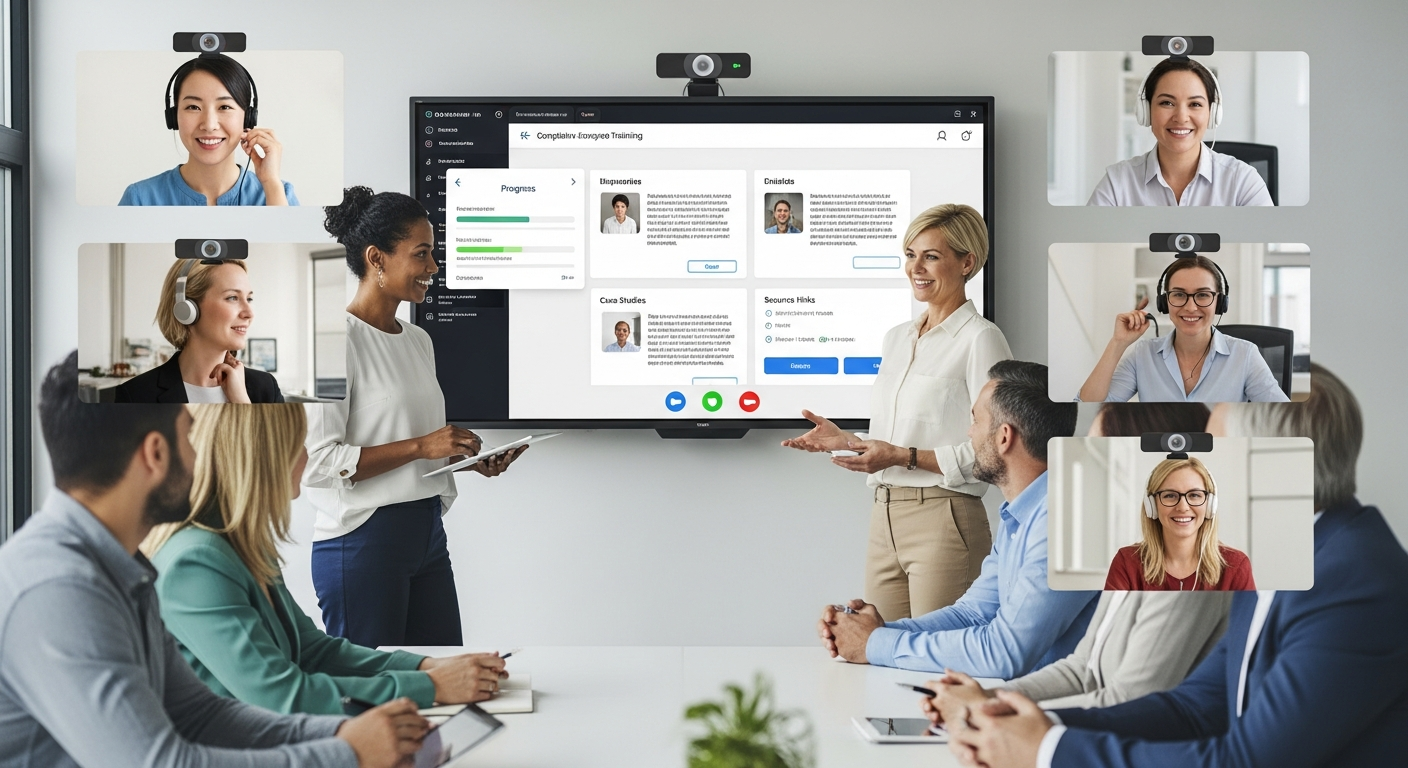
The landscape of work has fundamentally shifted, with remote and hybrid models becoming the norm for many organizations. While offering unprecedented flexibility, this evolution presents unique challenges, particularly in maintaining a robust compliance culture. For Vice Presidents, Directors, and Managers of L&D, the task of ensuring every employee, regardless of location, understands and adheres to critical regulations is more complex than ever. This raises a crucial question: what truly makes a compliance training platform effective in this distributed environment? The answer lies in a blend of accessibility, engagement, personalization, and advanced technological capabilities.
Essential Features for Impactful Compliance Training
Accessibility and Flexibility are Non-Negotiable
For remote and hybrid teams, a compliance training platform must be as ubiquitous as the internet itself. Employees need to access training anytime, anywhere, and on any device. This means a truly effective solution will be a Microlearning LMS that is cloud-based, mobile-responsive, and offers on-demand access. The core of any modern learning management system (LMS) for compliance must revolve around seamless accessibility. A powerful cloud based learning management system ensures that geographical barriers don't translate into knowledge gaps, empowering every employee to stay informed and compliant.
Engaging and Adaptive Content Drives Retention
Gone are the days when compliance training was a dreaded annual checkbox exercise. To be effective, especially for distributed teams prone to distractions, content must be engaging, relevant, and memorable. Look for platforms that offer interactive modules, real-world simulations, scenario-based learning, and even storytelling to illustrate complex regulations. A Gamified LMS can transform dry topics into interactive challenges, significantly boosting completion rates and knowledge retention. Furthermore, an effective platform should leverage Adaptive Learning paths, tailoring content delivery based on a learner's prior knowledge, role, and performance, ensuring that training is never redundant or overwhelming.
Personalization and Relevance for Diverse Teams
A "one-size-fits-all" approach to compliance training is inherently inefficient, particularly across diverse remote and hybrid workforces spanning different departments, roles, and even countries. An effective compliance training platform must be capable of delivering highly personalized content. This means tailoring modules to specific job functions (e.g., finance compliance for the finance team, data privacy for IT), geographical regulations, and individual learning needs. Platforms that facilitate Risk-focused Training allow L&D managers to identify and prioritize high-risk areas for specific employee groups, making the training more relevant and impactful. This targeted approach not only enhances understanding but also maximizes the return on investment in your learning management software.
Robust Reporting and Analytics for Strategic Insights
For L&D professionals, demonstrating the effectiveness of compliance training is paramount. An effective compliance platform provides comprehensive reporting and analytics capabilities. This includes tracking completion rates, scores, time spent on modules, and even identifying areas where a significant number of employees struggle. Such insights are crucial for identifying knowledge gaps, demonstrating compliance to auditors and regulators, and continuously improving training programs. A sophisticated learning management system goes beyond simple data, offering actionable insights that enable L&D leaders to make data-driven decisions and refine their enterprise learning management strategy.
Streamlined Content Creation and Management
Regulatory landscapes are constantly evolving. An effective compliance training platform must enable L&D teams to quickly update and deploy new training content. This is where a robust learning content management system (LCMS) comes into play. It allows for easy creation, version control, and rapid deployment of updated modules. Platforms offering an AI Powered Authoring Tool can dramatically reduce the time and effort involved in content creation, helping L&D teams stay agile and responsive to new compliance requirements. The ability to efficiently manage your learning management solutions is key to long-term compliance success.
How Smart Technology Elevates Compliance Training
How can smart technology enhance compliance training platforms?
Modern compliance platforms increasingly leverage artificial intelligence to optimize the learning experience and administrative efficiency. Intelligent algorithms can personalize learning paths, recommend relevant modules based on an employee's role and past performance, and even predict potential areas of non-compliance. This AI-driven personalization ensures that each learner receives the most impactful training for their specific needs. It’s about more than just a traditional LMS; it's about a dynamic lms learning management system that continuously adapts and improves.
Where is advanced technology making the biggest impact on compliance learning?
Advanced technology, particularly AI, is making a significant impact in ensuring global consistency while respecting local nuances. For organizations with employees across different regions, AI can help in localizing compliance content, translating materials, and ensuring that regional regulations are accurately reflected without manual oversight. This global-local balance is critical for large enterprises, making the learning management software a strategic asset for international compliance efforts. Such capabilities ensure that every employee, from a sales representative in one country to a production manager in another, receives relevant and compliant training.
What innovative intelligence can platforms offer for compliance training?
Innovative intelligence in compliance training platforms extends to real-time risk assessment and proactive intervention. AI can analyze learner behavior, completion patterns, and quiz results to identify potential compliance risks before they escalate. For instance, if a specific department consistently struggles with a particular compliance topic, the platform can flag this for L&D intervention, recommending supplementary training or live workshops. This predictive capability transforms compliance training from a reactive measure into a proactive risk management tool, bolstering your overall enterprise learning management strategy.
The Crucial Role of a Modern Learning Management System
At the heart of an effective compliance training strategy for remote and hybrid workforces is a robust and modern learning management system. It serves as the central hub for all learning activities, from content delivery and learner tracking to reporting and analytics. A comprehensive learning management software provides the necessary infrastructure for all the features discussed above. When selecting an LMS, L&D leaders must prioritize solutions that are scalable, secure, and user-friendly, ensuring they can grow with the organization's needs and support a diverse workforce. Solutions like MaxLearn LMS exemplify how an integrated lms learning management system can empower businesses across various sectors, from finance to healthcare, to maintain compliance and foster an ethical culture.
In conclusion, an effective compliance training platform for remote and hybrid workforces is far more than just a content repository. It is a dynamic, intelligent, and highly accessible ecosystem that prioritizes engagement, personalization, and actionable insights. By investing in a cloud based learning management system that offers these capabilities, L&D professionals can confidently navigate the complexities of a distributed workforce, ensuring their organization remains compliant, ethical, and resilient in an ever-changing regulatory environment.
.jpg)


