

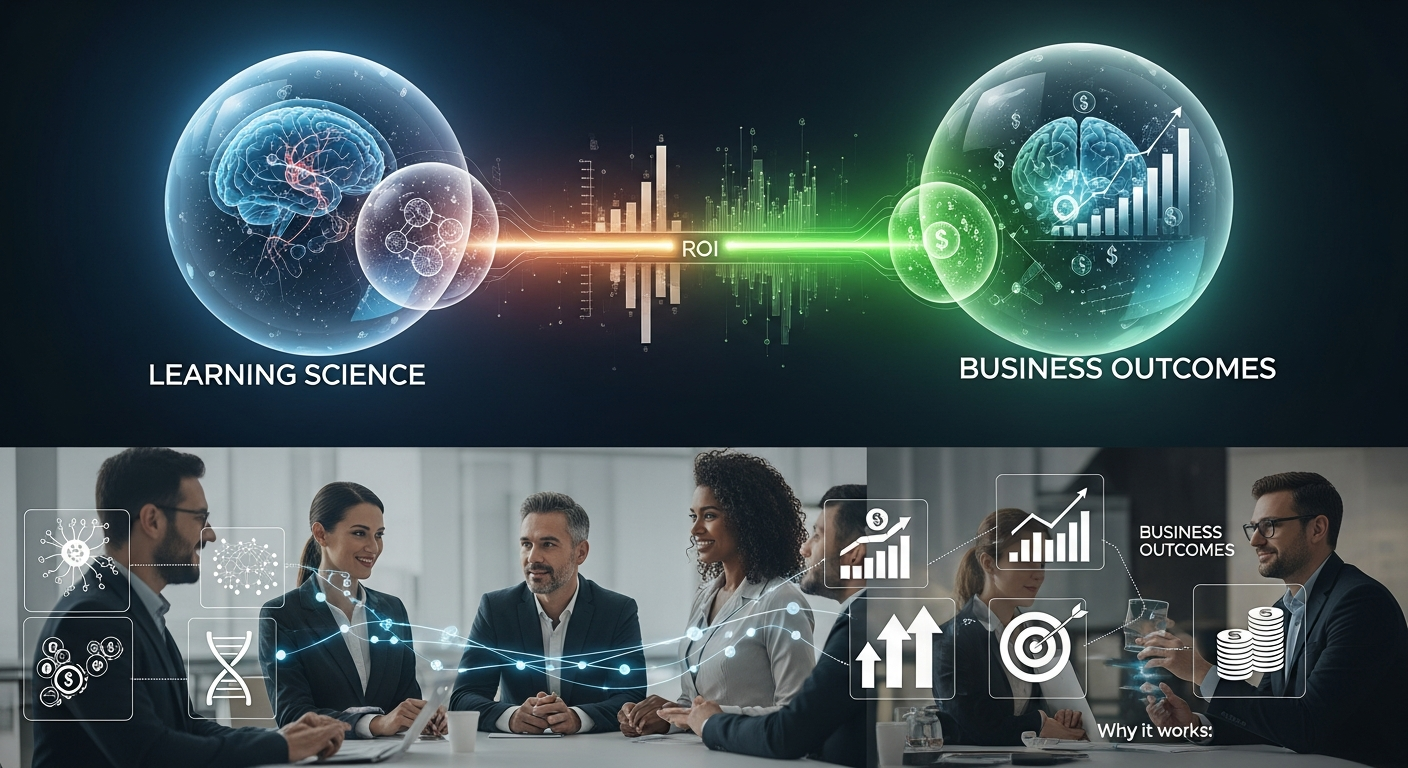
Maximizing Training ROI: The Link Between Learning Science and Business Outcomes
In today's fast-paced corporate environment, the pressure on Learning and Development (L&D) leaders to demonstrate tangible business value is greater than ever. It's no longer enough to simply deliver training; VPs, Directors, and Senior Managers are increasingly challenged to prove that their initiatives contribute directly to the bottom line. This crucial connection, often referred to as Return on Investment (ROI), can seem elusive when discussing the nuances of human learning. However, by strategically integrating the principles of learning science into your corporate training programs, L&D can transform from a cost center into a powerful engine for organizational growth and competitive advantage. The secret lies in understanding how people learn best and then applying that knowledge to drive specific, measurable business outcomes across diverse industries, from compliance and finance to retail and healthcare.
The Elusive ROI: Why Traditional Training Falls Short
Many organizations invest heavily in training, only to see minimal impact on performance or productivity. This disconnect often stems from a reliance on outdated methodologies or a lack of understanding of how the brain processes, retains, and applies information. Long, lecture-style sessions, generic content, and a "one-and-done" approach rarely translate into sustained behavioral change or improved business metrics. Without a scientific foundation, training can feel like a shot in the dark, making it difficult for L&D professionals to justify their budgets or showcase their strategic value.
This is where the application of a robust Microlearning LMS becomes critical. A well-designed learning management system can be the backbone for delivering scientifically-backed training. For instance, in the banking sector, compliance training often involves complex regulations. If delivered traditionally, comprehension and retention are low. But with a modern learning management system that leverages learning science, employees can grasp complex concepts more effectively, leading to fewer errors and reduced financial penalties – a clear ROI.
What Exactly is Learning Science?
Learning science is an interdisciplinary field that draws on cognitive psychology, neuroscience, education, and computer science to understand how individuals learn effectively. It provides evidence-based strategies for designing, developing, and delivering learning experiences that optimize retention, transfer, and application of knowledge and skills. It moves beyond intuition and anecdote, offering a data-driven approach to creating impactful training.
Key Principles of Learning Science for Business Impact
Applying learning science isn't about complex academic theories; it's about practical strategies that enhance employee development and, by extension, business performance. Here are some core principles:
- Spaced Repetition: Rather than cramming, learning is most effective when information is revisited at increasing intervals over time. This strengthens memory traces and improves long-term retention. Imagine sales teams learning new product features – spaced repetition through an effective lms learning management system ensures they don't forget crucial details before their next customer interaction.
- Active Recall: Instead of passively rereading notes, learners are prompted to actively retrieve information from memory. This could be through quizzes, self-testing, or problem-solving exercises. This technique significantly enhances understanding and retention.
- Interleaving: Mixing different but related topics or skills during practice helps learners discriminate between concepts and apply them appropriately. For example, a healthcare professional might practice diagnosing several different conditions in one session, rather than focusing on one condition exclusively.
- Feedback and Metacognition: Providing timely, constructive feedback helps learners understand what they know and what they need to improve. Encouraging metacognition (thinking about one's own thinking) helps learners monitor their understanding and adjust their learning strategies. This is especially vital for Risk-focused Training in industries like finance or oil and gas.
Bridging the Gap: Learning Science in Action with Modern Technologies
The true power of learning science is unleashed when combined with cutting-edge technology. An advanced learning content management system or learning management software can embed these scientific principles into every aspect of training delivery, turning theoretical concepts into practical business advantages.
- Microlearning: Short, focused bursts of content are ideal for spaced repetition and fit naturally into busy work schedules. A Microlearning LMS delivers bite-sized information precisely when and where it's needed, improving knowledge retention and application, critical for sectors like retail with high employee turnover.
- Gamification: Incorporating game-like elements such as points, badges, and leaderboards taps into intrinsic motivation, encouraging active engagement and repeated practice. A Gamified LMS can transform tedious compliance modules into engaging challenges, fostering competition and improving completion rates in pharma or finance.
- Adaptive Learning: This technology personalizes the learning journey based on an individual's prior knowledge, performance, and preferred learning style. An Adaptive Learning system ensures that learners receive content tailored to their needs, maximizing efficiency and effectiveness. This is paramount for accelerating skill acquisition across diverse roles in a large enterprise.
- AI in L&D: Artificial Intelligence can revolutionize training design and delivery. An AI Powered Authoring Tool can help create highly personalized and interactive content at scale. AI can also analyze learner data to identify knowledge gaps, recommend relevant content, and predict future training needs, optimizing resources for any enterprise learning management strategy.
Measuring the Impact: From Learning to Business Outcomes
Connecting learning initiatives to tangible business outcomes requires a deliberate strategy. L&D leaders must define clear objectives, align them with organizational goals, and establish metrics to track progress.
For example:
- Sales Performance: Improved product knowledge (measured via assessments on a learning management software) can directly correlate to increased sales conversions and average deal size.
- Compliance and Risk Reduction: Effective compliance training (tracked by completion rates and quiz scores within a cloud based learning management system) can lead to fewer regulatory violations, reduced fines, and enhanced organizational reputation, vital in banking and insurance.
- Customer Satisfaction: Better trained customer service representatives (skill improvement measured through simulations and peer reviews) result in higher customer satisfaction scores and reduced churn, critical for hospitality and retail.
- Employee Retention: Engaging and effective professional development programs (measured by employee engagement surveys and turnover rates) contribute to higher employee satisfaction and reduced recruitment costs.
By leveraging the data and analytics capabilities of a modern LCMS, L&D can meticulously track these correlations, demonstrating the clear ROI of their learning programs. A powerful MaxLearn LMS, for instance, provides the tools to do just that, offering insights into learner progress and the impact on key performance indicators.
Implementing a Learning Science-Driven Strategy
For VPs, Directors, and Managers of L&D, integrating learning science isn't just about adopting new tools; it's about shifting your entire approach to employee development. Here’s how:
- Assess Current Programs: Identify areas where current training falls short in terms of engagement, retention, or measurable impact.
- Educate Your Team: Ensure your instructional designers and content creators understand the core principles of learning science.
- Invest in the Right Technology: Select a learning management system that supports adaptive learning, microlearning, gamification, and robust analytics.
- Pilot and Iterate: Start with pilot programs, gather data, and continuously refine your approach based on results.
- Measure Beyond Completion: Focus on behavioral changes, performance improvements, and direct business impact.
Common Questions Regarding Modern Training Approaches
Organizations often inquire about the practicalities of adopting advanced learning solutions:
What are the benefits of applying science-backed methods in corporate training?
Applying science-backed methods significantly enhances the effectiveness of training by aligning content and delivery with how the human brain naturally learns. This leads to higher knowledge retention, improved skill application, and greater engagement among employees. For businesses, this translates directly into measurable improvements in productivity, compliance adherence, sales performance, and overall operational efficiency, ultimately boosting the organization's return on investment in its workforce.
How can technology enhance learning effectiveness in global organizations?
Technology, particularly a robust cloud based learning management system, plays a pivotal role in scaling and personalizing learning experiences for global organizations. It enables the delivery of consistent, high-quality content across different geographies and time zones. Features like adaptive paths, AI-powered content recommendations, and virtual collaboration tools can tailor learning to individual needs and cultural contexts, making training more relevant and effective for a diverse global workforce while reducing logistical costs.
Where can organizations find an effective system for managing employee development?
Organizations seeking an effective solution for managing employee development should look for a comprehensive learning management system that integrates modern learning science principles. Key features to consider include support for microlearning, gamification, adaptive learning pathways, and robust analytics. Systems like MaxLearn LMS are designed to meet these needs, providing a powerful platform for content delivery, learner tracking, and performance measurement, crucial for maximizing the ROI of training initiatives across various industries.
Conclusion
Maximizing training ROI is not just a desirable goal; it's an imperative for modern L&D. By embracing learning science and integrating it with powerful technological solutions such as a comprehensive learning management system, L&D leaders can move beyond simply delivering content to strategically shaping employee capabilities and driving significant business outcomes. This proactive approach ensures that every training dollar spent is an investment in human capital that yields measurable returns, positioning L&D as a vital strategic partner in organizational success.
.jpg)


