

How to Structure Scenario-Based Questions That Hook Gen Z and Millennial Staff
In the dynamic landscape of modern workplaces, engaging Gen Z and Millennial employees in corporate training is no longer a luxury but a strategic imperative. As L&D Vice Presidents, Directors, and Managers, you understand that traditional, static training methods often fall flat with these digitally native and experience-driven generations. Their desire for relevance, interactivity, and immediate applicability necessitates a fresh approach. The answer lies in well-structured scenario-based questions, amplified by the power of modern learning technologies and artificial intelligence.
This article will delve into crafting scenarios that not only capture attention but also foster critical thinking, decision-making, and genuine skill development across diverse industries such as Compliance, Sales, Banking, Finance, Insurance, Retail, Pharma, Healthcare, Hospitality, Oil and Gas, and Mining.
Why Traditional Training Fails Gen Z and Millennials
Gen Z and Millennials grew up in an era of instant information and personalized digital experiences. They expect training to mirror this reality. Long, passive lectures or endless policy documents simply don't align with their learning preferences. They crave:
- **Relevance:** They want to know "why" and "how" this training directly impacts their job performance and career growth.
- **Interaction:** Passive consumption is out; active participation and problem-solving are in.
- **Conciseness:** Attention spans are shorter, making Microlearning LMS approaches highly effective.
- **Feedback:** They seek immediate, constructive feedback to understand their progress and areas for improvement.
Without these elements, training becomes a chore, leading to disengagement and ineffective learning outcomes. A robust learning management system is essential to facilitate this modern approach.
The Power of Scenario-Based Learning
Scenario-based learning places learners in realistic, simulated situations where they must apply knowledge, make decisions, and experience the consequences of their choices. This methodology is particularly potent for Gen Z and Millennials because it:
- **Mimics Real-World Challenges:** It connects theoretical knowledge to practical application, making learning tangible.
- **Fosters Critical Thinking:** Learners analyze situations, weigh options, and predict outcomes.
- **Develops Problem-Solving Skills:** It encourages proactive engagement rather than rote memorization.
- **Provides Safe Practice:** Employees can make mistakes and learn from them without real-world repercussions.
Whether it's a sales representative handling a difficult customer objection, a compliance officer navigating a regulatory grey area, or a healthcare professional making a critical patient decision, scenario-based training delivered through an effective lms learning management system offers invaluable experiential learning.
Crafting Engaging Scenarios: The Core Principles
Relevance and Authenticity
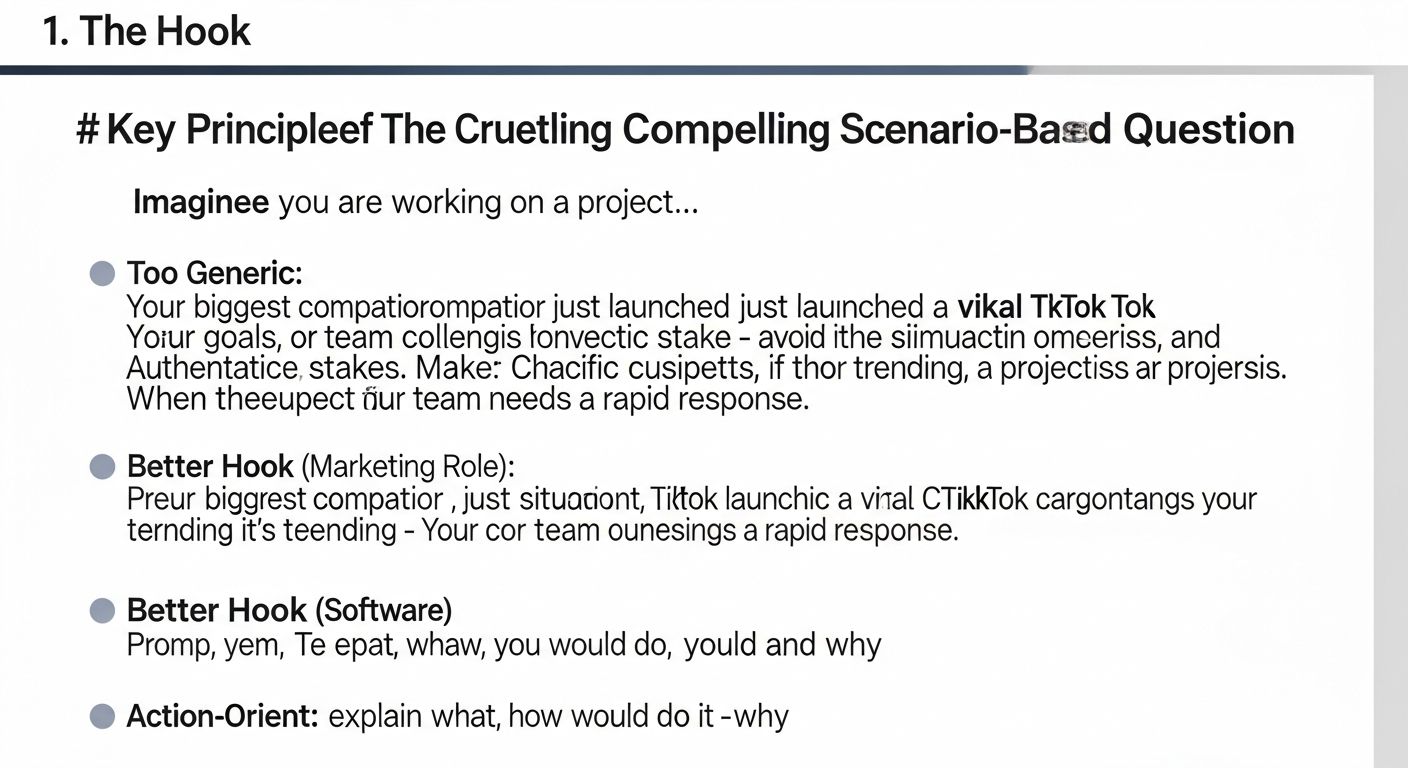
The scenarios must feel real and directly applicable to the learner's role and daily challenges. Use relatable characters, settings, and dilemmas. For instance, instead of a generic "customer service" scenario, create one featuring a specific product issue relevant to your company's offerings. This immediate connection enhances engagement and makes the training's value proposition clear. Adaptive Learning techniques can further personalize these scenarios.
Emotional Connection and Storytelling
Humans are wired for stories. Injecting narrative elements – a protagonist facing a challenge, a clear objective, rising tension, and a resolution – can make scenarios far more compelling. Emotional hooks ensure the learner is invested in the outcome. A sales scenario, for example, could revolve around a new hire trying to close their first big deal, facing a skeptical client. The learner feels the pressure and satisfaction of guiding the protagonist to success.
Interactive and Decision-Driven
Beyond simple multiple-choice questions, scenarios should present genuine dilemmas with multiple plausible (but not always correct) choices. Each choice should lead to different consequences, prompting the learner to reflect. Incorporating elements of a Gamified LMS, such as points, badges, or progress bars, can further boost interactivity and motivation. The learning should be active, not passive.
Conciseness and Pacing
While stories are important, scenarios for Gen Z and Millennials should be concise and move quickly. Leverage the principles of Microlearning LMS: present a clear situation, offer choices, provide immediate feedback, and then move to the next mini-scenario or learning objective. This keeps engagement high and prevents cognitive overload. A modern learning management software can help manage this pacing.
Integrating AI for Hyper-Engaging Scenarios
The true potential of scenario-based learning is unlocked when combined with artificial intelligence. AI can transform generic scenarios into hyper-personalized, adaptive experiences that resonate deeply with younger generations. A sophisticated learning management solutions platform leveraging AI can significantly elevate your training.
AI for Understanding User Intent and Optimizing Engagement
To truly hook learners, scenarios must align with their core motivations and learning styles. But how do we know what those are? An advanced Risk-focused Training platform, utilizing AI, can analyze engagement patterns and performance data. This allows L&D teams to identify common knowledge gaps and preferred learning modalities. An enterprise learning management system can then suggest scenario topics or question formats that align with their digital fluency and desire for immediate relevance. This allows us to tailor content that feels intrinsically valuable and directly applicable to their professional growth, ensuring optimal engagement.
AI for Tailored Content and Location-Specific Context
In a globalized or geographically dispersed organization, maintaining relevance across different regions and market segments is a significant challenge. How can training scenarios feel relevant to employees in diverse locations? Employ a sophisticated Learning content management system (LCMS) with intelligent content tagging. This allows for the creation of scenario variations that incorporate local regulations, market nuances, or common customer profiles specific to a region. For example, a sales training scenario in the US might subtly differ from one in Europe, reflecting local consumer behaviors or specific compliance standards. A cloud based learning management system can then deliver these localized versions seamlessly, making the learning experience highly pertinent and impactful, regardless of the learner's location.
AI for Intelligent Personalization and Outcome-Driven Paths
Beyond simple branching paths, how can technology create truly intelligent, adaptive learning journeys within scenarios that lead to measurable skill development? An advanced learning management software platform can utilize machine learning to observe a learner's choices and performance within scenarios. If a learner consistently struggles with a particular compliance regulation or a specific sales objection, the system can automatically present supplementary micro-lessons, provide targeted feedback, or route them through additional scenarios designed to reinforce that specific skill. This personalized journey, facilitated by a robust learning management system, ensures that each individual achieves specific, measurable learning outcomes. An AI Powered Authoring Tool can dramatically streamline the creation and adaptation of such intelligent scenarios, making the entire process more efficient and effective, leveraging the full potential of an lms learning management system like MaxLearn LMS.
Best Practices for Implementation
- **Start Simple, Iterate Often:** Begin with a few key scenarios, gather feedback from Gen Z and Millennial staff, and then refine and expand.
- **Involve Subject Matter Experts:** Ensure scenarios are accurate and reflect real-world challenges in your specific industry.
- **Leverage Data:** Use analytics from your LMS to identify which scenarios are most engaging and effective, and which need improvement.
- **Integrate with a Modern Platform:** A comprehensive learning management system is crucial for delivering, tracking, and optimizing scenario-based learning at scale.
Conclusion
Engaging Gen Z and Millennial staff in corporate training requires a deliberate shift towards interactive, relevant, and personalized experiences. By mastering the art of structuring scenario-based questions and intelligently integrating AI capabilities, L&D leaders can transform mundane training into impactful learning journeys. This approach not only hooks these crucial generations but also cultivates essential skills, driving productivity and fostering a culture of continuous learning across your organization. It's time to elevate your LMS strategy and unlock the full potential of your talent.
.jpg)


