

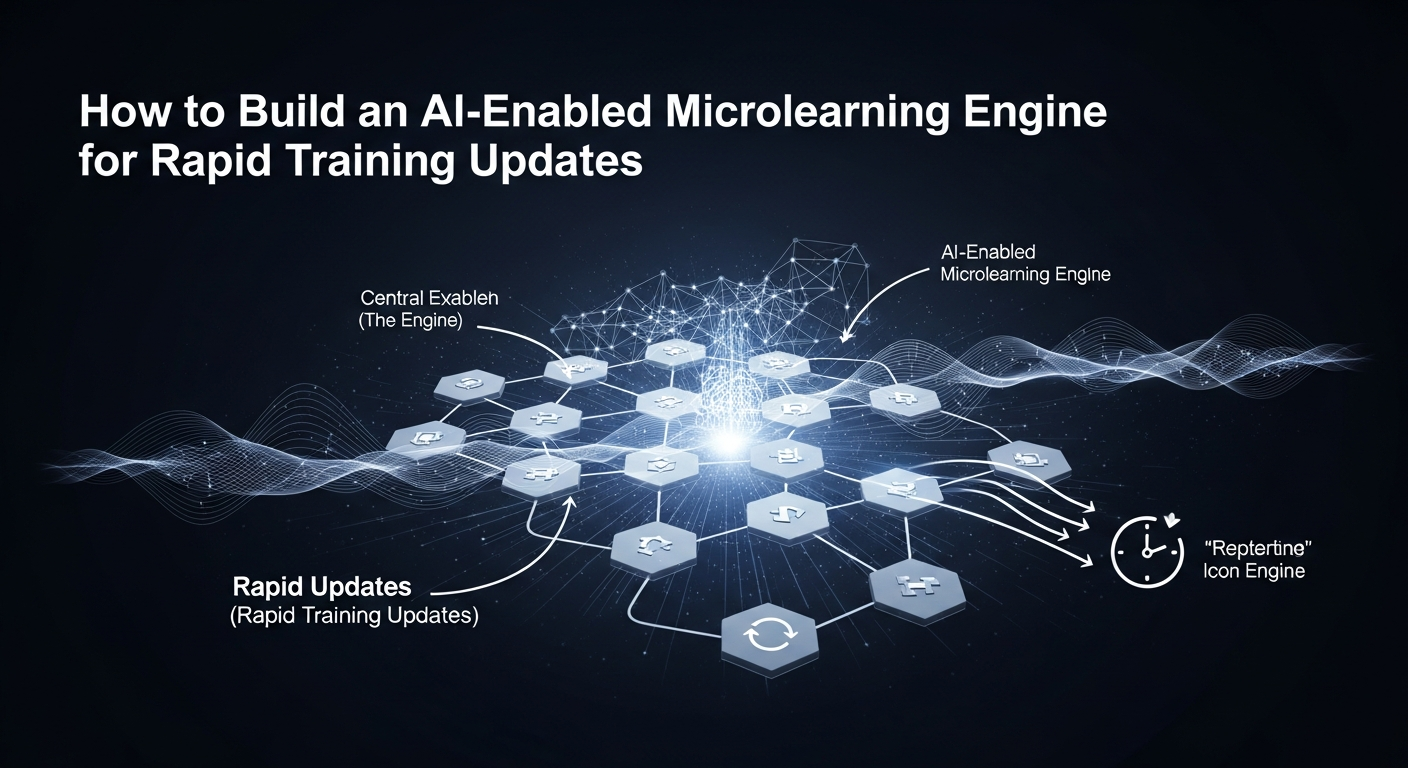
How to Build an AI-Enabled Microlearning Engine for Rapid Training Updates
In today's fast-evolving business landscape, the speed at which organizations can adapt and update their workforce skills is paramount. From ever-changing compliance regulations in banking and pharma to dynamic product launches in retail and sales, traditional training methods often fall short. L&D leaders, VPs, and Directors are constantly seeking innovative solutions to deliver timely, effective, and engaging learning experiences. This is where the synergy of Artificial Intelligence (AI) and microlearning creates a transformative engine for rapid training updates.
Imagine a learning system that not only delivers bite-sized, relevant content but also anticipates learning needs, personalizes pathways, and automates content updates. This article will guide you through building an AI-enabled microlearning engine, a strategic asset for any modern enterprise, especially those in compliance, sales, banking, finance, insurance, retail, pharma, healthcare, hospitality, oil and gas, and mining.
Why AI and Microlearning? The Modern L&D Imperative
The Pace of Change Demands Agility
Industries across the board are grappling with unprecedented rates of change. Regulatory frameworks are constantly shifting, new technologies emerge overnight, and market demands pivot rapidly. For L&D, this means a continuous challenge to keep training materials current, employees up-to-date, and organizational knowledge fresh. Stagnant training is not just inefficient; it's a significant business risk.
Microlearning, characterized by its short, focused bursts of content, has already proven its effectiveness in boosting engagement and retention. By breaking down complex topics into digestible modules, learners can acquire knowledge quickly and apply it immediately. However, the true power is unleashed when microlearning meets AI.
AI: The Game-Changer for Personalization and Efficiency
Artificial intelligence doesn't just automate tasks; it elevates learning to a strategic level. By analyzing vast amounts of data, AI can understand individual learner needs, predict future skill gaps, and even help in the creation and delivery of content. This capability is crucial for L&D teams striving to move from reactive training to a proactive, predictive model.
Core Components of an AI-Enabled Microlearning Engine
How can artificial intelligence personalize learning experiences?
At its heart, an AI-enabled microlearning engine excels at personalization. AI algorithms can analyze a learner's role, performance data, industry, previous training history, and even stated preferences to recommend the most relevant micro-content. This ensures that each employee receives a tailored learning path, focusing on precisely what they need to know, when they need it. This goes beyond simple recommendations, dynamically adjusting the sequence and type of content. The result is a highly efficient learning journey that maximizes engagement and impact.
What role does AI play in content creation and updates for corporate training?
One of the most significant challenges for L&D is keeping content fresh and relevant. An AI Powered Authoring Tool can revolutionize this process. AI can assist in scanning existing documentation, videos, and compliance mandates to identify key information, extract core concepts, and even generate initial drafts of micro-lessons. For rapid training updates, AI can monitor external data sources for changes in regulations (e.g., in finance or healthcare), product specifications, or sales strategies, automatically flagging relevant content for review or suggesting specific updates. This drastically reduces the manual effort and time required to keep training current, ensuring your workforce is always operating with the latest information.
How does an intelligent learning platform improve employee skill development?
AI transforms a standard learning platform into an intelligent one by enabling Adaptive Learning. This means the system dynamically adjusts the learning journey based on the learner's real-time performance and comprehension. If a learner struggles with a concept, the AI can provide additional micro-modules, different formats (video, quiz, infographic), or supplementary resources. Conversely, if a learner demonstrates mastery, the system can fast-track them to more advanced topics. This intelligent feedback loop ensures optimal pacing and deeper understanding, driving more effective skill development and knowledge retention.
How does artificial intelligence help identify and mitigate training risks?
AI's analytical prowess is invaluable for identifying training gaps and mitigating potential business risks. By analyzing assessment scores, completion rates, and even linking training data to real-world performance metrics, AI can pinpoint areas where employees, teams, or departments are falling short. This data-driven insight allows L&D to implement Risk-focused Training, deploying targeted micro-lessons to address critical deficiencies proactively. For instance, in industries like oil and gas or healthcare, where compliance failures can have severe consequences, AI can flag potential non-compliance risks identified through training data, enabling immediate corrective action and safeguarding the organization.
Building Your AI-Enabled Microlearning Engine: A Step-by-Step Guide
Step 1: Define Your Strategic Objectives
Before diving into technology, clearly articulate what problems you aim to solve. Are you looking to reduce compliance violations, improve sales conversion rates, accelerate new employee onboarding, or enhance safety protocols? Specific, measurable objectives will guide your technology choices and content strategy.
Step 2: Choose the Right Technology Stack
Implementing an AI-enabled microlearning engine requires a robust learning platform at its core. Look for a modern Microlearning LMS that offers AI capabilities, powerful content management, and strong analytics. A comprehensive LMS (Learning Management System) should support not just content delivery but also intelligent content authoring, personalized pathways, and deep reporting.
Consider features that boost engagement, such as a Gamified LMS, which leverages game-like elements to motivate learners. Evaluate systems based on their ability to integrate with existing HR systems and their capacity for scalability. Leading platforms like MaxLearn LMS provide the essential infrastructure. When selecting a system, ensure it functions as a comprehensive Learning content management system (LCMS), capable of handling all aspects of your learning material. An effective learning management software should offer advanced analytics and reporting to track learner progress and content effectiveness. Prioritize learning management solutions that are intuitive for both administrators and learners. A cutting-edge lms learning management system will often come as a cloud based learning management system, ensuring accessibility and ease of updates. For large organizations, an enterprise learning management system is crucial to manage diverse training needs across departments and regions. The best solution acts as a unified LCMS for all your learning resources.
Step 3: Curate and Create Initial Content
While AI assists, high-quality base content remains vital. Start by identifying your most critical training needs and creating concise, engaging micro-lessons. Leverage existing materials by breaking them down into digestible chunks. AI will then help categorize, tag, and recommend these modules efficiently.
Step 4: Implement and Pilot
Begin with a pilot program involving a specific department or a critical training area. Gather feedback from learners and administrators, paying close attention to engagement metrics and learning outcomes. Use this data to refine the system and content.
Step 5: Iterate and Scale
The beauty of an AI-enabled engine is its capacity for continuous improvement. The more data it processes, the smarter it becomes. Continuously monitor performance, update content based on AI insights, and gradually scale the engine across the organization, adapting it to diverse learning needs in various segments like hospitality, mining, or retail.
Benefits for L&D Leaders
- Increased Agility and Responsiveness: Quickly adapt training to market changes, regulatory updates, or new product launches.
- Enhanced Learner Engagement and Retention: Personalized, relevant, and bite-sized content significantly improves learner motivation and knowledge retention.
- Optimized Resource Allocation: AI automates content curation, personalization, and update flagging, freeing up L&D teams to focus on strategy and high-value content creation.
- Proactive Compliance and Risk Mitigation: Ensure employees are always current with critical information, especially in highly regulated sectors.
- Quantifiable ROI: Leverage AI-driven analytics to demonstrate the direct impact of training on business outcomes, justifying L&D investments.
Building an AI-enabled microlearning engine is no longer a futuristic concept; it's a strategic imperative for L&D leaders aiming to future-proof their workforce and drive organizational success. By embracing this powerful combination, businesses can ensure their employees are always equipped with the right knowledge, at the right time, delivered in the most effective way.
.jpg)


