

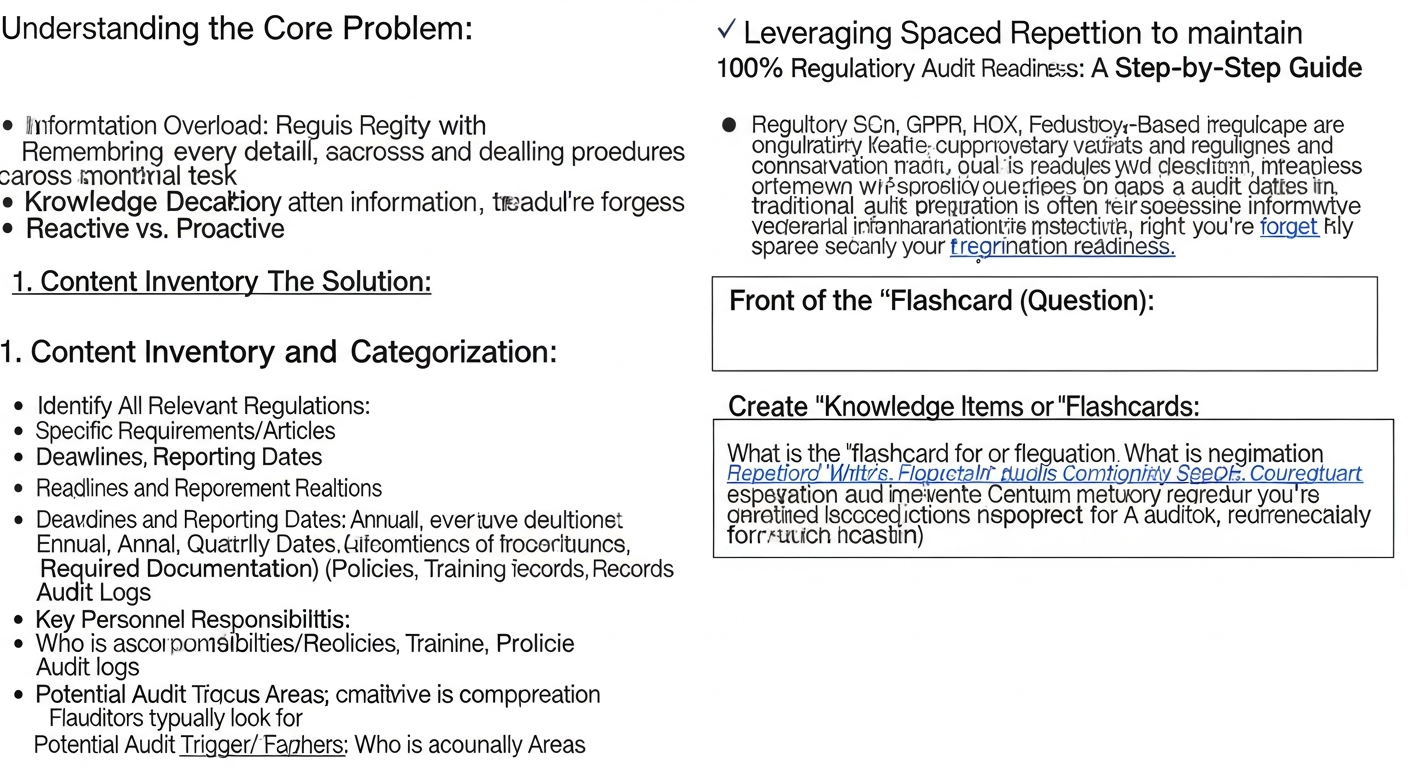
How to Leverage Spaced Repetition to Maintain 100% Regulatory Audit Readiness
For Vice Presidents, Directors, and Senior Managers in Learning & Development across high-stakes industries like Compliance, Sales, Banking, Finance, Insurance, Retail, Pharma, Health care, Hospitality, Oil and Gas, and Mining, the phrase "regulatory audit" can often evoke a sense of trepidation. The constant pressure to ensure that every employee is not just aware, but deeply knowledgeable about the latest regulations, policies, and procedures is immense. The cost of non-compliance, ranging from hefty fines and reputational damage to legal repercussions, underscores the critical need for a robust, reliable, and continuous training strategy. This is where the scientifically proven power of spaced repetition emerges as a game-changer, offering a pathway to not just meet, but exceed, audit expectations by fostering genuine, long-term knowledge retention.
Understanding the Challenge of Regulatory Audit Readiness
Regulatory landscapes are dynamic. What was compliant yesterday might be insufficient today. Employees, from front-line staff to senior executives, must demonstrate a consistent and accurate understanding of complex rules. Traditional training models—one-off annual refreshers or lengthy classroom sessions—often fall short. Information overload leads to rapid forgetting, leaving critical knowledge gaps that surface during an audit. The challenge isn't just delivering information; it's embedding it into the organizational memory so deeply that compliance becomes second nature, not a last-minute scramble.
The Spaced Repetition Advantage for Compliance
Spaced repetition is an evidence-based learning technique that involves reviewing previously learned material at increasing intervals. Instead of cramming, which leads to temporary recall, spaced repetition capitalizes on the "forgetting curve." By strategically prompting learners to recall information just as they are about to forget it, this method strengthens neural pathways, transforming short-term memories into durable, long-term knowledge. For complex regulatory details, policy nuances, and procedural steps, this approach is invaluable.
Imagine employees consistently reviewing key compliance points: anti-money laundering protocols, data privacy regulations, ethical guidelines, or safety procedures. Each review session, strategically timed, reinforces their understanding. This continuous reinforcement builds a resilient knowledge base, ensuring that when an auditor asks a critical question, the answer is readily available and accurate.
Integrating Spaced Repetition into Your Compliance Training
Implementing spaced repetition effectively requires a thoughtful approach and the right technological infrastructure, such as a modern LMS or learning content management system. Here’s how L&D leaders can integrate it:
- Microlearning Modules: Break down complex regulatory content into bite-sized, digestible Microlearning LMS modules. These short bursts of information are ideal for spaced repetition, making review sessions less daunting and more effective.
- Smart Scheduling: Utilize the capabilities of an advanced learning management software to automate the scheduling of review sessions. The system should track individual learner progress and mastery levels, then present relevant content again at optimal intervals.
- Varied Formats: Don't limit reviews to quizzes. Employ diverse formats like short scenarios, interactive flashcards, quick polls, or even Gamified LMS challenges to keep engagement high and prevent monotony.
- Performance Monitoring: A robust learning management system should provide analytics on knowledge retention. This allows L&D teams to identify areas where employees are struggling and adjust content or review frequencies accordingly.
Key Benefits for L&D Leaders
- Continuous Readiness: Move from reactive, last-minute audit prep to proactive, continuous readiness. Spaced repetition ensures employees are always up-to-date.
- Reduced Audit Stress: A well-informed workforce means less stress and more confidence during audits, leading to smoother processes and better outcomes.
- Enhanced Employee Competence: Beyond compliance, deep understanding of regulations empowers employees to make better, more ethical decisions in their daily roles.
- Cost-Effectiveness: While requiring initial setup, the long-term benefits—fewer non-compliance penalties, increased operational efficiency, and reduced need for intensive remedial training—outweigh the costs. Investing in a powerful lms learning management system like MaxLearn LMS is an investment in your organization's future.
Leveraging Artificial Intelligence for Enhanced Spaced Repetition
AI elevates spaced repetition from a powerful technique to an indispensable strategy for audit readiness. AI-driven platforms can personalize learning like never before, making the compliance journey more efficient and effective.
AI for Optimal Engagement: How can artificial intelligence personalize learning paths and ensure maximum engagement, leading to better knowledge retention and a state of audit readiness?
An AI-powered system can analyze a learner's performance, identify their unique learning patterns, and even predict when they are most likely to forget specific information. This allows the system to present review content at the precise moment it will be most effective, tailoring intervals and content delivery methods to individual needs. This level of personalization significantly boosts engagement, making compliance training feel less like a chore and more like a continuous growth opportunity. The result is unparalleled knowledge retention across the organization.
AI for Global Compliance Intelligence: How can artificial intelligence synthesize vast global regulatory changes and adapt learning content in real-time, ensuring teams are always up-to-date across diverse jurisdictions?
For multinational corporations or industries with complex global regulations, AI becomes an invaluable ally. An intelligent learning management solutions can constantly monitor regulatory updates from various jurisdictions. When a new regulation or amendment is published, an AI Powered Authoring Tool can swiftly flag relevant content, suggest modifications, and even automatically generate new microlearning modules or update existing ones. This ensures that compliance training is always aligned with the latest legal requirements, regardless of geographical location, providing true Adaptive Learning.
AI for Intelligent Operations: How can artificial intelligence proactively identify knowledge gaps and automate the delivery of targeted refresher training, minimizing compliance risks and streamlining operational efficiency?
AI's predictive capabilities extend to identifying organizational knowledge gaps before they become critical risks. By analyzing learning data, performance in simulations, and even operational incident reports, AI can pinpoint areas where a team or department shows a consistent misunderstanding. It can then trigger automated, targeted spaced repetition cycles for those specific areas, focusing on Risk-focused Training. This proactive approach not only minimizes the risk of compliance failures but also streamlines the entire training operation, making it more efficient and responsive to real-world needs.
Practical Steps to Implement Spaced Repetition with AI
For L&D leaders looking to establish true audit readiness, here’s a roadmap:
- Assess Current Training: Identify critical compliance areas and existing knowledge gaps.
- Choose the Right Platform: Invest in a modern cloud based learning management system or enterprise learning management solution that supports spaced repetition, microlearning, and ideally, AI integration. A robust LCMS is crucial.
- Content Transformation: Convert existing lengthy materials into engaging, concise microlearning modules suitable for frequent review.
- Pilot Program: Start with a pilot group to refine your approach and gather feedback before a full rollout.
- Monitor and Adapt: Continuously monitor learner progress and audit outcomes. Use the insights to adapt your spaced repetition intervals and content.
Measuring Success
Success isn't just about avoiding fines; it's about building a culture of competence. Metrics for success include:
- High completion rates for spaced repetition modules.
- Improved scores on knowledge assessments and simulations.
- Positive feedback from employees regarding training effectiveness.
- Clean audit reports and a demonstrated reduction in compliance-related incidents.
Conclusion
In the relentless pursuit of 100% regulatory audit readiness, spaced repetition stands out as a powerful, scientifically-backed methodology. When combined with the intelligence of AI, it transforms compliance training from a burdensome requirement into a dynamic, engaging, and highly effective continuous learning journey. For L&D Vice Presidents, Directors, and Managers, embracing this approach means moving beyond mere compliance checklists to cultivate a deeply knowledgeable and confident workforce—one that is inherently ready for any audit, any time. It's not just about staying compliant; it's about driving organizational excellence and resilience in an ever-changing regulatory world.
.jpg)


