

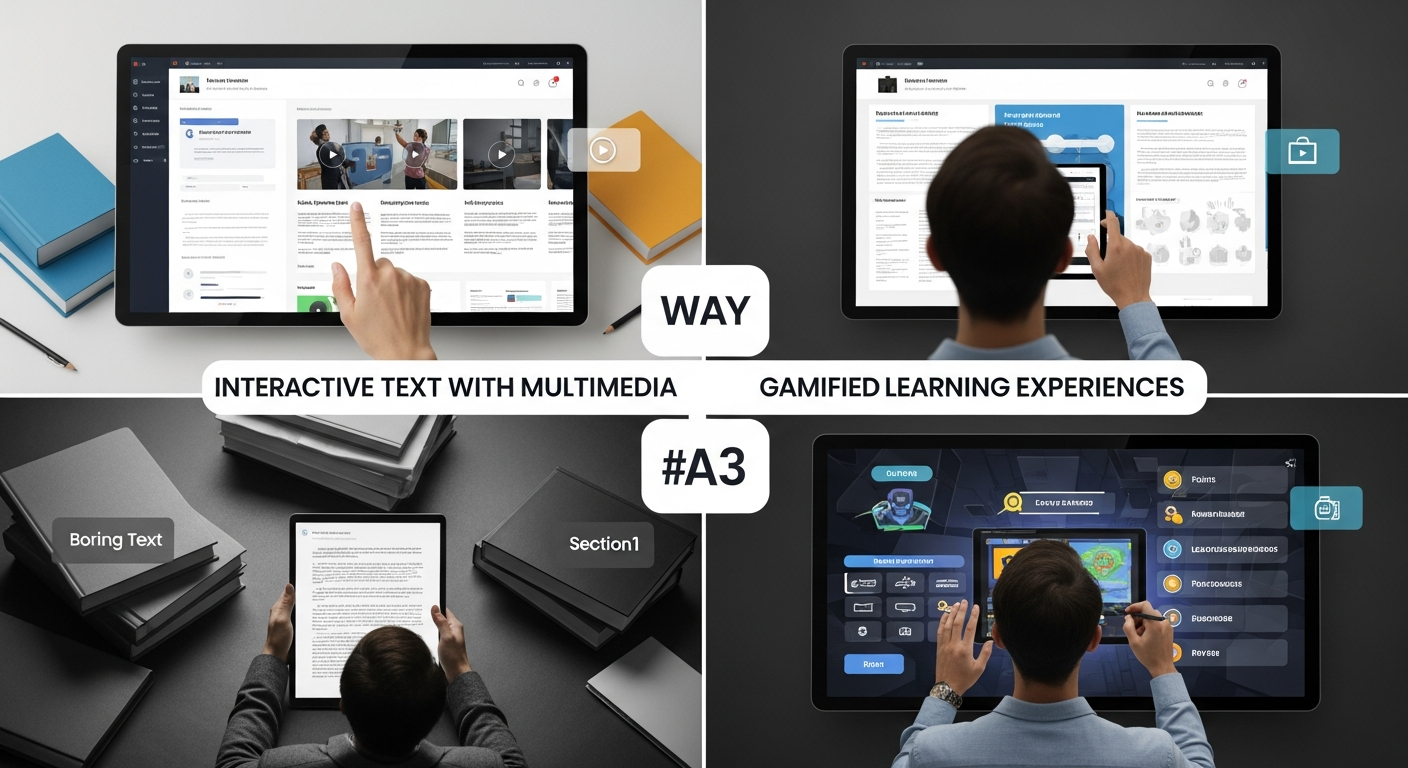
4 Ways to Transition Corporate Learning from Boring Text to Immersive Roleplay
For too long, corporate learning has been synonymous with dry textbooks, endless PowerPoints, and passive comprehension checks. In an era demanding agility, critical thinking, and applied knowledge, this outdated approach simply doesn't cut it. Modern organizations across sectors like Compliance, Sales, Banking, Finance, Insurance, Retail, Pharma, Health care, Hospitality, Oil and Gas, and Mining are realizing that effective training requires more than just information dissemination; it demands immersion, engagement, and practical application.
The solution? Immersive roleplay. By shifting from static text to dynamic, experiential scenarios, organizations can empower their teams to practice critical skills, make decisions, and learn from mistakes in a safe environment. This approach fosters deeper understanding, improves retention, and directly impacts performance. If you're an L&D leader looking to revolutionize your corporate training, here are four powerful ways to make that transition.
1. Embrace Scenario-Based Learning with Interactive Decision Trees
The foundation of effective roleplay is a well-crafted scenario. Instead of presenting information and asking learners to recall it, present them with realistic situations and ask them to navigate the challenges. This involves creating interactive decision trees where each choice a learner makes leads to a different outcome, providing immediate feedback on the consequences of their actions.
Designing Engaging Scenarios
- Real-world Relevance: Base scenarios on actual challenges your employees face daily. For a sales team, this might be handling a difficult objection; for healthcare, it could be a complex patient interaction.
- Branching Paths: Design multiple choices for each step, leading to varying consequences. This mimics real-life ambiguity and forces critical thinking.
- Emotional Hooks: Introduce elements that require empathy, negotiation, or conflict resolution, making the experience more memorable and impactful.
- Immediate Feedback: After each decision, provide constructive feedback explaining why a particular choice was effective or ineffective, guiding the learner towards optimal outcomes.
Implementing such scenarios often requires a robust Microlearning LMS that can deliver bite-sized, impactful learning modules. Platforms that support Gamified LMS features can further enhance engagement by incorporating points, badges, and leaderboards, transforming learning into a compelling experience. The right AI Powered Authoring Tool can significantly streamline the creation of these complex, branching scenarios, allowing L&D teams to focus on content quality rather than technical complexities.
2. Leverage AI-Powered Virtual Coaches for Personalized Feedback
One of the biggest limitations of traditional roleplay is the scalability of personalized, expert feedback. Human facilitators can only manage so many learners, and their feedback can be subjective. This is where artificial intelligence shines. AI-powered virtual coaches can provide instantaneous, objective, and consistent feedback at scale, mimicking the experience of a one-on-one mentor.
How AI Elevates Roleplay Feedback
- Performance Analysis: AI can analyze a learner's responses (text, voice, or even video) against predefined criteria, identifying strengths and areas for improvement. For instance, in a sales pitch roleplay, AI can evaluate tone, keywords used, and adherence to company protocols.
- Adaptive Guidance: Instead of generic feedback, AI coaches can offer specific, actionable advice tailored to the learner's performance, guiding them through difficult interactions. This contributes to truly Adaptive Learning experiences.
- Consistency and Objectivity: AI ensures that every learner receives the same quality of feedback, free from human bias, fostering a fair and equitable learning environment.
- Scalability: Virtual coaches can train hundreds or thousands of employees simultaneously, making high-quality, personalized feedback accessible to entire workforces, regardless of geographic location.
For organizations focused on compliance or high-stakes decision-making, integrating AI into Risk-focused Training is invaluable. It allows employees to practice handling sensitive situations with immediate, expert guidance, minimizing potential real-world errors. Modern learning content management system platforms are increasingly integrating these AI capabilities.
3. Implement Peer-to-Peer and Expert-Led Live Roleplay Sessions
While AI offers incredible scalability and consistency, the human element remains vital. Combining virtual, self-paced roleplay with live, facilitated sessions – either peer-to-peer or expert-led – provides a holistic learning experience that builds confidence and sharpens soft skills.
Structuring Live Roleplay Effectively
- Peer-to-Peer Practice: Organize small groups where learners can practice scenarios with each other, providing immediate, constructive feedback. This fosters a collaborative learning environment and builds team cohesion.
- Expert Facilitation: Bring in subject matter experts or seasoned managers to lead live roleplay sessions, offering nuanced feedback, sharing best practices, and demonstrating effective approaches. This is particularly crucial for complex processes in sectors like banking or pharma.
- Video Roleplay: Utilize video conferencing tools for remote teams to engage in live roleplay, recording sessions for later review and personalized coaching. This bridges geographical gaps for a global enterprise learning management system.
- Blended Learning Paths: Integrate self-paced AI roleplay as preparation for live sessions. Learners can hone their skills privately before applying them in a group setting, maximizing the value of expert time.
The overarching goal is to create a dynamic LMS environment where learners can move seamlessly between individual practice and collaborative application. A robust learning management system should support both asynchronous and synchronous learning modalities, ensuring maximum flexibility and engagement.
4. Integrate Performance Analytics and Continuous Improvement Loops
Transitioning to immersive roleplay isn't just about the learning experience; it's also about measurable outcomes. Advanced learning management software can track learner performance within roleplay scenarios, providing invaluable data for both individual development and overall program effectiveness.
Leveraging Data for Smarter Learning
- Skill Gap Identification: Analyze aggregated performance data to identify common areas of weakness across the workforce, informing future training content and focus areas. This is where an effective LCMS becomes critical.
- Individual Progress Tracking: Monitor how individual learners improve over time, allowing managers to provide targeted coaching and celebrate successes.
- ROI Measurement: Correlate roleplay performance data with real-world KPIs (e.g., reduced compliance violations, increased sales conversions, improved customer satisfaction) to demonstrate the tangible return on investment of your training initiatives.
- Content Optimization: Use data to refine and improve roleplay scenarios. If a particular choice consistently leads to poor outcomes, it might indicate a need for clearer prior instruction or an adjustment to the scenario itself.
For organizations utilizing a cloud based learning management system like MaxLearn LMS, this data collection and analysis is often built-in, transforming the learning management solutions from a passive repository into an active intelligence hub. This data-driven approach ensures that your lms learning management system continuously evolves and improves.
Frequently Explored Questions on Immersive Learning
How can organizations boost employee engagement in critical training, especially in highly regulated fields?
Organizations can significantly enhance engagement by moving beyond passive information delivery to active, immersive experiences. This includes interactive simulations, virtual reality scenarios, and gamified roleplaying where learners must make decisions and face consequences in a safe, controlled environment. For sectors like finance or healthcare, this hands-on practice in a realistic setting is crucial for developing practical skills and retaining complex information, making compliance training far more impactful.
What are the most effective learning strategies for widely dispersed teams across different regions and industries?
For global or geographically diverse teams, the most effective strategies combine scalable digital solutions with collaborative elements. This means utilizing a robust learning management software that supports asynchronous immersive roleplay accessible anywhere, anytime. Incorporating features like AI-powered virtual coaches allows for personalized feedback at scale, while also facilitating virtual live roleplay sessions via video conferencing tools. This blend ensures consistent, high-quality training tailored to local nuances without the need for extensive travel or in-person facilitators.
What quantifiable benefits can L&D leaders expect from investing in immersive roleplay technologies?
L&D leaders can anticipate several key quantifiable benefits. These include improved knowledge retention (studies show significantly higher retention with experiential learning), faster skill acquisition, and enhanced decision-making capabilities. Furthermore, data collected from immersive simulations can pinpoint specific skill gaps across the workforce, allowing for targeted interventions. This leads to a measurable reduction in errors, improved compliance rates, higher productivity, and ultimately, a clear return on investment (ROI) by reducing real-world incidents and improving overall operational efficiency.
Conclusion
The shift from static corporate learning to immersive roleplay is not merely a trend; it's an essential evolution for any organization aiming to build a highly skilled, adaptable, and engaged workforce. By embracing scenario-based learning, leveraging AI for personalized feedback, integrating both live and virtual sessions, and utilizing data analytics, L&D leaders can transform their training programs. This modern approach ensures that employees don't just 'know' the material, but can effectively 'do' their jobs, navigate complex challenges, and contribute meaningfully to business success. It's time to move beyond the text and into the experience.
.jpg)


