

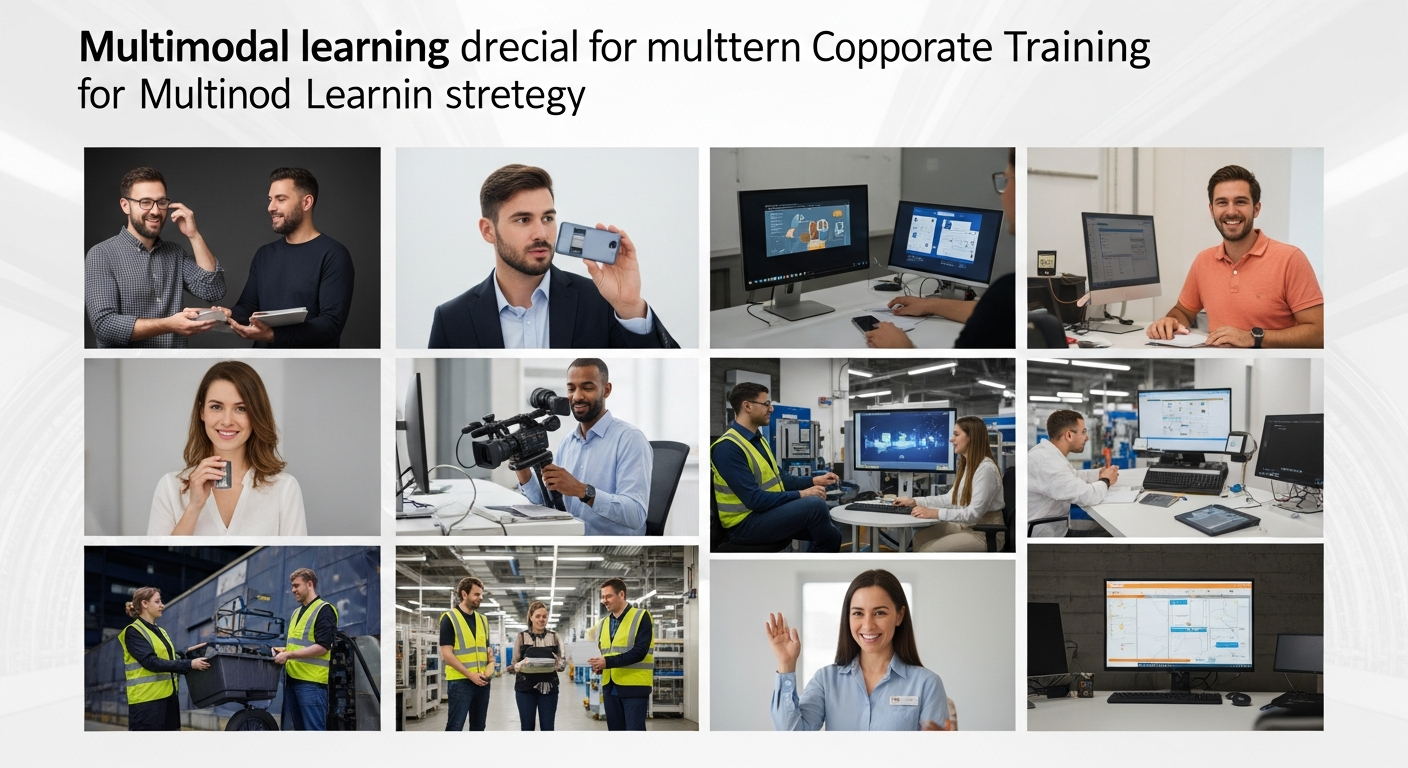
Why a Multimodal Learning Strategy is Crucial for Modern Corporate Training
In today's fast-paced corporate world, traditional, one-size-fits-all training approaches are no longer sufficient. Organizations across industries—from Compliance to Sales, Banking to Pharma, Healthcare to Oil and Gas—face a myriad of challenges: rapidly evolving skill requirements, diverse workforces, shrinking attention spans, and the need for immediate, measurable impact. Learning and Development (L&D) leaders, including Vice Presidents, Directors, and Managers, are under increasing pressure to deliver training that is not only effective but also engaging, accessible, and scalable. This is where a multimodal learning strategy becomes not just beneficial, but absolutely crucial for modern corporate training.
A robust learning management system (LMS) serves as the backbone for delivering such sophisticated strategies, enabling organizations to manage, track, and optimize diverse learning experiences. But what exactly does "multimodal" entail, and why is it the game-changer L&D professionals need?
The Evolving Landscape of Corporate Learning
The modern workforce is characterized by its diversity in demographics, learning preferences, and professional roles. Employees today expect training experiences that mirror the engaging, on-demand content they encounter in their daily lives. Furthermore, the speed of business demands that knowledge transfer is efficient and results in demonstrable behavioral change and performance improvement. Outdated methods often fall short, leading to disengagement, poor retention, and a significant return on investment gap.
To meet these demands, companies are increasingly turning to advanced learning content management system platforms. These systems move beyond simple course delivery, offering comprehensive learning management software capabilities that can support a rich tapestry of learning modalities, ensuring that every employee finds a pathway to success.
What is a Multimodal Learning Strategy?
At its core, a multimodal learning strategy involves delivering training content through a combination of different sensory channels and instructional methods. Instead of relying solely on text or lectures, it integrates visual, auditory, kinesthetic, and interactive elements to create a more comprehensive and adaptable learning experience. This approach acknowledges that individuals have varied learning styles and that presenting information in multiple formats enhances comprehension, retention, and application.
For L&D leaders, adopting this strategy means moving towards a more inclusive and effective training ecosystem. It's about designing a learning journey where a finance professional might watch an instructional video, then engage in a simulated banking scenario, followed by a collaborative discussion, and finally test their knowledge with an interactive quiz – all orchestrated seamlessly through an advanced learning management system.
Key Components of an Effective Multimodal Strategy
An effective multimodal strategy leverages a variety of formats to cater to diverse learning styles and optimize engagement:
Visual Learning
- Videos: Short, engaging videos for complex concepts, product demonstrations, or compliance procedures.
- Infographics & Visual Guides: Summarizing data, processes, or key takeaways in an easily digestible format.
- Interactive Presentations: Engaging learners with polls, clickable elements, and embedded media.
Auditory Learning
- Podcasts & Audiobooks: Allowing employees to learn on the go, perfect for busy sales professionals or those in transit.
- Webinars & Virtual Instructor-Led Training (VILT): Providing real-time interaction and expert guidance.
Kinesthetic/Experiential Learning
- Simulations & Role-Playing: Crucial for developing practical skills in areas like sales negotiation, customer service, or healthcare procedures.
- Serious Games: Gamified LMS environments turn learning into an engaging, competitive, and rewarding experience, boosting participation and retention.
- Hands-on Activities: Practical exercises that allow learners to apply theoretical knowledge in a controlled environment.
Reading/Writing
- Articles & Case Studies: In-depth analysis and real-world examples to foster critical thinking.
- Quizzes & Assessments: Reinforcing knowledge and identifying areas for improvement.
- Collaborative Documentation: Encouraging peer learning and knowledge sharing.
Microlearning
- Microlearning LMS platforms deliver bite-sized content modules (2-7 minutes) that can be accessed anytime, anywhere. This format is incredibly effective for just-in-time learning, reinforcing key concepts, or quickly onboarding new procedures. It's especially valuable in industries like retail or hospitality where employees need quick access to specific information without lengthy training sessions.
The Synergistic Power of Modern Learning Technologies
The true power of a multimodal strategy is unlocked through modern learning management solutions. A sophisticated lms learning management system can seamlessly integrate and deliver all these modalities, personalizing the learning journey for each employee.
Adaptive Learning capabilities, for instance, utilize algorithms to adjust the learning path based on a learner's progress, strengths, and weaknesses. This ensures that content is always relevant and appropriately challenging, optimizing the learning experience for individuals in diverse sectors like pharmaceutical sales or complex compliance roles within banking.
Furthermore, an AI Powered Authoring Tool can dramatically accelerate content creation, allowing L&D teams to rapidly develop a wide array of multimedia training materials. This is a game-changer for organizations needing to quickly update training due to new regulations, product launches, or market shifts.
By leveraging a cloud based learning management system, enterprises can ensure global accessibility and consistent training delivery across all their locations, making it an indispensable tool for enterprise learning management.
Industry-Specific Benefits and Applications
Multimodal learning strategies offer tailored advantages across various industries:
- Compliance & Banking: Complex regulations can be broken down into interactive modules, case studies, and simulations, making Risk-focused Training more engaging and effective in preventing breaches.
- Sales & Retail: Role-playing simulations, microlearning product guides, and gamified challenges enhance selling skills and product knowledge.
- Pharma & Healthcare: 3D anatomical models, procedural videos, and virtual patient scenarios improve clinical skills and understanding of new drugs.
- Hospitality: Customer service scenarios, interactive guides for operational procedures, and multilingual audio content can quickly upskill staff.
- Oil & Gas / Mining: Virtual reality (VR) simulations for equipment operation and safety protocols significantly reduce training risks and costs.
Integrating AI for Enhanced Multimodal Experiences
The advent of artificial intelligence (AI) is transforming multimodal learning, making it even more dynamic and effective. AI can personalize, recommend, and optimize learning paths, pushing the boundaries of what's possible in corporate training.
Many L&D leaders ponder how to personalize learning for their global workforce, considering diverse roles, cultures, and language preferences. AI, embedded within a sophisticated LMS, can analyze individual learner data—such as performance, engagement patterns, and declared preferences—to suggest tailored content, recommend specific modules, or even dynamically adjust the difficulty of assessments. This ensures that whether an employee is in a regional office or working remotely, they receive the most relevant and impactful training, truly optimizing learning for individual needs and ensuring relevance across diverse geographical and functional teams.
Another common challenge is keeping employees engaged with constantly changing information, especially in fast-evolving sectors like finance or technology. AI-powered platforms are designed to tackle this by dynamically updating content, curating timely microlearning LMS modules, and even generating new practice questions based on the latest data, regulatory changes, or product specifications. This proactive approach maintains high engagement levels and ensures that employees are always equipped with the most up-to-date knowledge.
Furthermore, L&D managers frequently ask how to measure the real impact of their training programs effectively. Advanced analytics, often AI-driven and integrated within a comprehensive learning management system, track every facet of the learning journey. These systems monitor engagement, completion rates, knowledge retention, and can even correlate training data with key business outcomes like sales performance or compliance adherence. This provides invaluable, data-driven insights, allowing L&D teams to refine their strategies, demonstrate concrete return on investment, and continuously improve the effectiveness of their training initiatives.
The MaxLearn Advantage: A Holistic Learning Content Management System
Embracing a multimodal learning strategy requires the right technological partner. MaxLearn stands as a prime example of an innovative learning content management system designed to empower L&D professionals. As a comprehensive learning management software, MaxLearn provides the robust infrastructure for implementing dynamic multimodal training. Its suite of learning management solutions supports everything from the smallest microlearning module to extensive blended learning programs, making it an ideal lms learning management system for any enterprise.
With its focus on modern, engaging learning, MaxLearn offers a cloud based learning management system that scales with your organization's needs, providing powerful enterprise learning management capabilities. As an advanced LCMS, MaxLearn not only delivers diverse content but also facilitates its creation, management, and continuous optimization, ensuring your training remains cutting-edge and impactful.
Conclusion
For L&D leaders navigating the complexities of modern corporate training, a multimodal learning strategy is not a luxury but a necessity. It's the most effective way to cater to diverse learning preferences, maximize engagement, and ensure high knowledge retention across a global and varied workforce. By strategically combining different learning formats and leveraging advanced platforms like a comprehensive LMS with AI capabilities, organizations can transform their training programs from mere compliance exercises into powerful engines for skill development, performance improvement, and sustained business growth. Embrace the multimodal approach, and equip your workforce for the challenges and opportunities of tomorrow.
.jpg)


