

```html
Optimizing Mobile Microlearning with the VARK Framework for L&D Leaders
In today's fast-paced corporate environment, effective employee training is not just an advantage—it's a necessity. For L&D Vice Presidents, Directors, and Managers across diverse sectors like Finance, Pharma, Retail, and Oil & Gas, the challenge is clear: how do we deliver impactful learning that resonates with a modern, mobile-first workforce? The answer lies in the strategic integration of mobile-centric microlearning, specifically tailored using the VARK framework.
The VARK model, standing for Visual, Auditory, Read/Write, and Kinesthetic, categorizes learning preferences, providing a powerful lens through which to design highly engaging and retention-focused training. When combined with the bite-sized, on-demand nature of mobile microlearning, it creates a formidable strategy for enhancing corporate education, from critical Risk-focused Training in banking to complex compliance modules in healthcare.
Understanding VARK in a Mobile-First World
The ubiquity of smartphones and tablets has revolutionized how we consume information. Learners expect instant access, intuitive interfaces, and content that fits into their busy schedules. This is where a well-implemented Microlearning LMS becomes invaluable. But merely delivering content to mobile devices isn't enough; it must be designed with diverse learning styles in mind. Let's explore how to apply each VARK preference to mobile-centric microlearning.
Visual Learners: Seeing is Believing on Mobile
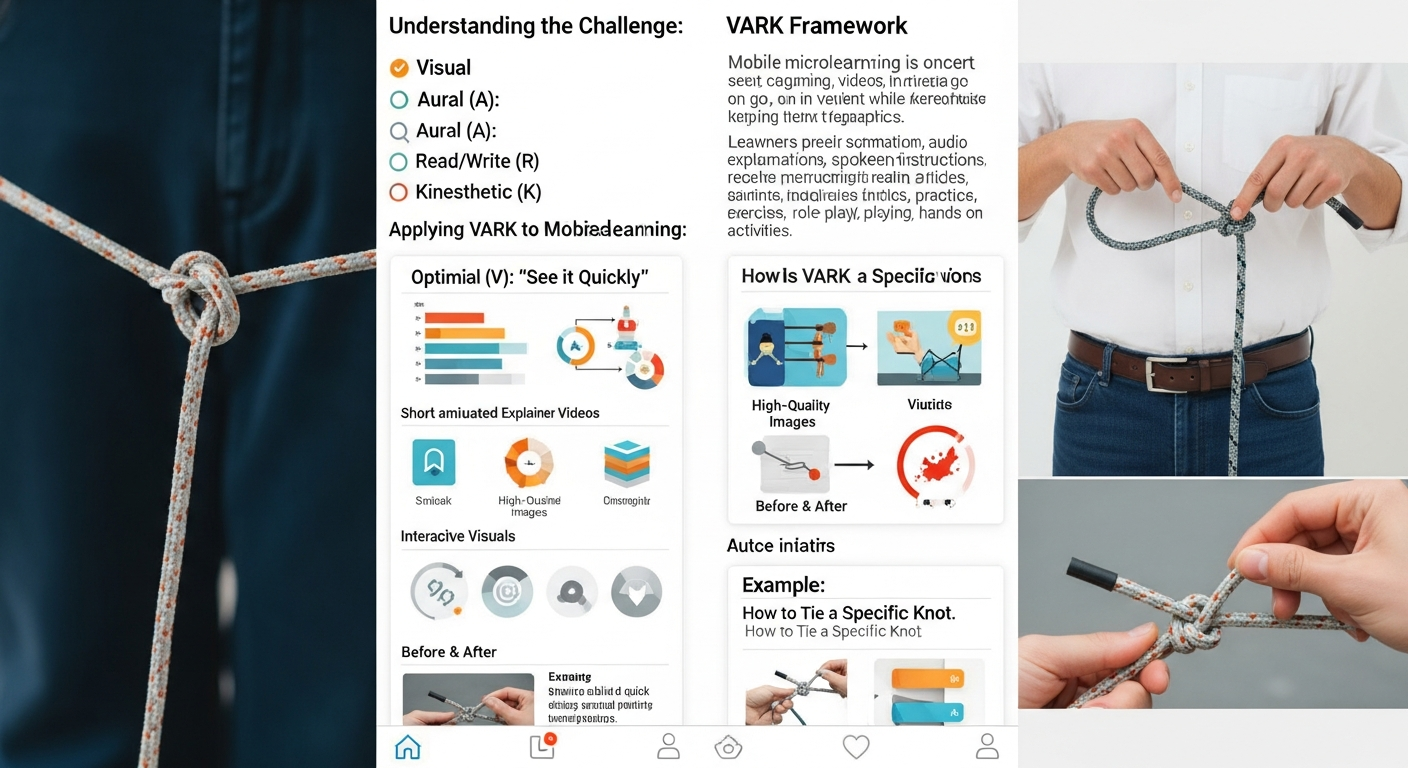
Visual learners absorb information best through images, diagrams, charts, and videos. On a mobile device, this translates into concise, high-impact visuals.
- Short Explainer Videos: Produce 2-3 minute animated videos or live-action clips demonstrating concepts, processes, or scenarios relevant to your industry (e.g., a new sales technique, a critical safety procedure in mining, or a customer service interaction in hospitality).
- Infographics and Visual Summaries: Break down complex data or compliance regulations into easily digestible infographics. Mobile devices are perfect for quick scans of visually rich information.
- Interactive Diagrams: Use tap-to-reveal diagrams or interactive flowcharts that explain intricate systems, like financial product structures or pharmaceutical drug mechanisms.
- Image-Heavy Quizzes: Incorporate questions that require identifying elements from an image or selecting the correct image that represents a concept.
Ensuring visual clarity and minimal text on mobile screens is paramount for this group.
Auditory Learners: The Power of Sound on the Go
Auditory learners learn best by hearing information. While mobile learning is often visual, incorporating audio elements is crucial for this segment.
- Audio Summaries and Podcasts: Offer short audio summaries of key learning points that learners can listen to during a commute or break. Think of mini-podcasts explaining a new company policy or market trend.
- Narrated Presentations: For training modules that might traditionally be text-heavy, like legal compliance or detailed product specifications, provide clear, engaging voiceovers to accompany slides or visuals.
- Dialogue-Based Scenarios: Create audio skits or role-play scenarios that demonstrate proper communication techniques, essential for sales training or conflict resolution in retail.
- Spoken Feedback: In interactive quizzes, provide immediate audio feedback explaining correct or incorrect answers.
High-quality audio production is key to keeping auditory learners engaged and ensuring comprehension.
Read/Write Learners: The Precision of Text in Small Doses
Read/write learners prefer to process information through text. For mobile microlearning, this means content must be concise, well-structured, and easily readable on smaller screens.
- Bite-Sized Articles: Deliver short articles, memos, or policy updates in a clear, bulleted format. Focus on key takeaways rather than lengthy paragraphs.
- Interactive Quizzes and Assessments: Utilize text-based quizzes, fill-in-the-blank exercises, or short-answer questions that reinforce learning and allow learners to articulate their understanding.
- Downloadable Quick Guides: Provide condensed, printable (or savable digital) reference guides or checklists for critical procedures, invaluable for field service technicians or healthcare professionals.
- Annotated Case Studies: Present brief case studies with questions that require learners to analyze and respond in text, fostering deeper understanding of situations in industries like banking or insurance.
The text should be scannable, using headings, subheadings, and bolding to highlight important information. A good Adaptive Learning platform can adjust the depth of textual content based on learner performance.
Kinesthetic Learners: Learning by Doing, Anywhere
Kinesthetic learners thrive on hands-on experiences, simulations, and active participation. Mobile microlearning can cater to this through interactive elements and simulations.
- Interactive Scenarios and Simulations: Create branching scenarios where learners make decisions and see the immediate consequences, simulating real-world situations like managing an oil rig emergency or handling a difficult customer in retail.
- Drag-and-Drop Exercises: Use interactive exercises where learners categorize, sequence, or build concepts by dragging and dropping elements on the screen.
- Gamified Challenges: Incorporate Gamified LMS features like points, badges, leaderboards, and progress tracking to turn learning into a game, motivating kinesthetic learners to complete tasks.
- Tap-to-Reveal Content: Allow learners to actively tap on parts of an image or diagram to reveal more information, providing a tactile interaction with the content.
- Virtual Walkthroughs: For complex physical environments, like a factory floor or a hospital ward, use 360-degree images or short interactive videos that allow learners to "explore" virtually.
These interactive elements make learning dynamic and memorable, especially when managed by a robust learning management system.
AI and the Future of VARK in Mobile Microlearning
The advent of artificial intelligence is further refining how we apply the VARK framework to mobile learning. For L&D leaders, leveraging AI means unprecedented personalization and efficiency.
How can learning platforms automatically identify individual learning styles?
Advanced learning content management system technologies can analyze a learner's interactions with various content types—which videos they watch to completion, which text modules they spend more time on, their performance in interactive simulations. Over time, an AI Powered Authoring Tool within a sophisticated learning management software can deduce a learner's preferred VARK style and adapt future content delivery. This allows for truly personalized paths within the lms learning management system, ensuring optimal engagement.
Where can artificial intelligence enhance the global delivery of VARK-optimized training?
AI can transcend geographical barriers by instantly translating and localizing microlearning content, ensuring that VARK-optimized modules are accessible and culturally relevant worldwide. For a global enterprise learning management system, AI can monitor completion rates and engagement metrics across different regions, identifying where specific VARK approaches are most effective. This data-driven insight helps L&D teams refine their global learning strategies and ensures consistent, high-quality training delivery via a cloud based learning management system, regardless of location.
What role does intelligent automation play in making VARK-tailored content generation more efficient?
Intelligent automation, powered by AI, can significantly streamline the creation of VARK-diverse content. For example, an AI Powered Authoring Tool can automatically generate visual summaries from text, create audio narrations, or even suggest interactive elements based on core content. This reduces the manual effort for instructional designers, allowing L&D departments to rapidly produce a rich library of VARK-optimized microlearning modules for their MaxLearn LMS, ensuring that the right content reaches the right learner at the right time. Such an advanced LCMS transforms the content creation pipeline.
Implementing Your VARK-Integrated Mobile Microlearning Strategy
For L&D leaders, the journey to a VARK-optimized mobile microlearning program involves thoughtful planning and the right technology. Start by assessing your current learning management solutions and identifying gaps. Invest in a robust LMS that supports diverse media formats, adaptive pathways, and mobile responsiveness. Encourage content creators to think beyond text, embracing video, audio, and interactive elements. Regularly gather feedback and leverage analytics to continuously refine your approach, ensuring that your training not only meets but exceeds the demands of your modern workforce.
By consciously applying the VARK framework to your mobile-centric microlearning initiatives, you're not just delivering training; you're creating a highly personalized, engaging, and effective learning experience that truly resonates with every employee, driving better outcomes across all your critical business operations.
```.jpg)


