

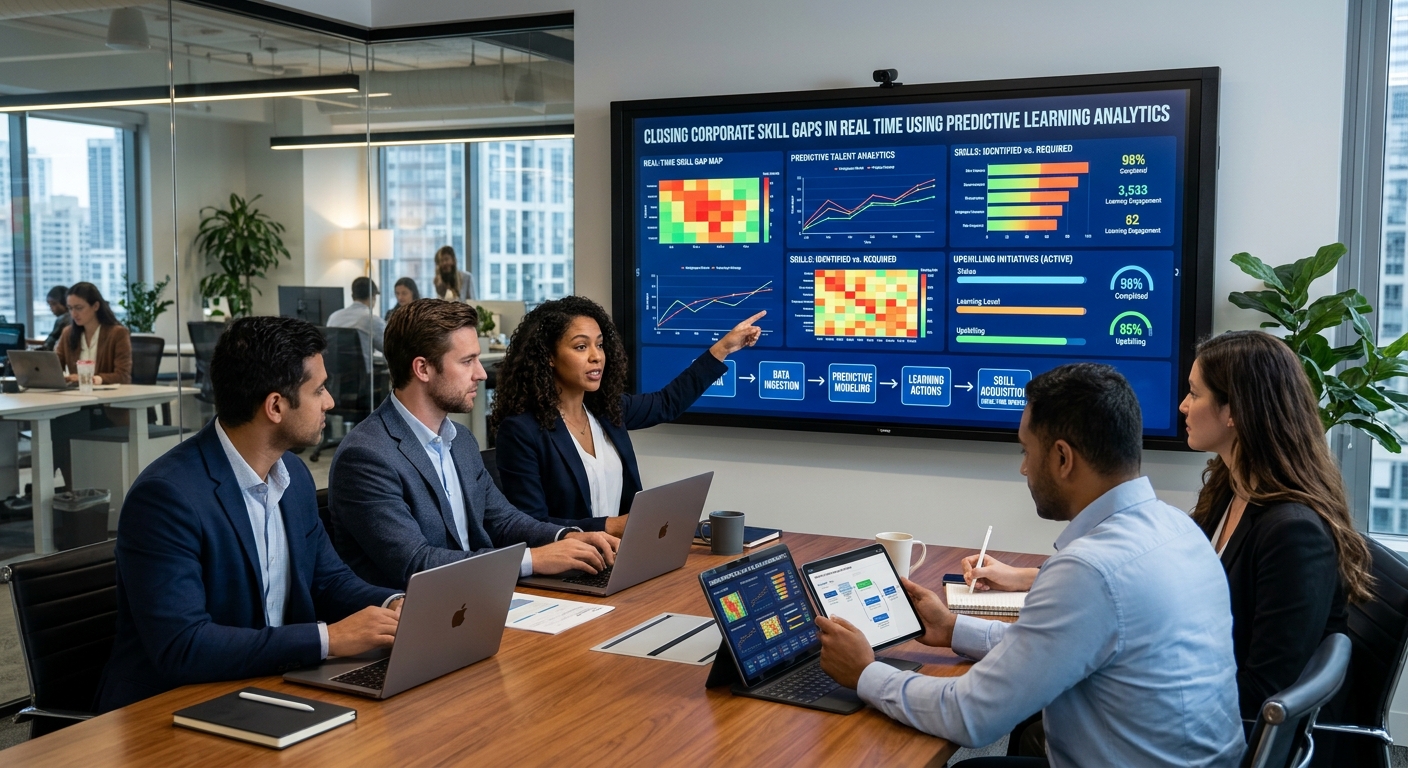
Closing Corporate Skill Gaps in Real Time Using Predictive Learning Analytics
In today’s rapidly evolving corporate landscape, the adage “time is money” has never been more relevant. For Vice Presidents, Directors, and Senior Managers in Learning and Development, the challenge of identifying and addressing skill gaps before they impact business outcomes is paramount. Traditional training methods, often reactive and one-size-fits-all, simply can’t keep pace. This is where predictive learning analytics emerges as a game-changer, offering a proactive, real-time solution to an age-old problem.
Imagine a system that not only tells you where your team’s skill deficiencies lie but also predicts where they are likely to occur, allowing you to intervene with precision and speed. This isn't futuristic fantasy; it's the tangible benefit of integrating predictive learning analytics into your corporate training strategy.
The Pervasive Challenge of Corporate Skill Gaps
Skill gaps are not merely inconveniences; they are significant impediments to growth, efficiency, and compliance across every industry. From ensuring regulatory adherence in Compliance, Banking, Finance, and Insurance, to optimizing customer experience in Retail and Hospitality, or driving innovation in Pharma and Health care, the implications are profound. In Sales, a knowledge gap can directly translate to lost revenue. In resource-intensive sectors like Oil and Gas and Mining, a lack of specific skills can lead to safety hazards and operational inefficiencies.
The core issue is often the delay between identifying a skill deficit and effectively addressing it. By the time a gap is recognized through performance reviews or customer feedback, it might have already cost the organization significant resources. The need for a proactive, real-time approach to enterprise learning management is more urgent than ever.
What is Predictive Learning Analytics?
Predictive learning analytics harnesses the power of data, artificial intelligence (AI), and machine learning to forecast future learning needs and potential skill gaps within an organization. It moves beyond descriptive analytics (what happened) and diagnostic analytics (why it happened) to prescriptive analytics (what will happen, and what should be done about it).
This sophisticated approach involves:
- Data Collection: Gathering vast amounts of data from various sources – employee performance metrics, assessment scores, learning platform engagement, project outcomes, HR records, and even external market trends.
- Pattern Recognition: AI algorithms analyze this data to identify patterns, correlations, and anomalies that indicate current or future skill deficiencies.
- Forecasting: Based on these patterns, the system predicts which employees or teams are at risk of developing specific skill gaps, or which new skills will be critical for upcoming projects or market shifts.
- Personalized Recommendations: It then recommends targeted learning interventions, often leveraging an advanced Microlearning LMS, to close these predicted gaps proactively.
How Predictive Learning Analytics Closes Gaps in Real Time
Proactive Identification and Intervention
Unlike traditional methods, predictive analytics doesn't wait for a problem to manifest. It identifies potential weaknesses before they impact performance. For instance, in a Banking firm, the system might predict that a new regulatory update could create a compliance skill gap for a segment of employees based on their historical training data and roles. An immediate, targeted Risk-focused Training module can then be deployed to mitigate this risk.
Personalized and Adaptive Learning Paths
A key strength of this approach is its ability to tailor learning experiences. Once a potential gap is identified, the system can automatically assign relevant content, courses, or modules to specific individuals or teams. This is where Adaptive Learning shines, adjusting content difficulty and pace based on learner progress and knowledge absorption. This ensures that every employee receives the most relevant training, maximizing engagement and retention.
Real-time Feedback and Optimization
The learning management system continuously monitors learner progress and performance. If an employee struggles with a particular concept, the system can immediately recommend supplementary materials, additional practice, or a different learning approach. This real-time feedback loop ensures that learning is dynamic and responsive, effectively closing gaps as they emerge rather than after they've become ingrained issues.
Industry-Specific Applications
- Sales: Predicts which sales reps need training on new product features or objection handling based on CRM data, deploying targeted modules via a Gamified LMS to boost competitive edge.
- Healthcare: Identifies nurses who need updated training on new medical devices or protocols to enhance patient safety and care.
- Oil & Gas/Mining: Forecasts safety training needs for operational teams based on equipment maintenance records and incident reports, minimizing workplace risks.
- Retail: Pinpoints store managers needing upskilling in new inventory management systems or customer service techniques to improve efficiency and satisfaction.
- Pharma: Ensures research teams are up-to-date on the latest scientific advancements and regulatory changes.
The Role of an Advanced Learning Management System
At the heart of any successful predictive learning analytics strategy is a robust learning content management system. A modern Microlearning LMS serves as the backbone, collecting data, delivering content, and facilitating the adaptive learning experience. A state-of-the-art lms learning management system, especially a cloud based learning management system, offers the scalability and features necessary to handle the complexity of enterprise learning management.
Platforms that incorporate an AI Powered Authoring Tool further streamline content creation, allowing L&D teams to quickly develop and deploy highly targeted, relevant learning content. This holistic approach transforms corporate training from a cost center into a strategic driver of organizational agility and competitive advantage.
Intelligent Insights for L&D Leaders
For L&D professionals, understanding how these intelligent systems function is key to leveraging their full potential.
How does artificial intelligence pinpoint skill gaps across diverse organizational structures?
Advanced algorithms analyze performance data, engagement metrics, and individual learning pathways to identify specific areas where employees might be underperforming or lack crucial competencies. This proactive insight allows L&D teams to intervene before these gaps impact productivity. For instance, in a large multinational corporation, AI can compare skill sets across different regions and departments, highlighting unique deficiencies that might go unnoticed in a manual review.
What is the strategic value of real-time data analysis in tailoring learning experiences for global workforces?
By continuously processing data from various regions and departments, systems can dynamically adjust content and delivery methods. This ensures that employees, whether in New York, London, or Mumbai, receive highly relevant and localized training, maximizing its impact and cultural fit. This also means that training for a financial product in one market can be quickly adapted for compliance requirements in another, all while maintaining a consistent quality of learning management software.
Can predictive technologies forecast emerging skill requirements for specific industry sectors?
Absolutely. Machine learning models can analyze market trends, industry reports, and internal project requirements to anticipate future skill demands. For instance, in finance, they might predict the need for new digital compliance skills, or in healthcare, evolving patient care technologies, allowing L&D to prepare training proactively. This foresight ensures the organization stays ahead of industry curves, a critical advantage in competitive markets.
How do these intelligent systems help optimize budget allocation for training programs?
By identifying the most critical skill gaps and the most effective learning interventions, predictive analytics ensures that training resources are directed where they will yield the highest return on investment. It reduces wasted effort on irrelevant courses and focuses on high-impact development initiatives. This strategic allocation allows L&D to demonstrate clear ROI, transforming budget conversations with senior leadership.
The Bottom Line for L&D Leaders
Implementing predictive learning analytics within an integrated learning management system represents a significant leap forward for corporate training. It empowers L&D leaders to:
- **Reduce Business Risk:** Proactively address compliance and operational skill gaps.
- **Boost Productivity & Performance:** Equip employees with the exact skills they need, precisely when they need them.
- **Enhance Employee Engagement & Retention:** Offer personalized development opportunities, fostering a culture of continuous learning.
- **Optimize Training ROI:** Ensure every training dollar is spent effectively on high-impact initiatives.
- **Drive Strategic Growth:** Position the workforce to adapt to future challenges and seize new opportunities.
The future of corporate learning is predictive, personalized, and real-time. By embracing an advanced LCMS with predictive capabilities, L&D professionals can transform their organizations, ensuring a skilled, adaptive, and future-ready workforce.


