

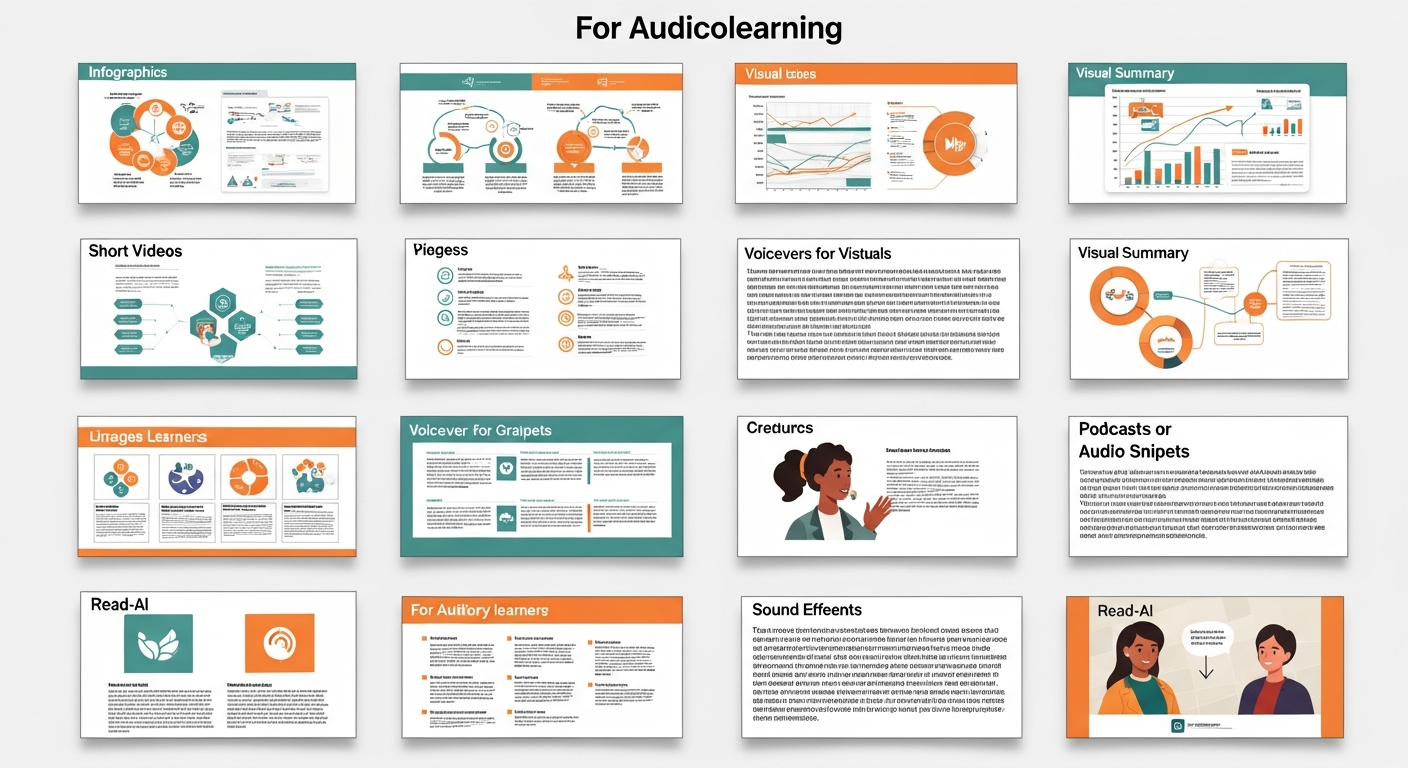
What Are the Best Ways to Design Microlearning for Visual and Auditory Learners?
In today’s fast-paced corporate environment, where time is a premium, Learning & Development (L&D) leaders face the persistent challenge of delivering impactful training that resonates with a diverse workforce. From compliance and sales to banking, healthcare, and oil & gas, professionals across every sector need training that is not just efficient but also highly effective. Microlearning, with its bite-sized, focused approach, has emerged as a powerful solution. However, its true potential is unlocked only when meticulously designed to cater to different learning preferences, especially visual and auditory learners.
As L&D Vice Presidents, Directors, and Senior Managers, understanding how to optimize microlearning for these dominant styles is crucial for maximizing engagement, knowledge retention, and ultimately, business outcomes. Let's explore the best strategies to craft microlearning experiences that truly stick.
Understanding Visual Learners and Tailoring Microlearning
Visual learners constitute a significant portion of any workforce. These individuals process information best when it is presented in a graphical or pictorial format. They excel at understanding concepts through images, diagrams, charts, and videos. For them, a page of dense text can be daunting, while a well-designed infographic can convey complex ideas in seconds.
Key Strategies for Visual Learners:
- Rich Visuals and Graphics: Incorporate high-quality images, custom illustrations, and infographics that simplify complex data or processes. For instance, explaining a new financial regulation through a flowchart rather than a text document can be far more effective.
- Short, Engaging Videos and Animations: Create concise explainer videos (1-3 minutes) that demonstrate a process, explain a concept, or illustrate a scenario. Animations are particularly effective for abstract topics, showing cause and effect without lengthy explanations.
- Interactive Diagrams and Simulations: Allow visual learners to interact with diagrams, click on different parts to reveal information, or navigate through a simulated environment. This hands-on visual engagement reinforces understanding, particularly beneficial for Risk-focused Training in finance or compliance.
- Visual Storytelling: Use storyboards or comic strips to present narratives, especially useful for soft skills training in sales or hospitality, or for illustrating the consequences of non-compliance.
- Clear Layout and Design: Even text-based microlearning modules can be visual-learner friendly with ample white space, bullet points, numbered lists, and strategic use of headings and subheadings. Think about visual hierarchy and readability.
Engaging Auditory Learners Through Microlearning
Auditory learners, on the other hand, absorb information most effectively when they hear it. They benefit from spoken instructions, discussions, lectures, and audio recordings. For these individuals, listening to a well-narrated explanation can be more impactful than reading it. They often remember names, details, and instructions by sound.
Key Strategies for Auditory Learners:
- Podcasts and Audio Clips: Develop short audio modules (e.g., 2-5 minutes) that explain a concept, conduct an interview with an expert, or share a success story. These can be consumed on the go, making them ideal for busy professionals in industries like retail or sales.
- Voiceovers and Narration in Videos: Ensure all videos feature clear, professional narration that explains the visual content. The synergy between what they see and what they hear significantly enhances comprehension for auditory learners.
- Interactive Audio Scenarios: Create branching audio scenarios where learners listen to a situation and then verbally or mentally choose a response, hearing the consequence. This is powerful for customer service training in banking or hospitality.
- "Listen and Learn" Activities: Include activities where learners listen to instructions or a case study and then answer questions or perform a task. This can be integrated into a broader learning content management system.
- Summaries and Recaps: Offer audio summaries at the end of modules to reinforce key takeaways, allowing auditory learners to consolidate information through sound.
Blending Modalities for Optimal Impact and Universal Accessibility
While we categorize learners, it's crucial to remember that most individuals are a blend of learning styles, with one often being dominant. The most effective microlearning design integrates both visual and auditory elements, creating a rich, multi-sensory experience that caters to a broader audience and reinforces learning through multiple pathways.
Creating Integrated Experiences:
- Multimedia Synergy: Combine animated visuals with expert narration. Show a process on screen while an instructor explains it verbally. This dual coding approach is highly effective.
- Interactive Quizzes with Audio Feedback: After a visual explanation, have a quiz where both questions and feedback are presented auditorily, perhaps with supporting visuals.
- Scenario-Based Training with Dialogue: For complex decision-making in compliance or healthcare, use realistic scenarios featuring dialogue between characters, complemented by visual cues.
- Gamified Elements: Incorporate elements from a Gamified LMS that challenge learners through visually stimulating interfaces and auditory cues for progress or success.
The Role of Advanced Platforms and Intelligence in Microlearning Design
Leveraging cutting-edge technology is paramount for L&D leaders looking to scale personalized and effective microlearning. Modern enterprise learning management systems (LMS) and intelligent tools are transforming how we design and deliver content for diverse learners.
How can intelligent platforms personalize microlearning paths for individual preferences?
Advanced learning management software can analyze learner interactions, progress, and performance data to identify preferred learning styles and knowledge gaps. Based on this intelligence, an Adaptive Learning system can then recommend specific microlearning modules – perhaps more videos for a visual learner struggling with a concept, or additional audio explanations for an auditory learner. This dynamic adjustment ensures that each professional receives content optimized for their unique needs, leading to higher engagement and better retention across diverse industries from pharma to mining.
What role does advanced digital tooling play in rapidly creating engaging multimedia microlearning?
Modern L&D teams need to produce high-quality content quickly. An AI Powered Authoring Tool dramatically accelerates this process. Such tools can assist in script generation for video narrations, suggest visual assets based on text, or even auto-generate quiz questions. This empowers content creators to design rich visual and auditory microlearning modules with unprecedented efficiency, ensuring relevance for critical areas like sales training or intricate healthcare procedures.
Can technology help L&D teams measure the effectiveness of diverse microlearning formats across different regions?
Absolutely. A robust Microlearning LMS provides sophisticated analytics dashboards. These platforms track completion rates, assessment scores, time spent on different content types (videos vs. audio vs. text), and even learner feedback. This data allows L&D leaders to gauge which visual and auditory microlearning formats are most effective for specific topics or learner cohorts, potentially revealing regional preferences or needs within global organizations in oil & gas or finance. Such insights are invaluable for continuous improvement and strategic planning of future learning initiatives. The comprehensive reporting offered by a sophisticated learning management system (LMS) is key to this understanding.
Conclusion
Designing microlearning that effectively caters to both visual and auditory learners is not merely a best practice; it's a strategic imperative for L&D leaders. By consciously incorporating diverse multimedia elements – from compelling visuals and interactive diagrams to engaging audio clips and professional narrations – you can create a truly inclusive and impactful learning experience.
The right cloud based learning management system, such as a Microlearning LMS, combined with intelligent authoring capabilities, empowers your organization to deliver highly effective and personalized training at scale. In industries where knowledge is power and compliance is critical, investing in learner-centric microlearning design ensures that your workforce is not just trained, but truly educated, engaged, and equipped for success. MaxLearn LMS offers the tools to achieve this seamless integration.
.jpg)


