

Transforming Workplace Habits: The Best Gamification Assets for Remediation
In today's dynamic corporate landscape, even the most skilled employees can sometimes develop habits that hinder productivity, compliance, or overall team performance. From inefficient workflows and poor communication to unsafe practices and non-adherence to protocols, these "bad habits" can erode an organization's bottom line and culture. For Vice Presidents, Directors, Senior Managers, and Managers of L&D, the challenge isn't just to identify these behaviors but to find effective, sustainable ways to remediate them.
Enter gamification: the application of game-design elements and game principles in non-game contexts. Far from a frivolous trend, strategic gamification has emerged as a powerful methodology for driving engagement, motivating learning, and fundamentally altering behavior. When deployed correctly, gamified training can turn the mundane task of habit correction into an engaging, rewarding, and highly effective experience.
Why Gamification Excels at Behavior Remediation
Traditional training often struggles with behavior change because it typically focuses on knowledge transfer rather than sustained practice and intrinsic motivation. Gamification, however, taps into core human psychological drivers:
- Engagement: Games capture attention and maintain interest, making employees more receptive to learning and practice.
- Motivation: Rewards, challenges, and recognition provide intrinsic and extrinsic motivators to complete tasks and adopt desired behaviors.
- Immediate Feedback: Unlike traditional methods, gamified systems offer instant feedback on actions, allowing for quick adjustments and reinforcement of correct behaviors.
- Safe Practice Environment: Employees can experiment, fail, and learn from mistakes without real-world consequences, fostering a growth mindset.
- Social Influence: Leaderboards and team-based challenges can leverage healthy competition and peer support to encourage positive change.
Key Gamification Assets for Effective Habit Remediation
The success of gamified remediation lies in selecting and implementing the right assets. Here are some of the most effective tools:
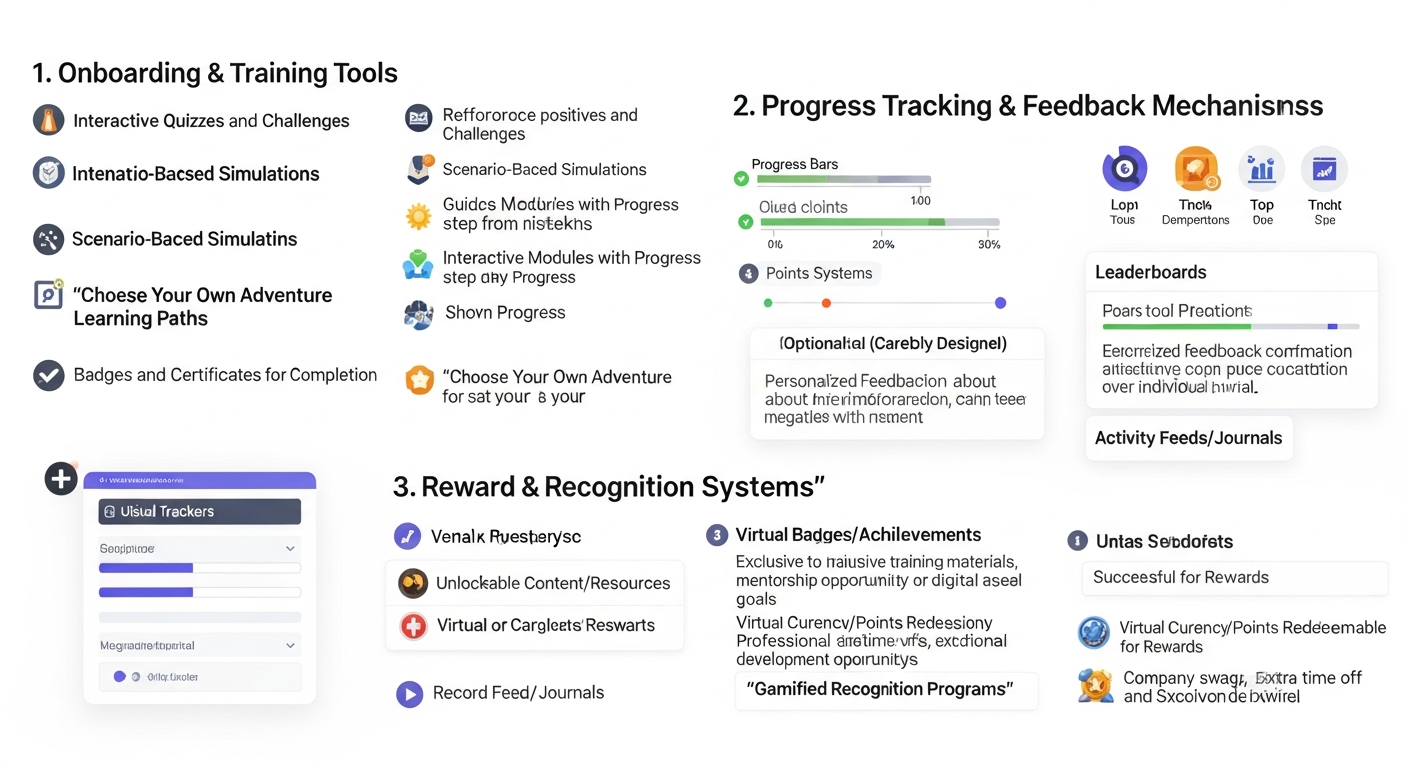
1. Points-Based Systems & Leaderboards
Perhaps the most common gamification asset, points track progress and reward specific actions (e.g., completing a module on time, applying a new communication technique, identifying a compliance risk). Leaderboards foster healthy competition, displaying top performers and encouraging others to improve. For remediating habits like procrastination or inconsistent reporting, points can be awarded for timely submissions or adherence to new processes. A well-designed Gamified LMS will naturally incorporate these features, making tracking and display seamless.
2. Badges & Awards
Digital badges and virtual awards serve as visible symbols of achievement and mastery. They provide recognition for completing specific tasks, demonstrating proficiency in a new skill, or consistently performing a desired behavior. For example, an "Integrity Champion" badge could be awarded for identifying and reporting an ethical lapse in a simulated scenario, reinforcing the importance of compliance. These digital accolades offer psychological rewards that motivate continued engagement and behavior change.
3. Quests & Challenges
Structuring remediation into a series of "quests" or challenges provides a clear path for learners. Each quest breaks down a larger behavioral change into manageable steps, making the process less daunting. For instance, remediating a habit of poor customer service could involve quests like "Mastering Active Listening," "De-escalation Dialogue," and "Post-Interaction Follow-up." Successful completion of each quest unlocks the next, guiding the employee through a structured learning journey that could be delivered through a Microlearning LMS.
4. Interactive Scenarios & Simulations
To truly change behavior, employees need to practice new habits in realistic contexts. Interactive scenarios and simulations provide a safe, immersive environment to apply learned behaviors. For remediating habits like unsafe workplace practices or improper financial transaction procedures, simulations allow employees to experience the consequences of their actions (without real-world harm) and practice the correct methods until they become second nature. These can be crucial for Risk-focused Training in high-stakes industries.
5. Storytelling & Narrative
Embedding learning within a compelling story or narrative makes the content more engaging and memorable. Learners become protagonists in their own development journey, facing challenges and making choices that impact the story's outcome. This approach is highly effective for explaining the 'why' behind habit change, helping employees understand the broader impact of their actions on the organization and its mission, especially when dealing with complex compliance regulations or ethical dilemmas.
6. Feedback & Progress Tracking
Instant, constructive feedback is paramount for habit remediation. Gamified systems provide real-time performance indicators, explaining why certain actions were correct or incorrect and offering guidance for improvement. Detailed progress tracking allows both the learner and managers to visualize growth over time, reinforcing positive changes and identifying areas that still require attention. An Adaptive Learning system is particularly adept at this, personalizing the feedback loop based on individual performance.
Integrating Gamification with Learning Platforms
To maximize the impact of these assets, they must be deployed through a robust LMS (Learning Management System). A modern learning management software, or learning management solutions suite, particularly an enterprise learning management system, provides the infrastructure to host content, track progress, and manage users efficiently. A cloud based learning management system ensures accessibility and scalability across diverse organizations and industries.
The best solutions function not just as a learning content management system (LCMS) but as a comprehensive platform where gamified elements are seamlessly integrated into the learning experience. This means the lms learning management system should support interactive content, diverse assessment types, and rich reporting features to truly measure the impact of remediation efforts.
The Role of AI in Supercharging Gamification for Habit Change
How can artificial intelligence enhance gamified training for behavior modification?
Artificial intelligence is revolutionizing the efficacy of gamified training. AI can personalize the learning path for each employee, adapting challenges and content based on their individual learning style, progress, and areas where bad habits persist. By analyzing performance data, AI can offer intelligent feedback, recommend specific modules or practice scenarios, and even predict potential areas of struggle before they fully manifest. This level of dynamic personalization ensures that remediation efforts are highly targeted and efficient, making every interaction more impactful.
What are the practical applications of AI-driven gamification in high-stakes environments like compliance or finance?
In industries such as banking, finance, healthcare, and oil and gas, where non-compliance can have severe consequences, AI-driven gamification offers unparalleled advantages. For example, AI can create highly realistic, evolving ethical dilemmas or compliance scenarios that challenge employees to apply regulations in nuanced situations. It can identify patterns in employee errors and then generate tailored practice scenarios to address those specific weaknesses. An AI Powered Authoring Tool can even assist in rapidly developing these complex, scenario-based gamified modules, ensuring training is always current and relevant to emerging risks.
How can organizations leverage intelligent systems to continuously adapt gamified learning content?
Intelligent systems can provide continuous adaptation by monitoring real-world performance data and integrating it back into the gamified training. If a new compliance issue arises or a particular workplace habit proves stubbornly resistant to change across a group, AI can automatically update existing scenarios or create new ones to address the gap. This ensures that the gamified content remains fresh, relevant, and continually optimized for effective habit remediation, creating a truly adaptive and responsive learning ecosystem.
Choosing the Right Gamification Solution
When evaluating gamification assets and platforms, L&D leaders should consider:
- Relevance: Do the game mechanics align with the specific habits you aim to remediate?
- Engagement: Is the system genuinely fun and motivating for your target audience?
- Integration: Can it seamlessly integrate with your existing MaxLearn LMS or HR systems?
- Analytics: Does it provide robust data and insights into behavior change and learning effectiveness?
- Scalability: Can the solution grow with your organization and adapt to different departments or global teams?
Effective habit remediation isn't about punishment; it's about empowerment, guidance, and creating an environment where employees are motivated to excel. By strategically deploying gamification assets within a powerful learning management system and leveraging the transformative capabilities of AI, L&D professionals can turn challenging workplace habits into opportunities for growth, ensuring a more productive, compliant, and engaged workforce.
.jpg)


