

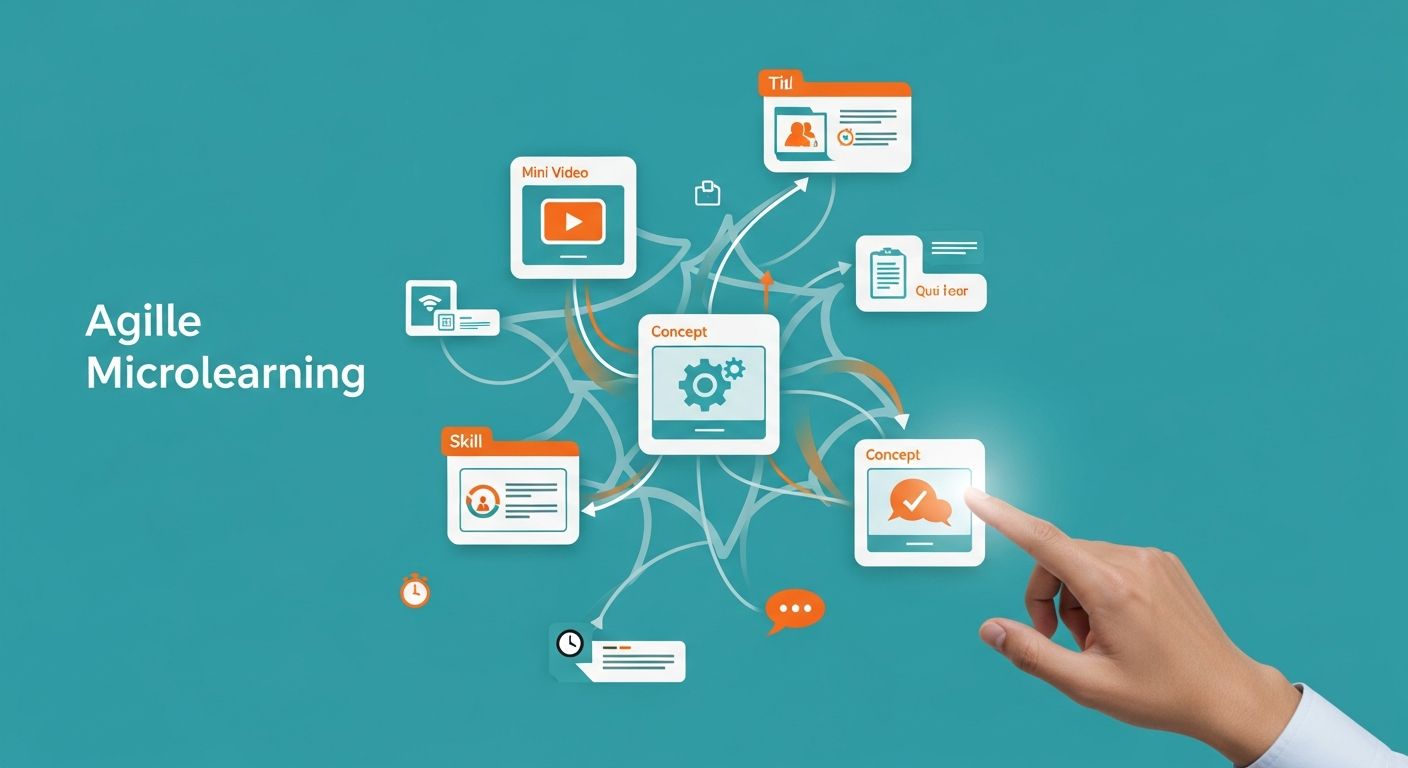
Agile Microlearning: The Strategic Imperative for Modern L&D Leaders
In today's fast-evolving corporate landscape, the traditional long-form training model is struggling to keep pace. Vice Presidents, Directors, and Senior Managers in Learning and Development across sectors like Compliance, Sales, Banking, Finance, Insurance, Retail, Pharma, Healthcare, Hospitality, Oil and Gas, and Mining are constantly seeking innovative solutions to address skill gaps, ensure compliance, and drive performance. The demand for immediate, relevant, and engaging learning experiences has never been higher. This is precisely where Agile Microlearning emerges as a powerful, transformative strategy, aligning perfectly with the dynamic needs of the modern workforce and the strategic objectives of forward-thinking organizations.
The convergence of agility—a methodology emphasizing iterative development, collaboration, and rapid adaptation—with microlearning—the delivery of learning content in small, focused bursts—creates a powerful synergy. This approach isn't just about delivering content faster; it's about making learning intrinsically more effective, measurable, and impactful on business outcomes. For L&D leaders, embracing Agile Microlearning is no longer an option but a strategic imperative to build a resilient, skilled, and future-ready workforce.
What Exactly is Agile Microlearning?
Agile Microlearning is a dynamic instructional design and delivery methodology that combines the principles of agile development with the pedagogical benefits of microlearning. At its core, it means breaking down complex learning objectives into short, digestible, and highly focused modules that can be rapidly developed, deployed, and iterated upon based on real-time feedback and evolving business needs. Think of it as delivering knowledge in sprints, continuously refining the learning experience.
- Agile Component: Emphasizes iterative development cycles, continuous feedback loops, collaboration between L&D and stakeholders, and adaptability to change. Instead of a single, monolithic training program, content is built and refined in smaller, manageable increments.
- Microlearning Component: Focuses on bite-sized content (typically 3-7 minutes) designed to achieve a single learning objective. This could be a short video, an interactive quiz, an infographic, a brief simulation, or a quick job aid. These modules are easily consumed, highly retainable, and directly applicable.
By blending these two powerful approaches, Agile Microlearning ensures that training is not only relevant and engaging but also remarkably responsive to the fast-changing demands of industries where regulations, market conditions, and technologies shift constantly. From keeping sales teams updated on new product features to ensuring compliance officers are aware of the latest regulatory changes, this methodology provides unparalleled flexibility.
Why Agile Microlearning is Crucial for L&D Leaders
For L&D executives, the benefits of adopting an Agile Microlearning strategy are compelling and directly impact key performance indicators:
- Enhanced Engagement and Retention: Short, focused modules prevent cognitive overload and fit seamlessly into busy schedules, making learning more approachable and enjoyable. This naturally boosts completion rates and knowledge retention.
- Rapid Skill Development and Deployment: New skills or compliance updates can be disseminated quickly, ensuring employees are equipped with the most current information precisely when they need it. This is invaluable in sectors like Pharma for drug launches or Banking for new financial regulations.
- Cost-Effectiveness and Resource Optimization: Developing microlearning modules is often less resource-intensive than creating lengthy courses. The iterative nature of agile allows for early identification and correction of issues, reducing costly reworks.
- Adaptability and Scalability: Agile Microlearning platforms allow for easy updating and personalization of content, making it scalable across diverse teams and global operations. This is critical for industries like Oil and Gas, where safety protocols frequently evolve, or Retail, where product training needs to adapt to seasonal changes.
- Data-Driven Insights: The modular nature allows for granular tracking of learner progress and content effectiveness. L&D leaders can quickly identify knowledge gaps, optimize content, and demonstrate clear ROI. Leveraging a Microlearning LMS can provide these invaluable analytics.
- Improved Performance Outcomes: By delivering just-in-time, relevant information, Agile Microlearning directly contributes to improved job performance, fewer errors, and enhanced customer satisfaction, particularly crucial in sectors like Healthcare and Hospitality.
Key Pillars of Successful Agile Microlearning Implementation
To truly harness the power of Agile Microlearning, L&D leaders must focus on several foundational elements:
- Strategic Content Curation & Design: Content must be purpose-built for microlearning—atomic, focused on a single objective, and often multimedia-rich. It's about quality over quantity, ensuring every module delivers immediate value.
- Robust Technology & Platforms: A powerful learning platform is essential. Solutions like a Microlearning LMS are designed to host and deliver bite-sized content effectively. Furthermore, a Gamified LMS can significantly enhance engagement through challenges, leaderboards, and rewards, making learning more interactive and enjoyable.
- Iterative Feedback & Continuous Improvement: Embracing the agile mindset means gathering continuous feedback from learners and stakeholders. This data informs rapid iterations and improvements to content, ensuring it remains relevant and impactful.
- Personalization & Adaptive Paths: Leveraging technology to tailor learning experiences to individual needs and roles is paramount. Adaptive Learning techniques ensure that each learner receives content most pertinent to their current skill level and developmental goals, accelerating mastery.
Intelligent Systems Amplifying Agile Microlearning
The advent of sophisticated computational intelligence is revolutionizing how we approach learning and development, offering unprecedented capabilities to enhance Agile Microlearning strategies. For L&D leaders navigating complex organizational learning needs, these advancements provide powerful tools to optimize training effectiveness and efficiency.
Consider the following strategic questions an L&D leader might ponder:
How can advanced algorithms help us pinpoint exact knowledge gaps within our organization across diverse industries, from compliance in finance to safety in mining?
Intelligent analytics systems can sift through vast datasets—performance reviews, compliance incident reports, engagement metrics, and skill assessments—to identify precise areas where understanding is lacking. These systems leverage predictive modeling to highlight not just current deficits but also potential future skill gaps based on industry trends and organizational shifts. This allows for highly targeted microlearning interventions, ensuring resources are allocated effectively to address critical needs. This capability is vital for Risk-focused Training, helping organizations proactively mitigate potential issues.
In a global enterprise, how do we ensure learning content is contextually appropriate and readily accessible to teams regardless of their location or operational environment?
Advanced contextual awareness tools within learning platforms can dynamically adapt content based on a user's location, language preferences, role, or even the device they are using. For instance, a sales team in one region might receive microlearning modules tailored to local market regulations, while a manufacturing team in another country gets content optimized for their specific equipment and operational procedures. These systems ensure that learning is not a one-size-fits-all approach but a deeply personalized experience that resonates with each individual's immediate work context. This geographic and contextual relevance is key to engagement and practical application.
Beyond just identifying gaps, how can intelligent systems craft and refine individual learning journeys that adapt in real-time to each employee's progress and role requirements?
Sophisticated recommendation engines and dynamic content sequencing are at the heart of personalized learning pathways. These systems continuously analyze a learner's interactions, performance on assessments, and identified skill gaps to suggest the most relevant microlearning modules next. They can dynamically re-route learners, offer remedial content where needed, or provide accelerated paths for those demonstrating mastery. The ability to create and update such tailored content is greatly enhanced by an AI Powered Authoring Tool, which can rapidly generate, suggest, or adapt microlearning content, significantly reducing development time and ensuring timely delivery of highly personalized training.
Implementing Agile Microlearning: A Strategic Roadmap
For L&D leaders looking to integrate Agile Microlearning, a phased approach is recommended:
- Pilot Programs: Start with a specific department or a critical skill gap within your organization. This allows for testing the approach and gathering initial feedback.
- Align with Business Objectives: Ensure your microlearning initiatives are directly tied to strategic business goals, whether it’s reducing compliance violations, increasing sales performance, or improving customer satisfaction.
- Leverage Technology: Invest in an LMS that supports microlearning, gamification, and adaptive learning capabilities.
- Foster a Culture of Continuous Learning: Promote microlearning as an integral part of daily work, not just an isolated training event.
- Measure and Iterate: Continuously collect data on engagement, completion rates, and business impact. Use these insights to refine and improve your microlearning content and strategy.
Conclusion
Agile Microlearning represents a paradigm shift in corporate training, offering a highly effective, adaptable, and engaging solution to the complex learning challenges faced by modern enterprises. For Vice Presidents, Directors, and Managers of L&D, embracing this methodology is a strategic move that not only future-proofs their workforce but also directly contributes to organizational agility, compliance adherence, and sustained business growth. By strategically integrating bite-sized content with agile development principles and harnessing the power of intelligent systems, L&D leaders can unlock unprecedented potential, transforming learning from a periodic obligation into a continuous, impactful driver of success across every industry.
.jpg)


