

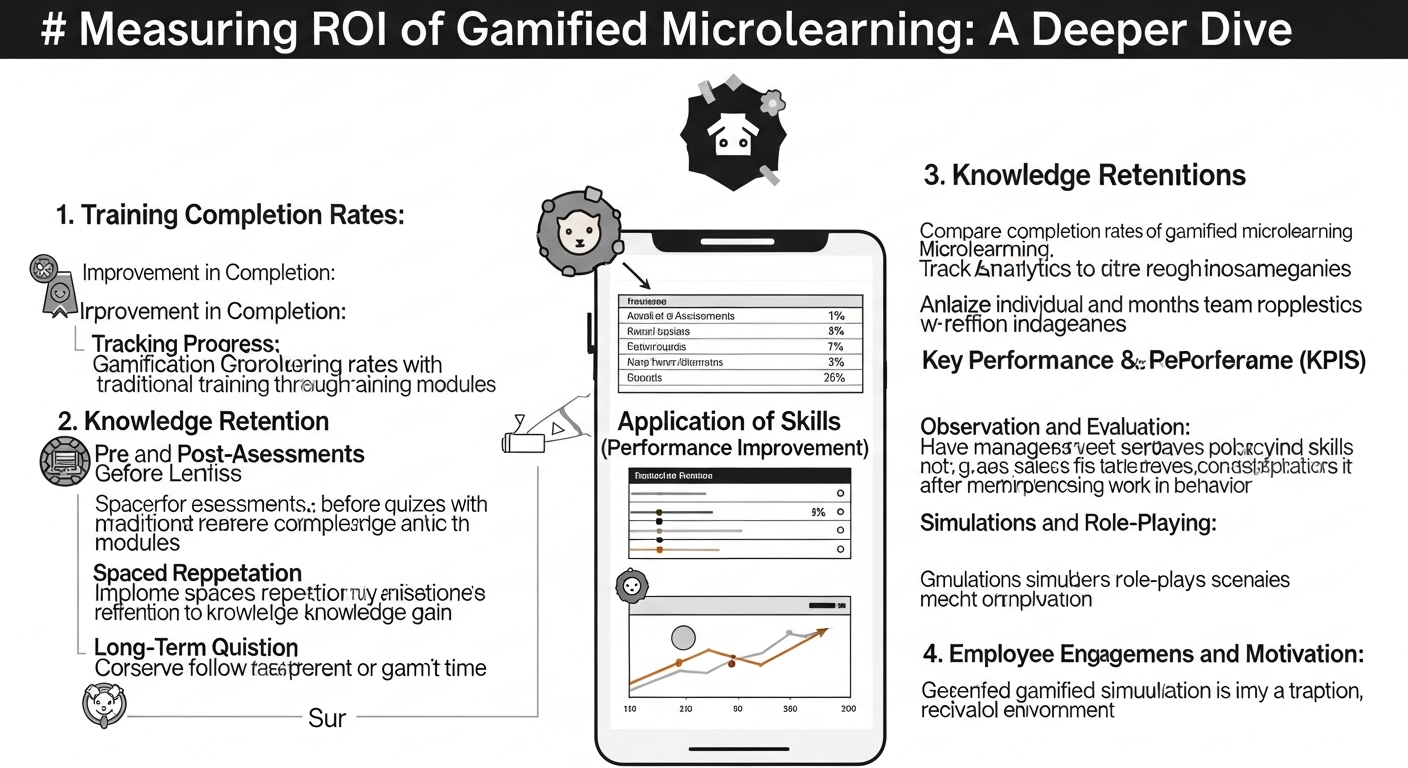
Measuring the ROI of Gamified Microlearning: A Strategic Imperative for L&D Leaders
As Vice Presidents, Directors, and Senior Managers in Learning & Development, you are constantly tasked with optimizing training effectiveness while demonstrating tangible business value. The landscape of corporate learning is rapidly evolving, with Microlearning LMS solutions and gamification emerging as powerful tools to enhance engagement and retention across diverse industries, from Compliance and Sales to Banking, Finance, Healthcare, and Oil & Gas.
While the intuitive benefits of gamified microlearning are clear – increased learner motivation, improved knowledge recall, and greater accessibility – the critical question often remains: How do we quantitatively measure its Return on Investment (ROI)? This article delves into a strategic framework for evaluating the financial and performance impact of your gamified microlearning initiatives, ensuring your programs not only educate but also deliver measurable results that resonate with the C-suite.
Why Measuring ROI is Non-Negotiable for L&D
In today's data-driven business environment, L&D is no longer just a cost center; it's a strategic partner driving organizational growth and competitive advantage. Demonstrating ROI is crucial for securing budget, justifying resource allocation, and proving the business impact of your learning programs. Many L&D leaders grapple with how to quantitatively demonstrate the value of innovative learning methods to their executive board. This challenge highlights the critical need for robust ROI measurement frameworks that go beyond mere completion rates.
A well-articulated ROI showcases how your Gamified LMS contributes directly to improved performance, reduced risks, and enhanced profitability, especially vital in sectors like Compliance, Finance, and Pharma where continuous, effective training is paramount.
The Core Components of Gamified Microlearning
Before diving into measurement, let's briefly define the synergy we're evaluating:
Microlearning
Microlearning delivers short, focused bursts of content designed for quick consumption and immediate application. Think 3-5 minute modules addressing a single learning objective. This approach perfectly fits the busy schedules of modern professionals, from a sales representative needing a quick product update to a healthcare provider reviewing a specific protocol.
Gamification
Gamification integrates game-like elements – points, badges, leaderboards, challenges, rewards – into non-game contexts to drive engagement, motivate learners, and foster healthy competition. When applied to learning, it transforms potentially dry subjects, like compliance regulations or new financial products, into interactive and enjoyable experiences.
The combination creates a highly effective, engaging, and digestible learning experience. But how do we prove it works?
Key Metrics for Measuring the ROI of Gamified Microlearning
Measuring ROI requires a multi-faceted approach, tracking both direct and indirect benefits. Here are the critical areas to focus on:
1. Engagement & Completion Rates
What to Measure: Log-in frequency, time spent per module, number of modules completed, interaction rates (e.g., clicks, quiz attempts), participation in gamified elements (leaderboards, challenges).
How it Connects to ROI: Higher engagement and completion rates indicate a more effective and appealing learning experience. This reduces wasted training investment from learners dropping out and signifies that employees are actively absorbing content. An engaged learner is a retained learner, minimizing re-training costs and accelerating time-to-competency.
2. Knowledge Retention & Application
What to Measure: Pre- and post-assessment scores, quiz results (especially spaced repetition quizzes), scenario-based evaluations, proficiency gains, and scores on simulated tasks. A frequent query in L&D is: "What are the best strategies for evaluating the financial returns of a skill-based training program?" The answer lies in linking knowledge mastery to tangible on-the-job application.
How it Connects to ROI: Improved knowledge retention directly translates to better on-the-job performance. For instance, in a sales team, better product knowledge from AI Powered Authoring Tool developed content can lead to more effective pitches and higher conversion rates. In compliance, better recall of regulations reduces the risk of costly errors or fines.
3. Behavioral Change & Performance Improvement
What to Measure: Key Performance Indicators (KPIs) directly impacted by the training. Examples include:
- Sales: Increased average deal size, shorter sales cycles, higher closing rates.
- Customer Service: Improved customer satisfaction scores (CSAT), reduced resolution times.
- Compliance: Decrease in audit findings, fewer policy violations.
- Healthcare: Reduced medical errors, improved patient outcomes.
- Operations: Lower accident rates, increased efficiency, reduced waste.
How it Connects to ROI: This is where the rubber meets the road. Quantifiable improvements in business KPIs directly demonstrate the financial return of your training investment. For instance, a 5% increase in sales conversion directly translates to increased revenue, while a reduction in compliance violations saves potential fines and reputational damage.
4. Cost Savings & Efficiency
What to Measure:
- Reduced training time: Less time away from work means higher productivity.
- Lower instructor/facilitator costs: Self-paced microlearning reduces the need for costly in-person sessions.
- Decreased travel expenses: Especially pertinent for distributed teams.
- Scalability: Ability to train a large workforce quickly and consistently without proportional cost increases.
- Reduced error rates: Fewer mistakes mean less rework, fewer complaints, and greater operational efficiency.
How it Connects to ROI: Direct financial savings contribute significantly to the ROI calculation. The efficiency gains from streamlined, self-paced learning, especially through a learning management system that allows for flexible access, free up valuable employee time, allowing them to focus on core tasks.
5. Employee Satisfaction & Morale
What to Measure: Employee surveys, feedback forms, eNPS (employee Net Promoter Score) related to training, talent retention rates, and observed improvements in workplace culture.
How it Connects to ROI: While harder to quantify directly, higher employee satisfaction often correlates with reduced turnover, improved productivity, and a more positive work environment. A motivated workforce is more productive, innovative, and loyal, translating to lower recruitment costs and higher overall output.
Leveraging Technology for Accurate ROI Measurement
To effectively track and analyze these metrics, a robust LMS is indispensable. A comprehensive learning content management system or learning management software provides the infrastructure for delivering, tracking, and reporting on gamified microlearning initiatives.
When considering a global workforce, organizations often wonder, "How does the geographic distribution of our workforce impact our ability to consolidate and analyze training efficacy data?" A sophisticated learning management system (LMS) provides centralized data aggregation, making global analysis seamless. An advanced enterprise learning management solution with powerful analytics capabilities is key.
Look for a cloud based learning management system like MaxLearn LMS that offers:
Advanced Analytics and Reporting: Detailed dashboards showing learner progress, engagement levels, quiz scores, and completion rates. This is vital for any learning management system.
Integration with HRIS/Performance Systems: To correlate learning data with actual job performance and business KPIs. Another pressing question for leaders is, "Where can my organization find solutions to automate the assessment of learning outcomes across diverse teams globally?" The answer often lies in an advanced Microlearning LMS that offers comprehensive analytics and reporting.
Gamification Features: Built-in capabilities to implement points, badges, leaderboards, and certifications to drive engagement, as found in a dedicated Gamified LMS.
Adaptive Learning Paths: Tailoring content based on individual learner performance, maximizing efficiency and relevance.
Scalability: The ability to support a growing number of learners and content without performance degradation, making it a true lms learning management system.
Content Management Capabilities: An effective LCMS (Learning Content Management System) allows for easy creation, updating, and distribution of microlearning modules, including those for Risk-focused Training, which is critical in industries like Finance and Mining.
Implementing a robust learning management solutions system allows L&D leaders to move from anecdotal evidence to data-driven insights, making a compelling case for the continued investment in gamified microlearning.
Conclusion
The strategic deployment of gamified microlearning is no longer an experimental venture but a powerful, proven methodology for enhancing employee capabilities and driving business success. For L&D Vice Presidents, Directors, and Managers, mastering the art of measuring its ROI is essential for demonstrating value, securing buy-in, and continuously optimizing your talent development initiatives.
By focusing on tangible metrics – from engagement and knowledge retention to behavioral change, cost savings, and employee satisfaction – and leveraging the analytical power of a modern LMS, you can clearly articulate the significant financial and strategic returns your gamified microlearning programs deliver. This not only elevates the perception of L&D within your organization but also ensures your learning investments are directly contributing to the bottom line.
.jpg)


