

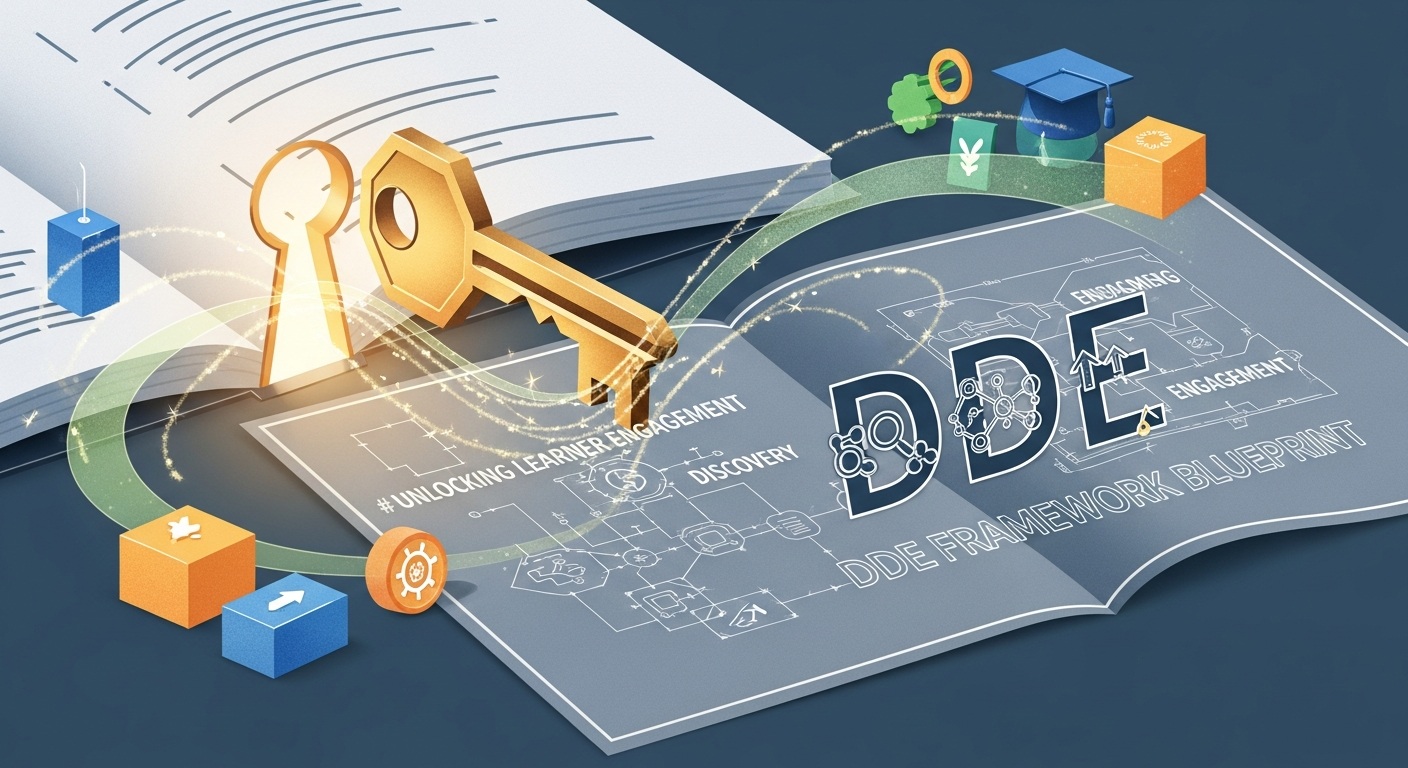
Unlocking Learner Engagement: The Definitive DDE Framework Blueprint
In today's rapidly evolving corporate landscape, the effectiveness of Learning & Development (L&D) initiatives is directly tied to one critical factor: learner engagement. For Vice Presidents, Directors, and Managers across industries like Compliance, Sales, Banking, Finance, Insurance, Retail, Pharma, Healthcare, Hospitality, Oil and Gas, and Mining, the challenge isn't just delivering content, but ensuring that content resonates, sticks, and transforms into tangible performance improvements. This is where the Definitive DDE Framework Blueprint comes in—a strategic, three-phase approach to consistently deliver highly engaging and impactful learning experiences.
Traditional training methods often fall short, leading to low completion rates, poor knowledge retention, and ultimately, a wasted investment. The DDE Framework—Discover, Design, Engage—provides a robust, systematic methodology to overcome these hurdles, fostering a culture of continuous learning and driving measurable business results.
What is the DDE Framework?
The DDE Framework is a comprehensive lifecycle approach to L&D, structured around three core pillars:
- Discover: Deeply understanding your audience, their needs, and the organizational objectives.
- Design: Crafting compelling, effective, and modern learning content and experiences.
- Engage: Implementing strategies to deploy, sustain, measure, and optimize learner involvement and impact.
This iterative framework ensures that every L&D effort is intentional, data-driven, and learner-centric, moving beyond generic training to create truly transformative educational journeys.
Phase 1: Discover – Unearthing Core Needs and Insights
The foundation of any successful learning program lies in a thorough understanding of its target audience and the specific problems it aims to solve. The Discover phase is about rigorous needs analysis, empathy mapping, and setting clear, measurable objectives.
Understanding Your Learners
Before any content is created, it's crucial to identify who your learners are. Are they frontline sales associates needing new product knowledge, financial advisors navigating complex regulations, or healthcare professionals requiring updated compliance training? Each group has unique learning styles, existing knowledge bases, and motivational triggers. A top-tier LMS can often help segment and analyze learner data.
- What are the key indicators of low learner engagement across different departments?
- How can we accurately assess training needs for diverse global teams in a unified manner?
- What specific data points help identify critical knowledge gaps in our retail sales force or our banking compliance officers?
By asking these penetrating questions, L&D leaders can gather crucial insights that inform the entire learning journey. This phase involves stakeholder interviews, performance data analysis, skill gap assessments, and technology readiness evaluations. A robust learning management system, or learning management software, is invaluable for collecting and analyzing this preparatory data.
Phase 2: Design – Crafting Impactful Learning Experiences
With a clear understanding of learner needs and objectives, the Design phase focuses on creating compelling and effective learning content. This is where instructional design principles meet modern technological capabilities to build truly engaging experiences.
Leveraging Modern Learning Methodologies
Forget static, text-heavy modules. Modern learning thrives on interactivity, personalization, and accessibility. Consider integrating:
- Microlearning LMS: Breaking down complex topics into bite-sized, digestible modules, perfect for busy professionals in industries like Pharma or Oil and Gas.
- Gamified LMS: Injecting game elements like points, badges, and leaderboards to boost motivation and competition, particularly effective for sales training.
- Adaptive Learning: Personalizing learning paths based on individual progress and performance, ensuring relevance and efficiency. This is crucial for complex topics like those in Finance or Healthcare.
Content Creation and Technology Integration
The right tools can significantly enhance the design process. An AI Powered Authoring Tool, for instance, can streamline content creation, suggest improvements, and even help translate materials for global teams. This is especially beneficial for rapid deployment in fast-paced sectors. A comprehensive learning content management system (LCMS) helps organize, update, and distribute this content efficiently.
- How can intelligent systems assist in personalizing learning paths for employees across different departments and global regions?
- What advanced tools can help us rapidly create and update compliance training content for evolving regulations in the banking or insurance sectors?
- Where can we find innovative solutions to deliver adaptive training experiences globally, optimizing for diverse cultural contexts and technological access?
Designing effective learning solutions requires a strategic blend of pedagogical expertise and technological foresight. Whether you opt for a cloud based learning management system or an enterprise learning management solution, the objective remains the same: create an environment where learning flourishes.
Phase 3: Engage – Sustaining Interest and Driving Performance
The final phase focuses on the successful deployment of your learning programs, fostering sustained engagement, and rigorously measuring their impact on performance and business outcomes.
Deployment and Communication
Even the best-designed course can fail without effective deployment. Strategic communication about the training, its benefits, and how it aligns with career development is vital. Utilize your learning management solutions to push notifications, reminders, and progress updates.
For high-stakes fields like compliance, Risk-focused Training must be seamlessly integrated and mandatory, ensuring critical information reaches every employee. This can be greatly facilitated by a robust MaxLearn LMS, ensuring comprehensive tracking and reporting.
Measurement and Optimization
Engagement isn't a one-time event; it's a continuous process. Establish clear metrics for success—completion rates, knowledge retention, skill application, and ultimately, business impact. Leverage your learning management system for detailed analytics.
- What advanced analytics can measure the real-time impact of our training programs on business outcomes, such as sales figures or compliance adherence?
- How can intelligent systems predict and proactively prevent learner drop-off in long-term development courses, especially in industries with high training demands like Pharma or Oil and Gas?
- What smart strategies can ensure continuous skill development and application post-training, fostering a culture of lifelong learning across the organization?
Regular feedback loops, surveys, and performance reviews allow L&D teams to continually refine and optimize learning experiences. This agile approach ensures that your L&D investment yields maximum returns, making every lms learning management system deployment more effective.
The DDE Framework in Action Across Industries
The DDE Framework is universally applicable, adapting its principles to the specific needs of diverse industries:
- Compliance: Discover evolving regulations, design concise Microlearning LMS modules on Risk-focused Training, and engage learners with mandatory certifications and regular refreshers.
- Sales: Discover product knowledge gaps, design interactive Gamified LMS scenarios, and engage through performance-linked training and continuous coaching.
- Banking & Finance: Discover complex financial products, design Adaptive Learning paths for nuanced roles, and engage with real-world case studies and simulation-based assessments.
- Healthcare & Pharma: Discover clinical best practices, design critical Microlearning LMS for drug information, and engage through peer-to-peer learning and mandatory skill updates.
Regardless of the industry, a well-implemented learning management system is the technological backbone that powers the DDE Framework, ensuring seamless content delivery and robust analytics. A modern LCMS can empower L&D teams to manage content with unparalleled efficiency.
Benefits of Adopting the DDE Framework
Implementing the DDE Framework yields significant advantages for organizations committed to empowering their workforce:
- Increased Learner Engagement: By understanding and meeting learner needs, programs become more relevant and captivating.
- Improved ROI on L&D: Strategic design and continuous optimization ensure that training investments translate into tangible business impact.
- Enhanced Skill Transfer & Performance: Engaging, relevant content leads to better knowledge retention and application on the job.
- Organizational Agility: The iterative nature of DDE allows L&D to respond swiftly to market changes, regulatory updates, and evolving business goals.
- Data-Driven Decision Making: Robust measurement in the Engage phase provides actionable insights for continuous improvement.
Conclusion
For L&D Vice Presidents, Directors, and Managers tasked with driving professional development, the DDE Framework Blueprint offers a definitive roadmap to unlock true learner engagement. By systematically Discovering needs, Designing impactful experiences, and strategically Engaging learners, organizations can move beyond transactional training to create a culture of continuous growth and peak performance. Equip your L&D teams with the strategic clarity of the DDE Framework and empower them with advanced tools like the MaxLearn LMS to transform your learning landscape and achieve unparalleled business success.
.jpg)


