

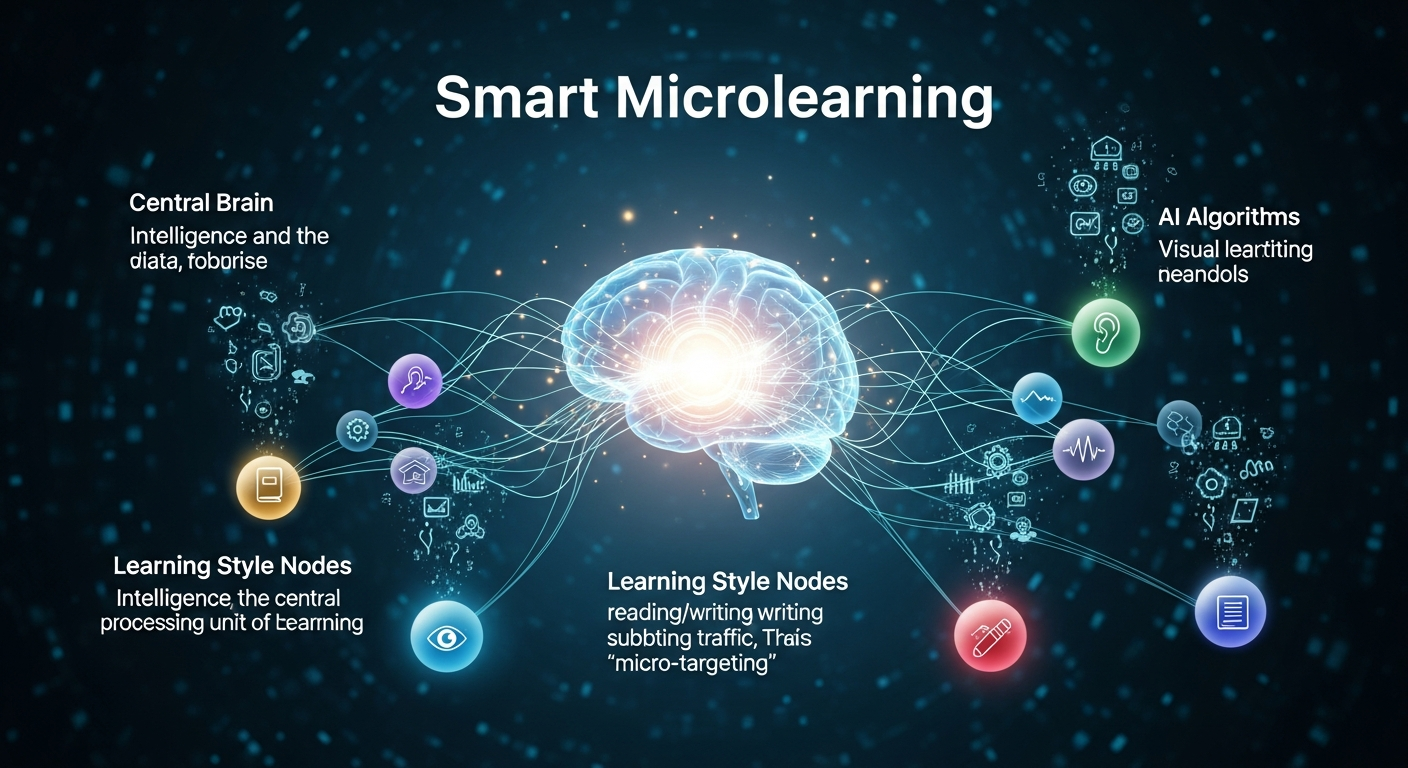
Smart Microlearning: How AI-Driven Algorithms Micro-Target Individual Learning Styles
In today's rapidly evolving corporate landscape, the demand for continuous learning and skill development is paramount. However, engaging a diverse workforce with a one-size-fits-all training approach is increasingly ineffective. L&D leaders like you grapple with challenges such as low completion rates, disengaged learners, and the struggle to demonstrate a clear return on investment for training initiatives. The solution lies in a paradigm shift: from generic content delivery to hyper-personalized, intelligent learning experiences. This is where smart microlearning, powered by AI-driven algorithms, steps in.
Imagine a learning system that understands each employee's unique learning preferences, knowledge gaps, and performance data, then delivers precisely the right content, in the right format, at the optimal time. This isn't a futuristic fantasy; it's the reality enabled by artificial intelligence transforming the landscape of corporate training. For organizations aiming to foster continuous growth and maintain a competitive edge, embracing an advanced Microlearning LMS is no longer optional—it's essential.
What is Smart Microlearning?
Microlearning, at its core, involves delivering learning content in small, digestible chunks, typically ranging from 2-5 minutes. These bite-sized modules are designed to address a single learning objective, making them easy to consume during brief moments throughout the day. While traditional microlearning offers convenience, smart microlearning elevates this concept by integrating AI and machine learning to achieve unparalleled personalization.
Smart microlearning moves beyond simply breaking down content. It leverages sophisticated algorithms to analyze vast amounts of data—learner demographics, historical performance, engagement metrics, job roles, and even preferred learning modalities. This analysis allows the system to dynamically adapt the learning path, content recommendations, and even the presentation style to suit each individual, ensuring maximum relevance and impact. It’s an evolution from simply providing small pieces of information to intelligently curating a unique learning journey for every single user within an enterprise learning management system.
The Limitations of One-Size-Fits-All Training
Traditional training models often rely on standardized courses and modules, assuming that all learners will benefit equally from the same approach. This assumption overlooks the fundamental reality of human diversity. Employees have varied prior knowledge, different speeds of comprehension, distinct attention spans, and preferred ways of absorbing information—be it visual explanations, interactive exercises, auditory narratives, or practical, hands-on tasks.
When training fails to account for these individual differences, the results are predictable: disengagement, frustration, superficial learning, and ultimately, a failure to achieve desired business outcomes. For industries like Compliance, Sales, Banking, Finance, Insurance, Retail, Pharma, Healthcare, Hospitality, Oil and Gas, and Mining, where precision and consistent understanding are critical, such inefficiencies can have significant financial and reputational repercussions.
AI's Role in Unlocking Individual Potential
Artificial intelligence is the engine that drives smart microlearning, transforming generic content into highly personalized, effective learning experiences. Here's how:
Dynamic Learner Profiling and Assessment
AI algorithms continuously collect and analyze data points from every learner interaction. This includes quiz scores, time spent on modules, types of content preferred (videos, infographics, quizzes), search queries, and even emotional responses (if an intelligent system is monitoring engagement). Based on this data, the AI builds a comprehensive profile for each user, identifying their strengths, weaknesses, preferred learning styles, and even their current mood or cognitive load. This profound understanding allows for truly bespoke content delivery.
Adaptive Content Delivery and Pathways
With a detailed learner profile in hand, AI-driven systems excel at Adaptive Learning. Instead of a fixed sequence, the algorithm dynamically adjusts the learning path in real-time. If a learner masters a concept quickly, the system can skip redundant modules and introduce more advanced topics. Conversely, if a learner struggles, the AI can offer supplementary materials, different explanations, or additional practice opportunities. This ensures that every minute spent learning is productive and targeted.
Personalized Content Curation and Recommendation
AI isn't just about sequencing; it's also about recommending the most relevant content. Based on a learner's role, career goals, performance data, and expressed interests, the AI can suggest specific micro-courses, articles, videos, or even experts to connect with. This intelligent curation ensures learners are always exposed to information most critical to their professional growth and current tasks, fostering a culture of continuous development within any organization using a sophisticated AI Powered Authoring Tool.
Intelligent Feedback and Reinforcement
AI can also provide immediate, personalized feedback that goes beyond simple right or wrong answers. It can analyze common mistakes, pinpoint areas of confusion, and offer tailored explanations or additional resources. Furthermore, AI can schedule spaced repetition exercises or quizzes to reinforce learning at optimal intervals, significantly improving knowledge retention—a crucial aspect for any `lms learning management system`.
Addressing Key Questions for L&D Leaders
As L&D professionals, you have critical questions about integrating advanced technology into your learning strategy. Here’s how smart microlearning platforms provide answers:
How does sophisticated computational analysis personalize learning experiences across a global enterprise?
Intelligent algorithms analyze vast datasets, including cultural nuances, language preferences, and job-specific requirements across different regions and departments. This enables the platform to not only deliver content in the local language but also to adapt examples, scenarios, and even instructional tones to resonate with diverse global teams. For instance, a sales training module can be automatically localized with relevant market examples, ensuring high relevance for teams in different countries. Such capabilities are fundamental to a truly effective Microlearning LMS that operates at an enterprise scale.
What innovative features do advanced automated systems offer for crafting highly individualized training modules?
These platforms leverage machine intelligence to streamline the content creation process dramatically. They can analyze existing learning materials, identify gaps, and suggest new content segments. More impressively, they can assist in generating quiz questions, case studies, and interactive scenarios that directly target specific learning objectives and individual learner profiles. This significantly reduces the manual effort involved in developing diverse learning paths, making an AI Powered Authoring Tool a game-changer for content development.
In what ways can smart algorithmic platforms optimize training for compliance and risk management in various sectors?
By continuously monitoring employee performance and regulatory updates, these intelligent platforms can proactively identify individual knowledge gaps related to compliance requirements or potential risk exposure. They then deliver targeted, time-sensitive micro-training modules to address these specific deficiencies. For industries like Banking, Finance, Pharma, and Healthcare, where regulatory adherence is non-negotiable, this ensures employees remain current with policies and procedures, thereby significantly mitigating organizational risk. This capability is at the heart of effective Risk-focused Training and crucial for a robust `learning management software`.
Tangible Benefits for Your Organization
Embracing smart microlearning powered by AI offers profound advantages for your organization:
Enhanced Learner Engagement and Retention
Personalized content that adapts to individual needs is inherently more engaging. When learning feels relevant and manageable, completion rates soar. Features like leaderboards, badges, and points, common in a Gamified LMS, further boost motivation and retention, making the learning process enjoyable and sticky.
Improved Performance and Skill Development
By precisely targeting skill gaps and delivering focused training, AI ensures that employees acquire the competencies most relevant to their roles and future growth. This translates directly into improved on-the-job performance and a more skilled workforce across all segments, from Retail to Oil and Gas.
Optimized Resource Allocation
L&D teams can move from content creation to strategic curation and analysis. AI automates many of the time-consuming tasks associated with personalization and delivery, freeing up L&D professionals to focus on higher-value initiatives and maximizing the utility of their `learning content management system`.
Robust Compliance and Risk Mitigation
For highly regulated industries, smart microlearning provides an unprecedented level of assurance. It ensures critical information is understood and retained, reducing the likelihood of costly errors, fines, or reputational damage. This is particularly vital in Finance, Insurance, and Healthcare where continuous, demonstrable compliance is a must for any `learning management system`.
Implementing Smart Microlearning: A Strategic Approach
Adopting an AI-driven microlearning strategy requires careful planning:
- Define Clear Objectives: What specific business outcomes do you want to achieve? Improved sales performance? Reduced compliance violations? Faster employee onboarding?
- Choose the Right Platform: Select a `cloud based learning management system` or `learning management solutions` provider with proven AI capabilities in personalization, content recommendation, and analytics. Look for a robust `LCMS` that can truly support dynamic content.
- Start Small, Scale Smart: Consider piloting the program with a specific department or training initiative before rolling it out across the entire organization.
- Foster a Data-Driven Culture: Encourage continuous feedback and use the rich data provided by the AI to iterate and improve your learning programs.
The Future is Personalized
The convergence of microlearning and artificial intelligence is not just a trend; it's the future of corporate education. As organizations navigate increasing complexity and the demand for agile skill development, AI-driven microlearning platforms like MaxLearn LMS offer a scalable, effective, and engaging path forward. They empower employees to learn in a way that truly resonates with them, transforming learning from a chore into a continuous journey of growth and discovery.
Conclusion
For Vice Presidents, Directors, Senior Managers, and Managers of L&D, the message is clear: the era of one-size-fits-all training is over. Smart microlearning, fueled by AI-driven algorithms, offers a powerful solution to micro-target individual learning styles, elevate engagement, enhance performance, and secure your organization's future. By embracing this technology, you can build a more skilled, adaptable, and compliant workforce, driving tangible business value and cementing L&D's role as a strategic imperative.
.jpg)


