

Personalized Learning At Scale: The Role Of AI In Microlearning
In today's fast-evolving business landscape, characterized by rapid technological advancements, shifting market demands, and increasingly complex regulatory environments across industries like banking, healthcare, retail, and manufacturing, the demand for highly skilled and adaptable workforces has never been more critical. For Vice Presidents, Directors, and Managers of Learning & Development, the challenge isn't just delivering training, but delivering the *right* training, at the *right* time, to the *right* person, at scale. Traditional one-size-fits-all approaches are no longer effective in preparing employees for the nuances of compliance, sales, finance, or even hospitality and oil & gas operations.
This is where the powerful combination of personalized learning, microlearning, and Artificial Intelligence (AI) emerges as a game-changer. Imagine a learning ecosystem that understands each employee's unique needs, identifies skill gaps before they become critical, and delivers precise, bite-sized knowledge exactly when it's needed. This isn't future-speak; it's the present reality enabled by sophisticated Microlearning LMS platforms.
The Imperative for Personalized Learning
The modern workforce is diverse, encompassing various learning styles, experience levels, and career aspirations. A pharmaceutical sales representative needs different ongoing training than a refinery safety officer or a bank teller. Generic training programs often lead to disengagement, poor retention, and a significant waste of resources. Personalized learning addresses this by tailoring content, pace, and delivery methods to individual learners, fostering deeper understanding and more effective skill development.
For organizations navigating strict compliance in finance or healthcare, or striving for peak performance in sales and retail, personalization means ensuring every employee possesses critical, up-to-date knowledge specific to their role and regional regulations. This level of precision, while highly effective, has historically been resource-intensive to implement on a large scale. This is where AI and microlearning step in, making personalization at scale a tangible reality.
Microlearning: The Agile Approach to Knowledge Delivery
Microlearning, characterized by short, focused learning units designed to achieve a specific learning outcome, is perfectly suited for today's busy professionals. These brief modules, typically lasting a few minutes, fit seamlessly into the flow of work, making knowledge acquisition convenient and efficient. Whether it's a quick refresher on a new banking regulation, a sales technique update, or a safety protocol reminder in mining, microlearning delivers immediate, actionable insights.
When deployed through a robust learning management system, microlearning boasts higher completion rates and improved knowledge retention compared to lengthy courses. It’s an agile strategy that allows organizations to quickly update training content in response to market changes, new product launches, or evolving compliance mandates, ensuring employees are always equipped with the most current information. This agility is especially valuable in industries like insurance, where policy updates are frequent, or hospitality, where service standards are constantly refined.
AI's Transformative Power in Personalized Microlearning
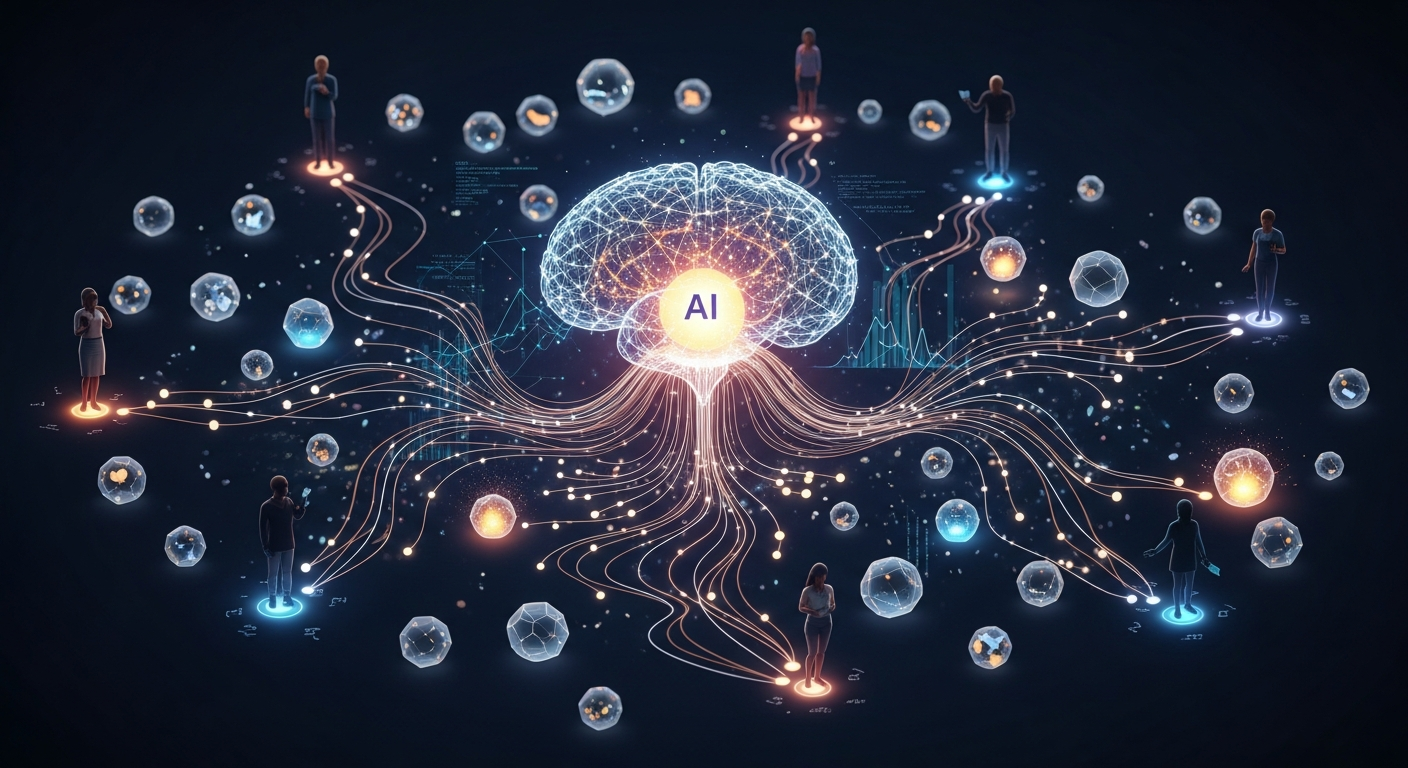
Artificial Intelligence is the engine that drives personalization in microlearning at scale. By analyzing vast amounts of data – learner performance, job roles, learning preferences, historical training data, and even industry trends – AI algorithms can create dynamic, adaptive learning paths for each individual. This means no two learners experience the exact same journey, yet both arrive at the desired proficiency.
AI enables true Adaptive Learning, where the system continuously assesses a learner's progress and adjusts the subsequent content. If a learner struggles with a particular concept, AI can provide additional remedial modules. If they demonstrate mastery, it can fast-track them to more advanced topics. This intelligent feedback loop ensures optimal learning efficiency and maximum engagement.
How can artificial intelligence curate learning content effectively?
Artificial intelligence excels at content curation by analyzing a multitude of data points. It can scan an organization's existing knowledge base, public information, and industry-specific updates (e.g., new compliance directives for financial services, product specifications for retail, or safety standards for oil & gas). Based on a learner's role, performance history, stated preferences, and even their current projects, AI algorithms can then recommend and sequence highly relevant, bite-sized microlearning modules. This intelligent filtering prevents information overload and ensures learners receive precisely what they need, when they need it, whether it's understanding a new healthcare regulation or mastering a complex sales pitch.
What advanced capabilities does artificial intelligence offer for identifying and addressing skill gaps?
AI provides sophisticated diagnostic tools that go beyond simple pre-assessments. Through continuous monitoring of performance within the learning platform and even real-world application (where integrated), AI can pinpoint specific skill deficiencies or knowledge gaps. For instance, in a pharmaceutical company, AI might identify that a sales team consistently struggles with explaining a particular drug's mechanism of action. The system can then automatically push targeted microlearning modules focused on that precise area, or suggest a specific Risk-focused Training to mitigate potential errors. This proactive, data-driven approach ensures that skill development is always precise and impactful.
How does artificial intelligence enhance learner engagement and motivation?
Artificial intelligence significantly boosts learner engagement by making the learning experience more dynamic and personal. It can analyze engagement patterns and recommend different learning formats or interactive elements based on individual preferences. AI can also power personalized feedback mechanisms, adjusting the tone and content of feedback to be most effective for each learner. Furthermore, AI can integrate and optimize Gamified LMS elements, dynamically suggesting challenges, rewards, and leaderboards that resonate with individual learners, keeping them motivated and encouraging continuous participation across all sectors, from customer service in retail to complex operations in mining.
Can artificial intelligence assist in the creation of microlearning content?
Yes, absolutely. Artificial intelligence is revolutionizing content creation for L&D teams. An AI Powered Authoring Tool can dramatically accelerate the development of microlearning modules. These tools can ingest raw source material – such as policy documents, product manuals, or compliance guidelines – and rapidly generate outlines, key takeaways, quiz questions, and even initial drafts of learning snippets. This allows L&D professionals to focus on refining and enhancing the content, ensuring accuracy and pedagogical effectiveness, rather than spending countless hours on initial drafting. This is particularly valuable for industries like banking and pharma, where content needs frequent updates.
Scaling Personalized Learning with an Advanced LMS
To truly achieve personalized learning at scale, organizations need a robust lms learning management system. Such a platform acts as the central nervous system, orchestrating content delivery, learner tracking, and performance analytics. A modern Learning content management system (LCMS) integrated within an enterprise learning management solution provides the infrastructure for storing, organizing, and managing vast libraries of microlearning content, while AI intelligently curates and distributes it.
For geographically dispersed teams or organizations with complex operational structures, a cloud based learning management system is indispensable. It offers unparalleled accessibility and scalability, ensuring that personalized microlearning reaches every employee, everywhere. Advanced learning management software not only delivers content but also provides sophisticated reporting and analytics, giving L&D leaders deep insights into learning effectiveness and ROI. Platforms like MaxLearn LMS exemplify these capabilities, offering comprehensive learning management solutions tailored for the modern enterprise.
Conclusion
The synergy of personalized learning, microlearning, and Artificial Intelligence represents a paradigm shift in corporate training. It empowers L&D leaders to move beyond generic training initiatives and build truly adaptive, engaging, and highly effective learning experiences. By leveraging AI-powered microlearning within an advanced learning management system, organizations can future-proof their workforce, ensure compliance, boost productivity, and drive sustained business growth across all segments – from the dynamic world of sales to the safety-critical environments of oil and gas.
Embracing AI in your microlearning strategy is not just about adopting new technology; it's about investing in the intelligence and agility of your most valuable asset: your people. It's about ensuring every dollar spent on training translates into tangible skills, improved performance, and a workforce ready for tomorrow's challenges.
.jpg)


