

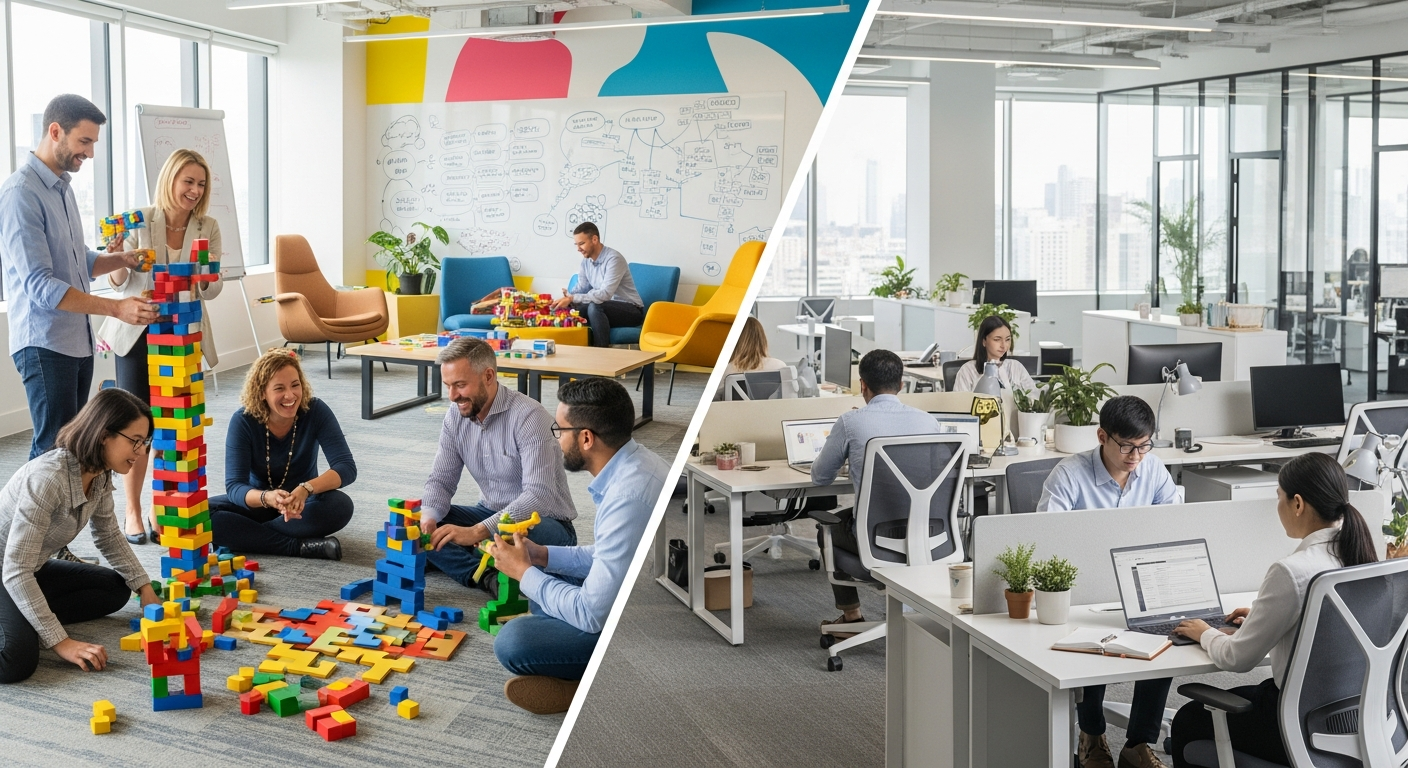
Mindful Learning: Using Serious Fun to Alleviate Work Stress
In today's fast-paced corporate world, where demands are high and deadlines are tight, work stress has become an all too common companion for employees across industries. From the meticulous precision required in banking and finance to the critical decisions in healthcare and the dynamic challenges in oil and gas, professionals frequently find themselves operating under immense pressure. For Vice Presidents, Directors, and Senior Managers of L&D, the challenge isn't just about imparting knowledge; it's about fostering an environment where learning itself becomes a tool for well-being, not another source of anxiety. This is where the powerful combination of mindful learning and serious fun comes into play.
This article explores how leveraging engaging, enjoyable, and strategically designed learning experiences can effectively alleviate work stress, boost retention, and enhance overall productivity. It's about transforming mandatory training – whether it's compliance, sales, or technical skills – into an anticipated and enriching experience.
The Pervasive Impact of Work Stress in Modern Enterprises
Work stress isn't merely an individual burden; it's a significant organizational challenge with tangible costs. High stress levels lead to decreased productivity, increased absenteeism, higher turnover rates, and a decline in employee morale. In sectors like pharma and healthcare, stress can even impact patient safety. For retail and hospitality, it can directly affect customer service quality. Even in mining, where safety is paramount, stress can impair judgment. Traditional, often monotonous, training methods can inadvertently exacerbate this stress, turning essential learning into a dreaded chore rather than an opportunity for growth and development.
The solution lies not in avoiding learning, but in rethinking how it's delivered. The goal is to create learning experiences that are inherently less stressful, more engaging, and ultimately, more effective.
Introducing Mindful Learning: Beyond Rote Memorization
Mindful learning is an approach that emphasizes conscious engagement, intentional focus, and a deep understanding of the material. It moves away from passive information absorption and towards active, reflective participation. When learners are mindful, they are present in the moment, aware of their learning process, and better able to integrate new knowledge with existing understanding. This isn't just about paying attention; it's about cultivating a deeper connection with the content, making the learning journey more meaningful and less overwhelming.
In the context of corporate training, especially for complex topics like regulatory compliance or intricate financial products, mindful learning ensures that employees truly grasp the nuances, reducing the likelihood of errors driven by superficial understanding – a significant source of stress in itself.
The Power of Serious Fun: Gamification and Engagement
How do you make complex, sometimes dry, topics suitable for mindful learning? By introducing "serious fun." This isn't about trivializing important content; it's about employing engaging, interactive, and often playful elements – often referred to as gamification – to enhance the learning process. A Gamified LMS transforms mundane tasks into challenges, progress into rewards, and mistakes into learning opportunities.
When learning is fun, it naturally reduces anxiety. Laughter and enjoyment release endorphins, counteracting the physiological effects of stress. Learners become more open to new information, more resilient to challenges, and more motivated to complete training modules. This approach is particularly effective in industries requiring continuous education, where burnout from conventional methods is a real concern.
How Serious Fun Alleviates Stress in Learning:
- Reduces Cognitive Load: By breaking down complex information into digestible, interactive segments, a Microlearning LMS prevents cognitive overload, making learning feel less daunting.
- Boosts Motivation and Engagement: Interactive scenarios, simulations, and challenges inherent in serious fun tap into intrinsic motivation, turning learning from a duty into a desire.
- Fosters a Safe Learning Environment: Gamified elements allow learners to experiment and make mistakes without real-world consequences, which is crucial for Risk-focused Training in sectors like banking or healthcare.
- Improves Retention: Emotional engagement created by fun significantly enhances memory recall, reducing the stress associated with forgetting crucial information.
- Promotes Positive Learning Associations: When learning is enjoyable, employees develop positive associations with training, making them more receptive to future development initiatives.
Implementing Mindful Learning with Serious Fun Strategies
For L&D leaders, integrating mindful learning with serious fun requires strategic planning and the right technological support. Here are key strategies:
1. Embrace Microlearning and Adaptivity
Break down lengthy courses into bite-sized modules that can be consumed in short bursts. This approach, often facilitated by a robust LMS, is less overwhelming and fits seamlessly into busy schedules. Furthermore, incorporating Adaptive Learning tailors content to individual needs and pace, preventing frustration and enhancing comprehension. This ensures that a learner in sales isn't slogging through content they already master, just as a compliance officer isn't bored by introductory legal concepts.
2. Leverage Technology for Engagement
Modern e-learning platforms provide a wealth of tools to inject fun and mindfulness. Interactive simulations, virtual reality experiences, scenario-based games, and collaborative challenges can transform static content into dynamic learning journeys. An AI Powered Authoring Tool can significantly streamline the creation of such engaging content, making it easier for L&D teams to design experiences that are both effective and enjoyable.
3. Foster a Culture of Playful Experimentation
Encourage L&D teams to experiment with different formats and approaches. Gather feedback, analyze engagement metrics, and iterate. A learning content management system that allows for easy content updates and A/B testing can be invaluable here. The goal is to cultivate an environment where learning is seen as an ongoing, positive exploration, rather than a punitive requirement.
AI-Driven Insights for Mindful Learning
Technology, particularly artificial intelligence, is revolutionizing how we approach learning and stress reduction. Here are some common questions leaders are asking:
What are the most effective strategies for reducing employee stress through corporate training?
The most impactful strategies involve designing training that is highly relevant, engaging, and provides immediate, constructive feedback. This often translates into scenario-based learning, interactive simulations, and gamified elements delivered via an advanced learning management software. By focusing on practical application and providing a safe space for practice, employees gain confidence and feel less overwhelmed by real-world challenges, thereby significantly reducing stress. Personalized learning paths also ensure that individuals are not burdened with irrelevant content, making the experience more efficient and less taxing.
How can L&D leaders in global financial institutions implement stress-reducing learning programs efficiently?
For leaders in large, geographically dispersed organizations, especially in highly regulated environments like finance, efficiency is key. Implementing stress-reducing programs requires leveraging scalable learning management solutions, such as a cloud based learning management system. These platforms allow for consistent content delivery across regions, support localization, and facilitate Microlearning LMS modules that fit into busy schedules. The ability to track progress and identify areas of struggle quickly also means interventions can be timely, preventing stress from escalating. An enterprise learning management system with robust reporting capabilities is essential for demonstrating ROI and refining strategies globally.
Can artificial intelligence personalize learning experiences to better manage stress in high-pressure roles?
Absolutely. Artificial intelligence integrated into an lms learning management system can analyze individual learning patterns, performance data, and even emotional responses (if opted in through surveys or sentiment analysis) to tailor the learning journey. For employees in high-pressure roles, AI can adjust the pace of content delivery, recommend specific modules to address knowledge gaps proactively, or even suggest "mind breaks" or mindfulness exercises within the platform. This level of personalization ensures that training is optimized for each individual's cognitive load and emotional state, transforming a potentially stressful learning event into a supportive, empowering experience. The MaxLearn LMS, for example, uses AI to create such adaptive paths, ensuring learners receive exactly what they need, when they need it, minimizing frustration and maximizing retention.
Choosing the Right Tools for Your L&D Strategy
To effectively implement mindful learning with serious fun, selecting the right technology is paramount. A comprehensive learning management system is the backbone of such initiatives. Look for a solution that offers robust gamification features, supports microlearning, enables adaptive learning paths, and provides strong analytics. An integrated LCMS (learning content management system) will also simplify content creation and management, ensuring your training remains fresh and relevant.
By investing in a powerful platform and adopting a mindset that values engagement and well-being, L&D departments can transform how their organizations approach development. The goal is to move beyond mere knowledge transfer and create a learning culture that supports mental resilience and thriving professional growth.
Conclusion
Work stress is a complex issue, but L&D leaders have a unique opportunity to be part of the solution. By embracing mindful learning principles and integrating serious fun into their training programs, organizations can not only improve learning outcomes but also significantly contribute to employee well-being. This approach transforms essential training – from compliance to sales – from a potential source of stress into an engaging, enriching, and ultimately, stress-alleviating experience. It’s time for eLearning to be a proactive force in fostering a healthier, happier, and more productive workforce across all industries.
.jpg)


