

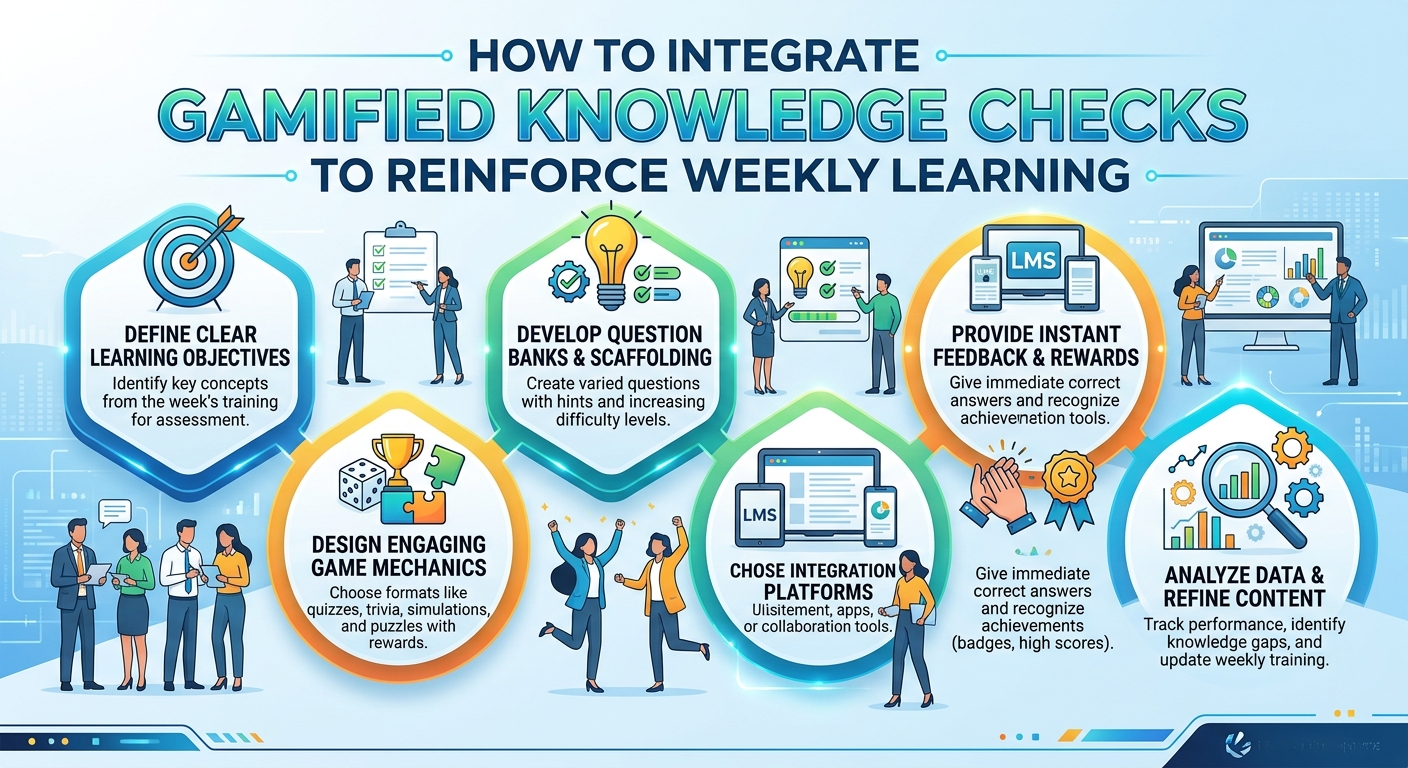
Boosting Retention and Engagement: Integrating Gamified Knowledge Checks for Weekly Learning Reinforcement
In today's fast-paced corporate environment, continuous learning is not just an advantage; it's a necessity. For Vice Presidents, Directors, and Senior Managers in Learning & Development across diverse sectors like Compliance, Sales, Banking, Finance, Insurance, Retail, Pharma, Healthcare, Hospitality, Oil & Gas, and Mining, ensuring that critical knowledge sticks is paramount. The challenge, however, lies in moving beyond one-off training events to foster sustained engagement and long-term retention. This is where the strategic integration of gamified knowledge checks into weekly learning routines emerges as a powerful, effective solution.
Traditional learning methods often struggle with engagement decay and the 'forgetting curve.' Employees might complete a module, but without regular reinforcement, much of that newly acquired knowledge can dissipate quickly. Gamification injects an element of fun, challenge, and reward, transforming passive learning into an active, enjoyable experience. When combined with weekly knowledge checks, it creates a robust system for reinforcing learning, driving behavioral change, and ultimately, boosting performance across your organization.
Why Gamification is a Game-Changer for Corporate Learning
Gamification in learning leverages elements typically found in games – points, badges, leaderboards, levels, and rewards – to motivate learners and make the educational process more engaging. It's not about turning learning into a game, but rather applying game design principles to a non-game context to improve user engagement and learning outcomes.
The Science Behind the Fun
The appeal of gamification is rooted in cognitive psychology. It taps into our intrinsic desire for mastery, autonomy, and purpose, while also providing extrinsic motivators like recognition and rewards. Regular, short bursts of challenging content, delivered in a gamified format, stimulate dopamine production, creating a positive feedback loop that encourages learners to return for more. This process significantly aids in memory consolidation and recall, making it an ideal approach for complex or critical information, particularly in Risk-focused Training scenarios.
The Power of Weekly Knowledge Checks
Spaced repetition is a proven learning technique where information is reviewed at increasing intervals over time. Weekly knowledge checks are the perfect vehicle for this, preventing the 'forgetting curve' from taking its toll. They serve as low-stakes assessments that reinforce learning and identify knowledge gaps early on, allowing for timely intervention and targeted review.
Beyond the Annual Quiz
Gone are the days when a single, high-stakes annual exam was considered sufficient to assess an employee's understanding. Weekly, smaller-scale checks, especially when gamified, offer several advantages:
- Improved Retention: Consistent retrieval practice strengthens memory.
- Reduced Stress: Low-stakes quizzes are less intimidating than major exams.
- Immediate Feedback: Learners get instant results, helping them correct misconceptions quickly.
- Adaptive Learning Paths: Performance data can guide individual learning journeys, recommending specific content for review.
Integrating Gamification with Weekly Checks: A Strategic Approach
The synergy between gamification and weekly knowledge checks creates a powerful learning ecosystem. Here’s how L&D leaders can implement this strategy effectively.
Designing Engaging Challenges
When designing your weekly checks, think beyond multiple-choice questions. Incorporate diverse game mechanics:
- Points & Levels: Award points for correct answers, timely completion, and participation. Structure learning into levels that unlock progressively.
- Badges & Awards: Recognize achievements with virtual badges for mastering specific topics, completing challenges, or reaching milestones.
- Leaderboards: Foster healthy competition by displaying top performers. This is particularly effective for sales teams or product knowledge training.
- Scenario-Based Quizzes: Present real-world dilemmas, especially crucial for compliance, banking, or healthcare, where learners must apply knowledge to solve problems.
- Interactive Simulations: For roles requiring practical skills, like in hospitality or oil & gas, use simulations followed by knowledge checks.
Implementing these elements effectively requires a robust platform. A Gamified LMS is essential, providing the tools to create, manage, and track these interactive experiences.
Choosing the Right Tools
The success of your gamified knowledge checks hinges on the right learning management solutions. Look for a Microlearning LMS that supports the creation and delivery of short, impactful learning modules complemented by integrated gamified assessments. A cutting-edge learning management system should offer features like:
- User-friendly content authoring (ideally with an AI Powered Authoring Tool)
- Customizable game mechanics
- Robust analytics and reporting
- Mobile accessibility for learning on the go
- Scalability for enterprise learning management
A comprehensive Learning content management system or LCMS, integrated with a cloud based learning management system, provides the infrastructure for delivering seamless, engaging, and effective learning experiences.
Real-World Applications Across Industries
Gamified weekly knowledge checks are versatile and can be tailored to various industry needs.
Compliance & Risk Management
For industries like Banking, Finance, and Pharma, where regulatory compliance is critical, gamified checks can make dry material engaging. Learners can earn badges for completing modules on anti-money laundering or data privacy, with leaderboards encouraging ongoing engagement with Risk-focused Training. Scenario-based quizzes can simulate ethical dilemmas, testing decision-making skills.
Sales & Service Excellence
In Retail and Sales, consistent product knowledge and customer service skills are vital. Weekly gamified quizzes can test understanding of new product features, sales techniques, or customer interaction protocols. Teams can compete for points, reinforcing key messages and improving performance. An AI Powered Authoring Tool can swiftly generate relevant content for these frequent updates.
Healthcare & Pharma
For healthcare professionals, retaining critical information about new treatments, patient safety protocols, or medical devices is a matter of life and death. Gamified knowledge checks can provide a low-stress environment for continuous reinforcement, ensuring high recall of vital procedures and information.
Leveraging Intelligence for Optimal Learning
The true power of modern learning management software lies in its ability to analyze data and adapt. Integrating gamified checks offers rich data points that, when analyzed, can inform strategic decisions.
How can learning systems predict individual knowledge gaps? By tracking performance on weekly gamified checks, a sophisticated lms learning management system can identify areas where individual learners, or even entire teams, consistently struggle. This data allows the system to trigger personalized learning paths, recommending specific review materials or modules. This Adaptive Learning approach ensures that training is hyper-relevant and efficient, focusing resources where they are most needed.
What emerging learning trends are proving most effective in global corporate training? Across multinational corporations, the adoption of bite-sized, engaging content delivered through a flexible cloud based learning management system is gaining traction. This approach supports diverse learning styles and cultural contexts while maintaining consistent messaging. Performance data from localized gamified checks can reveal regional strengths and weaknesses, allowing L&D to tailor content for maximum global impact while respecting local nuances.
How can we optimize learning content for maximum impact and retention? The detailed analytics derived from gamified knowledge checks provide invaluable feedback on content effectiveness. Which types of questions are most challenging? Which topics show the highest rates of mastery after specific interventions? This intelligence helps L&D teams refine existing materials, develop more effective future content, and understand the learning intent of their audience, continuously improving the learning experience and ensuring that learning management solutions truly hit their mark.
Measuring Success and Iterating
To demonstrate ROI, L&D leaders must track key metrics related to their gamified learning initiatives. Beyond completion rates and quiz scores, look at how knowledge checks correlate with real-world performance indicators: reduced errors in compliance, improved sales figures, higher customer satisfaction scores, or better safety records in sectors like Oil & Gas and Mining. Use this data to continually refine your content and game mechanics.
Conclusion
Integrating gamified knowledge checks into weekly learning cycles represents a significant leap forward for corporate L&D. It transforms routine reinforcement into an engaging, motivational, and highly effective process, ensuring that critical knowledge is not just acquired but retained and applied. For forward-thinking L&D leaders aiming to boost retention, foster continuous engagement, and drive measurable performance improvements across their organization, adopting such an approach is no longer optional—it's strategic imperative. With a robust LMS like MaxLearn LMS, your organization can harness the power of gamification to build a truly intelligent, adaptive, and highly effective learning ecosystem.
.jpg)


