

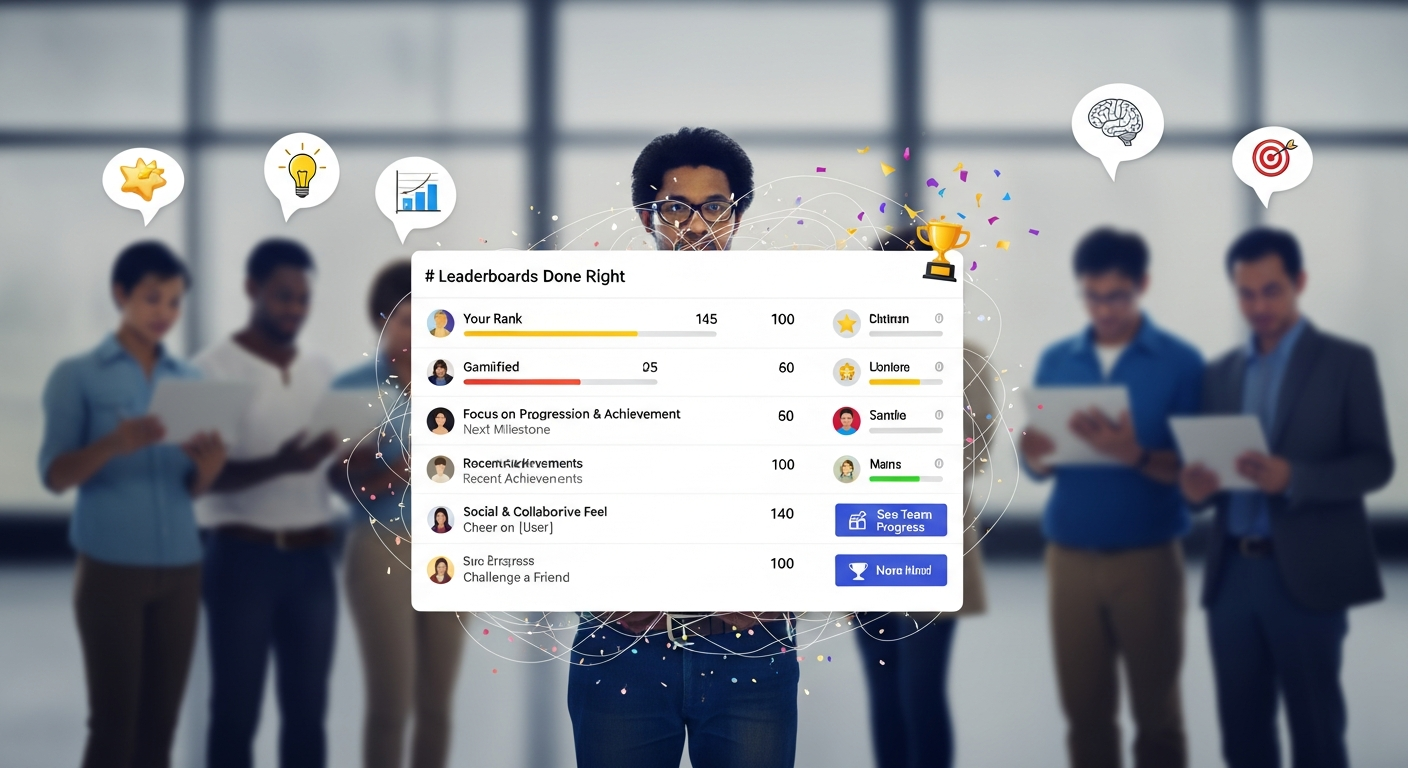
Leaderboards Done Right: The Psychology of People Fun
In the dynamic world of corporate learning and development, fostering engagement and driving performance are perennial challenges. As Vice Presidents, Directors, and Senior Managers of L&D, you’re constantly seeking innovative ways to motivate your teams, ensure knowledge retention, and translate learning into tangible business outcomes. Enter leaderboards – a classic gamification element that, when implemented thoughtfully, can unlock powerful psychological drivers for engagement and fun.
However, many organizations shy away from leaderboards, or worse, implement them poorly, leading to demotivation and disengagement. The secret isn't just to display scores; it's to understand the deep-seated psychology of human motivation and competition. This article delves into how to design leaderboards that truly inspire, bringing a new dimension of "people fun" to your learning initiatives across sectors like Compliance, Sales, Banking, Finance, Insurance, Retail, Pharma, Healthcare, Hospitality, Oil and Gas, and Mining.
The Deep Psychology Behind Effective Leaderboards
At their core, well-designed leaderboards tap into fundamental human needs:
- The Need for Achievement: We are wired to strive for mastery and celebrate success. Seeing one's name climb a ranking provides a clear, immediate signal of progress.
- Social Comparison Theory: Humans naturally compare themselves to others. A leaderboard provides a safe, transparent environment for this comparison, often sparking a desire to improve.
- Recognition and Status: Being acknowledged for effort and accomplishment is a powerful motivator. Leaderboards offer public recognition, which can boost morale and self-esteem.
- The Drive for Autonomy and Competence: When individuals feel competent and have some control over their learning path, engagement soars. Leaderboards can make this visible.
- Fun and Play: Ultimately, gamification elements, including leaderboards, introduce an element of play into what might otherwise be perceived as mundane tasks, making learning more enjoyable.
A simple
learning management system
might track completion, but a truly effective one, specifically a Gamified LMS, transforms data into dynamic, motivational experiences. The key is to harness these psychological triggers positively, avoiding the common pitfalls that turn fun into frustration.Why Most Leaderboards Fail: The Pitfalls
Many organizations have tried leaderboards and abandoned them, citing lack of engagement or even negative outcomes. This usually stems from:
- Focusing Solely on the Top 1-3%: When only the top performers are ever recognized, the vast majority of learners feel overlooked and demotivated. Why bother trying if you can't be number one?
- Unfair Metrics: If the metrics don't account for varying starting points, roles, or learning opportunities, the leaderboard feels rigged.
- Lack of Transparency: Learners need to understand *how* scores are calculated and what actions influence their standing. Ambiguity breeds suspicion, not motivation.
- Stagnation: Infrequent updates or a static display can quickly lose appeal. Once someone is at the top, they might coast; those at the bottom might give up.
- Exclusivity: Making leaderboards feel like an exclusive club can foster resentment rather than healthy competition.
Leaderboards Done Right: Principles for Engaging Fun
To cultivate "people fun" and genuinely drive learning outcomes, consider these principles when integrating leaderboards into your
enterprise learning management
strategy:1. Multiple Pathways to Success & Diverse Metrics
Don't just reward speed or initial test scores. Implement leaderboards that celebrate:
- Improvement: Track progress over time (e.g., "Most Improved Score," "Biggest Knowledge Gap Closed").
- Participation & Engagement: Reward active forum contributions, completion of optional modules, or time spent learning.
- Collaboration: Recognize teams that collectively achieve goals or individuals who help others.
- Mastery: Acknowledge consistent high scores, perfect module completion, or application of learning in real-world scenarios.
This approach ensures that everyone has a chance to shine, making the experience inclusive and fostering a growth mindset. A sophisticated
cloud based learning management system
can easily manage and display these multi-faceted metrics.2. Transparency, Fairness, and Clear Rules
Learners must understand how points are earned, how rankings are determined, and what the ultimate goal is. The rules should be consistent and perceived as fair by all participants. An effective
learning content management system
(LCMS) makes it easy to communicate these rules alongside the content.3. Timely Feedback and Dynamic Updates
Stale leaderboards are demotivating. Ensure scores and rankings update frequently, ideally in real-time. This provides immediate feedback, reinforces positive behaviors, and keeps the competition fresh. Modern
lms learning management system
solutions are designed for this kind of dynamic interaction.4. Focus on Recognition and Positive Reinforcement
Beyond just displaying ranks, actively celebrate achievements. This could involve virtual badges, public shout-outs, or small, meaningful rewards. The goal is to make learners feel valued for their efforts and accomplishments, transforming the
learning management software
into a hub of positive reinforcement.5. Make it Opt-In or Context-Specific
While most people enjoy a bit of competition, some prefer to learn privately. Offer the option to opt-out of public leaderboards or implement them for specific, high-engagement initiatives. For sensitive areas like Risk-focused Training, competition might be less about speed and more about depth of understanding, making subtle leaderboards that track progress towards mastery more appropriate.
AI and Leaderboards: Elevating Engagement for All
How can modern technology elevate the impact of performance tracking in learning? And what role do intelligent systems play in tailoring the competitive landscape for each learner? The integration of Artificial Intelligence (AI) can revolutionize leaderboards, moving beyond static rankings to truly personalized and globally relevant experiences.
AI-powered learning platforms can analyze individual learning patterns, strengths, and weaknesses. This allows for:
- Personalized Challenges: Instead of a one-size-fits-all leaderboard, AI can recommend individualized goals that, when achieved, contribute to overall standing, making the competition feel more attainable for everyone.
- Contextual Comparisons: Imagine leaderboards that compare you not just to everyone, but to peers with similar roles, experience levels, or progress paths. This makes social comparison more relevant and less intimidating.
- Predictive Insights: AI can predict potential disengagement or areas where a learner might struggle, prompting timely interventions or tailored content to help them improve their standing.
- Automated Recognition: AI can automatically identify and celebrate micro-achievements that might otherwise go unnoticed, providing continuous positive reinforcement.
Furthermore, an advanced
learning management solution
can provide globally relevant insights while respecting local nuances in training performance. For instance, in a multinational corporation, an Adaptive Learning system powered by AI can analyze performance data from different regions, offering localized leaderboards that account for cultural differences in competitive drive or regulatory training priorities. An AI Powered Authoring Tool can even help rapidly create and adapt content for these diverse scenarios, ensuring relevance and fairness across the board.Leaderboards in Action Across Industries
The principles of "leaderboards done right" apply across a wide spectrum of industries:
- Compliance (Banking, Finance, Insurance): Track completion of mandatory modules, perfect scores on compliance quizzes, or timely reporting of incidents.
- Sales (Retail, Pharma, B2B): Leaderboards can track product knowledge mastery, successful completion of sales pitches, or certifications on new product lines.
- Healthcare: Monitor continuous medical education (CME) credits, successful completion of patient care simulations, or adherence to new protocols.
- Hospitality: Track completion of customer service training, guest satisfaction scores, or mastery of new reservation systems.
- Oil & Gas / Mining: Essential for safety training, tracking safety observation submissions, or mastery of complex operational procedures.
In all these sectors, an Microlearning LMS can deliver bite-sized content, making learning frequent and the leaderboard updates dynamic, fostering continuous engagement.
Conclusion: The Future of Engaging Learning
Leaderboards, far from being a superficial gamification gimmick, are powerful psychological tools that, when designed with intent and empathy, can significantly boost learner engagement, motivation, and knowledge retention. By embracing principles of fairness, transparency, diverse success metrics, and leveraging the power of AI, L&D leaders can transform competitive elements into truly fun and productive learning experiences.
Consider how a robust learning management system that incorporates these "leaderboards done right" principles, like MaxLearn LMS, can elevate your organization’s learning culture. It's time to redefine competition in learning, making it a source of collective growth and individual achievement, fostering not just skills, but genuine "people fun" across your enterprise.
.jpg)


