

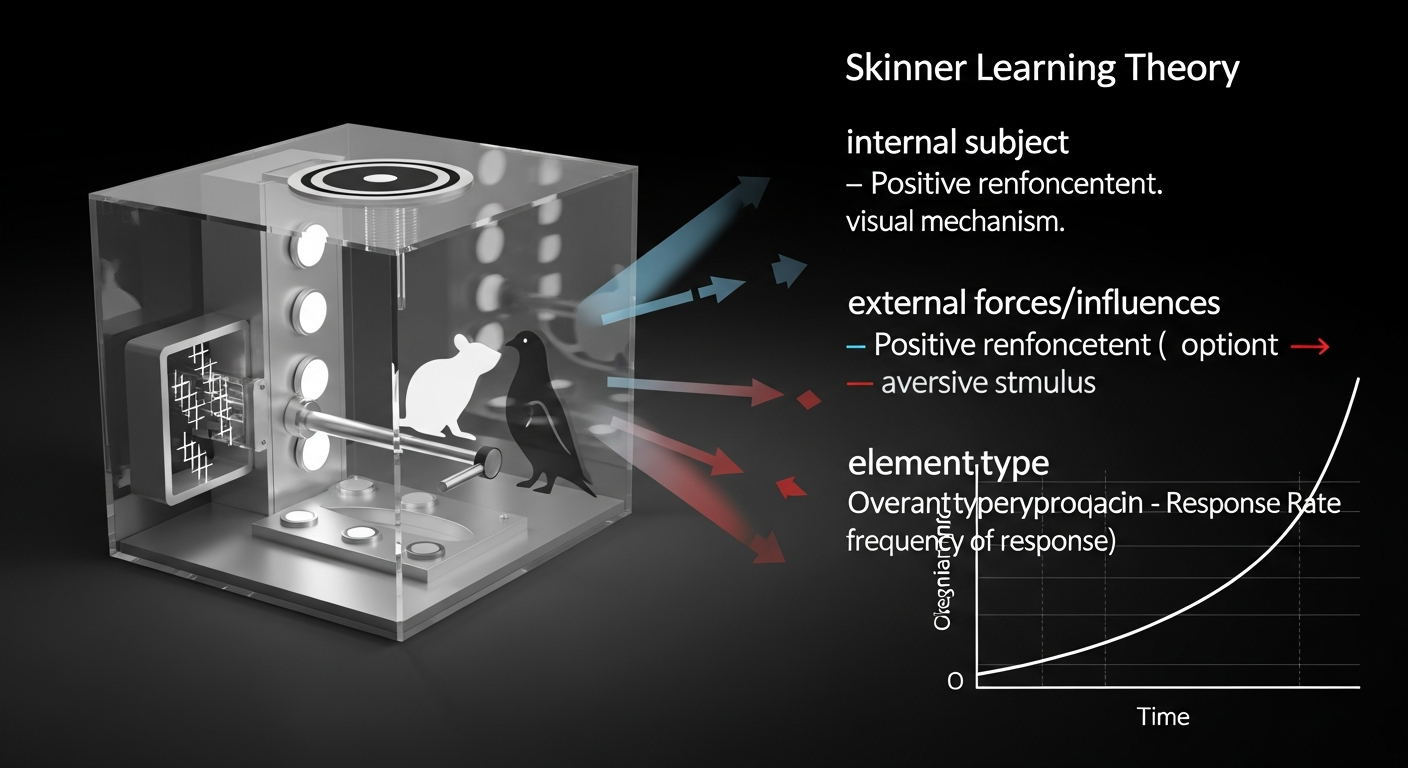
Skinner Learning Theory: A Strategic Blueprint for Elevating Corporate L&D
In the dynamic landscape of corporate learning and development, the pursuit of measurable results and sustainable behavioral change is paramount. As Vice Presidents, Directors, and Senior Managers of L&D, you are constantly seeking frameworks that not only foster skill acquisition but also drive tangible improvements in performance, compliance, and employee engagement. While modern eLearning technologies are revolutionary, the foundational principles that underpin effective learning often trace back to pioneers like B.F. Skinner.
Skinner's theory of operant conditioning, a cornerstone of behaviorism, offers a surprisingly robust and practical lens through which to design, implement, and optimize contemporary training programs. Far from being an outdated concept, its core tenets—reinforcement, feedback, and consequence—are profoundly relevant in shaping desired behaviors across industries, from critical compliance training in banking and healthcare to advanced sales techniques in retail and pharmaceutical sectors, and safety protocols in oil & gas and mining.
The Core Principles of Operant Conditioning in L&D
B.F. Skinner posited that learning is a function of change in overt behavior. Changes in behavior are the result of an individual's response to events (stimuli) that occur in the environment. When a stimulus-response pattern is reinforced (rewarded), the individual is more likely to repeat that behavior. Conversely, if a behavior is punished or ignored, it is less likely to recur.
Positive Reinforcement: The Engine of Desired Behavior
At the heart of Skinner's theory is positive reinforcement: the addition of a desirable stimulus that strengthens a behavior. In L&D, this translates into strategies that reward employees for engaging with learning content, successfully completing modules, or applying new skills on the job. These rewards don't always have to be monetary; they can be:
- Verbal praise or recognition from managers.
- Points, badges, or leaderboards within a Gamified LMS.
- Opportunities for career advancement or new projects.
- Immediate access to more advanced content or privileges.
Consider a sales team. Reinforcing the successful application of a new sales methodology with immediate positive feedback and visible recognition dramatically increases the likelihood of consistent adoption. In compliance training, successful completion of modules could unlock access to new responsibilities or reduced supervision, serving as a powerful motivator.
Shaping and Chaining: Building Complex Skills
Skinner recognized that complex behaviors aren't learned all at once. Instead, they are developed through "shaping," where successive approximations of a desired behavior are reinforced. "Chaining" involves linking a series of simpler behaviors to form a complex one. For L&D, this means:
- **Breaking down complex tasks:** Deconstructing intricate procedures (e.g., operating specialized machinery in hospitality or performing a specific financial transaction) into manageable steps.
- **Gradual skill progression:** Reinforcing each step as it's mastered, building confidence and competence.
- **Progressive challenges:** Introducing increasingly difficult scenarios as learners demonstrate proficiency.
This approach is particularly effective for highly technical or procedural training, common in industries like healthcare, pharma, and manufacturing. A nurse learning a new medical procedure or a technician mastering equipment maintenance benefits immensely from a structured approach that rewards each small step towards proficiency.
Immediate Feedback: The Cornerstone of Effective Learning
The timing and quality of feedback are critical in operant conditioning. Immediate, clear, and constructive feedback acts as a powerful reinforcer or corrector. Delaying feedback diminishes its impact. In the context of digital learning, this highlights the importance of:
- Instantaneous feedback on quizzes and assessments.
- Scenario-based training with immediate consequences for decisions.
- Performance support tools that guide employees in real-time.
This principle underpins the success of Adaptive Learning pathways, where the system responds to a learner's input by adjusting the next steps, providing targeted reinforcement or remediation precisely when needed.
Modern Applications: Beyond the Lab
Translating Skinner's principles into modern corporate learning means designing experiences that are not only informative but also inherently motivating and behavior-shaping. The goal is to create environments where desired actions (learning, applying, performing) are consistently reinforced.
Designing Engaging Digital Experiences
Modern learning platforms provide fertile ground for applying operant conditioning. A Microlearning LMS, for instance, delivers content in bite-sized, digestible units, allowing for frequent opportunities for reinforcement through completion, quick checks, and immediate feedback. This episodic reinforcement keeps learners engaged and motivated through often mandatory, but critical, training requirements.
The Power of Personalization
While Skinner focused on universal principles, the application in L&D must be personalized. What reinforces one individual might not reinforce another. Advanced learning technologies can track individual progress, identify preferences, and tailor the reinforcement schedule accordingly. This sophistication moves beyond a one-size-fits-all approach, recognizing individual learner needs.
Enhancing Compliance and Critical Skills
For industries with high stakes, such as banking, finance, and healthcare, where regulatory adherence is non-negotiable, Skinner's theory provides a robust framework for Risk-focused Training. By meticulously reinforcing correct procedures and decision-making, and providing clear, immediate feedback on deviations, organizations can significantly reduce errors and ensure adherence to policies and regulations. This proactive approach minimizes organizational liability and fosters a culture of responsibility.
Leveraging Intelligence for Superior Learning Outcomes
The advent of artificial intelligence in learning technology amplifies the potential of Skinnerian principles, allowing for unprecedented precision in reinforcement and behavioral shaping.
AI-Driven Personalization and Skill Development
Question: How can intelligent systems personalize learning pathways based on an individual's interaction patterns, ensuring optimal engagement and skill development?
Answer: Intelligent algorithms can analyze a learner's responses, completion rates, and performance data to dynamically adjust the difficulty, pace, and content of training. For example, if a banking professional struggles with a particular compliance scenario, the system can automatically provide more practice simulations, targeted microlearning modules, and immediate, specific feedback, acting as an instant, tireless coach. This ensures that reinforcement is delivered precisely when and where it's most effective, maximizing skill transfer.
Optimizing Content for Global Impact
Question: What strategies can optimize content delivery for varied global teams, considering their distinct learning environments, cultural nuances, and regional regulatory landscapes?
Answer: Advanced analytical tools can identify content elements that resonate most effectively with different demographic or geographical segments. By tracking engagement and performance across diverse groups, systems can recommend localized adjustments to examples, scenarios, and even reinforcement types to ensure cultural relevance. This allows a global retail chain or pharmaceutical company to deploy training that is equally impactful in multiple regions, adhering to local regulations while maintaining global standards.
Predictive Analytics for Proactive Training
Question: How can analytical insights driven by intelligent systems predict and address potential knowledge gaps before they impact performance or compliance?
Answer: By continuously monitoring learner progress and on-the-job performance indicators, intelligent platforms can identify patterns suggesting future skill deficiencies. For instance, in a hospitality setting, an intelligent system might detect that employees who skip a particular hygiene module are more likely to receive lower customer satisfaction scores related to cleanliness. The system can then proactively assign remedial AI Powered Authoring Tool generated content or targeted practice, preventing performance issues before they manifest and ensuring a consistently high standard of service.
Maximizing Impact with Advanced Learning Solutions
The strategic integration of Skinner's principles with cutting-edge learning technology offers a powerful approach to L&D that drives measurable results. By focusing on clear objectives, immediate and relevant feedback, consistent reinforcement, and the intelligent adaptation of content, organizations can cultivate a workforce that is not only knowledgeable but also consistently performs desired behaviors.
Whether you are aiming to enhance sales effectiveness, bolster regulatory compliance, improve patient safety, or optimize operational efficiency, the foundational understanding of how behaviors are learned and reinforced remains an invaluable asset. Leveraging platforms that embody these principles, such as MaxLearn LMS, empowers L&D leaders to build training ecosystems that truly transform potential into peak performance.
Conclusion
Skinner's Learning Theory, while originating from foundational psychological research, offers profound and actionable insights for modern L&D professionals. By meticulously applying the principles of positive reinforcement, shaping, and immediate feedback, combined with the adaptive capabilities of intelligent learning technologies, L&D leaders can design highly effective, engaging, and outcome-driven training programs. The result is a workforce that not only learns but consistently applies critical skills and behaviors, driving sustained success and competitive advantage across all industries.
.jpg)


