

Mastering Corporate Training: The Power of Operant Learning Theory in the Age of AI
As a Vice President, Director, or Senior Manager in Learning & Development, you understand that effective training isn't just about imparting information; it's about shaping behavior and driving measurable results. In today's dynamic business environment, from Compliance to Sales, Banking to Pharma, and across diverse sectors like Health Care, Hospitality, Oil and Gas, and Mining, the need for training that genuinely sticks and transforms performance is paramount. This is where the enduring principles of Operant Learning Theory, pioneered by B.F. Skinner, offer a powerful framework. When combined with cutting-edge eLearning solutions and artificial intelligence, this theory becomes an indispensable tool for cultivating high-performing teams and ensuring organizational success.
What is Operant Learning Theory?
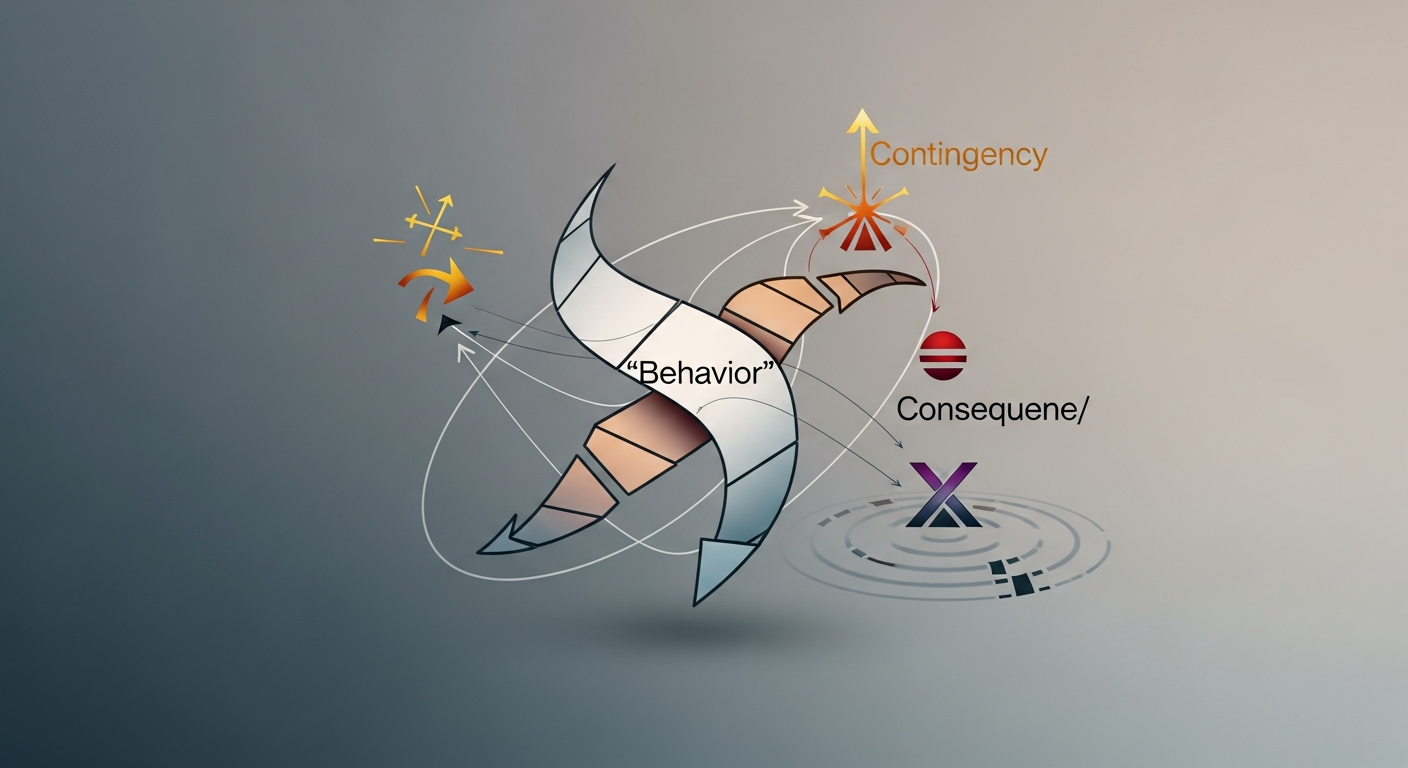
At its core, Operant Learning Theory posits that an individual's behavior is influenced by the consequences that follow it. Simply put, people tend to repeat behaviors that lead to desirable outcomes (reinforcement) and avoid behaviors that lead to undesirable ones (punishment). Unlike classical conditioning, which focuses on involuntary responses, operant conditioning deals with voluntary behaviors that are "operated" on the environment. For L&D professionals, this means understanding how to design training experiences that actively encourage desired actions and discourage unwanted ones.
Positive Reinforcement
This involves presenting a desirable stimulus after a behavior to increase the likelihood of that behavior recurring. In training, this could be immediate positive feedback, recognition, rewards, or achievement badges within an Gamified LMS. For instance, successfully completing a module on risk management or achieving a sales target is met with praise and recognition, motivating learners to continue excelling.
Negative Reinforcement
Often misunderstood, negative reinforcement is *not* punishment. It involves removing an undesirable stimulus after a behavior to increase its frequency. Imagine a learner who completes a difficult compliance module, and as a result, they no longer have to endure persistent email reminders. The removal of the annoying emails (undesirable stimulus) reinforces the behavior of completing the module. This can be a subtle yet powerful motivator in an LMS environment.
Positive Punishment
This involves presenting an undesirable stimulus after a behavior to decrease its frequency. In a corporate setting, this might manifest as constructive criticism or a corrective action after a procedural error. It's crucial for L&D to apply this judiciously and professionally, focusing on learning from mistakes rather than simply deterring. A well-designed learning management system can provide feedback loops that help correct behaviors without being overly punitive.
Negative Punishment
This involves removing a desirable stimulus after a behavior to decrease its frequency. For example, if a team consistently fails to follow safety protocols, they might lose access to certain privileges or resources until compliance is met. Again, the goal is to redirect behavior towards desired outcomes, often linked to Risk-focused Training, ensuring safety and adherence in industries like Oil and Gas or Pharma.
Why Operant Learning Matters for L&D Leaders
For L&D professionals, understanding and applying operant learning principles is a game-changer. It shifts the focus from passive knowledge transfer to active behavior modification. Whether you're in Banking, seeking to improve ethical decision-making, or in Retail, aiming to enhance customer service skills, this theory provides a roadmap for designing highly effective training programs. It allows you to:
- Shape Desired Behaviors: Systematically encourage actions that align with business objectives, such as adherence to compliance standards or adoption of new sales techniques.
- Accelerate Skill Acquisition: Reinforce correct practices immediately, embedding new skills more quickly and effectively across various roles.
- Boost Performance and Productivity: Create a training ecosystem where high performance is consistently rewarded, fostering a culture of continuous improvement.
- Reduce Undesirable Actions: Implement targeted interventions to minimize errors, safety violations, or non-compliant behaviors.
A robust learning management system, particularly a cloud based learning management system, can be the conduit for delivering these principles at scale, ensuring consistent application across your global workforce.
Leveraging Operant Learning in Modern eLearning
Today's eLearning technologies provide unprecedented opportunities to apply operant learning. A modern Microlearning LMS can break down complex topics into digestible chunks, each with immediate feedback and reinforcement loops. Consider the following applications:
- Microlearning and Reinforcement: Short, focused modules on an LMS allow for rapid feedback and positive reinforcement upon completion, preventing cognitive overload and enhancing retention.
- Gamification and Rewards: Leaderboards, points, badges, and virtual rewards within a Gamified LMS are direct applications of positive reinforcement, driving engagement and motivation.
- Adaptive Pathways: An Adaptive Learning platform can tailor content based on learner performance, providing extra practice (reinforcement) for challenging areas or skipping known concepts, optimizing the learning journey.
- Data-Driven Feedback: Advanced learning content management system capabilities enable tracking of learner progress and behavior, providing data for targeted interventions and personalized feedback, acting as continuous reinforcement or correction.
Advanced Technology's Role in Optimizing Operant Learning Experiences
The integration of advanced technology, particularly artificial intelligence, revolutionizes how L&D leaders can implement operant learning principles. AI enhances personalization, efficiency, and impact, making behavior-based training more powerful than ever.
How can learning platforms predict and adapt to individual learner needs for optimal engagement?
Modern platforms leverage sophisticated algorithms to analyze a learner's interactions, progress, and performance data. This allows the learning management system to predict areas where an individual might struggle or excel. By understanding these patterns, the platform can dynamically adjust content difficulty, provide personalized examples, or offer additional resources, creating a truly Adaptive Learning path. This bespoke experience acts as continuous, tailored reinforcement, ensuring each learner receives the precise stimuli needed to encourage desired behaviors and achieve mastery. It’s the ultimate form of individualized positive reinforcement, driving engagement and skill development across diverse industries.
What are the best strategies for deploying highly effective, contextually relevant training interventions across diverse global teams?
Deploying training globally requires more than just translation; it demands cultural and contextual sensitivity. Technology helps bridge this gap. An enterprise learning management solution, particularly a cloud based learning management system, can use data to identify regional performance trends and cultural nuances. AI can then recommend localized content variations or reinforcement strategies that resonate more effectively with specific groups, whether they are in European banking compliance or Asian hospitality services. This ensures that the chosen reinforcements (e.g., recognition styles, reward types) are perceived as desirable and meaningful by local teams, maximizing their impact and reducing the chance of misinterpretation. It makes behavior modification programs globally impactful.
How can advanced technology enhance the efficiency and impact of behavior-based training programs?
Advanced technology streamlines the entire training lifecycle, significantly boosting efficiency and impact. An AI Powered Authoring Tool can rapidly generate personalized content, scenarios, and quizzes that target specific behaviors. Intelligent feedback systems provide immediate, relevant feedback, acting as prompt positive or negative reinforcement. Furthermore, analytics dashboards track the real-time impact of training on desired behaviors, allowing L&D leaders to quickly iterate and optimize programs. This automation and data-driven approach means L&D teams can focus on strategic program design, knowing that the technological framework supports consistent, high-impact delivery of operant learning principles, making every intervention more effective.
Practical Strategies for L&D Leaders
To implement Operant Learning Theory effectively within your organization, consider these strategies:
- Clearly Define Desired Behaviors: What specific actions do you want employees to adopt or avoid? Be explicit in your training objectives.
- Design Clear Consequences: Ensure that positive consequences (reinforcers) are desirable and readily available for desired behaviors, and that undesirable consequences (punishments/extinctions) are consistent for unwanted behaviors.
- Emphasize Positive Reinforcement: Focus on rewarding good behavior. This builds morale and intrinsic motivation far more effectively than punishment. Use features within your lms learning management system to automate this.
- Provide Timely and Specific Feedback: The sooner feedback is given after a behavior, the stronger the association between the behavior and its consequence. This is crucial for both reinforcement and correction, often facilitated by a responsive learning management software.
- Utilize an Effective Learning Platform: A sophisticated learning management system (LMS) or a comprehensive learning management solutions suite is essential for consistent delivery, tracking, and reinforcement.
Integrating Operant Learning with a Powerful Learning Platform
To truly harness the power of Operant Learning Theory, L&D leaders need a robust technological partner. A modern Microlearning LMS like MaxLearn LMS is purpose-built to facilitate these principles. Its architecture supports bite-sized content delivery, enabling frequent, targeted reinforcement. Features such as built-in analytics provide immediate feedback to both learners and administrators, allowing for precise behavioral shaping.
Moreover, the inherent capabilities of a modern LCMS (Learning Content Management System) ensure that training content is dynamic, easily updated, and can be personalized to maximize reinforcement impact. Whether you're seeking to improve sales techniques with an AI Powered Authoring Tool or implement critical Risk-focused Training, a comprehensive enterprise learning management system provides the framework for consistent behavior modification across your organization.
Conclusion
Operant Learning Theory offers L&D leaders a profound understanding of how to influence and shape behavior through consequences. By strategically applying positive reinforcement, leveraging an Adaptive Learning approach, and utilizing the advanced capabilities of a modern LMS with AI integration, you can design training programs that not only impart knowledge but also instill lasting, high-impact behaviors. This isn't just about training; it's about building a culture of continuous improvement, high performance, and strategic advantage for your organization.
.jpg)


