

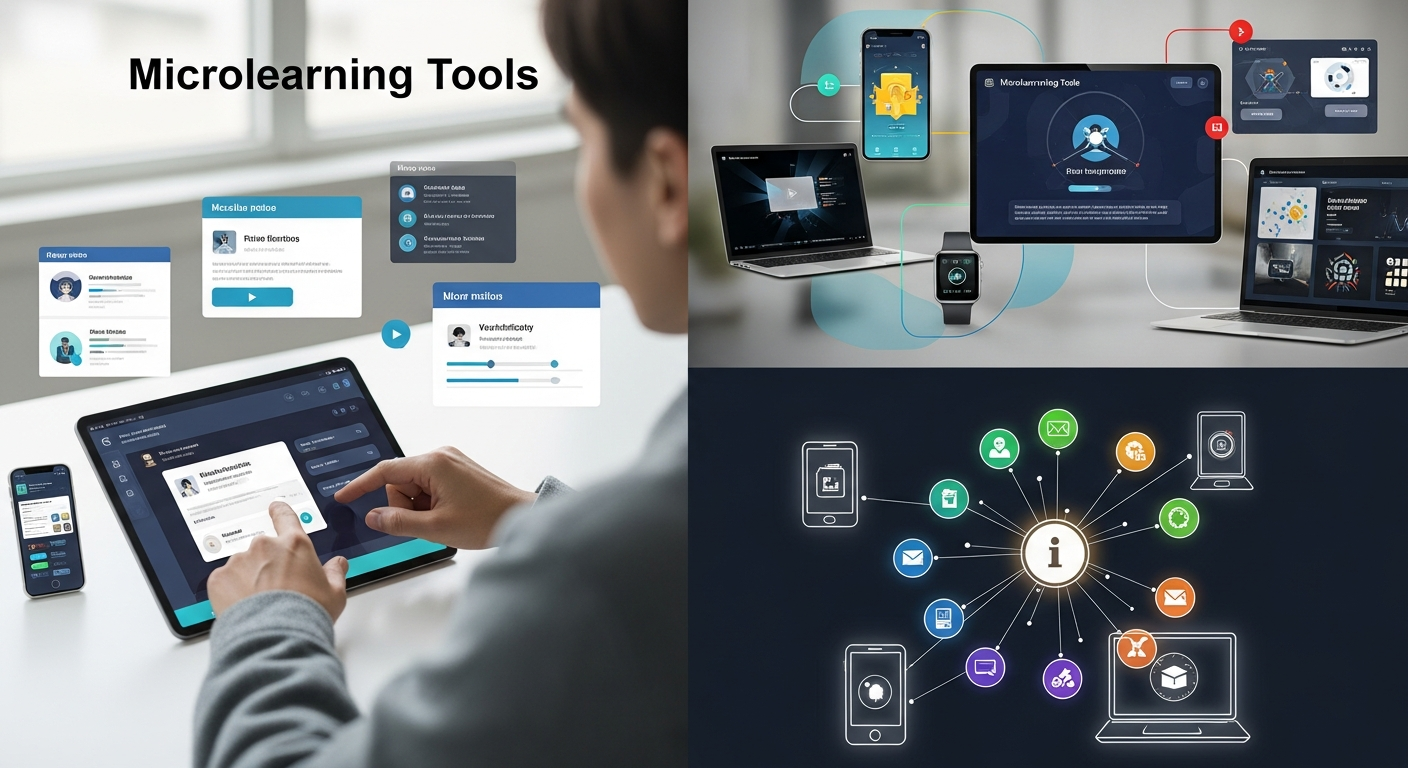
Elevating L&D: The Strategic Advantage of Microlearning Tools for Modern Enterprises
In today's fast-paced business landscape, continuous learning isn't just a buzzword; it's a strategic imperative. For L&D Vice Presidents, Directors, and Managers across sectors like Compliance, Sales, Banking, Finance, Insurance, Retail, Pharma, Health care, Hospitality, Oil and Gas, and Mining, the challenge is clear: how to deliver effective, engaging, and scalable training that truly impacts performance and drives growth. The answer often lies in harnessing the power of microlearning tools.
Traditional long-form courses, while valuable, can struggle to keep pace with rapid industry changes and diminishing attention spans. This is where microlearning steps in, offering a potent solution by delivering bite-sized, focused content designed for immediate application. But what exactly are these tools, and how can they revolutionize your enterprise learning strategy?
Understanding Microlearning Tools: More Than Just Short Videos
Microlearning is an approach to learning that delivers content in small, digestible units. Each unit typically focuses on a single learning objective and can be consumed quickly, often in 1-10 minutes. Microlearning LMS platforms are purpose-built to facilitate this agile learning methodology, providing the infrastructure to create, manage, deliver, and track these focused learning experiences.
Microlearning tools encompass a broad spectrum of technologies and features designed to support this methodology. They are crucial for organizations looking to implement efficient and impactful learning solutions, especially when dealing with complex regulations in finance, critical sales techniques, intricate healthcare protocols, or safety procedures in mining and oil and gas.
Key Features of Advanced Microlearning Tools
- Intuitive Authoring: Tools that allow L&D teams to quickly create new content or repurpose existing material into micro-modules without extensive technical expertise.
- Multi-device Compatibility: Ensuring content is accessible and engaging on desktops, tablets, and smartphones, catering to the modern learner's preference for on-the-go access.
- Interactive Elements: Quizzes, polls, simulations, drag-and-drop activities, and gamified elements to boost engagement and retention.
- Analytics and Reporting: Robust dashboards providing insights into learner progress, completion rates, knowledge gaps, and overall program effectiveness.
- Integration Capabilities: Seamless integration with existing HRIS, CRM, and other enterprise systems to streamline data flow and learner management.
- Personalization Engines: Systems that can recommend content based on learner roles, performance, and identified skill gaps.
The Strategic Imperative: Why Microlearning Matters for Your Industry
Across diverse industries, microlearning offers distinct advantages that directly address core business challenges:
Compliance and Risk Management
In highly regulated sectors like Banking, Finance, Insurance, Pharma, and Health care, compliance training is non-negotiable but often perceived as tedious. Microlearning tools allow organizations to break down complex regulations into manageable chunks, making updates easy to deploy and test. This approach ensures employees grasp critical information without being overwhelmed, significantly reducing risk exposure. Implementing Risk-focused Training through micro-modules can be a game-changer for maintaining regulatory adherence and fostering a culture of compliance.
Sales and Product Knowledge
For Sales teams, staying updated on product features, competitive landscapes, and selling techniques is vital. Microlearning provides just-in-time training accessible directly before a client meeting or during downtime. Fast, focused refreshers on product specs or objection handling can significantly impact sales performance. A comprehensive AI Powered Authoring Tool can help rapidly generate relevant sales content, keeping teams sharp and competitive.
Employee Onboarding and Skill Development
In Retail, Hospitality, and any sector with high turnover or rapidly evolving roles, effective onboarding and continuous skill development are paramount. Microlearning facilitates faster ramp-up times for new hires and allows existing employees to quickly acquire new skills or brush up on existing ones. It reduces the time employees spend away from their core tasks, making learning a seamless part of their workflow.
Operational Efficiency and Safety
Industries like Oil and Gas, Mining, and even Manufacturing within Pharma, benefit immensely from microlearning for operational procedures and safety protocols. Complex machinery operation or critical safety steps can be delivered as short videos or interactive guides, accessible precisely when and where they are needed. This immediate access to crucial information enhances safety and operational efficiency.
Beyond the Basics: Leveraging Advanced Capabilities
The true power of modern learning management solutions for microlearning comes from their advanced capabilities:
Gamification for Engagement
Keeping learners engaged is a perpetual challenge. Gamified LMS platforms inject elements of competition, reward, and progress tracking into the learning experience. Leaderboards, badges, points, and challenges transform mundane training into an exciting journey, significantly boosting completion rates and knowledge retention across all industries, from retail sales to pharmaceutical compliance.
Personalized Learning Paths
Every learner is unique. A modern Adaptive Learning system uses data to understand individual learner needs, preferences, and performance. It then tailors the content and learning path accordingly, ensuring that each employee receives the most relevant and impactful training experience. This level of personalization makes learning more efficient and effective, particularly in developing specialized skills for roles in banking, finance, or specialized healthcare.
The Role of Artificial Intelligence in Microlearning
Artificial intelligence is rapidly transforming the capabilities of microlearning tools. For L&D leaders, understanding how these intelligent systems can be leveraged is key to future-proofing their learning strategies.
How can intelligent algorithms enhance the precision of training delivery across a global workforce?
Leveraging sophisticated algorithms within a robust learning management system allows organizations to tailor content based on regional compliance nuances, linguistic preferences, and cultural contexts. This ensures that every employee, regardless of their location, receives the most relevant and impactful training, significantly reducing localization efforts and improving engagement. An enterprise learning management system with these capabilities provides a significant advantage for global operations.
What advanced analytical approaches can personalize employee development paths and predict skill gaps?
Advanced analytics integrated into a modern learning platform can continuously monitor learner progress, identify knowledge gaps, and recommend personalized content. By analyzing performance data and behavioral patterns, these systems can proactively suggest modules, identify emerging skill requirements, and even predict future training needs, optimizing individual growth and organizational readiness. This transforms a basic learning content management system into a strategic talent development engine.
In what ways can automated content generation and curation support rapid training deployment?
Automated content tools, particularly those with generative capabilities, can significantly accelerate the development of microlearning modules. They can convert existing long-form content into bite-sized lessons, suggest relevant external resources, and even draft quizzes, enabling L&D teams to respond to urgent training needs with unprecedented speed and consistency. This capability is invaluable for a MaxLearn LMS, allowing for dynamic content management.
Selecting the Right Learning Management System (LMS)
Choosing the right learning management software is a critical decision. A good LMS should not only support microlearning but also align with your organizational goals, scalability needs, and budget. When evaluating a cloud based learning management system, consider its ability to integrate with your existing tech stack, its user-friendliness for both administrators and learners, and its commitment to continuous innovation.
A robust learning management system, sometimes referred to as a learning management software or LCMS, provides the backbone for all your training initiatives. For enterprise-level organizations, an enterprise learning management solution that can handle diverse training needs, from compliance to leadership development, is essential. The right MaxLearn LMS acts as a comprehensive learning content management system, centralizing all your educational resources.
Conclusion: Empowering Your Workforce with Agile Learning
The strategic deployment of microlearning tools represents a significant opportunity for L&D leaders to drive meaningful change. By embracing this agile approach to learning, organizations can ensure their workforce is consistently skilled, engaged, and prepared for the challenges of tomorrow. From enhancing compliance in banking to boosting sales performance in retail, and ensuring safety in mining, microlearning tools are not just a trend; they are an essential component of a forward-thinking learning strategy.
Invest in a learning management system that empowers your L&D team to deliver dynamic, effective microlearning. The future of learning is here, and it’s bite-sized, intelligent, and incredibly impactful.
.jpg)


