

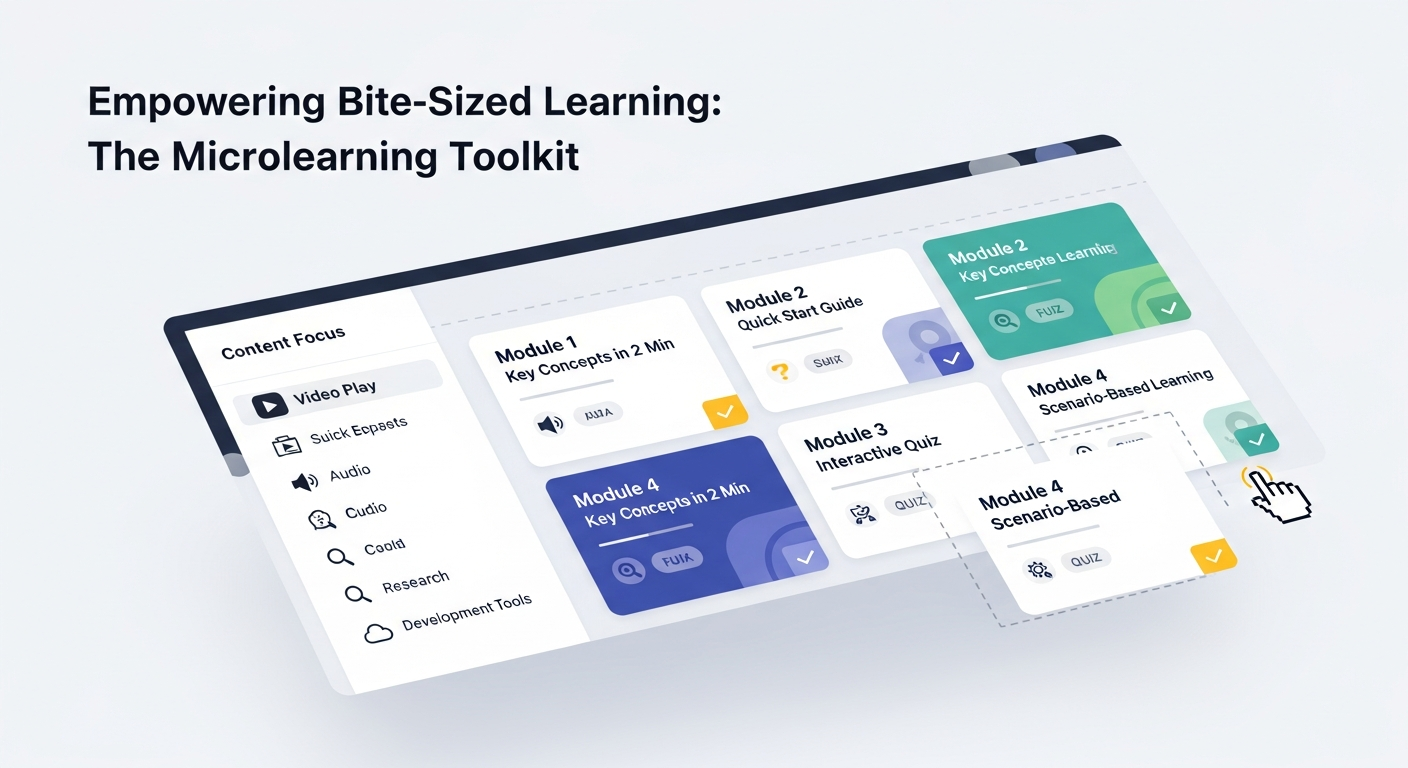
Microlearning Development Tools: Empowering L&D Leaders for Modern Workforce Training
As a Vice President, Director, or Senior Manager in Learning & Development, you understand the critical challenge of keeping your workforce skilled, engaged, and compliant in an ever-evolving business landscape. Traditional long-form training modules often struggle to resonate with today's time-strapped professionals across diverse industries from banking and finance to healthcare and oil & gas. This is where microlearning emerges as a powerful solution, delivering bite-sized, focused content precisely when and where it's needed.
The effectiveness of microlearning, however, hinges significantly on the development tools and platforms chosen to create and deliver this dynamic content. Selecting the right Microlearning LMS and complementary authoring solutions is paramount for driving engagement, improving knowledge retention, and ultimately, boosting performance across your organization.
Why Microlearning is Non-Negotiable for Today's L&D Leaders
The modern learner's attention span is short, and their schedules are packed. Whether it's a sales team needing quick product updates, compliance officers requiring refreshers on new regulations, or frontline retail staff mastering customer service protocols, traditional lengthy courses are often met with resistance. Microlearning addresses these challenges by:
- Boosting Engagement: Short, focused modules are less daunting and more likely to be completed.
- Improving Retention: Spaced repetition and targeted content aid memory recall.
- Enhancing Agility: Quick development and deployment mean training can adapt rapidly to market changes or new policies.
- Supporting Just-in-Time Learning: Learners access information precisely when they need it, at the point of need.
- Maximizing ROI: Efficient content creation and higher completion rates lead to better training outcomes.
For industries like finance, pharma, and healthcare, where regulatory changes are constant and errors can have severe consequences, the ability to deliver Risk-focused Training in a digestible format is invaluable. Similarly, sales teams benefit immensely from instant access to product knowledge or objection handling techniques, significantly impacting their productivity.
Navigating the Landscape of Microlearning Development Tools
Developing effective microlearning isn't just about creating short videos or quizzes; it's about crafting impactful learning experiences. This requires a robust set of tools, typically falling into two main categories: authoring tools and delivery platforms.
Authoring Tools: Crafting Engaging Content
Microlearning authoring tools enable L&D teams to design and build the actual learning modules. When evaluating these, consider:
- Ease of Use: Can your team quickly create content without extensive technical knowledge? Drag-and-drop interfaces and pre-built templates are key.
- Multimedia Support: The best tools support various formats – videos, infographics, interactive quizzes, simulations, and audio clips – crucial for rich microlearning experiences.
- Interactivity: Features like branching scenarios, drag-and-drop activities, and built-in assessment types keep learners actively involved.
- Mobile-First Design: Content must look and function flawlessly on any device, as mobile learning is a cornerstone of microlearning.
Many modern authoring tools integrate seamlessly with a comprehensive learning management system, ensuring a smooth content flow from creation to deployment.
Delivery Platforms: The Power of a Specialized Microlearning LMS
Once content is created, it needs an effective delivery system. A dedicated Microlearning LMS is not just another LMS; it’s specifically designed to handle the unique characteristics of microlearning modules. Look for features like:
- Mobile Optimization: True responsiveness across smartphones, tablets, and desktops.
- Personalization: The ability to deliver tailored learning paths based on a learner's role, performance, or knowledge gaps, often facilitated by Adaptive Learning capabilities.
- Gamification: Incorporating elements like points, badges, leaderboards, and challenges through a Gamified LMS to boost motivation and engagement.
- Robust Analytics: Detailed insights into learner progress, completion rates, knowledge retention, and content effectiveness.
- Scalability: An enterprise learning management solution that can support thousands of users across global operations.
A cutting-edge cloud based learning management system, such as MaxLearn LMS, offers the flexibility and scalability required by large organizations in diverse sectors. It acts as a central learning content management system (or LCMS) for all your bite-sized learning assets.
The Future is Now: Artificial Intelligence in Microlearning
Artificial intelligence is rapidly transforming how we develop and deliver microlearning. L&D leaders are increasingly leveraging its capabilities to enhance efficiency and effectiveness.
How can artificial intelligence enhance microlearning content creation?
AI can significantly streamline the content development process. An AI Powered Authoring Tool can analyze existing long-form content and automatically suggest microlearning segments, summarize key points, and even generate initial quiz questions. AI can also assist in personalizing content delivery by analyzing learner performance and recommending the next best piece of micro-content.
Where can AI-powered tools best be applied in microlearning?
AI finds its strongest applications in several areas:
- Content Curation and Generation: Automatically identifying relevant articles, videos, or internal documents to convert into microlearning.
- Personalized Learning Paths: AI algorithms can analyze learner data to create dynamic, adaptive learning paths, ensuring each individual receives the most relevant content at the right time.
- Intelligent Tutoring Systems: Providing real-time feedback and hints based on a learner's responses.
- Performance Support: AI-driven chatbots or search functions within an lms learning management system can provide instant answers to learner questions.
- Predictive Analytics: Identifying learners at risk of disengagement or failure and recommending interventions.
What intelligent features are crucial for future microlearning platforms?
For L&D leaders planning for the future, look for platforms that offer:
- Natural Language Processing (NLP): To understand learner queries and generate relevant content.
- Machine Learning (ML): To continuously optimize learning paths and content recommendations.
- Content Auto-Tagging and Search: Making it easier for learners to find exactly what they need within a vast library of micro-content.
- Voice-Activated Learning: Enabling hands-free access to microlearning modules, especially useful in operational environments.
- Automated Content Updates: AI can flag outdated information and suggest revisions, particularly vital for compliance and product training.
Embracing a learning management software that integrates these intelligent features will position your organization at the forefront of modern learning practices.
Choosing the Right Microlearning Tools for Your Organization
For L&D VPs and Directors, the selection process is strategic. Consider these factors:
- Alignment with Learning Objectives: Do the tools support your specific training goals, whether it's onboarding, compliance, sales enablement, or skill development?
- User Experience: Both for content creators and learners. Intuitive design is paramount.
- Integration Capabilities: Can the tools seamlessly integrate with your existing HRIS, CRM, or other business systems?
- Analytics and Reporting: Comprehensive data is crucial for demonstrating ROI and refining strategies.
- Vendor Support and Community: Reliable support and an active user community can be invaluable.
- Security and Compliance: Especially important for highly regulated industries like banking, healthcare, and finance.
- Cost-Effectiveness: Evaluate total cost of ownership, including licenses, support, and potential development time savings.
Implementing a comprehensive suite of learning management solutions that includes both robust authoring and a specialized delivery platform can significantly elevate your L&D strategy. A platform like MaxLearn LMS offers the kind of flexibility and advanced features that empower L&D leaders to build a truly impactful microlearning ecosystem.
Conclusion
The imperative for continuous, effective learning has never been greater. For L&D leaders across retail, hospitality, pharma, and heavy industries, leveraging the right microlearning development tools is no longer a luxury but a strategic necessity. By investing in intuitive authoring tools and a powerful Microlearning LMS with intelligent features, you can create a dynamic learning environment that fosters engagement, improves performance, and drives measurable business outcomes. The future of learning is bite-sized, personalized, and powered by smart technology – ensure your organization is equipped to lead the way.
.jpg)


