

Unlocking Potential: The Transformative Power of Gamification in Corporate Learning
As Vice Presidents, Directors, and Managers of Learning & Development, you are constantly seeking innovative strategies to elevate employee engagement, enhance skill acquisition, and drive measurable business results. In today’s dynamic corporate landscape, traditional training methods often fall short, struggling to capture attention and sustain motivation. This challenge is particularly acute in critical sectors like Compliance, Sales, Banking, Finance, Insurance, Retail, Pharma, Healthcare, Hospitality, Oil and Gas, and Mining, where effective learning directly impacts performance, adherence, and growth. Enter gamification – a powerful approach that is revolutionizing how organizations approach talent development.
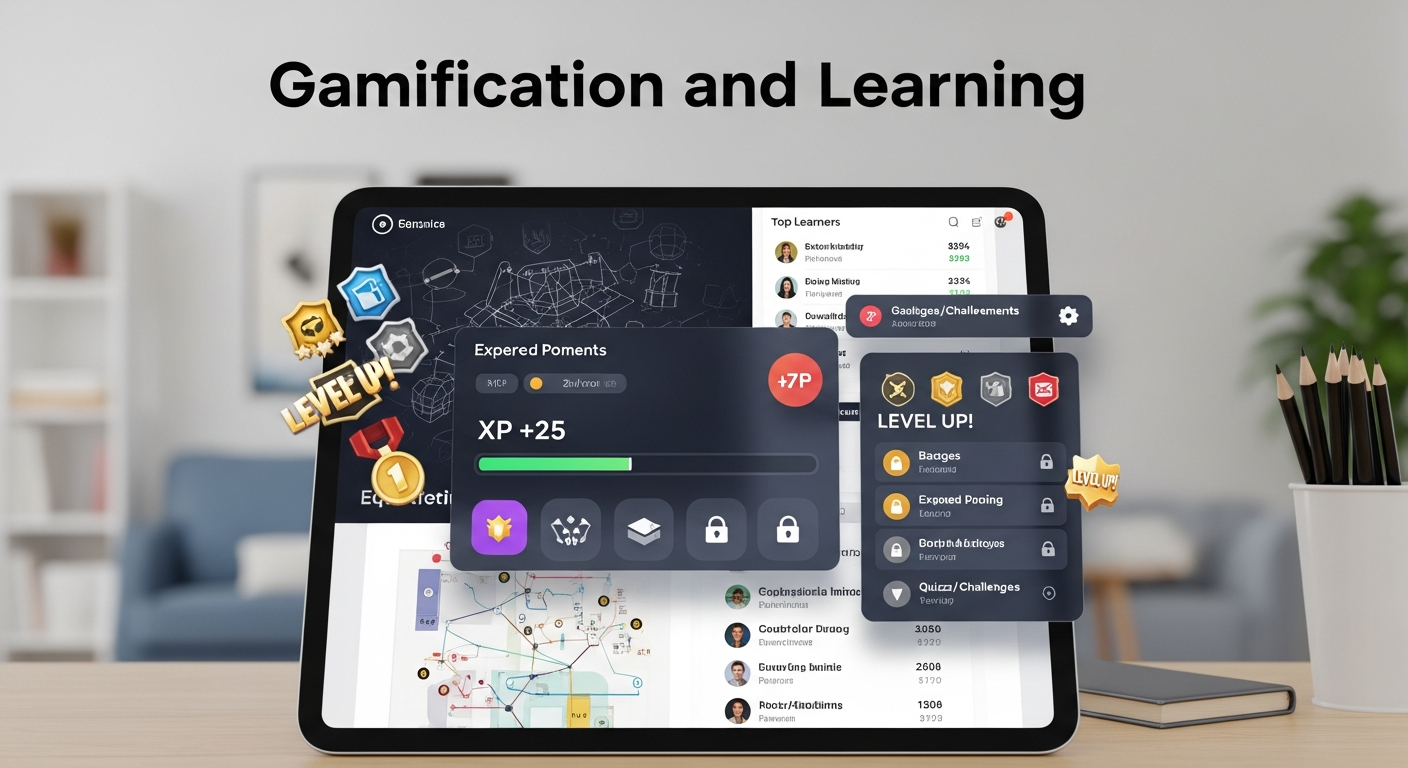
Gamification in learning isn't just about adding badges and leaderboards; it’s about strategically applying game-design elements and game principles in non-game contexts to engage users and solve problems. For L&D professionals, this translates into a powerful methodology for transforming mundane training into an immersive, motivating, and highly effective experience.
What Exactly is Gamification in Learning?
At its core, gamification for learning involves integrating elements typically found in games – such as points, levels, challenges, rewards, narratives, and immediate feedback – into educational environments. The goal is to leverage innate human desires for achievement, competition, collaboration, and self-expression to make learning more compelling and impactful.
It shifts the focus from passive information consumption to active participation, encouraging learners to take ownership of their development journey. For an enterprise learning management system, implementing gamified elements means cultivating an environment where employees are not just completing courses but are actively playing to learn.
The Science Behind Gamification's Success
The effectiveness of gamification is rooted in behavioral psychology. It taps into dopamine release associated with rewards and achievements, fostering a positive feedback loop that encourages continued engagement. Key psychological triggers include:
- Motivation: External rewards and recognition boost intrinsic motivation.
- Engagement: Interactive elements keep learners focused and invested.
- Retention: Active participation and experiential learning lead to better memory recall.
- Progression: Clear paths and visible achievements provide a sense of accomplishment.
- Social Connection: Leaderboards and team challenges foster healthy competition and collaboration.
Tangible Benefits for L&D Leaders
Implementing a gamified approach within your learning management software offers a multitude of advantages, directly addressing common L&D pain points:
Enhanced Engagement and Retention
In industries like Compliance and Finance, where training can often feel dry and mandatory, gamification can significantly boost learner participation. Interactive scenarios and challenges make complex regulations or financial concepts more digestible and memorable, leading to higher completion rates and better retention of critical information.
Improved Performance Metrics
For Sales and Retail sectors, a gamified learning content management system can simulate real-world customer interactions or sales pitches. By tracking performance within these simulations, L&D teams can identify skill gaps and provide targeted training, directly correlating learning outcomes with improved sales figures or customer service scores. This immediate feedback loop is crucial for rapid skill development.
Data-Driven Insights
Modern learning management solutions with gamification capabilities provide robust analytics. You can track progress, identify areas where learners struggle, and measure the effectiveness of different game mechanics. This data empowers L&D leaders to refine their strategies, ensuring resources are allocated efficiently and training programs are continuously optimized. An effective Microlearning LMS combined with gamification offers unparalleled insight into learner behavior.
Faster Skill Acquisition
The iterative nature of games – trial, error, feedback, and improvement – accelerates skill development. In technical fields like Oil and Gas or Manufacturing, employees can practice complex procedures in a low-stakes, gamified environment, rapidly gaining proficiency before working in real-world scenarios. This hands-on, experiential learning is a cornerstone of an effective learning management system.
Addressing Specific Industry Needs
- Compliance & Healthcare: Gamified modules make mandatory training less onerous and more effective, ensuring critical knowledge retention for regulations and patient safety protocols. Consider Risk-focused Training to mitigate potential errors.
- Sales & Banking: Role-playing scenarios, virtual sales pitches, and financial simulations within a Gamified LMS sharpen communication skills, product knowledge, and customer handling techniques.
- Hospitality & Retail: Interactive customer service simulations and product knowledge challenges enhance employee readiness and improve customer experience.
- Pharma & Mining: Complex operational procedures, safety protocols, and new technology adoption can be effectively taught through engaging, immersive game-based learning.
Integrating AI with Gamified Learning
The synergy between Artificial Intelligence and gamification promises an even more personalized and impactful learning experience. As L&D professionals consider the future of training, several questions naturally arise about AI's role:
Personalized Learning Paths
One common query from L&D leaders is: how can intelligent systems optimize learning paths for our employees? AI algorithms can analyze learner performance, preferences, and knowledge gaps within a gamified environment. This allows the system to dynamically adjust content difficulty, recommend specific challenges, and tailor learning journeys to each individual. This hyper-personalization, often enabled by Adaptive Learning, ensures that every employee receives the most relevant and impactful training at the right time.
Intelligent Feedback
Another important consideration for L&D professionals is: where can our training efforts be most effectively deployed geographically, and how can AI assist with localized feedback? AI-powered systems can provide immediate, specific, and actionable feedback based on learner interactions within gamified scenarios. Instead of generic responses, AI can pinpoint exact areas for improvement, explain 'why' certain choices were better, and even offer hints tailored to the learner's current progress, regardless of their location. This intelligent guidance is crucial for rapid skill mastery.
Predictive Analytics for L&D Optimization
L&D leaders often ask: what organizational insights can advanced analytics offer to improve our overall training strategy? AI can go beyond simple performance tracking. By analyzing patterns across thousands of learners within your cloud based learning management system, AI can predict future learning needs, identify employees at risk of disengagement, and even suggest content improvements for an AI Powered Authoring Tool. This predictive capability allows L&D teams to be proactive rather than reactive, optimizing their entire learning ecosystem for maximum impact.
Key Elements of an Effective Gamified Learning Strategy
To successfully implement gamification with your MaxLearn LMS or any enterprise learning management, consider these critical components:
- Clear Goals & Objectives: Every game element must align with specific learning outcomes.
- Meaningful Challenges: Tasks should be challenging but achievable, fostering a sense of progress.
- Rewards and Recognition: Points, badges, leaderboards, and certificates provide tangible proof of achievement.
- Narrative & Storytelling: A compelling story can immerse learners and make content more memorable.
- Social Interaction: Opportunities for collaboration, competition, and peer learning enhance engagement.
- Immediate & Constructive Feedback: Learners need to understand why they succeeded or failed to adjust their approach.
Choosing the Right Platform
The success of your gamified learning initiative heavily relies on the learning management system (LMS) you choose. Look for a robust Microlearning LMS that inherently supports gamification features. A cutting-edge Gamified LMS should offer built-in mechanics like points, badges, levels, leaderboards, and customizable themes. It should also support Adaptive Learning paths and provide strong analytics. For content creation, an AI Powered Authoring Tool can streamline the development of engaging, gamified modules. When selecting a learning management software, prioritize one that offers scalability, integration capabilities, and dedicated support for L&D professionals seeking to implement advanced learning strategies like Risk-focused Training within their learning management solutions.
Conclusion
Gamification is no longer a niche concept but a proven methodology for driving engagement, improving retention, and accelerating skill development across all industries. For L&D VPs, Directors, and Managers, embracing gamification, especially when powered by intelligent AI, represents a strategic investment in your organization's human capital. By transforming learning into an interactive, rewarding experience, you can unlock your employees' full potential, foster a culture of continuous growth, and ultimately achieve superior business outcomes. Explore how a powerful Microlearning LMS with advanced gamification features can redefine your corporate learning strategy today.
.jpg)


